
Gosaikunda Trek 2026 Status: Can You Still Reach the Sacred Lakes After the Rasuwa Flood?
Yes, via Dhunche the sacred lakes are largely spared — road access up the Pasang Lhamu Highway is still recovering after the 26 August flood.
At a glance
- Published
- TopicSafety & Advisories
- Verified againstU.S. Embassy in Nepal
- Treks coveredGosaikunda Lake Trek — 9 Days, Langtang & Gosaikunda Trek — 13 Days
Short answer: the Gosaikunda trek is one of the least-affected trips in the Langtang region after the 26 August flood, because it starts from Dhunche — higher up and short of the stretch of the Bhote Koshi corridor the water tore through. The sacred lakes, and the trail that climbs to them, were never in the flood's path. What took the hit is the road to the trailhead: the Pasang Lhamu Highway through Rasuwa. That is being cleared, and there is a classic walk-in from Kathmandu that skips the damaged road entirely. Here is exactly where things stand for autumn 2026, from our team's read of the ground.
Key facts — Gosaikunda, autumn 2026
- What: the sacred alpine lakes trek, Gosaikunda (4,380m), inside Langtang National Park, Rasuwa district.
- Access in: via Dhunche — not Syabrubesi, which is where the flood damage is concentrated.
- Status: the lakes and high trail are unaffected; road access up the Pasang Lhamu Highway is still recovering — confirm the current road/heli position with your operator before you travel.
- Best season: October–November (main autumn), then March–May in spring.
- Our price: $730–$1,010 per person, group-size dependent.
This is a current-status and planning note, not a retelling of the disaster. If you want the flood itself — what happened, why, and the rescue — we have covered it in full: start with the Bhote Koshi flash flood in Rasuwa, and see our forward-looking Langtang recovery and access piece. For every other region — Everest, Annapurna, Manaslu — and a live picture of which trails are open, we keep Nepal trekking conditions right now updated through the season.
What the Gosaikunda trek is, and why it is special
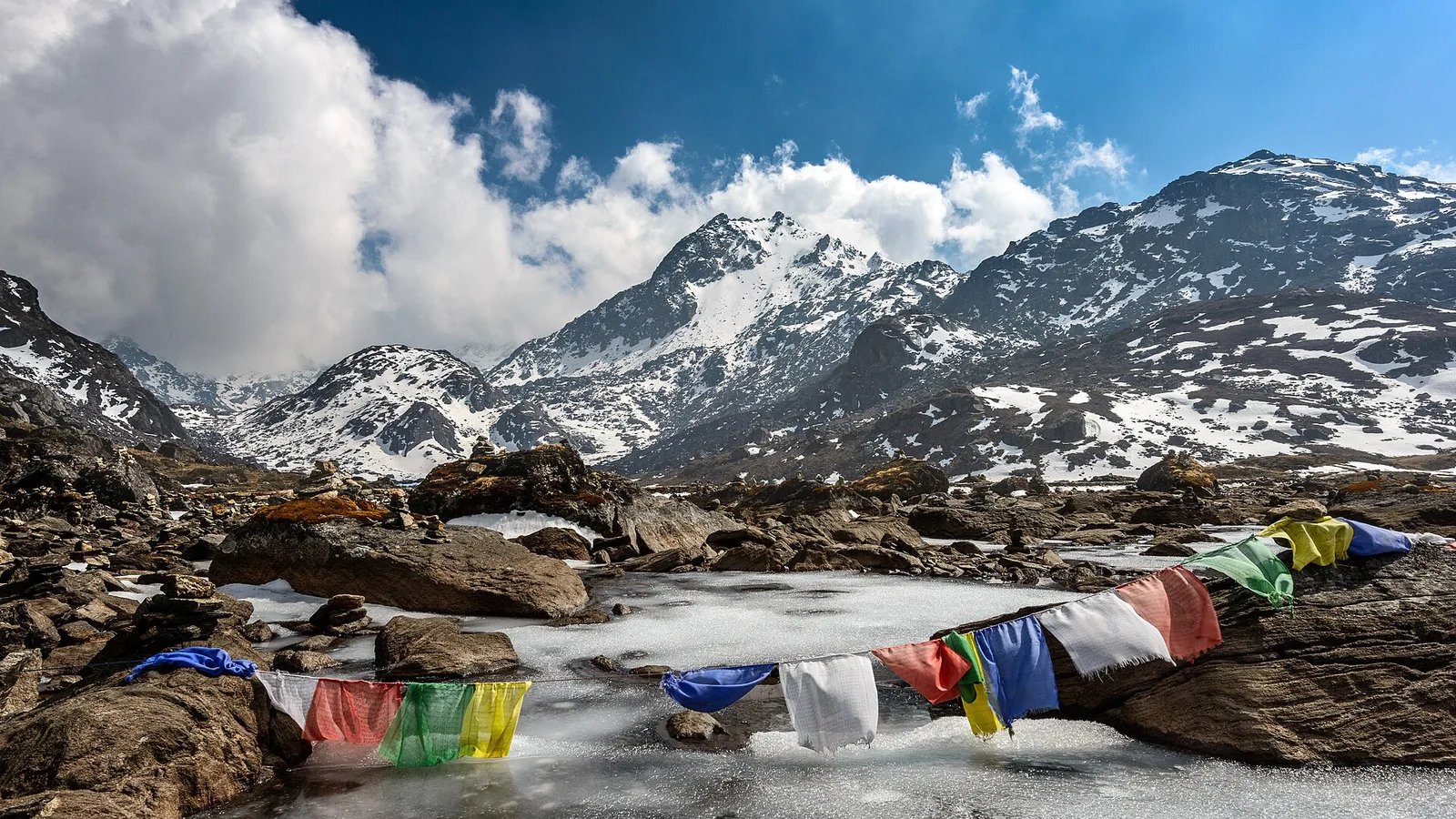
Gosaikunda is a chain of high glacial lakes cupped in the mountains above Dhunche, in the Langtang region north of Kathmandu. By Hindu tradition there are 108 lakes across the basin; the main lake sits at 4,380m, its water an astonishing blue-green against bare grey rock and, from October, a rim of early snow. It is one of the few treks in Nepal that is at once a serious alpine walk and a living place of worship — Shiva is said to have created the lake by striking the mountain with his trident, and the water is considered deeply sacred.
What makes it special for a visiting trekker is the compression. In a single short trip you climb from rhododendron and oak forest, through yak pasture and Tamang and Buddhist villages, to a genuinely high alpine lake basin — without the two-week commitment of Everest or Annapurna, and on far quieter trails. It is close to Kathmandu, it is affordable, and the reward at the top is out of all proportion to the effort.
Janai Purnima: the pilgrimage that fills the lake
Once a year, on the August full moon of Janai Purnima, thousands of Hindu pilgrims — and Jhankri shamans in full dress — climb to Gosaikunda to bathe in the lake and change their sacred thread. In 2026 that falls on 28 August, in the middle of monsoon and, this year, directly in the shadow of the Rasuwa flood. We wrote about the pilgrimage separately in Janai Purnima at Gosaikunda. For a trekker, the pilgrimage is not the season to come — it is monsoon, the trail is crowded and wet, and the region is under strain. The trekking seasons are the clear autumn and spring windows either side of it.
Current access after the flood — the honest picture
The flood came down the Bhote Koshi on 26 August and concentrated its damage on the lower corridor around Syabrubesi and Timure, and on sections of the Pasang Lhamu Highway (Trishuli – Betrawati – Dhunche – Syabrubesi). The important point for Gosaikunda is that the short trek does not go through Syabrubesi at all. It leaves the road at Dhunche, which sits higher, well above the river and short of the worst-hit stretch, and climbs to the lakes from there. The lakes and the trail above Dhunche were not in the flood's reach.
The live constraint is the drive up. The highway through Rasuwa was disrupted and is being restored in stages; how smooth the road journey to Dhunche is on any given week is the thing to confirm with your operator, not something to assume. The Nepali authorities and the U.S. Embassy in Nepal have advised travellers to hold off on travel into Rasuwa until operators and officials confirm safe access — sensible advice while the corridor is still being cleared.
There is also a way in that bypasses the damaged road entirely: the classic Helambu approach on foot — Sundarijal – Chisapani – Kutumsang – Gosaikunda — walking to the lakes directly from the Kathmandu valley rim. It adds days, but it needs no drive up the Rasuwa highway, which makes it a genuinely useful option this particular autumn while the road recovers.
| Trip | Days | How you reach the lakes | Price (pp) |
|---|---|---|---|
| Gosaikunda Lake Trek | 9 | Via Dhunche, out-and-back to the lakes | $730–$1,010 |
| Langtang & Gosaikunda Trek | 13 | Langtang valley first, then over to Gosaikunda | $980–$1,380 |
Prices are our own published rates: the solo (1-person) rate is the top of each band and it falls as the group grows — a guide costs the same whether he leads one trekker or eight. The 13-day Langtang & Gosaikunda combines the rebuilt Langtang valley with the lakes; because it uses the Syabrubesi gateway for the Langtang half, it is the more road-dependent of the two right now, so we would confirm its access more carefully than the Dhunche-only short trek.
What this means for you
If you have autumn dates, keep them — the lakes are fine and October–November is the best trekking weather of the year. The only variable is the road up through Rasuwa, and there is a walk-in alternative if it is still slow. Book, but book with an operator who is confirming the current road/heli position week by week rather than guessing. Do not attempt to reach Rasuwa independently while the corridor is being cleared.
Plan it with us
We are a licensed Nepali operator and we run both Gosaikunda trips ourselves; our team in Nepal is tracking the Rasuwa road daily and will tell you the honest current position before you commit. Read the full Gosaikunda Lake Trek guide for the day-by-day, or talk to us about dates.
Book or ask us anything
Message us on WhatsApp at +45 91 71 72 19 for the latest Gosaikunda road status, or use our contact page. Ready to plan? See the Gosaikunda Lake Trek (9 days) or the longer Langtang & Gosaikunda Trek (13 days).
Source: U.S. Embassy in Nepal, Rasuwa flooding and road-closure advisory; and Travel Himalaya Nepal's own on-the-ground reporting on the Rasuwa flood and Langtang-region recovery.
Cover photo: Sergey Pesterev via Wikimedia Commons (CC BY-SA 4.0).
Planning a trek?
Trek this route with us — Gosaikunda Lake Trek — 9 Days
NMA-certified local guides, transparent pricing, 5,000+ treks since 1998. Message us your dates and we'll sort the permits, lodges and logistics — reply within 24 hours, no obligation.


Popular Nepal treks
All treks →


Related coverage
Breaking · Safety & Advisories
Massive Flash Flood on the Nepal-Tibet Border Leaves Hundreds of Tourists Missing
A wall of water tore through Rasuwa's Bhote Koshi valley on August 26, killing at least nine and leaving 384 travellers — including three Americans — unaccounted for near the Langtang trekking region.
Safety & Advisories
How Nepal's Rescue Teams Reached Flood Survivors in Rasuwa
An account of the air-rescue operation after the 26 August 2026 Bhote Koshi flood: who coordinated it, how helicopters reached cut-off villages, and the numbers reported so far.
Breaking · Safety & Advisories
Bhote Koshi Flash Flood, 26 August 2026: What Happened in Nepal’s Rasuwa District
At least 95 people are confirmed dead after a flash flood surged from Tibet down the Bhote Koshi into Nepal’s Rasuwa district on 26 August 2026, with hundreds initially reported missing and being accounted for.
Safety & Advisories
Langtang Trek After the Rasuwa Flood: Access, Autumn 2026 and What to Expect
Everest and Annapurna run normally; only Langtang's flood-hit gateway needs watching — here's the autumn 2026 access timeline and how to rebook.
Latest from the desk

Gear & Tech
How to Avoid Getting Locked Out of Your Accounts Abroad in 2026: 2FA, Authenticator Apps and Backup Codes
The digital lock-outs travellers hit overseas — SMS codes sent to a home number you cannot receive, an authenticator app on a lost phone, a bank that blocks a foreign login, an email recovery loop — and the twenty minutes of setup before you fly that prevents every one.
Culture & Heritage
Dal Bhat, Momo and Everything Between: What You'll Actually Eat in Nepal in 2026
Dal bhat, momo and Nepal’s real food culture
Safety & Advisories
Chitwan After the 2026 Floods: Is the Jungle Safari Open?
The core-park safari is closed — but for the routine monsoon, not the flood; road access is the real disruption. An honest region status and what it means for your trip.