
Island Peak vs Mera Peak: Which Should Be Your First Himalayan Summit?
Nepal's two classic 6,000m trekking peaks demand almost opposite skills — the honest comparison before you book either.
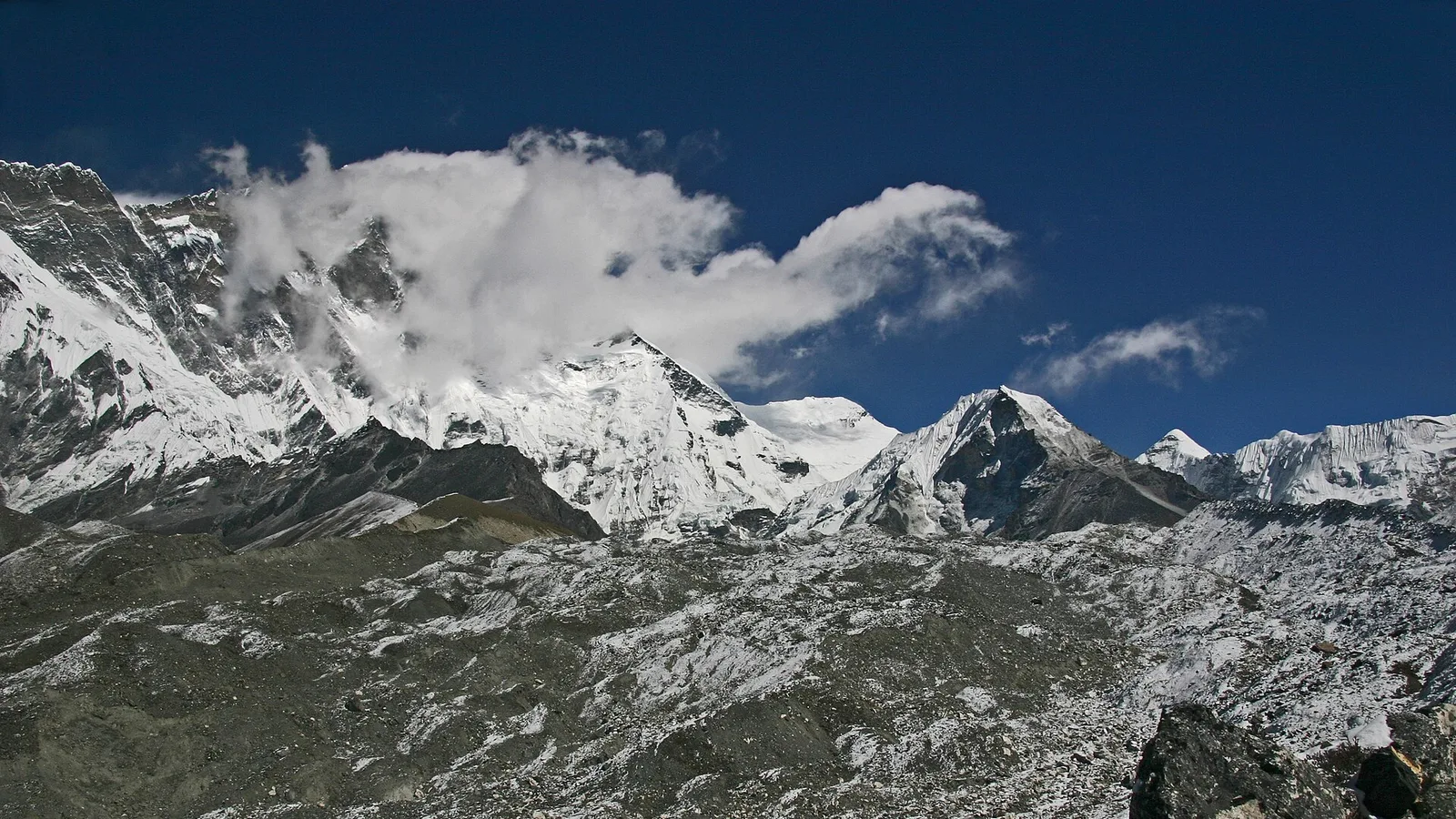
At a glance
- Published
- TopicRecords & People
- Verified againstWikipedia
- Treks coveredIsland Peak Climbing — 18 Days, Mera Peak Climbing — 15 Days, Island Peak Climbing — 14 Days
Both top 6,000m. Both are sold as 'a beginner's first Himalayan summit.' Only one of them actually asks nothing of you but fitness and patience with thin air — the other hands you a fixed rope, a jumar and a crevasse crossing near the top. Mixing them up is the most common mistake first-time peak climbers make when booking.
Key facts
- Mera Peak (6,476m) is Nepal's highest trekking peak, first climbed on 20 May 1953 — nine days before Everest — and is almost entirely a high-altitude snow walk, no technical climbing required for most parties.
- Island Peak / Imja Tse (usually listed at 6,189m; some modern surveys give 6,165m) is lower but harder: a steep, fixed-rope headwall and glacier travel guard the summit ridge.
- Both peaks are climbed only through an NMA-registered Nepali agency — foreign climbers cannot apply for the permit directly.
Start with what each mountain actually asks of your body versus your technique. Mera's standard northern route, via the Mera La in the remote Hinku Valley, is a long, non-technical snow slog — the challenge is almost purely altitude and stamina, which is why it's historically been graded Alpine F ('easy'). Recent glacier retreat has exposed a short, steeper section near the true summit, nudging the modern grade to PD ('a little difficult'), but most commercial parties still summit Mera Central at 6,461m without ropework, just below Mera North's true 6,476m high point, which does require technical climbing few trekking permits authorise.
Island Peak inverts that trade entirely. It's 300-odd metres lower, but the final push is graded PD+: a headwall of ice and rock, jumaring up fixed ropes, and — on many seasons — an aluminium ladder bridging a crevasse just below the summit ridge. It's a genuine, if short, introduction to technical alpine climbing, which is exactly why most Everest-region operators use it as a training and acclimatization objective, a role it's played since members of the 1953 British Everest expedition — including Tenzing Norgay — first climbed it for that very reason.
British explorer Eric Shipton's Everest reconnaissance team names it for its resemblance to an island in a sea of ice, viewed from Dingboche.
Col. Jimmy Roberts and Sherpa Sen Tenzing reach Mera Central — nine days before Hillary and Tenzing Norgay's Everest summit.
Members of that year's British Everest expedition, including Tenzing Norgay, climb it as an acclimatization exercise.
Nepal's Mountaineering Association gives it its official Nepali name; 'Island Peak' remains the name almost everyone uses.
| Mera Peak | Island Peak (Imja Tse) | |
|---|---|---|
| Elevation | 6,476m (Mera Central 6,461m) | ~6,189m |
| Technical grade | Alpine PD, mostly non-technical | Alpine PD+, fixed-rope headwall |
| Approach | Hinku Valley via Mera La (remote) | Chukhung (often combined with EBC) |
| National park permit | Makalu Barun NP + Pasang Lhamu RM | Sagarmatha NP + Khumbu Pasang Lhamu RM |
| Biggest risk | Altitude — long time above 5,500m | Technical exposure on summit day |
Which one should you climb first
The honest verdict
If you have zero climbing-technique experience but strong trekking fitness, Mera Peak is the better first summit — the danger is altitude, and it's managed the same way EBC's is: slow ascent, real rest days, a guide watching for symptoms. If you already trek well and want your first taste of fixed-rope, crampon-and-ice-axe climbing before committing to something like Ama Dablam, Island Peak is the better classroom, and pairing it with an Everest Base Camp trek is the standard, sensible way to do it.
Both require an NMA royalty permit obtained through a registered agency — currently US$500 for the first seven climbers in a group plus US$100 per additional climber (to a maximum of 15), on top of a refundable US$500 garbage deposit. Neither peak is a place to save money on a guide: on Mera it buys altitude judgement, on Island Peak it buys someone who can get you safely off a fixed line if the weather turns. We run both as guided expeditions — Mera Peak (15 days), Island Peak (14 days) and the combined Island Peak with Everest Base Camp (18 days) — with NMA-certified guides on every rope.
Source: Wikipedia, 'Mera Peak' (cross-checked against the Nepal Mountaineering Association's peak-permit fee structure, effective September 2025).
Cover photo: Gerd Eichmann via Wikimedia Commons (CC BY-SA 4.0).
Planning a trek?
Trek this route with us — Island Peak Climbing — 18 Days
NMA-certified local guides, transparent pricing, 5,000+ treks since 1998. Message us your dates and we'll sort the permits, lodges and logistics — reply within 24 hours, no obligation.


Popular Nepal treks
All treks →


Related coverage
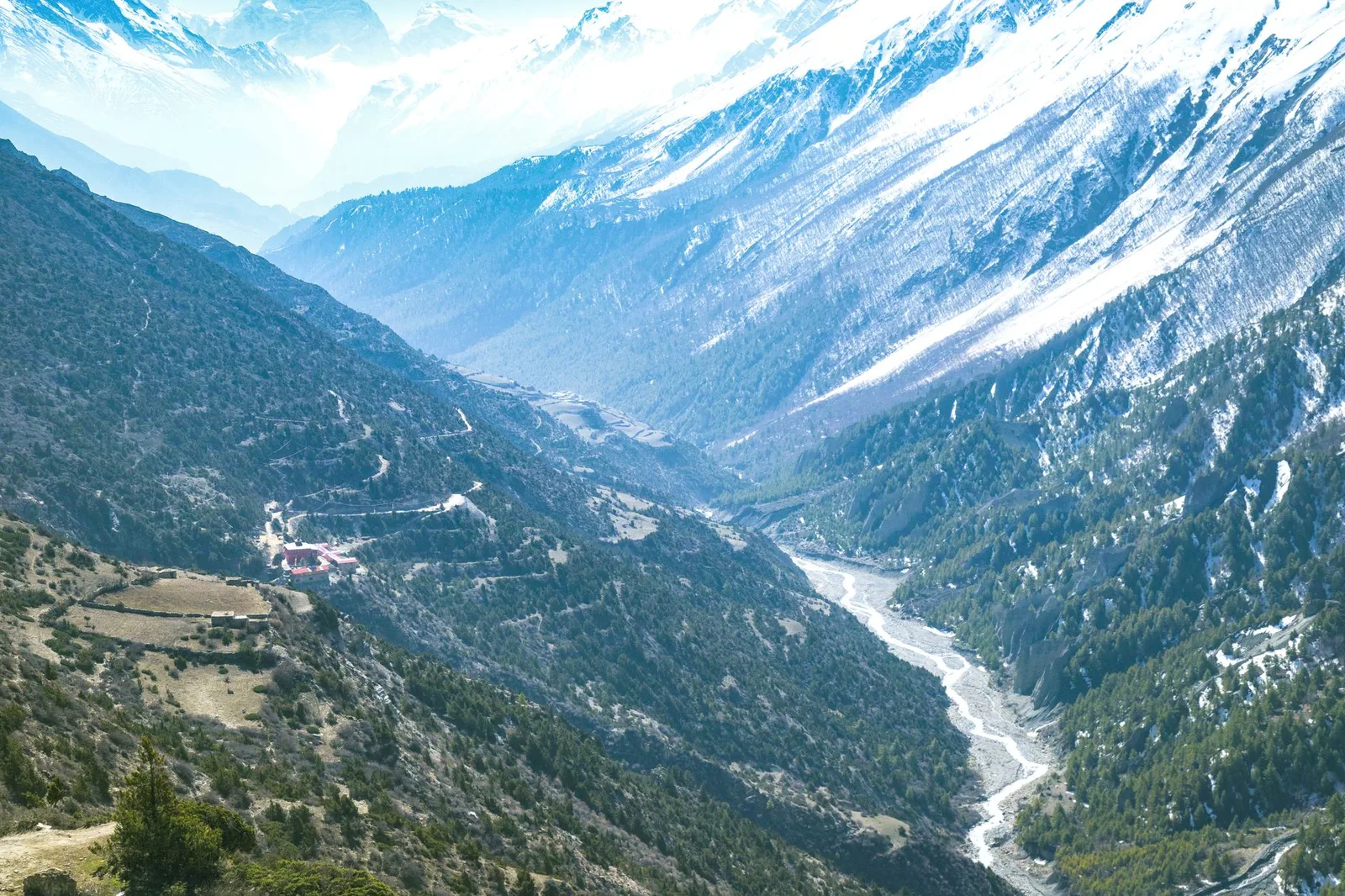
Breaking · Records & People
Nine Months Buried in the Snow: Nepal Just Recovered Five Climbers Lost on a Peak Almost No Trekker Has Heard Of
Rescuers located the bodies of three foreign climbers and two Nepali nationals on August 8, 2026 — nine months after an avalanche buried Yalung Ri's base camp on the closed Tibet border.
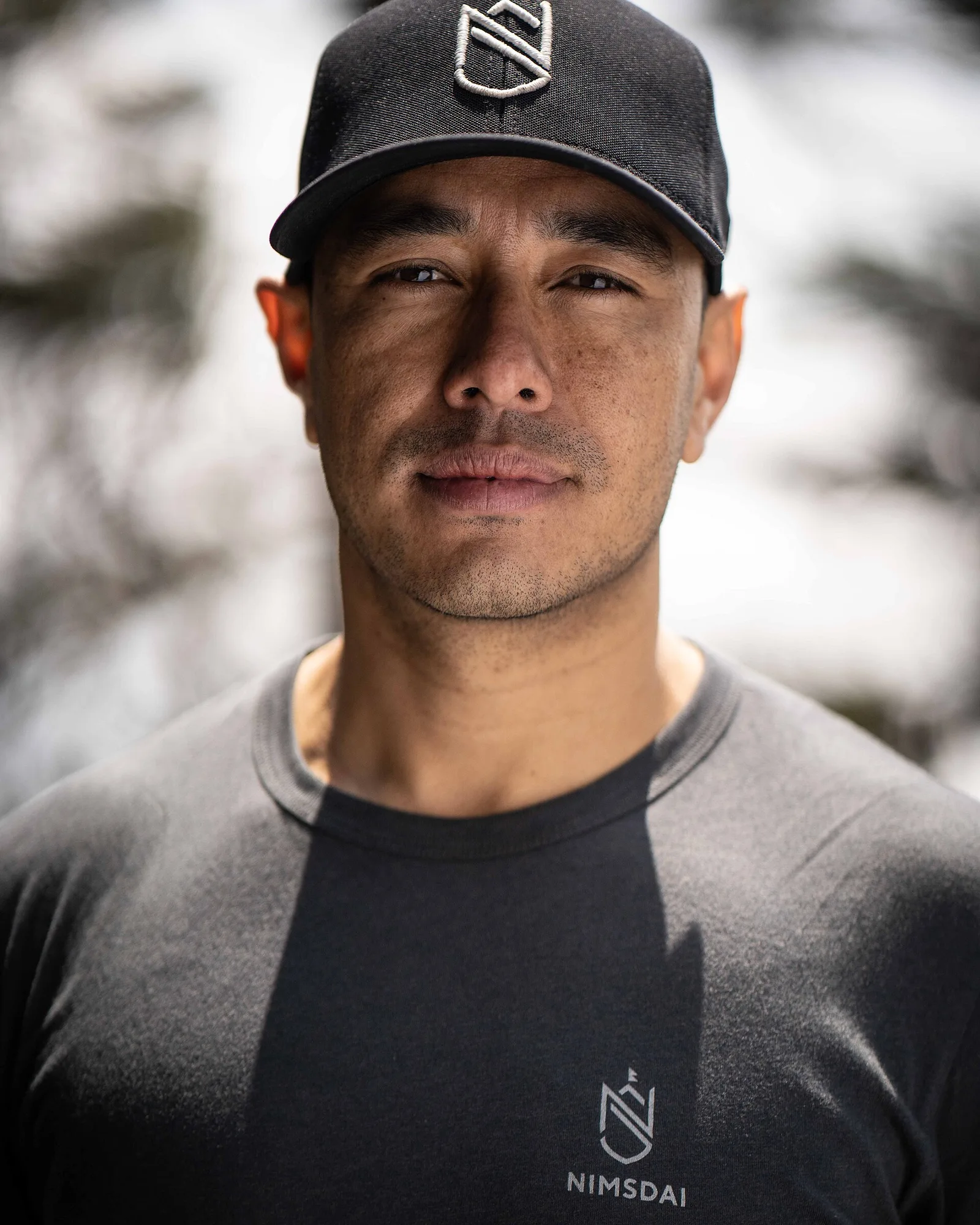
Records & People
He Climbed 14 of the World's Highest Peaks in 189 Days. A Mountain He'd Summited Before Just Killed Nirmal Purja
The Nepali-British soldier turned mountaineer shattered a record nobody thought was humanly possible, then died in an avalanche on Pakistan's Broad Peak alongside nine fellow climbers from five countries.
Breaking · Records & People
Nirmal Purja Is Confirmed Dead — Five Nepali Guides Died Beside Him on Broad Peak
The Karakoram avalanche that killed the record-breaking Nepali climber also killed five of his Nepali teammates in a single morning. Here is everything confirmed so far, and what it means for how you vet a Himalayan expedition.
Records & People
The First Omani Woman to Summit Everest Died Chasing All 14 of the World's Highest Peaks
Nadhira Al Harthy failed her first mountain in 2015, then reached Everest's summit four years later. On July 30, 2026, an avalanche below Camp III on Pakistan's Broad Peak ended her climb toward the 8,000-metre club.
Latest from the desk
Money & Insurance
Ski & Winter Sports Travel Insurance in 2026: Why Standard Cover Excludes the Slopes
Strap on skis and most standard travel policies quietly stop covering you. Here is why winter sports are excluded, what a ski add-on really buys — off-piste, piste closure, avalanche delay, mountain rescue, helicopter, equipment — and the exact clauses to check before you travel.
Safety & Advisories
How Many Days Do You Actually Need for Everest Base Camp? 10 vs 12 vs 14 vs 15-Day Itineraries
The honest answer, checked against Nepal's own altitude-medicine numbers — not against which itinerary sells fastest.
World Destinations
Northern Lights 2026: Where and When to See the Aurora (Best Destinations)
A clear, no-hype guide to catching the aurora next winter — the best destinations from Tromsø to the Yukon, the September–March season, why the solar cycle still favours 2026, and honest expectation-setting.