
Manaslu Circuit vs Annapurna Circuit in 2026: The Honest Head-to-Head
Same region, wildly different experience: one route just got easier for solo trekkers to permit, the other has a paved road creeping up its most famous valley. Here's how they really compare.
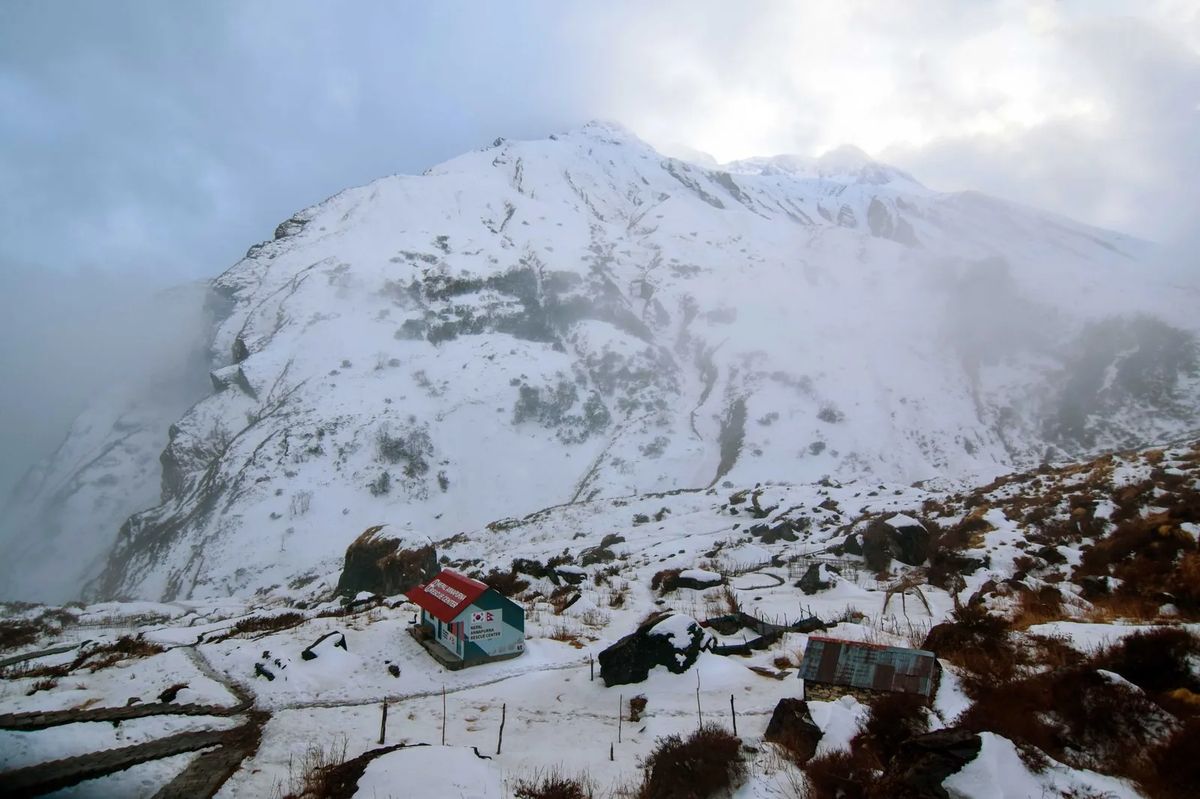
At a glance
- Published
- TopicPermits & Rules
- Verified againstTravel And Tour World
- Treks coveredAnnapurna Circuit Trek — 14 Days, Manaslu Circuit Trek — 14 Days
Both circuits loop around 8,000m giants in central-west Nepal. Both take about two weeks. But in 2026 they are two very different trips: Manaslu just became easier for solo trekkers to permit, while the Annapurna Circuit keeps losing trail to a widening road. If you're choosing between them, here is the real difference in rules, crowds, cost and difficulty — using our own published rates, not a marketing pitch.
Key facts
- Manaslu requires a Restricted Area Permit (RAP) — $100 per person for the first 7 days in autumn (Sep-Nov), plus $15/extra day — on top of a $30 Manaslu Conservation Area Permit (MCAP).
- Annapurna Circuit needs only an ACAP (NPR 3,000, about $22-25) and a TIMS card (NPR 2,000) — no restricted-area fee.
- The Annapurna region logged a record 246,575 foreign visitors in the first ten months of 2025; the Manaslu Conservation Area saw 12,512 in the same fiscal year — roughly a 20-to-1 gap.
- A road now runs from Besisahar to Upper Manang on the Annapurna side, replacing several days of the original trekking trail with a jeep track.
Manaslu Circuit (Larkya La 5,160m) — day-by-day altitude
Annapurna Circuit (Thorong La 5,416m) — day-by-day altitude
Permits and rules: Manaslu is stricter, and just got a little easier
Every trekker on the Manaslu Circuit needs three permits — MCAP ($30), a Restricted Area Permit, and an ACAP for the final stretch into the Annapurna region — plus a licensed guide, no exceptions. Until March 2026, the RAP could only be issued to groups of two or more, which meant a genuine solo traveller had to either find a trekking partner or pay for a second permit just to qualify. Nepal's Department of Immigration lifted that two-person minimum in March 2026: a single trekker can now get a Manaslu RAP on their own, provided they still travel with a licensed guide from a registered agency. Guideless trekking is still not allowed in either restricted or non-restricted zones under Nepal's 2023 guide-mandatory rule — see our full breakdown of that rule if you're unsure how it applies to you.
The Annapurna Circuit sits inside the Annapurna Conservation Area, not a restricted zone, so the paperwork is lighter: an ACAP and a TIMS card, both straightforward to arrange in Kathmandu, Pokhara, or online in advance. The same national guide-mandatory rule for independent trekkers still applies, but there is no restricted-area fee and no group-size rule.
| Permit | Manaslu Circuit | Annapurna Circuit |
|---|---|---|
| Restricted Area Permit | $100 (first 7 days) | — |
| Conservation area permit | $30 (MCAP) | ~$22-25 (ACAP, NPR 3,000) |
| TIMS card | — | ~$15 (NPR 2,000) |
| Exit/entry ACAP (Manaslu only) | Required on final stretch | — |
The road problem: why Annapurna isn't the trail it was
The Annapurna Circuit's original draw was a continuous footpath from lowland rice terraces to the 5,416m Thorong La pass. That path has been steadily narrowed by a jeep road pushed up the Marsyangdi valley — the Besisahar-to-Chame stretch opened to vehicles back in 2012, and by 2025 the road reached Upper Manang, putting a dusty jeep track through villages like Dharapani, Bagarchhap and Chame that used to be pure trekking trail. Trekkers who want the original footpath experience now need to actively follow the NATT (New Annapurna Trekking Trails) markers — color-coded red/white or blue/white signs that route you off the road and back onto traditional paths. It's manageable, but it's an extra layer of navigation the Annapurna Circuit didn't used to require.
Manaslu has no equivalent problem. The Budi Gandaki gorge that the trail follows has never been widened for vehicles, so the route is still walked start to finish — one reason it draws roughly 20 times fewer trekkers than Annapurna despite similar scenery and a comparable high-pass crossing.
Cost: what a 14-day trek on each route actually costs
Group size changes everything, since a guide and permits cost the same whether you're one person or eight. Comparing our own published rates for a comparable 14-day itinerary, travelling with 2-3 people:
| Trek | Price per person |
|---|---|
| Annapurna Circuit, 14 days | $1,450 |
| Manaslu Circuit, 14 days | $1,900 |
The roughly $450 gap is almost entirely the Manaslu RAP fee plus the extra logistics of supplying a genuinely restricted, lower-infrastructure route — not profit margin. Solo travellers pay more on both (Manaslu solo is $2,100 for 14 days; Annapurna Circuit solo is $1,600), since a private guide's day rate does not split across a group.
What this means for trekkers
Choose Manaslu if you want the classic circuit-trek experience minus the road and the crowds, don't mind the extra permit cost, and are comfortable with a stricter, guide-and-permit-mandatory structure. Choose Annapurna Circuit if budget matters more than solitude, you want easier last-minute logistics, or you're happy following the NATT trail markers around the road sections. Neither is the wrong choice — they're now genuinely different trips wearing similar names.
Source: Travel And Tour World, Annapurna and Manaslu Conservation Area visitor arrivals, 2025.
Cover photo: Namal Siriwardana via Pexels (Pexels License).
Still running this season
Annapurna Circuit Trek — 14 Days is running normally
NMA-certified local guides, transparent pricing, 5,000+ treks since 1998. Message us your dates and we'll sort the permits, lodges and logistics — reply within 24 hours, no obligation.
Popular Nepal treks
All treks →
Related coverage
Money & Insurance
Here's what a Manaslu Circuit trek really costs in 2026 now that solo trekkers can finally get the permit
A guided Manaslu Circuit runs about US$1,550 to US$2,100 per person in autumn 2026 - and since 22 March the old two-person permit rule is gone, so lone walkers no longer pay for a phantom second permit. Here's the honest, line-by-line breakdown.
Safety & Advisories
Is the Manaslu Circuit Trek Affected by the 2026 Nepal Floods?
No — the Manaslu Circuit runs on the Budhi Gandaki in Gorkha, a different river from the flood-hit Bhote Koshi in Rasuwa. Here is why the trail and the Larke La are unaffected — and the one road caveat to confirm.
Safety & Advisories
Is the Tsum Valley Trek Affected by the 2026 Nepal Floods?
Short answer: no. Tsum Valley is in the Manaslu region of Gorkha district, on the Budhi Gandaki — a separate valley from the flood-hit Bhote Koshi in Rasuwa. The trail is running normally; the one honest caveat is the monsoon approach road.
World Destinations
Underrated Alternatives to Overtouristed Destinations in 2026: Swap the Crowd for Its Quieter Twin
Skip the ticketed queues at Venice, Santorini, Bali and Dubrovnik. Here are the quieter, cheaper equals — from Bologna and Naxos to Kotor, the Faroes and Nepal's Manaslu — that deliver the same experience with a fraction of the crowds.
Latest from the desk

Records & People
The Gurkha Blood Myth That Even the Falklands War Couldn't Kill
Every campfire story about the kukri insists a Gurkha must draw blood before sheathing it again — actual Gurkhas, and two centuries of British Army history, say otherwise.

Flights & Access
That Tiny Hole in Every Airplane Window Is Not a Manufacturing Flaw
It is a precision pressure valve, and it is the reason your photo of a Himalayan skyline from 35,000 feet doesn't come out fogged over.

Trail & Weather
Everest Base Camp or Kilimanjaro: Which Trek Should You Actually Do in 2026?
One is a five-day sprint to 5,895 metres, the other a fourteen-day walk to 5,364 — the honest trade-off between them comes down to acclimatization, not fitness.