
The only country without a rectangular flag, and six more ways Nepal stands alone
Nepal’s flag is not a rectangle. It also holds eight of the ten highest mountains, the Buddha’s birthplace, and a calendar running 56 years ahead of ours.
At a glance
- Published · updated
- TopicRecords & People
- ReportingOriginal, by our guides in Pokhara
- Treks coveredAnnapurna Base Camp Trek — 9 Days, Everest Base Camp Trek — 12 Days, Kathmandu Valley Cultural Tour — 3 Days
Every other national flag on Earth is a rectangle. Nepal’s is not — it is two stacked triangular pennants, the only non-quadrilateral national flag in the world. That quirk is the perfect introduction to a country that breaks the mould in almost every way.
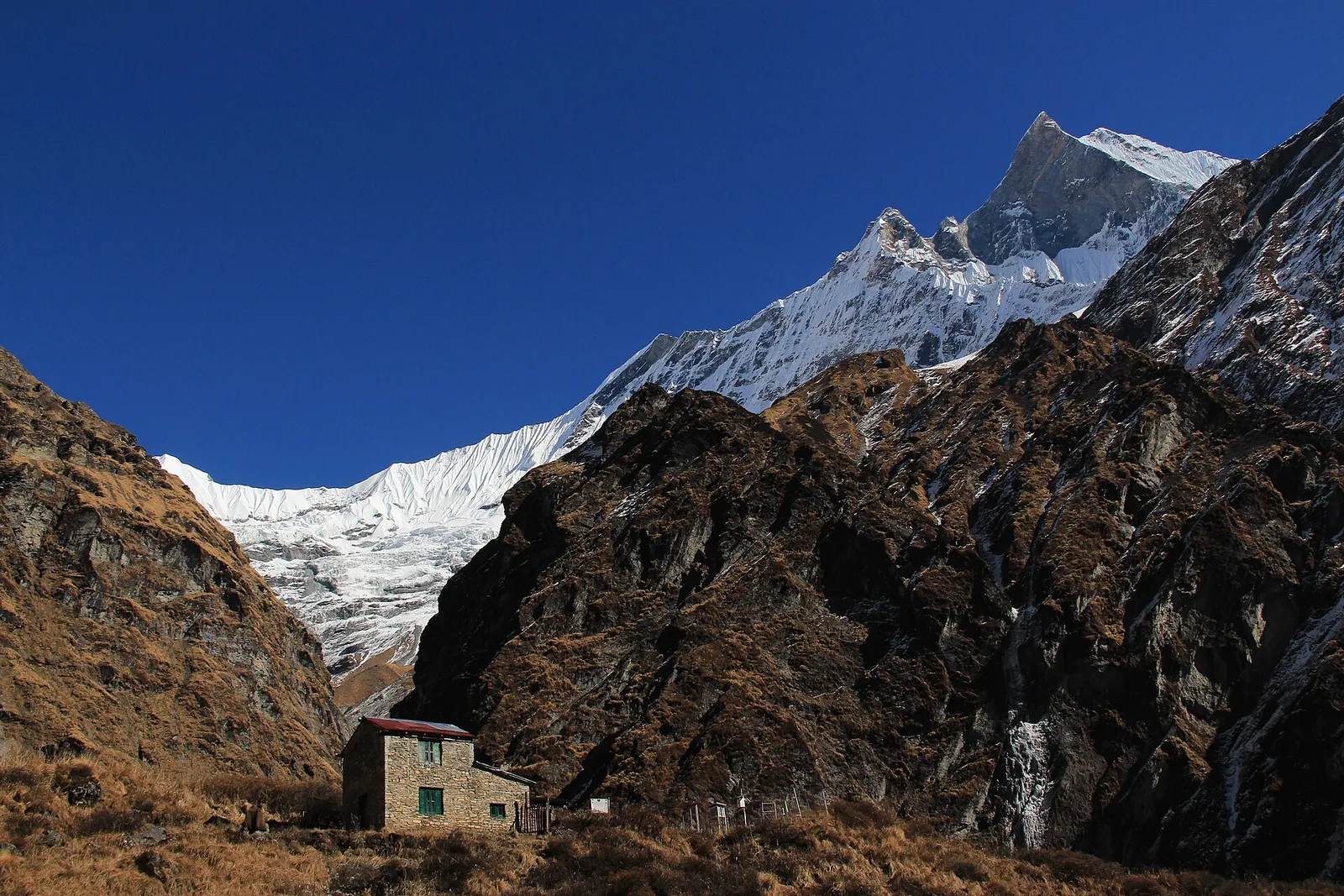
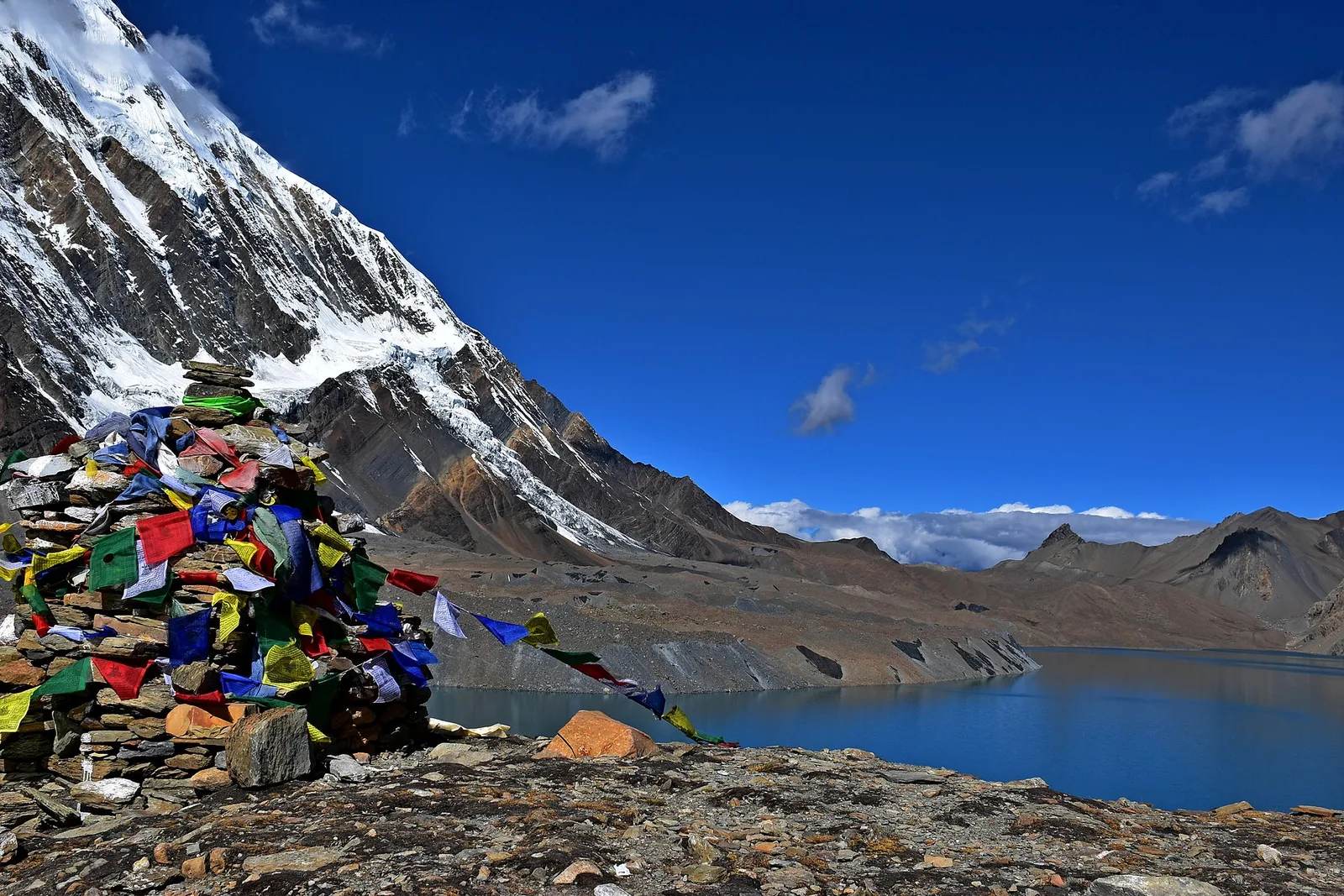
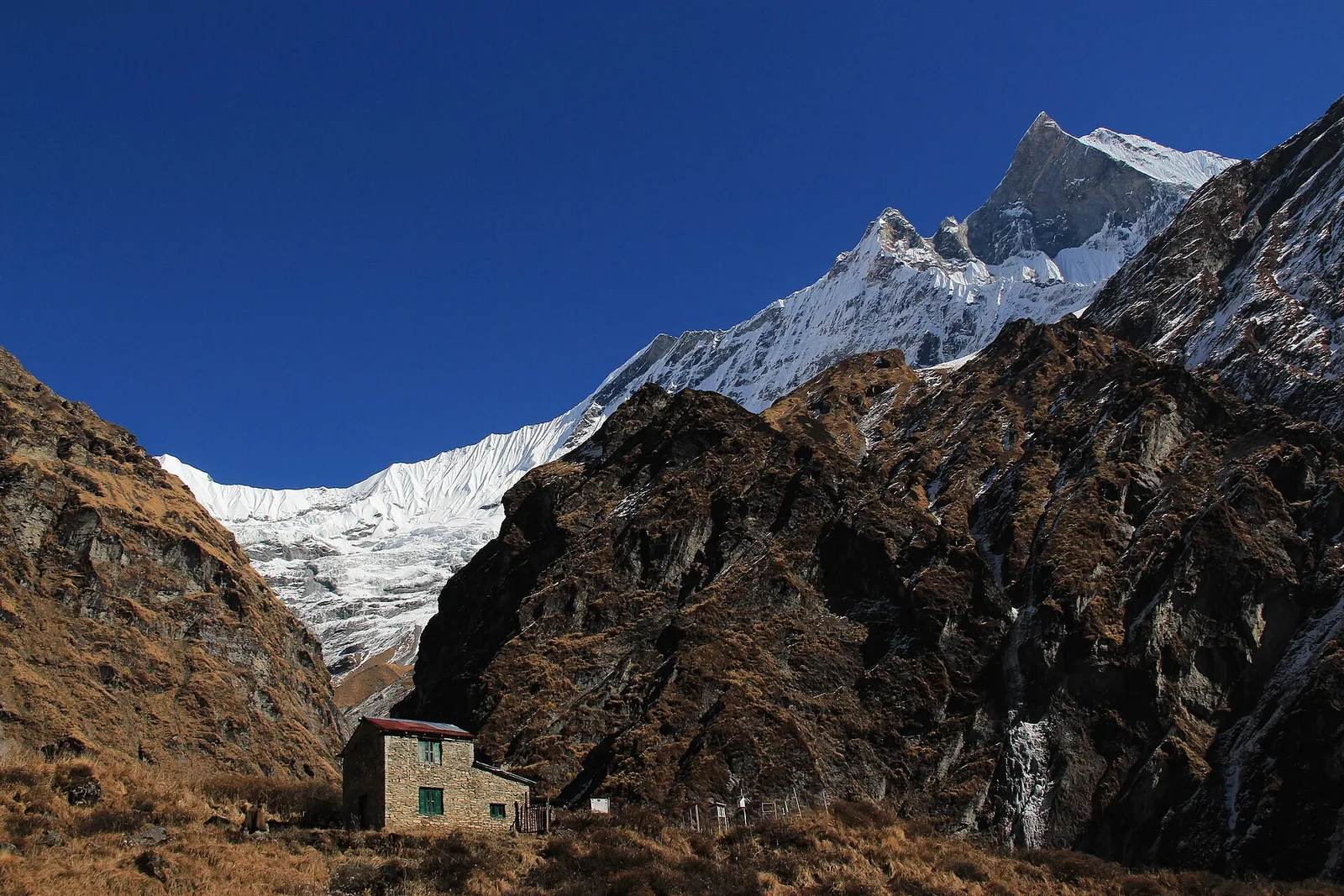
From the trail · Annapurna


Nepal, unlike anywhere
- The world’s only non-rectangular national flag.
- Eight of the ten highest mountains on Earth.
- The birthplace of the Buddha (Lumbini).
- A calendar (Bikram Sambat) running ~56–57 years ahead.
1. The flag is not a rectangle, and the shape is legislated
Nepal flies two stacked triangular pennants, and it is the only country on Earth that does not fly a quadrilateral. The shape is not decorative or approximate.
The construction is written into the constitution as a sequence of geometric instructions — draw this line, strike this arc — so the flag is defined by a method rather than by a set of proportions. We take that construction apart step by step in the piece on how the flag is actually built.
2. Eight of the ten highest mountains are here
Of the ten highest mountains on the planet, eight stand in Nepal or on its borders. Only K2 and Nanga Parbat, both in Pakistan, break the run.
That is a density no other country comes close to. It is also the source of a claim worth being careful with: Nepal is sometimes said to hold fourteen 8,000-metre peaks, which is a different and contested statement — we set out what the official count actually is in the fourteen-versus-eight explainer.
3. The Buddha was born here, not in India
Siddhartha Gautama was born at Lumbini, in Nepal’s southern Terai, and the site is a UNESCO World Heritage property. It is one of the most common factual mix-ups about the region.
Lumbini sits in flat, hot lowland farmland roughly 300 kilometres from Everest, which is its own illustration of how much this country contains. More on the site and the pilgrimage circuit around it in our report from Lumbini.
4. It was never colonised
Nepal was never ruled by a foreign power. While the subcontinent around it was absorbed into the British Empire, Nepal remained sovereign throughout.
That continuity is why so much here is unbroken rather than reconstructed: the temple traditions, the caste and ethnic structures of the valley towns, the living religious institutions. Nothing had to be revived after an occupation, because there was not one.
5. The year is 2083
Nepal runs on the Bikram Sambat calendar, which sits roughly 56 to 57 years ahead of the Gregorian one. Your visa is stamped in a year most visitors have never seen written down.
It is not ceremonial. Bikram Sambat is the official civil calendar — government notices, newspapers, school terms and public holidays all run on it, and the months do not line up with January to December. The full explanation of the calendar covers why the offset is not a fixed number of days.
6. The clock is 15 minutes off the grid
Nepal keeps UTC+5:45, one of only a handful of time zones on Earth offset by 45 minutes rather than a whole or half hour. It is deliberate, not an accident of history.
The offset is set to Nepal’s own meridian rather than borrowed from a neighbour, which is a small act of sovereignty repeated every day on every clock in the country. It is also why a flight itinerary from India will look, at a glance, like it contains an arithmetic error. More in the piece on the 45-minute time zone.
7. From 60 metres to 8,849, inside one border
Nepal spans a greater vertical range than any other country: roughly 60 metres above sea level in the southern plains to 8,848.86 metres at the summit of Everest. The whole span fits inside a country about the size of England.
What that means on the ground is that you can be photographing rhinos in subtropical jungle one week and standing on a glacier the next, without crossing a border or changing currency. If the measurement itself interests you, there are three defensible ways to call a mountain the tallest and Everest only wins one of them.
| # | Fact |
|---|---|
| 1 | The only national flag that isn’t a rectangle (two pennants) |
| 2 | Home to 8 of the 10 highest peaks on Earth |
| 3 | Lumbini — the birthplace of the Buddha |
| 4 | Never colonised in its history |
| 5 | Its own calendar, Bikram Sambat (it’s the year ~2083 there) |
| 6 | A rare time zone: UTC+5:45 |
| 7 | From ~60 m lowlands to 8,849 m — the greatest altitude range of any country |
Why the quirks matter to a traveller
These are not just trivia — they are what the trip actually feels like. In one country you can go from steamy 60-metre jungle, with rhinos and tigers in it, to the foot of Everest.
You arrive to a different year on the calendar and a clock 15 minutes off the usual half-hour grid. You walk past 2,500-year-old Buddhist sites toward mountains no other nation can match. Few places on Earth pack this much difference into one visa.
What this means for you
Nepal rewards the curious. A single trip can stitch together the Kathmandu Valley’s living heritage, the Buddha’s birthplace, and a trek beneath the highest mountains on the planet. We build journeys that capture that range — culture plus a Himalayan trek — so you come home with more than photos of a mountain. Tell us what intrigues you most and we will shape the trip around it.
Source: Travel Himalaya Nepal field reporting, with each claim linked to our own sourced report on it.
Cover photo: Nabin K. Sapkota via Wikimedia Commons (CC BY-SA 4.0).
Still running this season
Everest Base Camp Trek — 12 Days is running normally
NMA-certified local guides, transparent pricing, 5,000+ treks since 1998. Message us your dates and we'll sort the permits, lodges and logistics — reply within 24 hours, no obligation.
Popular Nepal treks
All treks →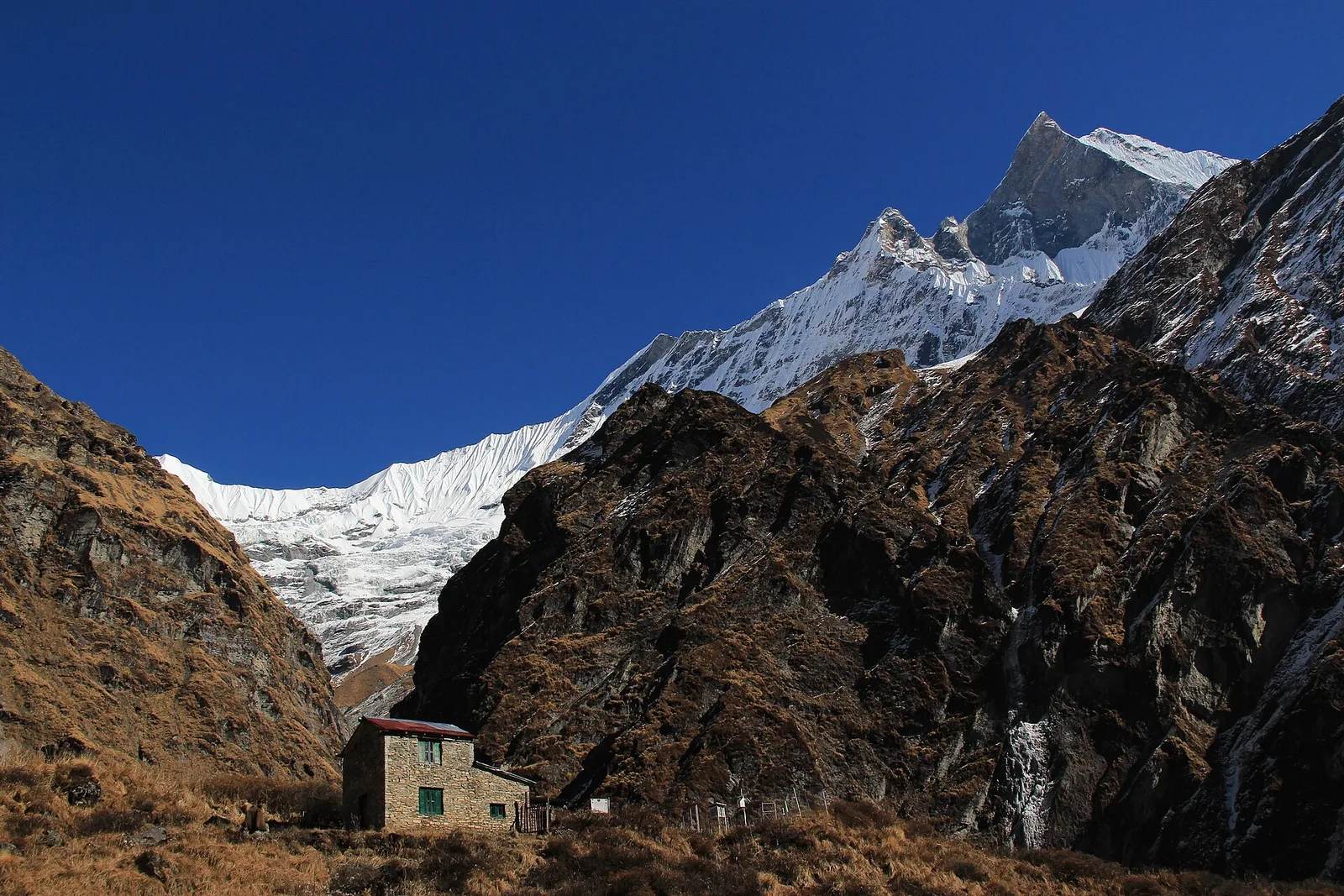
Related coverage

Records & People
Nims Purja's Project Possible: All 14 Peaks in 6 Months, 6 Days
How Nirmal 'Nims' Purja climbed every 8,000-metre mountain in 189 days in 2019, shattering a record that had stood almost eight years — and how the speed record has fallen twice since. Every date and time sourced.
Safety & Advisories
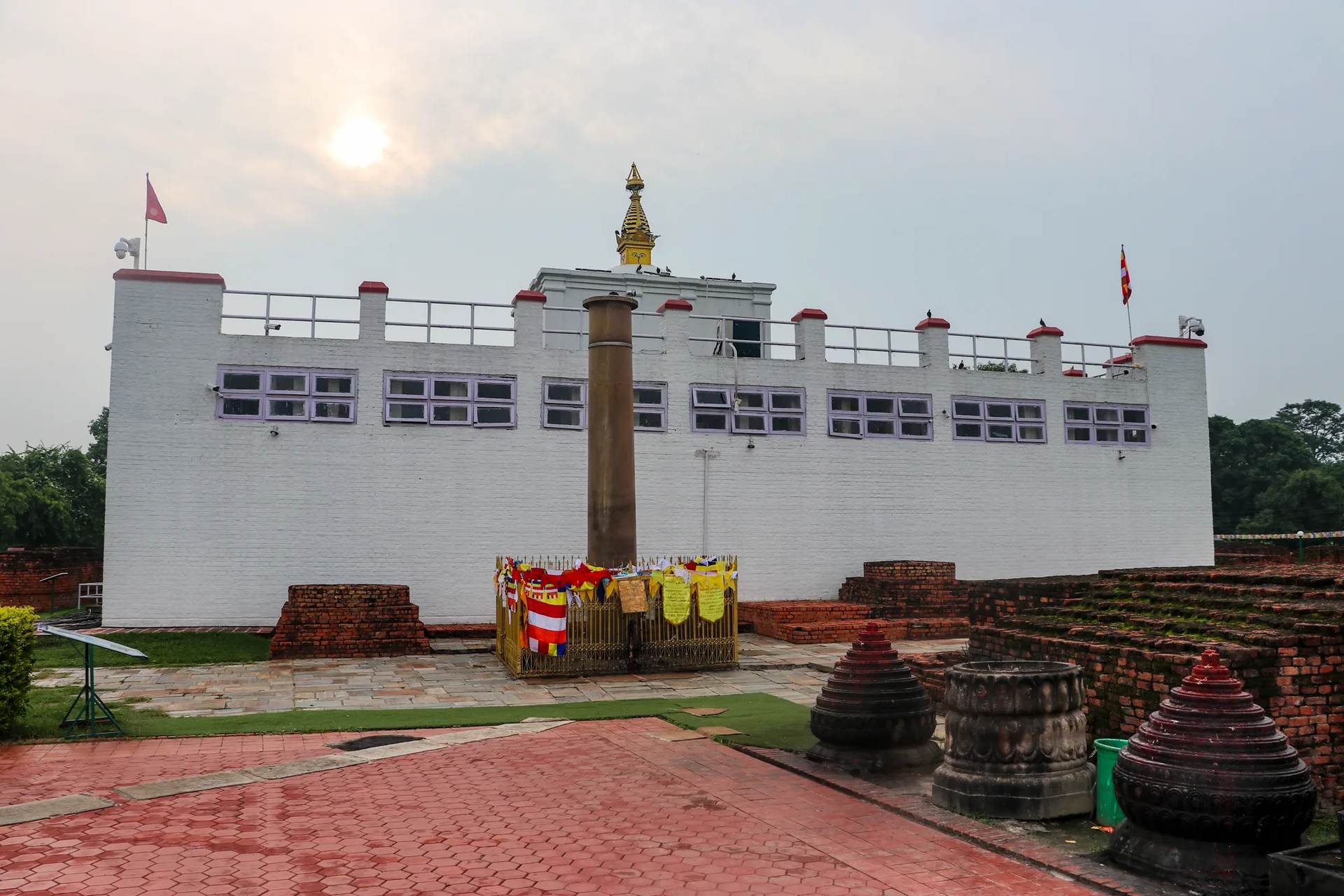
Is a Lumbini Tour Affected by the 2026 Nepal Floods?
No — Lumbini, the Buddha's birthplace, sits in the far-southern Terai in Rupandehi, hundreds of kilometres from the Rasuwa flood, and the sacred garden is open. The one honest caveat is overland travel timing across the monsoon-hit plains. Here is the full picture.

Records & People
Nepal Runs on Its Own Clock: Why the Country Sits 15 Minutes Off Every Neighbor
Land in Kathmandu and you don't just change time zones — you join one of the only places on Earth with a 45-minute offset, fixed to the exact minute of a Himalayan peak.
Records & People
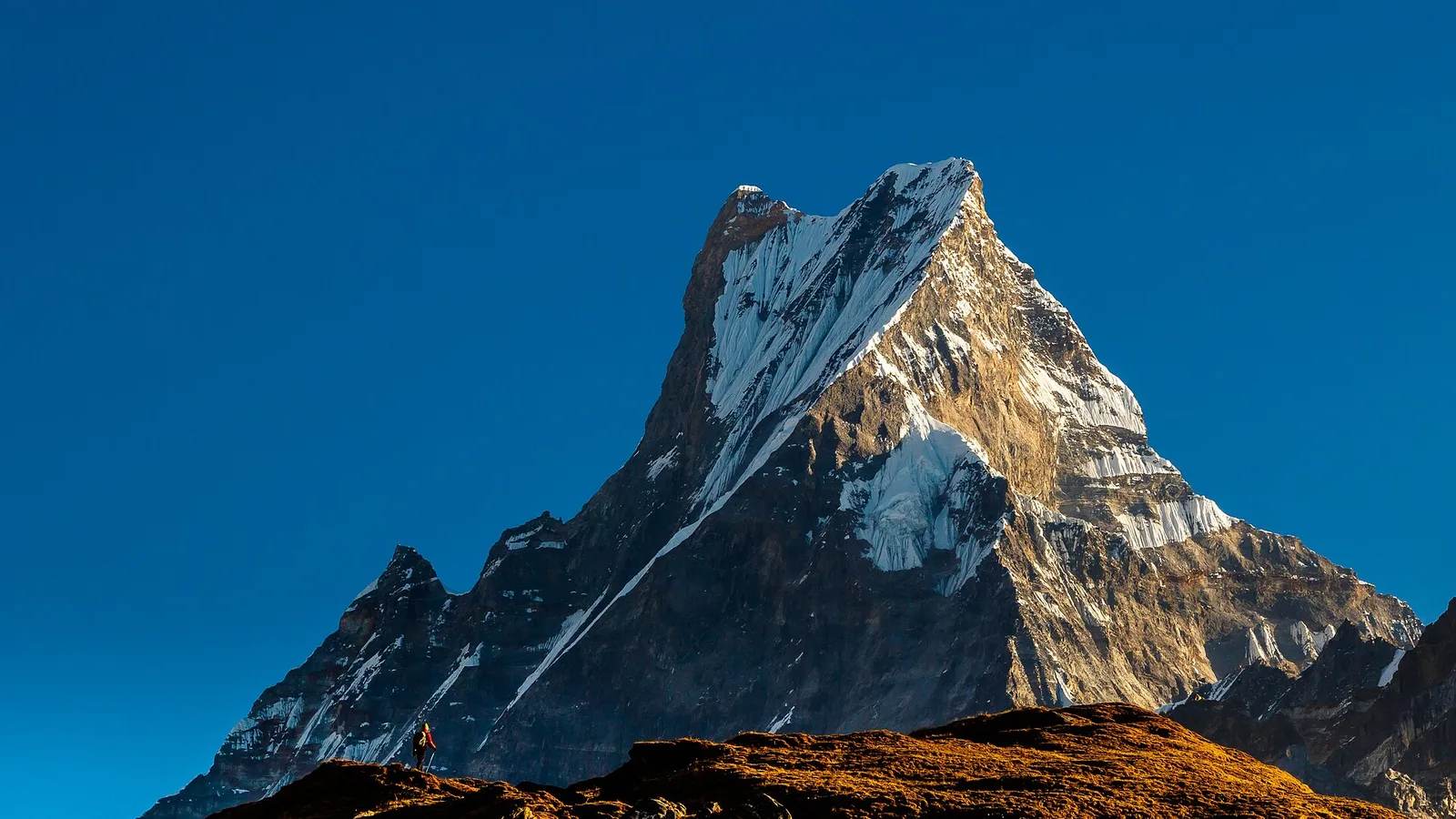
The Himalayan Peak So Sacred Nepal Has Never Once Let Anyone Legally Climb It
Machapuchare's twin summit rises 6,993 metres above Pokhara — and for more than sixty years, Nepal has refused every application to stand on top of it.
Latest from the desk
Gear & Tech
Trail shoes or hiking boots, and what the ankle-support research actually found
Most teahouse trekkers wear more boot than the walk needs, and the ankle-support argument holding that up is thinner than the shops suggest.
Gear & Tech
Merino or synthetic base layers, and what a lab found when it measured the smell
Merino wins the week-long wear, synthetic wins the overnight dry, and the lab reason merino stays fresh is not the bacteria story you have been told.
Safety & Advisories
If someone you know is missing in the Nepal flood, you don't have to fly to Kathmandu
Nepal Police have identified 95 of more than 1,200 bodies recovered. Families abroad can be DNA-profiled at home and send the result in. Here is how it works.