
Waterproof jackets fail in a way the label never warns you about
A jacket can be sold as waterproof at 1,500 mm. What the ratings actually measure, why yours feels like it leaks, and the details worth more than the number.
At a glance
- Published
- TopicGear & Tech
- Verified againstSATRA Technology — EN 343:2019 protective clothing against rain
- Treks coveredAnnapurna Base Camp Trek — 9 Days, Everest Base Camp Trek — 14 Days
A jacket can be sold as waterproof in the UK at 1,500 mm of hydrostatic head, and most people would call that jacket wet after an hour of real rain. The number on the swing tag is a floor, not a promise, and it describes the fabric rather than the garment you are standing in.
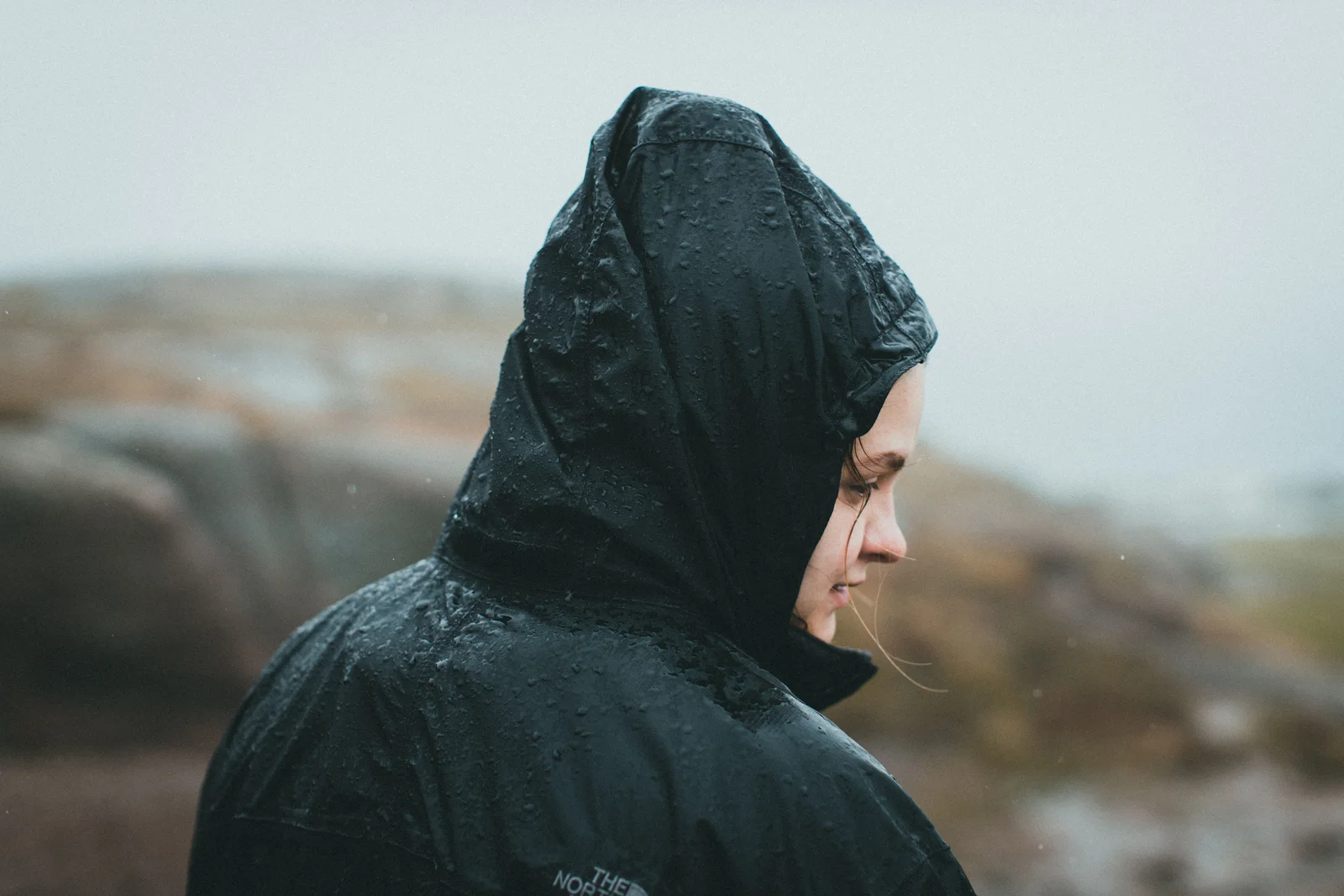
Which is why the complaint I hear most often is some version of “it leaked”. Almost always, it did not.
What the numbers mean
- UK manufacturers may call a fabric waterproof at 1,500 mm hydrostatic head.
- Under EN 343:2019, the top water-resistance class needs ≥20,000 Pa.
- The higher classes are tested after abrasion, flexing and laundering — not new.
- Breathability is MVTR in g/m²/24h. Higher is more breathable.
- Most “leaks” are wetting out or sweat, not water through the membrane.
What waterproof legally means
Hydrostatic head is a pressure test, and it is the number every rating comes from. A machine pushes water against the fabric at increasing pressure until three drops appear on the other side, and the pressure at that moment is the rating.
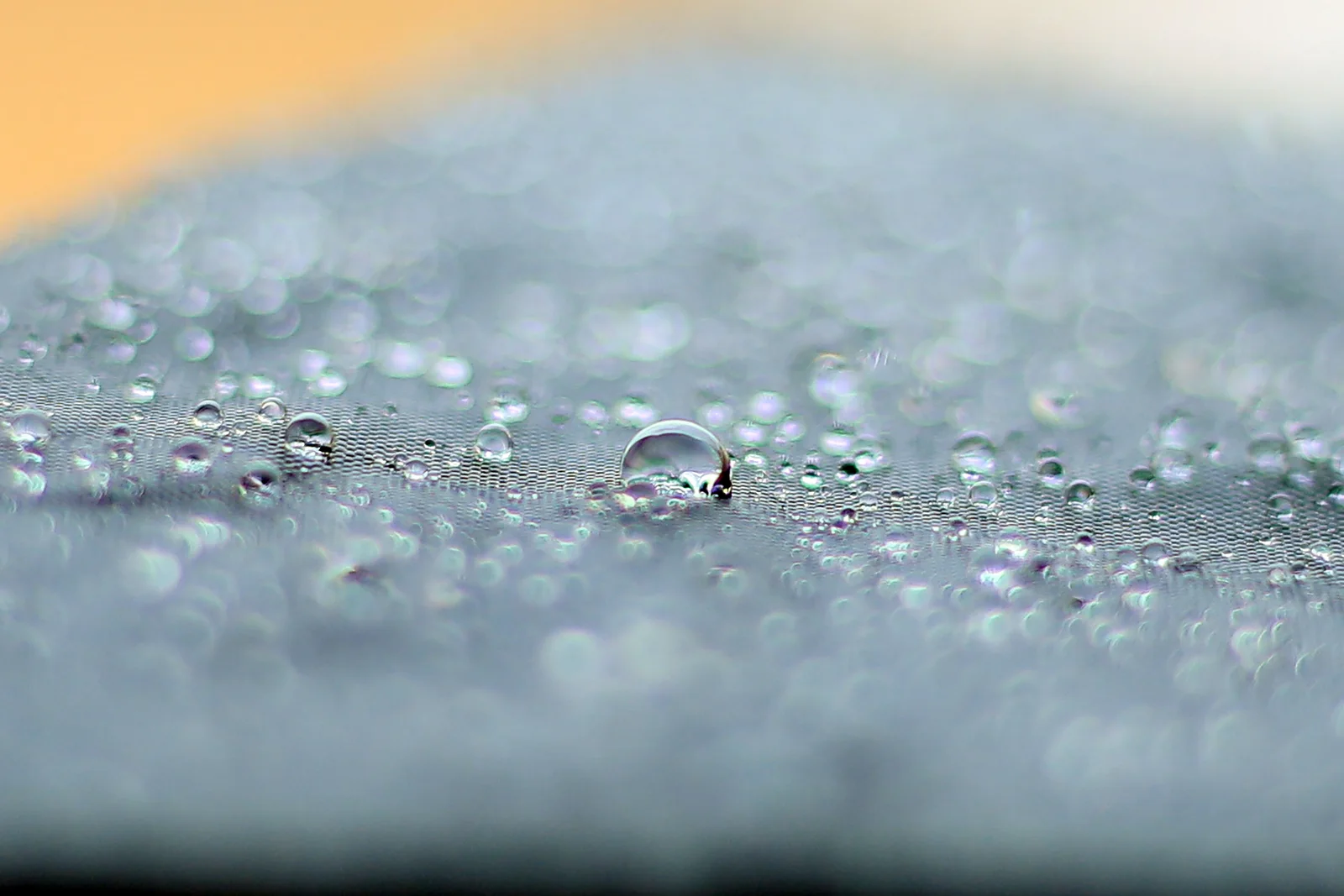
That is a laboratory measure of one flat piece of fabric. It says nothing about the seams, the zip, the cuffs or the hood — which is where garments actually let water in.
| Class | Threshold | Tested |
|---|---|---|
| 1 | ≥8,000 Pa | As new |
| 2 | ≥8,000 Pa | After pre-treatment |
| 3 | ≥13,000 Pa | After pre-treatment |
| 4 | ≥20,000 Pa | After pre-treatment |
Read the right-hand column, because it is the useful part. Classes 2 and above are only awarded after the fabric has been abraded, flexed and laundered to simulate a jacket that has been used. Two jackets can carry the same millimetre figure and be tested in completely different states, and the one tested after wear is the one telling you something about year three.
Why your jacket feels like it is leaking
It is almost certainly wetting out, and that is a surface problem, not a membrane failure. The outer fabric has a water-repellent finish that makes rain bead and roll off. That finish wears away with dirt, packing and time.
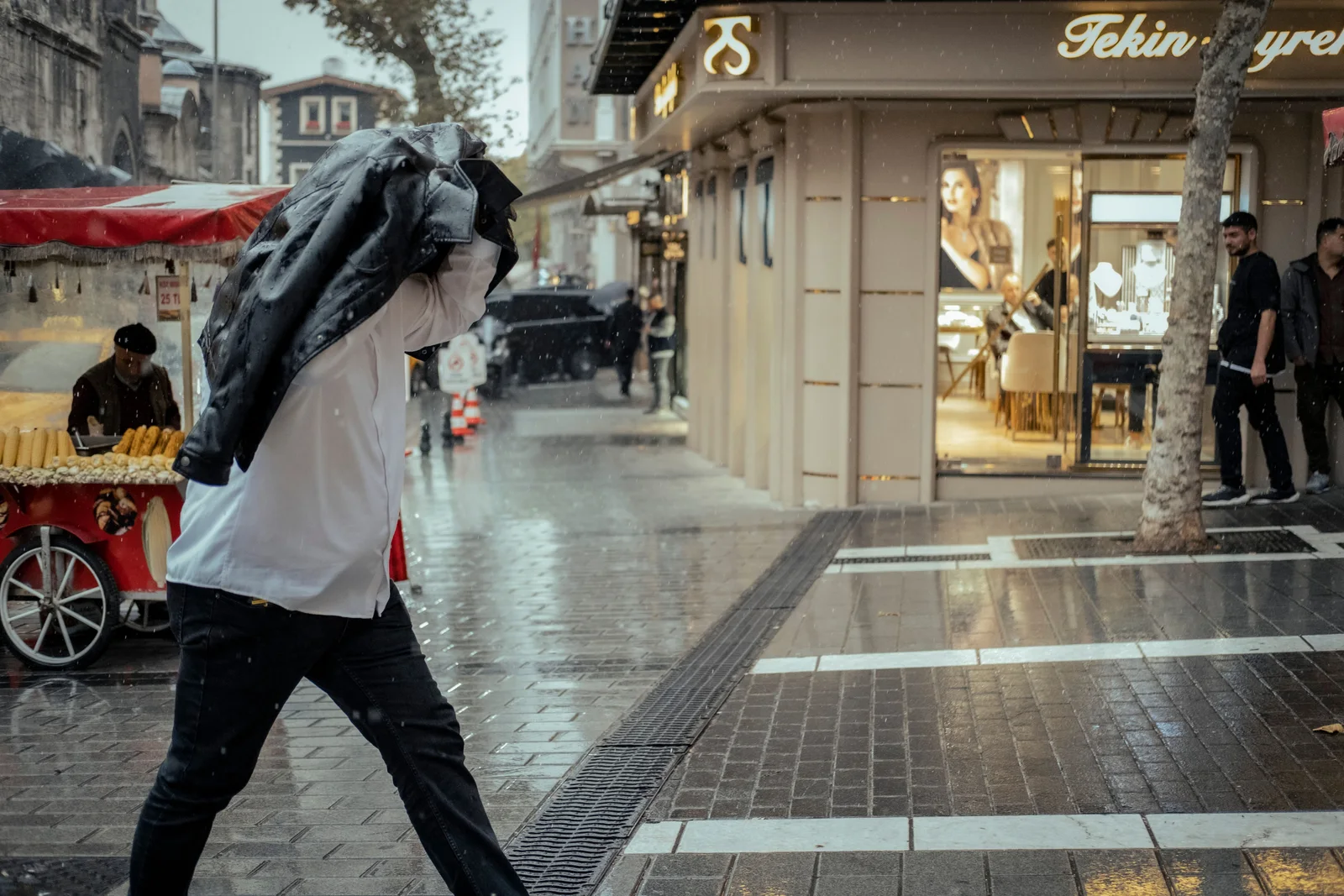
Once it goes, the outer face soaks through and lies against the membrane. The membrane still keeps liquid water out — but it can no longer pass your sweat vapour outward, because the outside is already saturated. So moisture builds up inside, the lining feels damp, and you conclude the jacket has failed. It has not. It needs washing and reproofing, which costs a few pounds and takes an evening.
The part no rating covers
Water gets in at the openings and heat gets trapped at the shoulders, and no millimetre figure describes either. Rain runs down your neck past a hood that does not cinch, up your sleeves when you use trekking poles, and through a zip with no storm flap behind it.

Then there is you. On a climb in warm rain, a sealed shell fills with your own sweat faster than any membrane can move it out, and the result is indistinguishable from a leak. This is why pit zips are worth more than an extra 10,000 mm on the rating, and why the honest answer in genuinely hot rain is sometimes to accept being wet and stay warm instead.
What to actually buy
For most travel, a light 10,000 mm-class shell with taped seams, a wired hood and pit zips is enough, and it should cost well under the flagship price. You are buying the details, not the headline number.
The premium is worth paying in one situation: sustained, hours-long rain where you cannot stop. That is a different product and a different price, and most travellers never need it.
Our catalogue rates a heavier shell “best in sustained rain” specifically because that is the narrow case where the money changes the outcome. If your rain comes in showers you can wait out, the light one is the better buy and the weight you save is real.
What we would actually do
Wash and reproof the jacket you own before buying a new one — a wash-in treatment costs a fraction of a shell and fixes the exact symptom most people replace a jacket over. If you are buying, ignore the millimetre number above about 10,000 and spend the attention on the hood, the pit zips and the cuffs. And carry a light pair of waterproof trousers instead of a heavier jacket: wet legs make you cold faster than a damp back does.
What this looks like in a monsoon country
Nepal is the honest test, because from roughly June to September the rain here is not showers. Nothing you can wear stays dry through days of it, which is why our guides talk about drying systems rather than waterproof ones — a lodge with a stove, spare dry layers in a dry bag, and the discipline to change immediately on arrival.
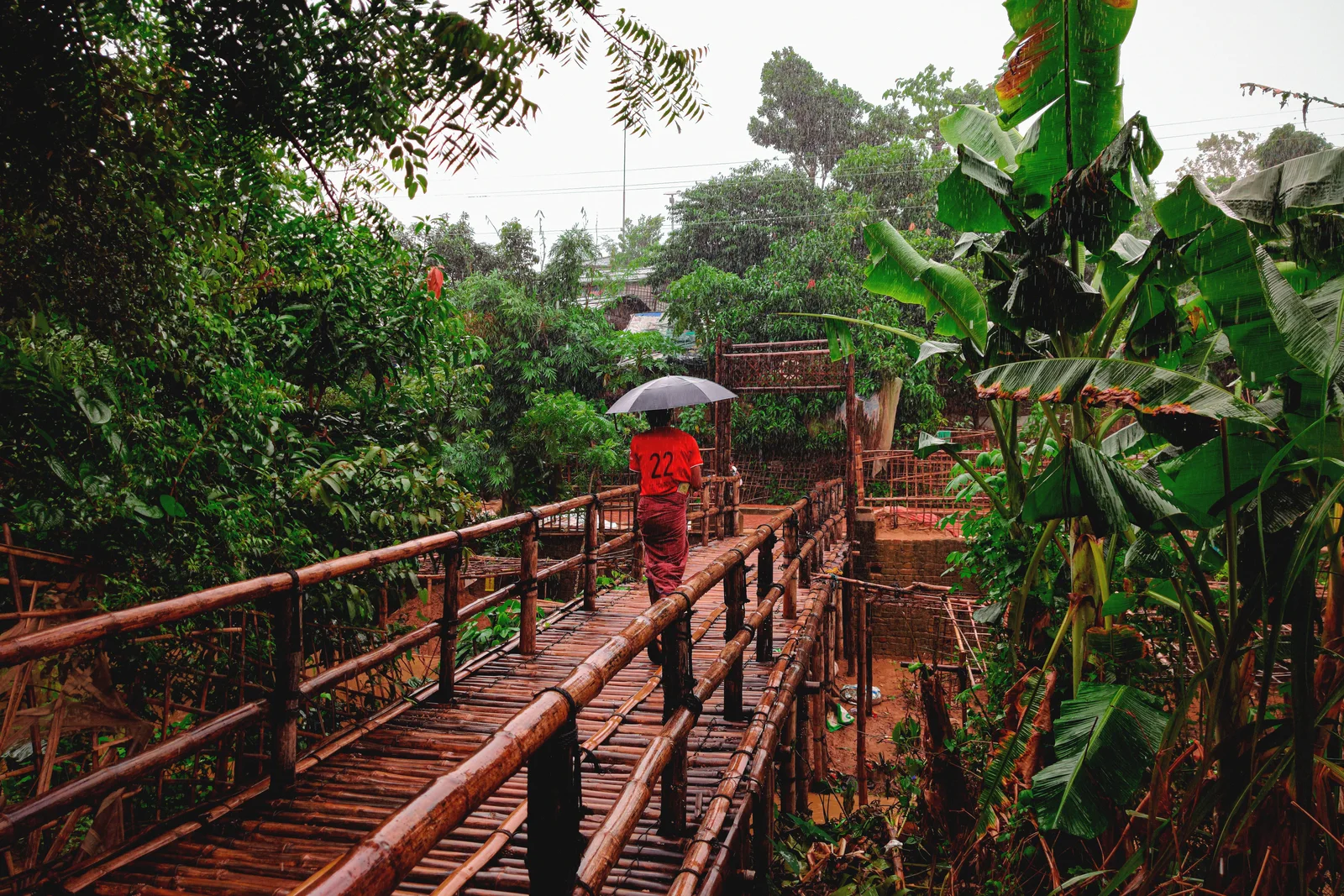
That is also why the rain-shadow routes exist. If you want to trek in the monsoon, going somewhere it barely rains beats any jacket — the rain-shadow treks sit behind the main Himalaya and stay largely dry while the rest of the country floods.
For the rest of the kit, our guide to choosing travel luggage covers what carries it all, and the boots piece makes the same argument about footwear: the gear you already own, cared for, usually beats the gear you buy in a hurry.
Wash it, reproof it, and stop reading the millimetres.
Cover photo: Nothing Ahead via Pexels (Pexels License). Section photos: Jonathan Cooper via Pexels (Pexels licence); Sridhar Rajini via Pexels (Pexels licence); Zeynep Sude Emek via Pexels (Pexels licence); Moe Magners via Pexels (Pexels licence); Al Rashed via Pexels (Pexels licence).
As an Amazon Associate we earn from qualifying purchases, at no extra cost to you. It does not change what we recommend — including the things we tell you to rent instead, which earn us nothing.
Still running this season
Annapurna Base Camp Trek — 9 Days is running normally
NMA-certified local guides, transparent pricing, 5,000+ treks since 1998. Message us your dates and we'll sort the permits, lodges and logistics — reply within 24 hours, no obligation.
Popular Nepal treks
All treks →
Related coverage
Industry & Tourism
Everest Base Camp or Annapurna Base Camp: Which Should You Actually Trek in 2026?
Both are sold as 'base camp treks' but they differ by 1,400 metres of altitude, a week of walking and a coin-flip mountain flight — here is how to pick the right one for your fitness, budget and time.
Gear & Tech
How to Sleep on a Long-Haul Flight in 2026: Seat, Kit and Timing Tactics That Actually Help
Real, practical tactics for in-flight sleep — pick a window seat, pack a proper neck pillow, eye mask and earplugs, time your rest to the destination, skip the alcohol, and move every couple of hours. Plus the honest limits.

Gear & Tech
How to Avoid Getting Locked Out of Your Accounts Abroad in 2026: 2FA, Authenticator Apps and Backup Codes
The digital lock-outs travellers hit overseas — SMS codes sent to a home number you cannot receive, an authenticator app on a lost phone, a bank that blocks a foreign login, an email recovery loop — and the twenty minutes of setup before you fly that prevents every one.

Money & Insurance
Does Your Credit Card Include Travel Insurance in 2026? What It Covers — and the Costly Gap
Many premium and travel cards bundle some cover — but it's usually secondary, conditional and capped, and it almost never pays for the emergency medical bill or evacuation that actually bankrupts travellers.
Latest from the desk
Gear & Tech
New hiking boots ruin more trips than bad weather does
Buying boots the week before you fly is the most common gear mistake there is. What needs breaking in, what does not, and why socks matter more.
World Destinations
Altitude sickness doesn't need a mountain, just a flight to Cusco
Altitude illness starts around 2,450 m, and Cusco, La Paz and Lhasa all sit above it. Flying straight in is harder on you than walking to Everest Base Camp.
Records & People
The Gurkha Blood Myth That Even the Falklands War Couldn't Kill
Every campfire story about the kukri insists a Gurkha must draw blood before sheathing it again — actual Gurkhas, and two centuries of British Army history, say otherwise.