
The short version
Api Base Camp Trek 2026 guide: permits, cost, best season, itinerary and how to reach Nepal's wild far-west secret beneath Api Himal in Darchula.
🇳🇵 As featured by Nepal's PM Balen Shah
Nepal's Prime Minister recently put Api Himal and its far-western base camp in the global spotlight. Read the story · See the trek & book.
- Nepal's wildest secret: the Api Base Camp Trek sits in remote Darchula district, far-western Nepal, beneath Api Himal (7,132 m) and Saipal (7,031 m) near the India–Tibet tri-junction.
- Almost no other trekkers: this is one of the country's least-walked corners — alpine meadows, rhododendron forest, glaciers and waterfalls with genuine solitude.
- Permits are simple but a guide is mandatory: you need an ANCAP entry permit (roughly NPR 2,000 + VAT) and a TIMS card; this is not a restricted area, so no RAP is required.
- Plan for logistics, not just altitude: budget USD 1,500–2,500 and 14–18 days because of the flight to Dhangadhi and long drives to the far west.
The Api Base Camp Trek is the trip seasoned trekkers whisper about. Tucked into the far north-west corner of Nepal, in Darchula district inside the Api Nampa Conservation Area, it leads you beneath Api Himal (7,132 m) and Saipal (7,031 m) — twin giants standing near the India and Tibet tri-junction. There are no crowds here, no hot-shower lodges, and very little of the infrastructure you would find on the Annapurna or Everest trails. What you get instead is something rarer: a corner of the Himalaya that still feels untouched. We are a Pokhara-based team that has guided in Nepal since 1998, and trips like this one are why we still love this work.
Why trek to Api Base Camp
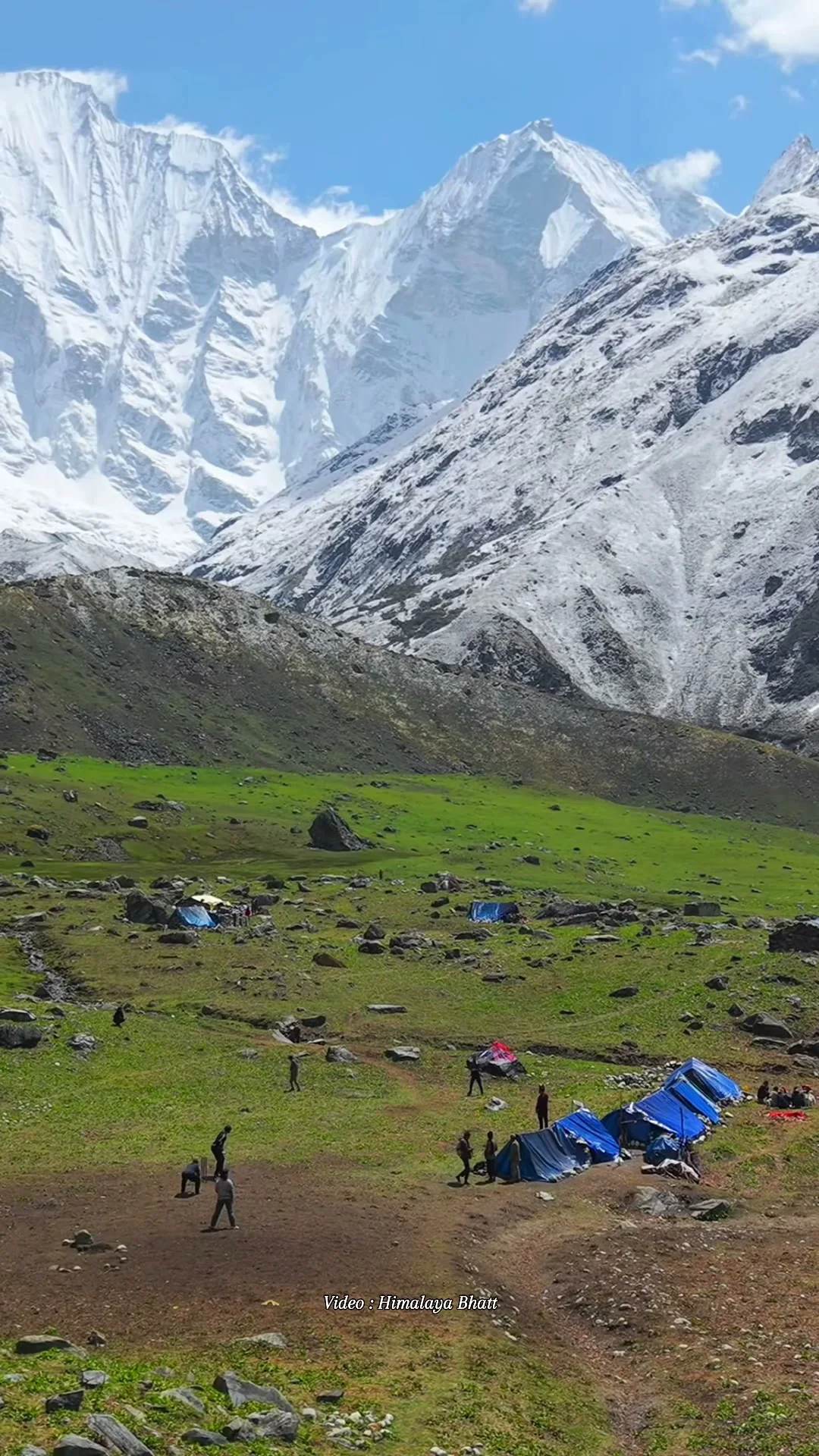
Most trekkers will spend a lifetime in Nepal without ever seeing the far west. That is exactly the appeal. The Api region has gone quietly "viral" among adventurous trekkers precisely because it offers what the famous routes no longer can — real wilderness and real solitude. You walk through dense rhododendron and oak forest, climb onto sweeping alpine meadows like Khaliya and Dhar, pass thundering waterfalls, and finally stand in a glacial amphitheatre beneath the south face of Api. Along the way you meet Byans and Chhipla communities whose culture has barely been touched by tourism. If you have already done the classics and want something that feels like discovery, this is it.
Route & itinerary overview
Because the trailhead is so far from Kathmandu, the trip is built around its logistics. A typical 14–18 day plan looks like this:
- Days 1–3: Fly Kathmandu to Dhangadhi in the far-western Terai, then drive the long, winding road north towards Darchula and the roadhead near Gokuleshwar.
- Days 4–7: Begin trekking through riverside villages and rhododendron forest, gaining height gradually as the valley narrows and the first big peaks appear.
- Days 8–11: Climb onto the high meadows (Khaliya/Dhar) and push to Api Base Camp itself, with time set aside to acclimatise and, on some itineraries, walk to a higher viewpoint towards Nampa and the Kalapani area.
- Days 12–18: Retrace the route down, drive back to Dhangadhi and fly to Kathmandu.
We deliberately avoid publishing a rigid hour-by-hour schedule, because weather, road conditions and group fitness genuinely shift the plan out here. Your guide will adjust day by day. If you like comparing options before you commit, our Nepal trek comparison and best treks in Nepal pages are a good place to start.
Difficulty & fitness
Make no mistake — this is a strenuous trek. The challenge is less about extreme altitude (base camp sits around 3,900–4,100 m rather than the 5,000 m-plus passes of other routes) and more about remoteness, long days, rough trails and limited infrastructure. Some sections involve camping where there are no lodges, and help is a long way off if anything goes wrong. You should be a confident, experienced trekker who is comfortable with consecutive long days, simple food and basic accommodation. Several weeks of cardio and hill training before you arrive will pay off enormously.
Permits & 2026 cost
The paperwork for Api is refreshingly simple compared with Nepal's restricted regions. You need two things: an Api Nampa Conservation Area Permit (ANCAP) and a TIMS card. For 2026, expect the ANCAP foreigner entry fee to fall in the region of NPR 2,000 (plus 13% VAT) — figures vary between official sources, so treat this as a conservative range and confirm the current rate when you book. The TIMS card is roughly NPR 2,000 for an independent foreign trekker (around NPR 1,000 each for organised group members). Crucially, this is not a restricted area, so there is no expensive Restricted Area Permit (RAP) — but a licensed Nepali guide is mandatory. For the full picture across regions, see our trekking permits hub, the restricted-areas guide, and our 2026 permits guide.
All-in, budget USD 1,500–2,500 per person. The cost is driven far more by far-western logistics — the Dhangadhi flight, long jeep transfers, fuel and camping support — than by the permits themselves. You can sanity-check your own numbers with our trek cost calculator and trekking cost guide.
Best time to go
The two reliable windows are spring (March–May) and autumn (October–November). Spring brings the rhododendron forests into bloom and milder days on the meadows; autumn delivers the crispest mountain views and the most stable weather after the monsoon. Winter is bitterly cold and snowbound at altitude, and the summer monsoon makes the far-western roads and trails treacherous. For a fuller seasonal breakdown, read our best time to trek Nepal page and our 2026 seasonal guide.
How to get there
Getting to the trailhead is half the adventure. From Kathmandu you fly west to Dhangadhi, the gateway town of the far-western Terai. From there it is a long road journey — often a full day or more — north into the hills towards Darchula and the roadhead near Gokuleshwar where the walking begins. This overland leg is exactly why the trek needs 14–18 days; the mountains are remote, and there are no shortcuts. We handle the flights, transfers and the inevitable scheduling buffers so you can simply enjoy the ride through a part of Nepal almost no visitor ever sees.
Accommodation: teahouse vs camping
Do not expect the comfortable teahouse network of the Annapurna or Khumbu regions. On Api you will use a mix of very basic teahouses and village homestays at lower elevations and full camping support higher up, where there is simply no lodging. That means a crew — guide, cook and porters — carrying tents, food and kitchen equipment. It is a more involved style of trekking, but it is also part of the magic: dinner under a sky full of stars with not another trekker in sight. Pack as you would for a camping expedition rather than a lodge trek.
What to pack
Because you are largely self-sufficient and far from resupply, packing well matters more here than on busier trails. Bring a proper four-season sleeping bag, warm layers for cold camp nights, sturdy broken-in boots, full waterproofs, a personal first-aid kit and plenty of water-treatment capacity. A headtorch, power bank and any specialist medication are essentials — there are no shops to bail you out. Our Nepal trekking packing list covers the full kit; for Api, lean towards the colder, more remote end of every recommendation.
Who is this trek for?
Api Base Camp is for experienced trekkers who actively want wilderness and solitude rather than mountain cafés and Wi-Fi. If the idea of walking for two weeks without meeting another foreigner excites rather than worries you, this is your trek. In spirit it sits alongside Nepal's other great remote journeys — it shares the raw, off-grid character of the Dolpo trek and the wild, lake-and-meadow beauty of the Rara Lake trek, all of them far-western or mid-western routes that reward self-reliant walkers. If you are newer to the Himalaya, we would gently steer you towards a classic region first; browse our regional guides and tours to find the right starting point.
Altitude & safety
While Api Base Camp is not extreme by Himalayan standards, altitude still demands respect — and remoteness magnifies every risk. There are no quick evacuations from the far west, so prevention is everything: ascend gradually, stay well hydrated, and tell your guide immediately about any headache, nausea or breathlessness. Comprehensive travel insurance that explicitly covers high-altitude trekking and helicopter rescue is non-negotiable on a trip this far from a road or clinic. Read our guide to altitude sickness prevention and treatment before you go. And because a licensed guide is both legally required and genuinely safer out here, our explainer on whether you need a guide to trek Nepal is worth a read. When you are ready, our team at Travel Himalaya Nepal can build the whole expedition for you.
How hard is the Api Base Camp Trek?
It is strenuous and remote. The altitude is moderate — base camp is around 3,900–4,100 m — but long trekking days, rough trails, camping sections and the sheer distance from help make it demanding. It suits fit, experienced trekkers rather than first-timers.
Do I need a special permit for Api Himal?
You need an Api Nampa Conservation Area Permit (ANCAP) and a TIMS card, plus a licensed Nepali guide. It is not a restricted area, so there is no costly Restricted Area Permit. Confirm the exact 2026 ANCAP fee when you book, as figures vary between official sources.
How much does the trek cost?
Budget roughly USD 1,500–2,500 per person. The price is driven mainly by far-western logistics — the flight to Dhangadhi, long jeep transfers and full camping support — rather than by permits, which are modest.
When is the best time to trek to Api Base Camp?
Spring (March–May) for rhododendron blooms and milder weather, or autumn (October–November) for the clearest mountain views and most stable conditions. Avoid the monsoon and deep winter.
How do I get to the trailhead?
Fly from Kathmandu to Dhangadhi in the far-western Terai, then drive north — often a full day or more — towards Darchula and the roadhead near Gokuleshwar, where the trek begins. The long overland leg is why the trip needs 14–18 days.
Are there teahouses, or is it camping?
Both. You will use very basic teahouses and homestays at lower elevations and full camping support higher up, where there is no lodging at all. It is a more expedition-style trek, with a guide, cook and porters carrying tents and supplies.
Travel Himalaya Nepal runs the Api Base Camp Trek as a fully-supported, licensed 16-day far-west departure. View the 16-day trek & dates →
Private departures on any date, hand-picked NMA guides, and 25+ years on the trail. Tell us your dates — we usually reply within a few hours.
Browse all treks & tours →
Written by
Travel Himalaya NepalPokhara-based, NMA-certified trekking guides. We’ve led 5,000+ treks across the Annapurna and Everest regions since 1998 — every word here comes from the trail. More from this author →
Share this article
Ready to Trek?
From reading about it to standing on it
Our Pokhara-based guides have been doing this since 1998. Tell us your dates and fitness level — we'll build your perfect itinerary. Free, no obligation.
Why trek with our licensed agencyMore guides like this
Popular trips to consider
View all treks & toursFree Trekker’s Insider Guide
Permits, packing lists, cost breakdowns — no fluff.
We send one useful email. You can unsubscribe anytime.