
The short version
The complete 2026 guide to the Dhampus and Australian Camp trek: an easy 3-day Annapurna sunrise walk from Pokhara, perfect for beginners and families.
- Closest big-mountain views to Pokhara. Dhampus and Australian Camp sit just outside the city in the Annapurna foothills, so you reach a Himalayan sunrise within a couple of hours of walking.
- Genuinely easy. Gentle stone paths, low altitude (~2,060 m) and short days make this the trek we recommend most often for first-timers, families and travellers short on time.
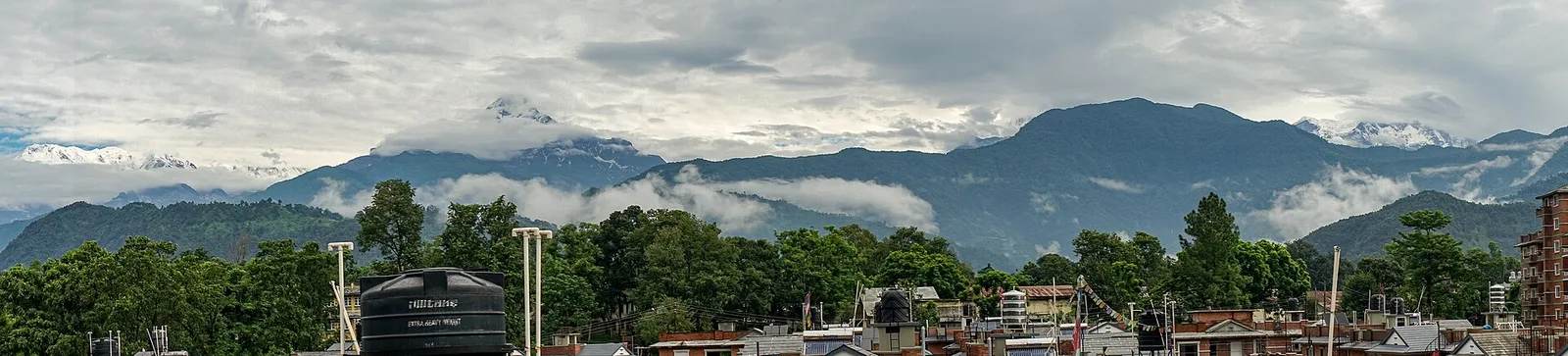
- Sunrise is the headline. From Australian Camp the whole Annapurna wall and the fishtail peak of Machhapuchhre light up at dawn — one of the best-value mountain views in Nepal.
- Light on permits and logistics. You only need the ACAP conservation permit (NPR 3,000 for foreigners); this is open trekking, not a restricted area.
The Dhampus & Australian Camp Trek is the walk we hand to anyone who wants the Himalaya without the hardship. It begins barely 45 minutes by road from Pokhara, climbs through terraced Gurung farmland and rhododendron forest to the ridge-top meadow of Australian Camp, and rewards you with a front-row sunrise over Annapurna South, Hiunchuli and the unmistakable fishtail of Machhapuchhre. We have guided this route since the late 1990s, and for beginners, families and short-stay visitors it remains our single best easy trek. Here is everything you need to plan it well in 2026.


Why trek Dhampus and Australian Camp
Most Himalayan treks ask for a week or more and a serious climb to altitude. This one does not. Dhampus is a tidy Gurung village strung along a hillside at around 1,600 m, with stone houses, mustard fields and an open view of the Annapurna range; Australian Camp (locally Thulakot) is a grassy saddle just above it at about 2,060 m where the panorama opens out fully. The reward-to-effort ratio is extraordinary — you can leave Pokhara after breakfast and be watching the sun touch Machhapuchhre the next morning. It is also a soft, low-risk introduction to teahouse trekking, which is why we steer so many first-time trekkers in Nepal here before they attempt anything bigger.
Route and itinerary overview
The classic loop runs between the trailheads at Phedi and Kande, on the Pokhara–Baglung highway, and can be walked in either direction. On a comfortable three-day plan it breaks down like this:
- Day 1: Short drive from Pokhara to Phedi (or Kande), then a steady stone-stepped climb through forest and terraces to Dhampus village for the night. Two to three hours of gentle walking.
- Day 2: An easy traverse through pine and rhododendron forest to Australian Camp, with the Annapurnas growing closer the whole way. Afternoon free to relax on the ridge.
- Day 3: Wake for sunrise over the range, then descend to Kande and drive back to Pokhara — usually back in the city by midday.
Strong walkers regularly compress this into a single long day hike or an overnight, while families and slower groups enjoy stretching it across the full three days. You will find the full version on our Dhampus & Australian Camp Trek (3 days) page, and it sits naturally within our wider range of short treks in Nepal.
Difficulty and fitness
This is the easy end of Nepal trekking. There is real uphill on the climb from Phedi to Dhampus, and your legs will feel the stone steps, but the days are short, the path is well made, and you never go high enough for altitude to be a concern. Anyone in normal good health — including children of around eight and up and active older travellers — can complete it comfortably. No previous trekking experience is needed. A reasonable level of everyday fitness and a willingness to walk for two to four hours a day is all it takes.
Permits and 2026 cost
Because the route sits inside the Annapurna Conservation Area, you need an ACAP (Annapurna Conservation Area Permit), which costs NPR 3,000 per foreign trekker (around US$23–25) in 2026, with a discounted rate for SAARC nationals. Historically a TIMS card (Trekkers' Information Management System, roughly NPR 2,000 for foreigners on a group/agency card) was also requested; its enforcement has varied in recent years, so we keep clients covered by arranging whatever is current at the time of travel. This is open trekking — there is no costly restricted-area permit involved. We obtain the paperwork for you in Pokhara; you can also self-arrange the ACAP at the conservation office or online. For the full picture across every region, see our Nepal trekking permits hub.
For budgeting, a guided three-day trip typically lands somewhere around US$120–220 per person depending on group size, accommodation standard and whether transport and meals are bundled in. That figure covers your guide, permits, twin-share teahouse rooms and transfers; independent trekkers travelling on a tight budget can do it for less, while private, fully supported trips cost a little more.
Best time to trek
The two prime windows are autumn (October–November) and spring (March–April), when skies are clearest and the mountains stand out sharply at dawn. Spring adds blooming rhododendron forest, while autumn delivers the most reliably crisp visibility after the monsoon. That said, because the trek is so low, it works year-round — winter (December–February) is cold but often crystal clear, and even the monsoon months can give beautiful mornings if you start early before cloud builds. For a season-by-season breakdown across the country, read our guides on the best time to trek in Nepal and the more detailed best time to trek Nepal in 2026.
How to get there from Pokhara
Everything starts in Pokhara, six to seven hours by road or 25 minutes by air from Kathmandu. From Pokhara's lakeside it is a short, scenic drive of roughly 45 minutes to the trailhead at Phedi or Kande on the Baglung highway. Private vehicle, shared taxi or local bus all serve the route. Because the access is so quick, this trek pairs perfectly with a relaxed few days around Phewa Lake, and it slots easily into a wider Pokhara or Annapurna itinerary — see our regional Annapurna trekking guide for ways to combine it.
Accommodation: teahouse or camping
You will trek teahouse-style, sleeping in simple, family-run lodges in Dhampus and at Australian Camp. Rooms are basic but clean — twin beds, shared or simple private bathrooms, and warm Nepali hospitality — and the lodges serve fresh dal bhat, noodles, eggs and hot drinks. Australian Camp in particular has a cluster of lodges with terraces angled straight at the mountains, which is exactly why people stay the night there. Camping is possible and occasionally arranged for groups who want it, but it is unnecessary on a route this well served; the teahouses are part of the charm.
What to pack
Pack light — you do not need expedition kit for a low, short trek. The essentials are good walking shoes or light boots, layers for cool ridge-top mornings (a fleece and a light insulated jacket are plenty in the main seasons), a windproof shell, sun protection, a refillable water bottle with purification, a small daypack and a headtorch for the pre-dawn sunrise. A warmer layer is worth carrying in winter. We provide a porter on guided trips if you would rather walk unburdened. For a complete checklist you can adapt down for short treks, see our Nepal trekking packing list.
Who it's for — and how it compares
This trek is built for beginners, families with children, couples wanting a quick mountain escape, and anyone with only a few spare days in Pokhara. If you crave the high-altitude drama of Annapurna Base Camp or the Sanctuary but cannot spare ten days or are unsure about altitude, Dhampus and Australian Camp give you the same iconic skyline — Annapurna South, Hiunchuli and Machhapuchhre — at a fraction of the effort, cost and risk. Think of it as the gentle little sibling of the bigger Annapurna treks: less commitment, the same jaw-dropping sunrise. Many of our clients use it as a warm-up before a longer route, or as a standalone highlight of a Pokhara holiday.
Altitude and safety
At a maximum of around 2,060 m, Australian Camp is well below the altitude at which acute mountain sickness becomes a concern, so this is one of the safest treks in Nepal on that front — there is no need to acclimatise. The main things to mind are sensible footwear on stone steps that can be slippery when wet, sun protection at altitude, and keeping hydrated. We still brief every client on mountain awareness as good practice; if you want to understand the topic before heading higher elsewhere in Nepal, our guide to altitude sickness prevention and treatment is the place to start. Travelling with a licensed local guide adds an extra layer of reassurance, especially for first-timers and families.
How many days do you need for the Dhampus and Australian Camp trek?
Two to three days is the comfortable norm, with three days letting you enjoy a relaxed pace and a proper sunrise from Australian Camp. Fit walkers can do it as a single long day hike or an overnight from Pokhara.
Is the Dhampus and Australian Camp trek suitable for beginners and families?
Yes — it is the trek we recommend most often for first-timers and families. The days are short, the trails are well made, and the low altitude means there is no risk of altitude sickness. Children of around eight and up usually manage it well.
What permits do I need in 2026?
You need the ACAP (Annapurna Conservation Area Permit), NPR 3,000 for foreign trekkers in 2026, with a discounted SAARC rate. A TIMS card (around NPR 2,000) has also been requested historically; enforcement varies, so we arrange whatever is current. There is no restricted-area permit for this route.
How high is Australian Camp?
Australian Camp, also called Thulakot, sits at roughly 2,060 m (about 6,760 ft). That is the highest point of the trek and is low enough that no acclimatisation is required.
When is the best time to do this trek?
Autumn (October–November) and spring (March–April) offer the clearest mountain views and the most pleasant walking. Because the trek is low, it is enjoyable year-round, including crisp clear winter mornings.
How do I get to the trailhead from Pokhara?
It is a short, scenic drive of about 45 minutes from Pokhara's lakeside to the trailhead at Phedi or Kande on the Baglung highway, by private vehicle, taxi or local bus.
Private Pokhara departures on any date, hand-picked NMA guides, and 25+ years on these trails. Tell us your dates — we usually reply within a few hours.
Browse Pokhara treks & tours →
Written by
Travel Himalaya NepalPokhara-based, NMA-certified trekking guides. We’ve led 5,000+ treks across the Annapurna and Everest regions since 1998 — every word here comes from the trail. More from this author →
Share this article
Ready to Trek?
From reading about it to standing on it
Our Pokhara-based guides have been doing this since 1998. Tell us your dates and fitness level — we'll build your perfect itinerary. Free, no obligation.
Why trek with our licensed agencyMore guides like this
Popular trips to consider
Free Trekker’s Insider Guide
Permits, packing lists, cost breakdowns — no fluff.
We send one useful email. You can unsubscribe anytime.