The short version
Plan the Jomsom Muktinath trek for 2026: a 7-day, monsoon-friendly Lower Mustang pilgrimage through the Kali Gandaki gorge to sacred Muktinath (~3,800m).
- Monsoon-proof: the trek sits in the Annapurna rain shadow, so it stays trekkable through Nepal's June-September wet season when most other routes are washed out.
- Two permits only: ACAP (NPR 3,000) plus a TIMS card (around NPR 2,000) for foreigners. This is Lower Mustang — the costly Upper Mustang restricted permit is not required.
- Sacred summit: the route climbs through the world's deepest gorge to Muktinath Temple (~3,800m), revered by both Hindus and Buddhists.
- Easy logistics: short flights or jeep transfers between Pokhara and Jomsom make this one of the most accessible high-Himalayan treks at a Moderate grade.
The Jomsom Muktinath Trek is one of Nepal's great pilgrim-and-mountain journeys: a walk up the legendary Kali Gandaki valley through whitewashed Thakali villages to the sacred temple of Muktinath at roughly 3,800 metres. We have been running this route from our Pokhara base since 1998, and it remains the trek we recommend most often to travellers who want genuine high-Himalayan scenery, deep culture and a comfortable Moderate grade — without the long, lung-busting commitment of Everest or the Annapurna Circuit. Best of all, because it sits in the Annapurna rain shadow, it is one of the very few classic treks you can do reliably even during the summer monsoon.
Most people fly one leg and drive the other. If you are driving, the road from Pokhara to Jomsom is about 180 km and takes 7 to 9 hours — 75 km sealed to Beni, then 105 km of gravel up the Kali Gandaki.


Muktinath is in the news: in June 2026 Nepal's Investment Board approved financing for an 81 km Birethanti–Muktinath cable car — set to be the world's longest. It is years from opening and the classic walk-in trek is unchanged, but it is worth knowing before you go.
Why trek Jomsom to Muktinath
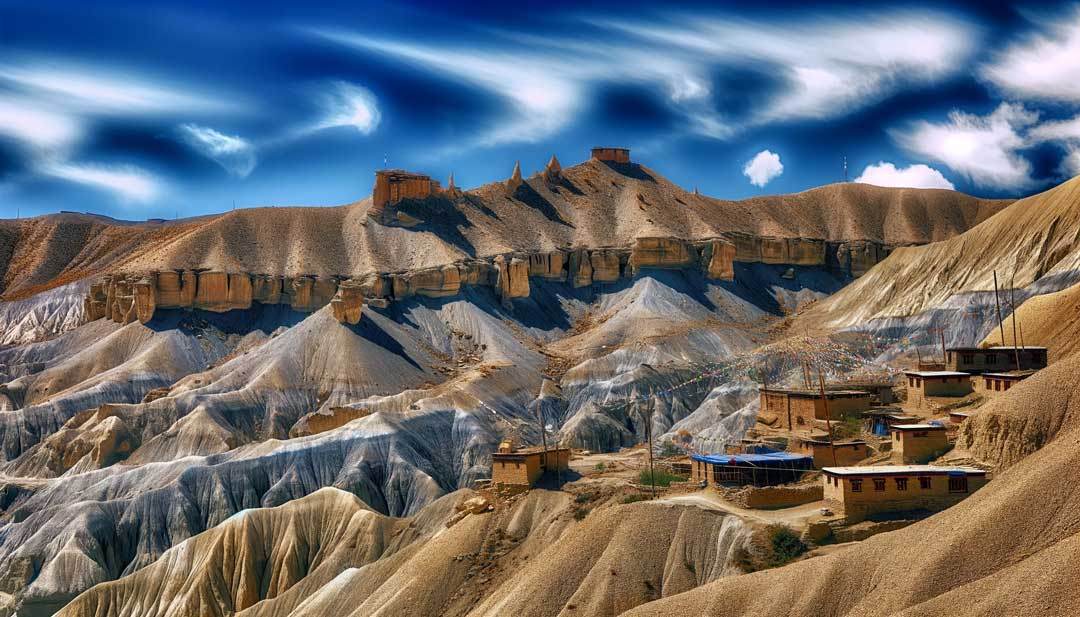
Few treks pack this much variety into a single week. You follow the Kali Gandaki — by vertical relief the deepest gorge on Earth, with Dhaulagiri (8,167m) and Annapurna I (8,091m) towering more than five kilometres above the riverbed — from green, apple-orchard lowlands into the windswept, ochre-coloured high desert of Lower Mustang. Along the way you pass medieval walled villages, Buddhist gompas and Hindu shrines, culminating at Muktinath, a pilgrimage site sacred to two faiths. For many travellers it is the cultural and spiritual richness, as much as the mountains, that makes this trek unforgettable. For broader context on the region, see our Mustang region guide and Annapurna region guide.
Route and itinerary overview
Most travellers complete the classic loop in about seven days, including travel to and from Pokhara. We keep day-by-day plans flexible because flights, weather and fitness vary, but the shape of the trek is consistent:
- Days 1-2: Travel from Pokhara to Jomsom (2,720m) by short mountain flight or scenic jeep drive, then begin walking up the valley. The early stages pass through Marpha, the famous apple-growing Thakali village known for its orchards and local brandy.
- Days 3-4: Continue north to Kagbeni (2,810m), a striking medieval walled village at the gateway to Upper Mustang, then climb steadily toward Muktinath.
- Days 5-6: Reach Muktinath Temple (~3,800m), the spiritual high point, before descending back down the valley.
- Day 7: Return to Jomsom and fly or drive back to Pokhara.
You can see the full curated version on our Jomsom Muktinath Trek 7 Days page. To compare it side by side with other routes, our Nepal trek comparison is a good starting point.
Difficulty and fitness
We grade Jomsom Muktinath as Moderate. Daily walking is typically four to six hours on well-established trails and rough roads, with the highest point at around 3,800 metres — high enough to feel the thin air, but well below the thresholds where serious altitude problems become common. There are no technical sections, no glacier travel and no need for climbing skills. If you can manage several consecutive days of hill walking, you can do this trek. That accessibility is exactly why we suggest it to first-time Himalayan trekkers, families and older travellers who still want a real high-altitude experience.
Permits and 2026 cost
For 2026, foreign trekkers need just two permits for the Jomsom Muktinath route:
- ACAP (Annapurna Conservation Area Permit): NPR 3,000 for foreign nationals.
- TIMS card (Trekkers' Information Management System): around NPR 2,000 for foreign nationals.
Crucially, this is Lower Mustang. The expensive Upper Mustang Restricted Area Permit — historically a flat US$500 for ten days, and from 2026 charged at roughly US$50 per person per day — is only required if you continue north of Kagbeni toward Lo Manthang. For Muktinath and everything south of Kagbeni, you do not need it, which keeps this trek dramatically cheaper than its Upper Mustang cousin. As an all-in guided package, budget from roughly US$700-1,000 per person depending on group size, transport choices and season. For the official picture, check our permits hub, the dedicated Nepal trekking permits 2026 guide and the restricted areas page, or model a full trip on our trek cost calculator.
Best time to trek
The standout feature of this route is that it can be trekked almost year-round. Spring (March-May) and autumn (September-November) deliver the clearest skies and the classic Himalayan postcard views, and these remain our most popular windows. But because the valley sits in the rain shadow behind the Annapurna and Dhaulagiri massifs, it receives only a fraction of the rainfall that soaks the rest of Nepal in summer. That makes it one of the best monsoon treks in the country — a genuine option in June, July and August when most other trails are leech-ridden and cloud-bound. Winter is feasible too, though it can be cold and windy at Muktinath. For the full seasonal breakdown, see our best time to trek Nepal guide and our 2026 seasonal post.
How to get there
Everything begins in Pokhara, Nepal's lakeside trekking hub. From there you reach Jomsom in one of two ways. The quickest is the short mountain flight from Pokhara to Jomsom — a spectacular 20-minute hop straight up the Kali Gandaki between two eight-thousanders, though it is weather-dependent and morning-only because of strong afternoon winds. The alternative is a jeep drive up the valley road, which is longer and bumpier but reliable and budget-friendly. Many of our guests fly one way and drive the other to enjoy both perspectives. We arrange all transfers, flights and logistics as part of the package.
Accommodation: teahouses, not tents
This is a teahouse trek from start to finish — no camping required. The Kali Gandaki corridor is well developed, with comfortable family-run lodges in Marpha, Kagbeni, Jomsom and Muktinath offering private rooms, hot meals and, increasingly, hot showers and Wi-Fi. The Thakali people of this valley are celebrated cooks, and a Thakali dal bhat here is one of the best trail meals in Nepal. Staying in teahouses also keeps your pack light and puts your money directly into local hands, which matters to us as a community-rooted operator.
What to pack
Despite the moderate grade, the upper valley is high, dry and famously windy, so come prepared for sharp temperature swings between sun and shade. Essentials include warm layers, a windproof shell, a good sleeping-bag liner, sun protection (the high-desert glare is intense), sturdy broken-in boots and a reusable water bottle with purification. Our full Nepal trekking packing list covers everything in detail. In monsoon months, add a quality rain shell and pack covers even though rainfall is light here.
Who it's for — and how it compares
Jomsom Muktinath is ideal for travellers who want a culturally rich, scenically dramatic Himalayan trek without extreme altitude or a long time commitment. If you have only a week, want a monsoon-season option, or are easing into high-altitude trekking, this is our top pick. If, on the other hand, you crave the walled kingdom and Tibetan-Buddhist heartland further north — and have the budget and time — consider the longer, restricted Upper Mustang Trek (12 days), which begins where this route turns around. Browse our full range on the tours page if you want to weigh up the options.
Altitude and safety
At a maximum of around 3,800 metres, Muktinath sits in the zone where mild altitude effects can occur but serious altitude sickness is uncommon on a sensibly paced itinerary. The gradual ascent up the valley helps your body acclimatise naturally. We still advise the basics: ascend steadily, hydrate well, avoid alcohol on climbing days and tell your guide immediately about any headache, nausea or dizziness. Our guides carry first-aid kits and are trained to recognise and respond to altitude symptoms. For background, read our guide to altitude sickness prevention and treatment. As always, trekking with a licensed local guide adds a real margin of safety — see do you need a guide to trek Nepal.
Do I need the Upper Mustang permit for the Jomsom Muktinath trek?
No. Muktinath lies in Lower Mustang, south of Kagbeni, so you only need the ACAP and a TIMS card. The expensive Upper Mustang Restricted Area Permit is required only if you continue north of Kagbeni toward Lo Manthang.
How high is Muktinath Temple?
Muktinath sits at roughly 3,800 metres (the temple complex itself is around 3,710m). It is high enough to feel the thin air, but well within the comfortable range for a Moderate trek.
Can I really trek this route during the monsoon?
Yes. The valley lies in the rain shadow of the Annapurna and Dhaulagiri massifs and receives little summer rainfall, making it one of the few classic Nepal treks that stays reliable through June, July and August.
How long does the trek take?
About seven days in total, including travel to and from Pokhara. The actual walking portion is shorter, and the itinerary can be adjusted around flight schedules and your fitness.
How do I get from Pokhara to Jomsom?
Either a short, scenic 20-minute mountain flight (morning-only, weather-permitting) or a jeep drive up the Kali Gandaki valley road. Many trekkers fly one way and drive the other.
How fit do I need to be?
Reasonably fit. Days involve four to six hours of walking on good trails at a Moderate grade, with no technical terrain. Anyone comfortable with several consecutive days of hill walking can manage it.
Private Mustang departures on any date, hand-picked NMA guides, and 25+ years on these trails. Tell us your dates — we usually reply within a few hours.
Browse Mustang treks & tours → Read the Mustang guide →
Written by
Travel Himalaya NepalPokhara-based, NMA-certified trekking guides. We’ve led 5,000+ treks across the Annapurna and Everest regions since 1998 — every word here comes from the trail. More from this author →
Share this article
Ready to Trek?
From reading about it to standing on it
Our Pokhara-based guides have been doing this since 1998. Tell us your dates and fitness level — we'll build your perfect itinerary. Free, no obligation.
Why trek with our licensed agencyMore guides like this
Popular trips to consider
Free Trekker’s Insider Guide
Permits, packing lists, cost breakdowns — no fluff.
We send one useful email. You can unsubscribe anytime.