
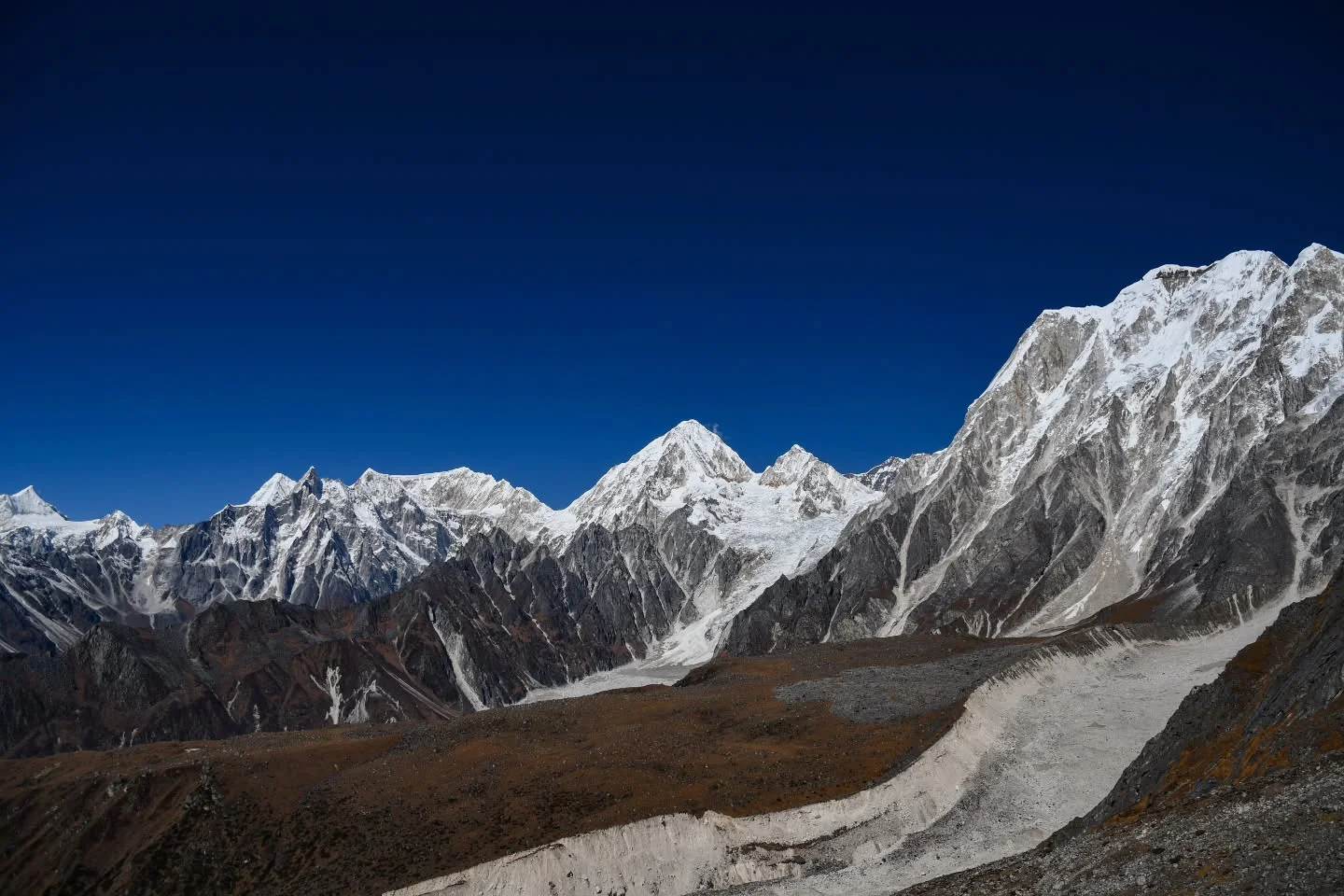
The short version
Muldai View Point trek 2026 guide: a 3,637m Annapurna sunrise with a fraction of Poon Hill's crowds. Route, 6-day plan, ACAP permit cost and best season.
- Poon Hill's view, without the crowds. Muldai delivers a 360° Annapurna and Dhaulagiri sunrise from 3,637m with a tiny fraction of the dawn traffic.
- Six relaxed days from Pokhara. A scenic loop through Ghandruk, Tadapani and Dobato — short driving, classic Gurung villages, rhododendron forest.
- Genuinely moderate. No technical ground and a low ceiling, but real uphill days; a reasonable fitness base makes it comfortable.
- Light permit load. Only the ACAP (NPR 3,000) is reliably enforced in 2026; it is not a restricted area, so no costly special permit.
The Muldai View Point Trek is the trek we now quietly recommend to travellers who want the famous Annapurna sunrise but baulk at sharing it with a few hundred people. From our base in Pokhara we have run the Ghorepani and Poon Hill circuit for over two decades, and we have watched the dawn crowds at Poon Hill grow year on year. Muldai (also spelled Mulde) View Point, perched at 3,637m on a ridge above Dobato, gives you the same sweep of giants — Annapurna South, Hiunchuli, Machhapuchhre and the wall of Dhaulagiri — but most mornings you will share the railing with a handful of people rather than a queue. It is, simply, the upgraded version of the walk that made the Annapurna foothills famous.


Why trek Muldai instead of Poon Hill?
Poon Hill earned its reputation honestly: it is accessible, the sunrise is spectacular, and it slots into a long weekend. But its popularity is now its weakness. Muldai sits roughly 425m higher, faces a similar arc of peaks, and sees only a small share of the foot traffic. You also get a richer, more varied route into it — high rhododendron forest, the Gurung heartland of Ghandruk, and the lonely meadow camp at Dobato — instead of a there-and-back staircase. If you have read about the best time to trek Nepal in 2026 and want the postcard view with breathing room, this is the trek. We still rate the classic; see our Ghorepani Poon Hill 4-day trek if you are tighter on time. For the full guided itinerary on this route, our 6-day Muldai View Point Trek lays out departures and pricing.
Route & itinerary overview
The trek is a loop that begins and ends in Pokhara, so you never retrace the same trail twice — one of its quiet pleasures. Here is the shape of a typical six-day plan:
- Days 1–2: Short drive from Pokhara to the trailhead near Nayapul or Kimche, then climb the stone steps to Ghandruk, the largest and most beautiful Gurung village in the region, before pushing on through forest toward Tadapani.
- Days 3–4: The heart of the trek — a steady climb from Tadapani up to Dobato, a small cluster of lodges in a forest clearing, followed by the pre-dawn push to Muldai View Point for sunrise over the Annapurna and Dhaulagiri ranges.
- Days 5–6: Descend westward, often by way of Ghorepani and Poon Hill so you can compare the two viewpoints, then drop down through Ulleri's famous stone staircase to the road and drive back to Pokhara.
We deliberately quote ranges rather than a rigid day-by-day script, because weather, group pace and lodge availability shape the exact stages. Your guide finalises each day on the ground. You can compare this loop against other foothill options on our best treks in Nepal roundup.
Difficulty & fitness
Muldai is honestly graded moderate. There is no scrambling, no exposure and no technical terrain — it is a walking trek on well-trodden trails. What earns the grade is the up-and-down: the Annapurna foothills are relentlessly steep in places, with long flights of stone steps both up to Ghandruk and down from Ulleri. Expect four to six hours of walking on the busier days, with one early, cold start for the viewpoint. If you can manage several hours of hill walking with a day pack and you train a little beforehand, you will enjoy it rather than endure it. It suits first-time Himalayan trekkers far better than higher, longer routes.
Permits & 2026 cost
This is one of the trek's biggest advantages: it is not a restricted area, so there is no expensive special permit. For 2026 you need the Annapurna Conservation Area Permit (ACAP), which costs NPR 3,000 per foreign trekker (around USD 23). The TIMS card has been inconsistently enforced across the Annapurna region in recent seasons — when it is applied it costs roughly NPR 2,000 — so we obtain it where required and skip it where it is not. We arrange both permits for you in Pokhara before departure. For the wider picture, read our Nepal trekking permits 2026 guide or the live permits hub.
On total cost, a guided six-day Muldai trek with us typically runs USD 480–700 per person depending on group size, lodge standard and season. That covers your guide, permits, accommodation, transport to and from the trailhead, and most meals on the trail. Solo travellers and very small groups sit at the higher end; couples and small parties at the lower end.
Best time to go
The two prime windows are autumn (October–November) and spring (March–April). Autumn gives the cleanest, most stable skies of the year and the sharpest mountain views — the safest bet for sunrise. Spring is warmer and brings the rhododendron forests above Ghandruk and Tadapani into full red-and-pink bloom, which is unforgettable on this particular route. Winter (December–February) is feasible and beautifully quiet, though Dobato and the viewpoint can be cold and occasionally snowbound. We steer travellers away from the June–August monsoon, when leeches, cloud and slick trails undo the whole point of coming for a view.
How to get there
Everything begins in Pokhara, a 25-minute flight or six-to-seven-hour drive from Kathmandu. From Pokhara it is a short road transfer — usually one to two hours — to the trailhead near Nayapul, Kimche or Ghandruk, depending on road conditions. There is no long, jolting jeep approach as on some remote treks; you are walking among terraced hills within a couple of hours of breakfast. This easy access is a big reason the route works so well as a self-contained six-day trip.
Accommodation: teahouse, not tent
Muldai is a teahouse trek from start to finish — no camping gear required. Ghandruk and Ghorepani have comfortable, well-established lodges, many with private rooms, hot showers and hearty menus. The higher stops at Dobato are simpler and fewer, so beds there are limited in peak season; this is precisely why we book ahead and travel in small groups. You will eat the familiar trail staples — dal bhat, noodles, eggs, porridge — cooked fresh, and sleep in a real bed every night. It is comfortable trekking, not an expedition.
What to pack
Because the ceiling is modest and the lodges are good, you can travel light. The essentials are sturdy broken-in boots, warm layers for the cold viewpoint dawn (it can be near freezing at Muldai even in shoulder season), a windproof shell, a down jacket, a four-season sleeping bag liner, sun protection and a headtorch for the early start. A light daypack is plenty since lodges provide bedding and meals. For a full checklist tailored to Annapurna teahouse trekking, see our Nepal trekking packing list.
Who it's for — and Muldai vs Poon Hill
This trek is ideal for first-time Himalayan trekkers, families with active teenagers, photographers chasing an uncrowded sunrise, and anyone short on time who still wants a proper multi-day loop rather than an out-and-back. If your priority is the absolute shortest, cheapest taste of the Annapurnas, classic Poon Hill still wins. If your priority is the same view with solitude, a more interesting trail and an extra night to soak it in, Muldai wins comfortably. Many of our repeat guests who first did Poon Hill years ago come back specifically for this quieter alternative. To weigh it against the wider region, our Annapurna region guide covers every route from a day hike to the full circuit.
Altitude & safety
At 3,637m, Muldai sits low enough that serious altitude sickness is uncommon, but it is not zero-risk — some travellers feel mild symptoms above 3,000m. The gradual profile of this loop helps you acclimatise naturally, and our guides watch for headaches, poor sleep and loss of appetite, and adjust the pace accordingly. Drink plenty of water, avoid alcohol on the climbing days, and tell your guide how you feel. Since 2023 a licensed guide is required for foreign trekkers in Nepal's conservation areas, which also adds a real safety margin — read more in our note on whether you need a guide to trek Nepal in 2026. For symptoms and prevention, our altitude sickness guide is worth a read before any Himalayan trek.
How high is Muldai View Point?
Muldai (Mulde) View Point sits at 3,637m on a ridge above Dobato in the Annapurna Conservation Area. That is roughly 425m higher than Poon Hill, which gives it an even broader sweep of the Annapurna and Dhaulagiri ranges.
Is Muldai really less crowded than Poon Hill?
Yes. Poon Hill draws large dawn crowds in peak season, while Muldai sees only a small fraction of that traffic. On most mornings you will share the viewpoint with a handful of trekkers rather than a queue — that solitude is the whole reason we recommend it.
What permits do I need in 2026?
You need the Annapurna Conservation Area Permit (ACAP), NPR 3,000 for foreigners. The TIMS card (around NPR 2,000) has been inconsistently enforced lately; we arrange it where checkpoints require it. It is not a restricted area, so no special permit is needed. We handle all permits in Pokhara.
How fit do I need to be?
The trek is moderate. There is no technical ground, but the foothills are steep, with long stone staircases up to Ghandruk and down from Ulleri. If you can walk uphill for four to six hours with a day pack and do a little training beforehand, you will be comfortable.
When is the best time to trek to Muldai?
Autumn (October–November) for the clearest skies and sharpest views, or spring (March–April) for warmer days and rhododendron blooms. Winter is quiet but cold and sometimes snowy at the top; avoid the June–August monsoon.
Do I need a guide for the Muldai trek?
Since 2023, foreign trekkers must use a licensed guide in Nepal's conservation areas, which includes Annapurna. Beyond the rule, a guide handles permits, lodge bookings at the limited Dobato stops and pacing for safe acclimatisation.
Private Annapurna departures on any date, hand-picked NMA guides, and 25+ years on these trails. Tell us your dates — we usually reply within a few hours.
Browse Annapurna treks & tours → Read the Annapurna guide →
Written by
Travel Himalaya NepalPokhara-based, NMA-certified trekking guides. We’ve led 5,000+ treks across the Annapurna and Everest regions since 1998 — every word here comes from the trail. More from this author →
Share this article
Ready to Trek?
From reading about it to standing on it
Our Pokhara-based guides have been doing this since 1998. Tell us your dates and fitness level — we'll build your perfect itinerary. Free, no obligation.
Why trek with our licensed agencyMore guides like this
Popular trips to consider
Free Trekker’s Insider Guide
Permits, packing lists, cost breakdowns — no fluff.
We send one useful email. You can unsubscribe anytime.