
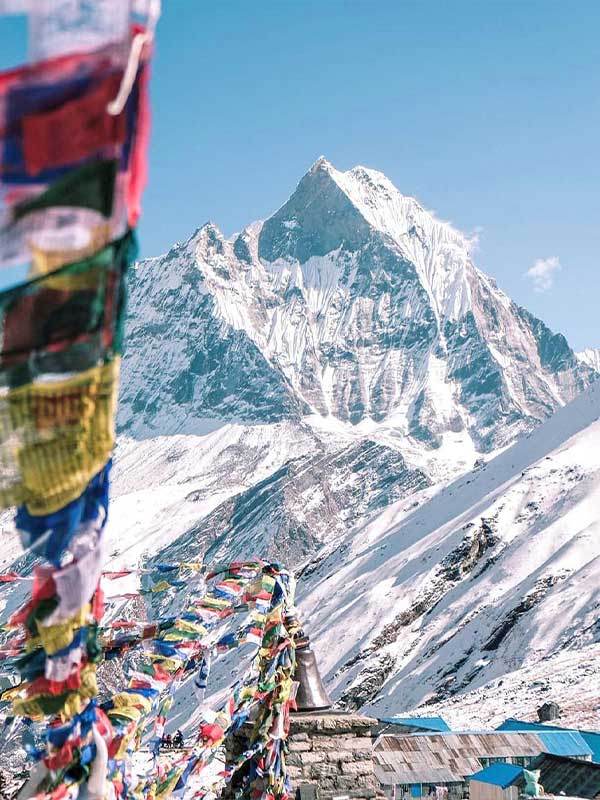
The short version
Mundhum Trail Trek 2026 guide: 9-day Kirati homestay walk in eastern Nepal to Silichung (4,153m). Permits, cost, best season and route from a Nepali operator.
- A genuine new frontier — the Mundhum Trail is one of eastern Nepal's freshest community trekking routes, threading Rai and Limbu villages through the Tinjure–Milke–Jaljale rhododendron country.
- No restricted-area permit needed — unlike Manaslu or Mustang, you only need a TIMS card (~USD 20) plus small local homestay and municipal fees in Khotang and Bhojpur.
- Homestay culture, not luxury lodges — you sleep in family homes and the odd basic teahouse, eating dal bhat with your hosts; this is cultural immersion first, mountain scenery second.
- Moderate and accessible — topping out at Silichung (4,153m), it is fit-walker friendly with no technical sections, but the days are long and the infrastructure is simple.
The Mundhum Trail Trek is, in our view, one of the most quietly exciting things to happen to Nepali trekking in a generation. Named after the Mundhum — the sacred oral scripture of the Kirati peoples — this is a "new tourism" community trail through the remote hills of eastern Nepal, where Rai and Limbu families open their homes to walkers rather than purpose-built lodges lining the path. We have guided in Nepal since 1998, and a route that combines living indigenous culture, rhododendron forest, ridge-top Himalayan views and almost no other foreigners is exactly the sort of trip we love to run. Here is everything you need to plan it for 2026.
Why trek the Mundhum Trail
Most first-time visitors head straight for Everest or the Annapurna region, and rightly so — they are world-class. But if you have already trekked Nepal, or you simply want something that still feels undiscovered, the Mundhum Trail is a revelation. It runs through the Tinjure–Milke–Jaljale highlands, often called the rhododendron capital of the world, across the districts of Khotang, Bhojpur and Sankhuwasabha. What sets it apart is the people: this is the heartland of Kirati civilisation, and the trek is built around homestays in Rai and Limbu villages where ancient traditions, dances and animist beliefs are still very much alive. You walk to learn, not just to look.
Route and itinerary overview
We run the Mundhum Trail as a nine-day walk, usually bookended by travel days to and from Kathmandu. The shape of the trip is a high ridge traverse with Silichung Peak (4,153m) as the climax viewpoint.
- Days 1–2: Travel east and reach the trailhead — most commonly via Diktel in Khotang, or starting from the Bhojpur side. From the road head you climb steadily into terraced hill country and your first homestay village.
- Days 3–5: The cultural core — you traverse a string of Rai and Limbu settlements through oak and rhododendron forest, gaining height gradually and crossing ridges with widening views toward Makalu and the eastern Himalaya.
- Days 6–7: The high section, climbing toward Silichung (4,153m) for the trek's grandest panorama, then dropping back into forest and grazing country.
- Days 8–9: A final run of villages down to the road at Bhojpur (or back toward Diktel), where you transfer for the return journey.
Because this is a developing trail, exact overnight stops shift with homestay availability and weather. We never hand you a rigid hour-by-hour script that reality cannot keep — we plan day ranges and adapt on the ground, which is part of the trail's charm.
Difficulty and fitness
The Mundhum Trail is a moderate trek. There is nothing technical, no ropes, no glacier travel — but do not mistake "moderate" for "easy". The hill country here is steep and the days can be long, with sustained ups and downs between villages. If you can comfortably walk five to seven hours a day on rough trail for a week, with a reasonable level of cardio fitness, you will manage well. A little hill training in the months before you come pays off enormously. Compare your options on our Nepal trek comparison page to see where it sits against busier routes.
Permits and 2026 cost
This is where the Mundhum Trail is refreshingly simple. It is not a restricted area, so there is no expensive restricted-area permit and no national-park entry fee to budget for. You need only a TIMS card (Trekkers' Information Management System), which for 2026 costs around USD 20 for an independent foreign trekker, or roughly USD 10 when arranged through a registered agency. On top of that you pay modest local homestay and municipal/tourism fees collected in the Khotang and Bhojpur communities — these are small, go directly to villages, and are part of what makes the trail sustainable. See our full permits hub and the 2026 permits guide for the wider picture, and read restricted areas if you are weighing this against a permit-heavy trek.
All-in guided cost typically lands around USD 850–1,300 depending on group size, transport (drive versus a flight via Biratnagar) and trip length. You can sketch your own figures with our trek cost calculator and read how trekking budgets break down on our Nepal trekking cost guide.
Best time to trek
The two prime windows are spring (March to May) and autumn (October to November). Spring is the headline season: the Tinjure–Milke–Jaljale rhododendron forests erupt in red, pink and white blooms, and this is arguably the single best place in Nepal to see them. Autumn brings the clearest skies and the crispest mountain views after the monsoon. We generally steer people away from the June–September monsoon (leeches, slick trails, cloud) and the deep winter, when the high ridge near Silichung can be cold and exposed. Our best time to trek Nepal page and the 2026 seasonal guide go deeper.
How to get there
Access is the trade-off for the solitude. From Kathmandu the simplest route is a long but scenic drive east to Diktel (Khotang) or toward Bhojpur to reach the trailhead. To save a day, many trekkers fly to Biratnagar in the eastern plains and continue by road into the hills, or use the small Bhojpur airstrip when flights are operating. We arrange all internal transport as part of a guided package so you are not negotiating jeeps and timetables in an area with little English signage.
Accommodation: homestays and basic teahouses
Forget the lodge comfort of the Everest or Annapurna highways. On the Mundhum Trail you stay primarily in community homestays — clean, simple rooms in family homes, with shared facilities and home-cooked Kirati meals. In places there are basic teahouses, and on a couple of high or remote sections a short stretch of camping may be used depending on the season and route variant. This is the trek's whole point: you eat dal bhat in the kitchen with your hosts, learn a few words of Rai or Limbu, and see daily life as it really is. Pack with that simplicity in mind.
Packing for the Mundhum Trail
Layering is everything on an eastern hill trek where you climb from warm valleys to a 4,000m-plus ridge. Bring good broken-in boots, warm layers and a proper down jacket for the Silichung section, a four-season-friendly sleeping bag (homestay bedding is basic), a head torch, water purification, and a small supply of cash in Nepali rupees as there are no ATMs on the trail. Because this is a homestay route, modest, respectful clothing for villages is appreciated. Our Nepal trekking packing list covers the full kit.
Altitude and safety
At 4,153m, Silichung is high enough to take seriously but well below the extreme altitudes of Everest or Dolpo. Because you gain height gradually over several days, most trekkers acclimatise naturally — but mild altitude symptoms are still possible at the top, so we walk slowly, hydrate, and never rush the high day. Read our altitude sickness guide before you travel. The bigger practical risks here are remoteness and thin infrastructure: there is limited medical care, patchy phone signal and no helicopter pad on your doorstep, which is exactly why we strongly recommend trekking with a licensed local guide who knows the villages, the evacuation routes and the language.
Who it's for — and how it compares
The Mundhum Trail is for the curious, culturally minded trekker who values people and authenticity over Instagram peaks and hot showers. If you want the classic high-mountain amphitheatres, the Everest and Manaslu regions deliver those better. But if you have done a mainstream trek and want Nepal's eastern hills almost to yourself — comparable in spirit to off-grid routes like the Rara Lake trek, but cheaper and permit-light — this is a standout choice. Browse all our tours and regional guides, and when you are ready, see the full Mundhum Trail Trek 9-day itinerary to book with us.
Do I need a special permit for the Mundhum Trail?
No. The Mundhum Trail is not a restricted area, so there is no restricted-area permit or national-park fee. You need a TIMS card (about USD 20 independent, or roughly USD 10 through an agency) plus small local homestay and municipal fees in Khotang and Bhojpur.
How hard is the Mundhum Trail Trek?
It is moderate. There is nothing technical, but the eastern hills are steep with long days and a high point of 4,153m at Silichung. Reasonable cardio fitness and some pre-trip hill training will see you through comfortably.
When is the best time to go?
Spring (March to May) for the famous rhododendron bloom, and autumn (October to November) for the clearest Himalayan views. Avoid the June–September monsoon and the cold of deep winter on the high ridge.
Where do I sleep on the trek?
Mostly in community homestays in Rai and Limbu villages, with some basic teahouses and occasionally a short camping section. Facilities are simple and shared — this is cultural immersion, not lodge luxury.
How do I get to the trailhead?
By a long drive east from Kathmandu to Diktel (Khotang) or toward Bhojpur, or by flying to Biratnagar and continuing by road. We arrange all internal transport as part of our guided package.
Can I trek the Mundhum Trail without a guide?
We strongly advise against it. The area is remote with thin infrastructure, limited medical care and little English, and a licensed local guide manages logistics, homestays, safety and language — making the experience far richer and safer.


Private departures on any date, hand-picked NMA guides, and 25+ years on the trail. Tell us your dates — we usually reply within a few hours.
Browse all treks & tours →
Written by
Travel Himalaya NepalPokhara-based, NMA-certified trekking guides. We’ve led 5,000+ treks across the Annapurna and Everest regions since 1998 — every word here comes from the trail. More from this author →
Share this article
Ready to Trek?
From reading about it to standing on it
Our Pokhara-based guides have been doing this since 1998. Tell us your dates and fitness level — we'll build your perfect itinerary. Free, no obligation.
Why trek with our licensed agencyMore guides like this
Popular trips to consider
View all treks & toursFree Trekker’s Insider Guide
Permits, packing lists, cost breakdowns — no fluff.
We send one useful email. You can unsubscribe anytime.