
Annapurna Base Camp Trail Hit: The Ghurjung Bridge, Modi River Floods and What ABC Trekkers Need to Know (2026)
The ABC trail is passable but disrupted — here is what happened, what is damaged, and how to plan for autumn.
At a glance
- Published
- TopicTrail & Weather
- ReportingOriginal, by our guides in Pokhara
- Treks coveredAnnapurna Base Camp Trek — 6 Days, Annapurna Base Camp Trek — 7 Days, Annapurna Base Camp Trek — 9 Days
📍 Developing story — live updates
The 2026 Nepal floods are a developing, nationwide emergency and figures are rising. For the latest verified death toll, missing and rescued numbers, and trek status, follow our continuously-updated Nepal Floods 2026: Live Updates.
Key facts — as reported by TAAN Gandaki and Nepali media, mid-July 2026 (details provisional)
Planning a trek this autumn? We keep a live region-by-region status page — which trails are open, which access roads are cut, and what we would book right now. It is updated through the season by our team in Pokhara: Nepal trekking conditions right now.
- What: Several days of continuous monsoon rain swelled the Kimrong (Kumrung) Khola and the Modi River, triggering floods and landslides that damaged the main Annapurna Base Camp (ABC) trekking trail.
- Where: Annapurna Rural Municipality wards 10 and 11, Kaski district — around Ghurjung, Syauli Bazaar, Ghandruk and Banthanti.
- When: Mid-July 2026 (reported by OnlineKhabar on 13 July, with a status update around 15 July).
- Status: The suspension bridge crossing at Ghurjung was damaged, with reports it was swept away; the trail near Syauli Bazaar eroded; the road to Ghandruk closed to vehicles. No casualties were reported and no official reopening timeline was given.
The short version: in mid-July 2026, monsoon floods on the Modi River damaged part of the main Annapurna Base Camp trail in Kaski district — most notably the suspension bridge at Ghurjung — and cut vehicle access to Ghandruk. The Trekking Agencies' Association of Nepal, Gandaki chapter (TAAN Gandaki) urged the government to restore the infrastructure and asked guides, porters and trekkers to stay out of high-risk areas and use alternative routes. If you are booked for the autumn season, this is a reason to check trail status before you travel — not to cancel.
What happened at Ghurjung and Ghandruk
After several days of continuous rain, the Kimrong (Kumrung) Khola and the Modi River rose sharply in Annapurna Rural Municipality, wards 10 and 11, in Kaski district. Officials believe a landslide temporarily dammed the river upstream before the blockage gave way, sending a surge of water downstream.
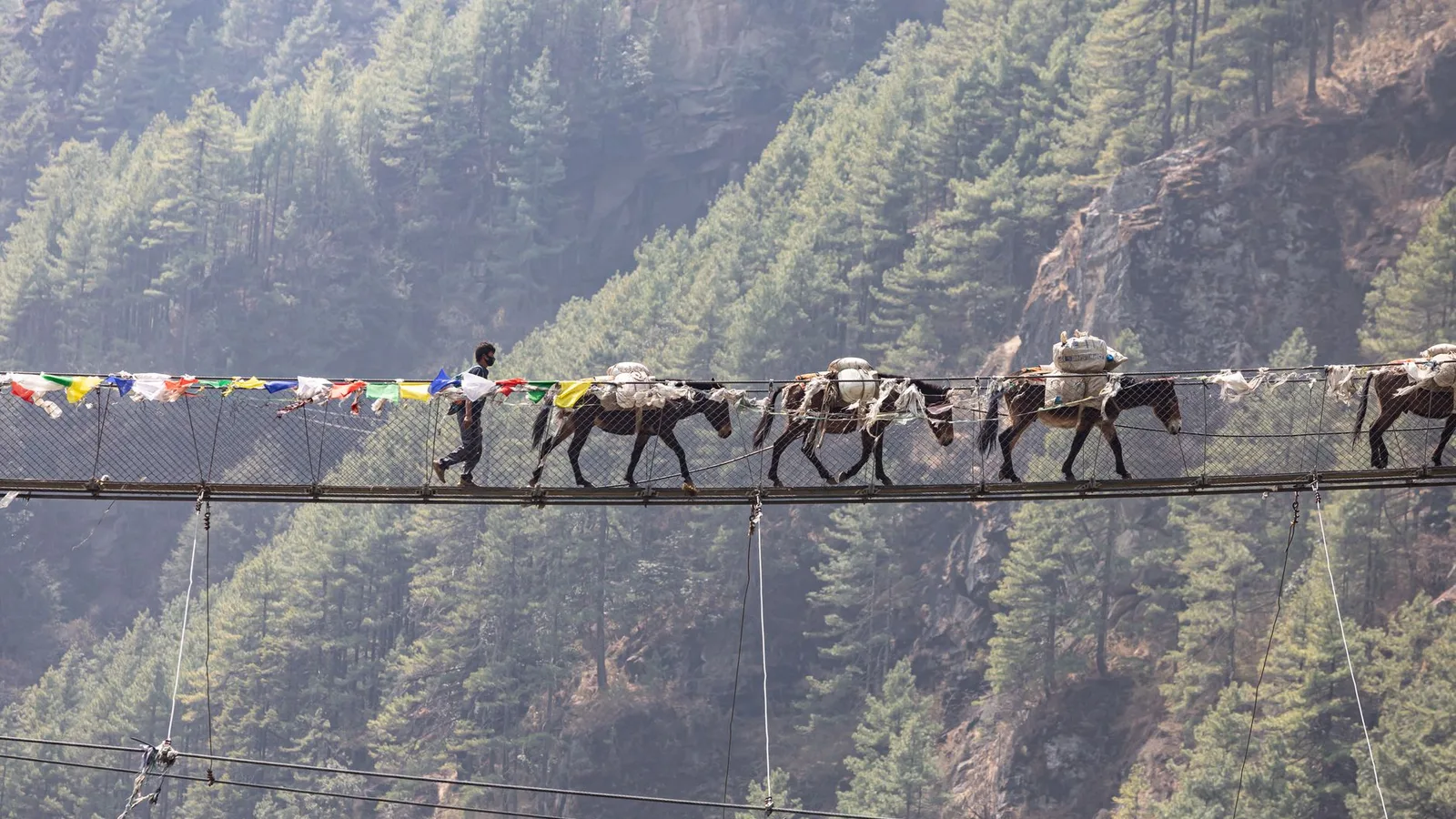
According to TAAN Gandaki, as reported by OnlineKhabar, the surge damaged the suspension bridge crossing at Ghurjung, on the main trail up to Annapurna Base Camp, with some reports saying the bridge was swept away. The trail near Syauli Bazaar was eroded, and the main road to Ghandruk was closed to vehicles after the swollen Modi River tore away a paved section of the Nayapul–Birethanti–Ghandruk road near Syauli Bazaar. Two hotels at Banthanti, in the Ghandruk area, were damaged by the floods and landslides. Reports said around 300 domestic tourists who had travelled up for a three-day public holiday were stranded in Ghandruk while access was cut.
To be precise about what is confirmed: the sources describe the Ghurjung bridge as damaged, with reports it was swept away. We are not going to flatly claim the crossing has "collapsed" beyond what the sources support. No deaths or injuries were reported, and no authority has published a date for when the bridge, trail and road will be fully restored.
| What's damaged | Status | What trekkers should do |
|---|---|---|
| Ghurjung suspension bridge (main ABC trail) | Damaged; reports it was swept away | Do not attempt to cross a damaged bridge; confirm the crossing with ACAP / your guide before this section |
| Trail near Syauli Bazaar | Eroded | Use alternative routes; travel with a licensed guide who has current ground reports |
| Nayapul–Birethanti–Ghandruk road | Closed to vehicles (section washed out near Syauli Bazaar) | Expect road disruption to the trailhead; build in buffer days and flexible logistics |
| Two hotels at Banthanti (Ghandruk) | Damaged by floods/landslides | Confirm accommodation is open and safe before relying on it |
| Casualties | None reported in the sources | |
This is NOT the same as the 26 August Rasuwa flood
It is easy to conflate the summer's flood news, so let's be clear: this is a separate event from the deadly Bhote Koshi flash flood in Rasuwa that struck on 26 August 2026 on Nepal's northern border with Tibet. That later disaster hit the Langtang gateway and a corridor of hydropower plants and caused significant loss of life.
The Annapurna damage described here happened in mid-July, in a different region (Kaski district, the Annapurna Sanctuary approach), on different rivers (the Kimrong Khola and Modi River, not the Bhote Koshi). Different date, different place, no reported casualties. Both are chapters in the same wider story of a hard monsoon — you can read the longer view in our piece on the 2024–2026 monsoon flood pattern — but do not treat them as one event.
TAAN Gandaki's advice — and ours
TAAN Gandaki urged the government to restore the damaged bridges, trails and roads and to reopen the route as quickly as possible. In the meantime, the association asked guides, porters and trekkers not to enter high-risk areas, to use alternative routes to reach safety, and to coordinate with the Annapurna Conservation Area Project (ACAP) and the tourist police for current, on-the-ground conditions.
That matches how we run trips. During and just after the monsoon, ground conditions in these valleys change week to week: a bridge that is out today may have a temporary crossing next month, and a road that is closed to jeeps may reopen once a washed-out section is rebuilt. The single most useful thing a trekker can do is stop reading month-old reports as if they were live, and instead confirm the specific section — Ghurjung, Syauli Bazaar, the Ghandruk road — with someone who checked it this week.
A local guide's honest take
Monsoon damages Annapurna-region trails and bridges most years, and most of it is repaired before the autumn trekking season. I would not panic-cancel an October or November Annapurna Base Camp trek over July flood news. What I would do is treat the trailhead logistics as fluid, build in a buffer day, walk with a licensed guide carrying current reports, and confirm the Ghurjung crossing and the Ghandruk road before setting out. If the bridge is still out when you arrive, there are alternative approaches into the Sanctuary — the point is to plan around the recovery, not to gamble on a damaged crossing.
Who should adjust their plans
Trekking now, in the monsoon: take this seriously. July–August is the wettest, most landslide-prone window in the Annapurna foothills, and this event is exactly why we advise extra caution. Go with a licensed guide, avoid high-risk sections, and coordinate with ACAP and tourist police as TAAN Gandaki advised.
Booked for autumn (Oct–Nov), the main ABC season: you almost certainly do not need to cancel. The monsoon ends and skies clear into the autumn; damaged infrastructure is typically repaired or bridged before the peak season. Ask us — or your operator — for a status check as your departure approaches, and keep your itinerary flexible around the Ghandruk road and the Ghurjung crossing.
Still deciding: Annapurna Base Camp remains one of the finest, most accessible treks in Nepal. For the wider national picture on whether it is a good time to come, see our overview: Is trekking in Nepal safe? The 2026 data.
Planning an Annapurna Base Camp trek
Get a current trail read before you commit
We run Annapurna Base Camp treks in every season and check ground conditions with ACAP and our guides in the field. Before you book — or if you are already booked for autumn — talk to us and we will give you an honest read on the Ghurjung crossing, the Ghandruk road and the state of the trail.
Sources and further reading: OnlineKhabar — Floods and landslides damage Annapurna trekking route · The Tourism Times — TAAN Gandaki issues urgent appeal. Damage details and advisory attributed to TAAN Gandaki (Trekking Agencies' Association of Nepal, Gandaki chapter). Figures are provisional and were being updated; confirm current trail status with ACAP and the tourist police before you travel.
Cover photo: Volker Meyer via Pexels (Pexels License).
Planning a trek?
Trek this route with us — Annapurna Base Camp Trek — 6 Days
NMA-certified local guides, transparent pricing, 5,000+ treks since 1998. Message us your dates and we'll sort the permits, lodges and logistics — reply within 24 hours, no obligation.

Popular Nepal treks
All treks →


Related coverage
Trail & Weather
Why the Annapurna Trail’s River Crossings Keep Failing: The Ghurjung Bridge and the Mechanics of a Debris Surge
The suspension bridges on the ABC trail rarely fail from bad building — they fail when a monsoon cloudburst meets an upstream landslide-dam burst, and when a rising, braided riverbed quietly eats the safety margin engineers designed in.
Safety & Advisories
Annapurna Circuit vs Annapurna Base Camp: Which Route the 2026 Floods Actually Hit
They share a name, not a trail. The July floods damaged the ABC route; the Annapurna Circuit was not reported hit. Here is which is which, the status of each, and what to do.
Trail & Weather
Annapurna Base Camp or Annapurna Circuit? The Real Difference in 2026
Same mountain range, two completely different trips — one climbs into a sanctuary in ten days, the other crosses a 5,416m pass over two weeks. Here is how to choose, with the real numbers.
Records & People
Nepal Just Proposed Renaming Annapurna. Here's Why — and Why It Isn't That Simple
Weeks after Nirmal 'Nimsdai' Purja died on Broad Peak, his home municipality wants to rename the world's deadliest 8,000m peak in his honour — a plan that still needs Kathmandu's sign-off and a French family's blessing.
Latest from the desk

Safety & Advisories
India Sends Around 50 Tonnes of Aid to Nepal as Modi Offers Condolences After the 2026 Floods
India is rushing tonnes of relief and rescue support to flood-hit Nepal, as Prime Minister Narendra Modi conveyed condolences to his Nepali counterpart and pledged India's full solidarity.

Money & Insurance
Does Your Credit Card Include Travel Insurance in 2026? What It Covers — and the Costly Gap
Many premium and travel cards bundle some cover — but it's usually secondary, conditional and capped, and it almost never pays for the emergency medical bill or evacuation that actually bankrupts travellers.

Safety & Advisories
Everyone Is Pledging Millions to Nepal. Here Is Where You Can Actually Send Money
The UN released $2m, the US pledged $500,000, India sent 50 tonnes. None of that helps if you are one person with a card. The official fund, the two alternatives worth trusting, and the scam window that is open right now.