
Best Time to Visit Southeast Asia in 2026: A Month & Region Guide (There Is No Single Best Month)
Southeast Asia has no one best month — the monsoon differs by country and coast. Here is the 2026 pattern-by-pattern map: the dry mainland season, Vietnam’s three climates, Bali flipped, and Thailand’s opposite coasts.
At a glance
- Published
- TopicWorld Destinations
- Verified againstWikipedia: Climate of Thailand, Geography of Vietnam, Climate of Indonesia
- Treks coveredAnnapurna Base Camp Trek — 9 Days, Everest Base Camp Trek — 14 Days, Mardi Himal Trek — 7 Days
Search “best time to visit Southeast Asia” and you will get a single tidy answer — usually “November to February.” It is not wrong, but it hides the thing that matters: Southeast Asia has no single best month. The region sprawls across the equator and two different monsoon systems, so while one beach is being rinsed by daily downpours, another a few hundred kilometres away is having its driest, bluest week of the year. Plan around the region as a whole and you will get half of it right by accident.
Here is the honest, pattern-by-pattern map for 2026 — grounded in the climate itself — so you can match your dates to the country and coast you actually want.
Key facts
- The mainland — Thailand, Vietnam, Cambodia and Laos — is broadly dry and cooler from November to February, the most reliable region-wide window.
- Vietnam is really three climates in one country: the north has a cool winter, the centre has a later autumn rainy season, and the south runs on a simple wet/dry monsoon.
- Bali and much of Indonesia sit south of the equator, so their dry season runs roughly April to October — the mirror image of the wet mainland summer.
- In Thailand, the Andaman coast and the Gulf coast have opposite monsoons: when one is soaked, the other is often fine.
The mistake most people make
Treating “Southeast Asia” as one climate. It isn’t. It is a mainland with a cool dry season, an equatorial belt with rain scattered all year, and islands south of the equator whose seasons are flipped. A December that is perfect for Bangkok temples and Angkor Wat is the wettest stretch of the year on Bali and on Thailand’s own Gulf islands. The month is never the whole answer — the country and the coast are.
The mainland: broadly dry and cool, November to February
Thailand, Cambodia, Laos and southern Vietnam share the classic mainland monsoon rhythm. Thailand’s climate runs in three seasons: a cool, dry season from November to February, a hot season from March to May, and a rainy southwest-monsoon season from roughly May to October. Cambodia (Angkor Wat) and Laos (Luang Prabang) follow the same pattern — wet through the summer, then drying out and cooling from late autumn. Lowland temperatures stay tropical year-round, averaging around 27–29°C, so “cool” here means comfortable rather than cold.
That is why November to February is the region-wide sweet spot: it is the one window when nearly the whole mainland is dry at once. The trade-off is that everyone knows it — it is peak season, with peak prices and crowds. The hot season that follows (March–May) is dry but genuinely fierce, especially inland.
Vietnam: one country, three different climates
Vietnam is the country that breaks every simple rule, because it stretches so far north to south. The north (Hanoi, Sapa, Ha Long Bay) is humid subtropical with four real seasons and a cool winter from November to April, when cold air pushing down from the north can make the mountains chilly. Central Vietnam (Hue, Da Nang, Hoi An) runs on a later schedule: its rainy season arrives in autumn, roughly September into December, and this is the stretch that brings the flooding Hoi An is known for. The south (Ho Chi Minh City, the Mekong Delta) is simple tropical monsoon — wet from about May to October, dry from November to April. Vietnam also sees several typhoons a year, mostly striking the centre and north in summer and autumn.
The practical upshot: there is no month that is perfect everywhere in Vietnam at once. Roughly February to April is the best compromise if you want to travel the whole length of the country in one trip.
The two Thai coasts run opposite monsoons
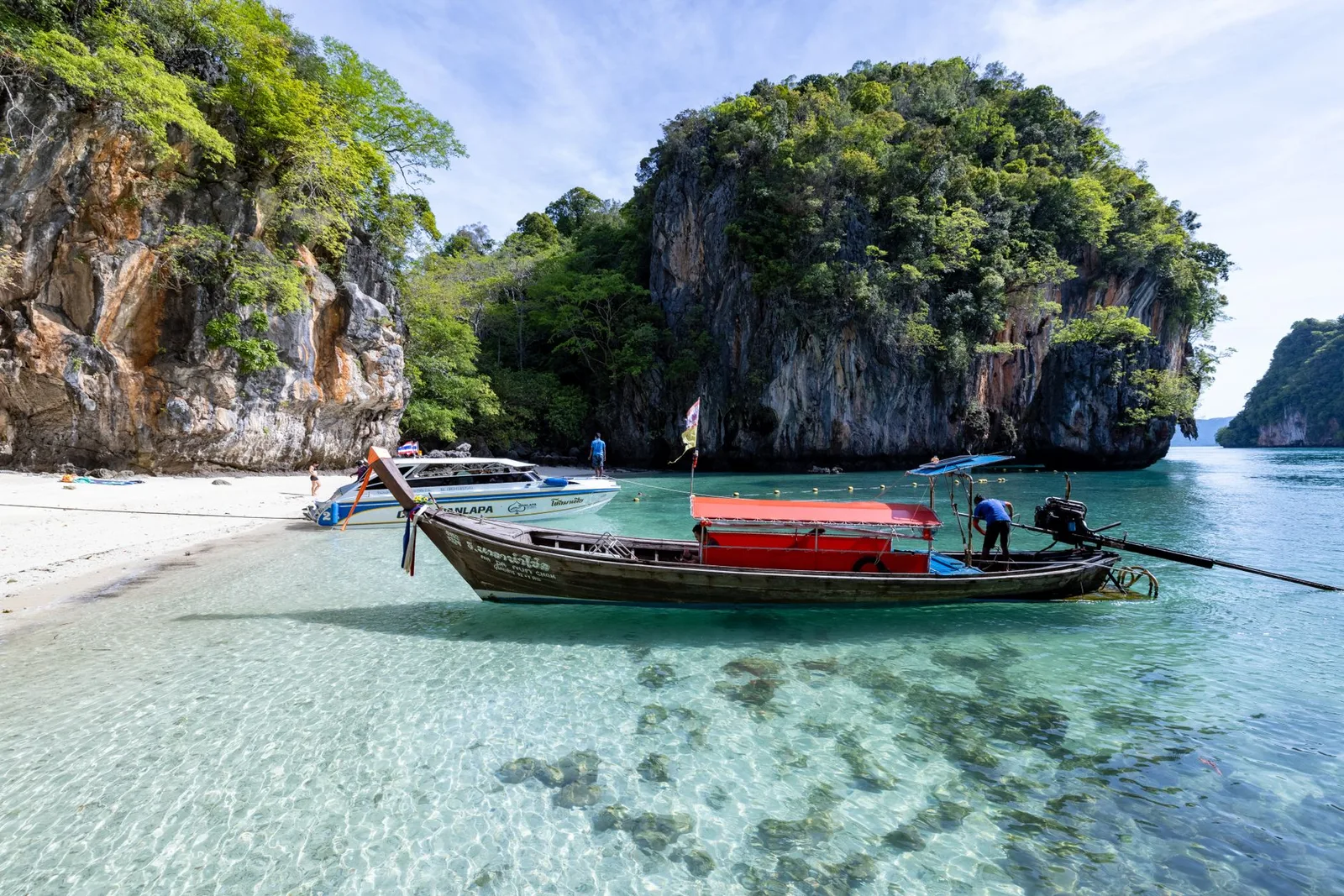
This is the single most useful fact for a beach holiday, and almost nobody plans around it. Thailand’s two coastlines face opposite directions relative to the monsoon winds, so they get their rain at opposite times of year. The Andaman coast in the west — Phuket, Krabi, Phi Phi, Ko Lanta — is wettest during the southwest monsoon, May to October. The Gulf of Thailand in the east — Ko Samui, Ko Pha Ngan, Ko Tao — is driest through much of that same period and instead gets its heaviest rain later, during the northeast monsoon, roughly October to January. So if you are booking for, say, June and set on a beach, the Gulf islands are the smarter bet than Phuket; flip it for December.
Bali and Indonesia: seasons flipped, dry April to October
Cross the equator and the calendar turns over. Indonesia’s dry season runs about April to October, driven by dry air from the Australian continent, while the wet season is October to March, heaviest around January to March. Bali sits close to the equator, so temperatures barely move — around 27°C all year — and the real variable is rain. The best window for Bali, Lombok and Nusa Tenggara is the dry-season middle, roughly May, June and September: reliably dry but without the July–August peak-season crush.
| Country / region | Best months | Monsoon / watch-out |
|---|---|---|
| Thailand (mainland & Bangkok) | Nov–Feb | SW-monsoon rains May–Oct; fierce heat Mar–May. |
| Thailand — Andaman coast (Phuket, Krabi) | Nov–Apr | Wettest and roughest seas May–Oct (SW monsoon). |
| Thailand — Gulf coast (Ko Samui, Pha Ngan) | Feb–Sep | Opposite pattern: wettest Oct–Jan (NE monsoon). |
| Vietnam — North (Hanoi, Sapa) | Oct–Apr | Cool, sometimes cold winter; hot, wet summer. |
| Vietnam — Central (Hoi An, Hue) | Feb–Aug | Autumn rains & flooding Sep–Dec; typhoon risk. |
| Vietnam — South (HCMC, Mekong) | Nov–Apr | Wet monsoon May–Oct. |
| Cambodia & Laos | Nov–Feb | Wet May–Oct; very hot Mar–May. |
| Bali & Indonesia | Apr–Oct (best May, Jun, Sep) | Wet season Oct–Mar, heaviest Jan–Mar. |
So when should you actually go?
If you only get one answer, November to February is the safest single window — dry across most of the mainland and the Andaman coast, which is exactly why it is peak season. But the region rewards precision: Bali is best mid dry-season (May–September), the Gulf islands are happiest February–September when Phuket is soggiest, and touring Vietnam end to end works best February–April. It is the same logic behind our guide to shoulder-season travel — and if budget is driving, Southeast Asia consistently ranks among the cheapest countries to travel, especially in each area’s green season.
Chaining Southeast Asia with a Nepal trek
Plenty of travellers we host stitch Southeast Asia together with a Himalayan trek, and the calendars line up neatly. Nepal’s two prime trekking seasons are October–November and spring (March–May) — and both dovetail with Southeast Asia’s dry mainland season on either side. A common route is autumn in Nepal for the clear post-monsoon mountain views, then onward to Thailand, Cambodia or Vietnam for warm, dry lowland weeks as winter sets in. If that is your kind of trip, our Annapurna Base Camp and Everest Base Camp treks are the easiest to pair with a regional add-on — tell us your dates and we will help you time both halves.
Cover photo: Balazs Simon via Pexels (Pexels License).
Planning a trek?
Trek this route with us — Annapurna Base Camp Trek — 9 Days
NMA-certified local guides, transparent pricing, 5,000+ treks since 1998. Message us your dates and we'll sort the permits, lodges and logistics — reply within 24 hours, no obligation.


Popular Nepal treks
All treks →


Related coverage

World Destinations
The Cheapest Months to Visit the World’s Top Destinations in 2026
Shoulder-season timing is the traveller’s cheat code: here is when prices and crowds drop across Japan, Italy, Greece, Thailand, Bali, Iceland and Nepal — and what you trade off.
Trail & Weather
When Is the Best Time to Trek in Nepal? The Real Month-by-Month Data for 2026
Autumn and spring aren't just guidebook folklore — Nepal's own 2025 visitor data backs them up almost exactly. Here is what the numbers, and the weather behind them, actually show.
Industry & Tourism
Chinese Tourist Arrivals to Nepal Just Passed Pre-Pandemic Levels, Jumping 61% in a Single Month
July 2026 arrivals from China beat July 2019 for the first time, even as Nepal's overall foreign arrivals grew by just 2.3%.
World Destinations
Northern Lights 2026: Where and When to See the Aurora (Best Destinations)
A clear, no-hype guide to catching the aurora next winter — the best destinations from Tromsø to the Yukon, the September–March season, why the solar cycle still favours 2026, and honest expectation-setting.
Latest from the desk

Money & Insurance
Adventure & Activity Travel Insurance in 2026: Why Standard Cover Excludes Rafting, Diving, Skydiving and High Trekking
Scuba, bungee, skydiving, quad bikes, jet skis, rafting, safari, motorbiking and trekking above a certain altitude are the activities standard travel insurance quietly leaves out. Here is how activity tiers and add-ons work, why an undeclared activity can void the whole claim, and how to match cover to your trip.
Climate & Environment
Soot Is Darkening Himalayan Snow and Speeding Its Melt, 2026 Science Shows
Soot darkens Himalayan snow so it absorbs more sunlight and melts faster — a second, faster-acting driver of glacier loss alongside warming, and the one the region could switch off within weeks.

Visas & Entry
Taking a Pet Abroad in 2026: The Rules Most Owners Underestimate
Microchip, rabies vaccination and a waiting period, a health certificate or pet passport, tapeworm treatment and even quarantine — a plain-English guide to taking a pet abroad in 2026, and why it has to start months before you fly.