
7 facts about Mount Everest that surprise almost everyone
Its summit was once an ocean floor. It grows every year. And it's still rising. Here are the facts about the world's highest mountain that most people get wrong — and why they make the trek even more astonishing.
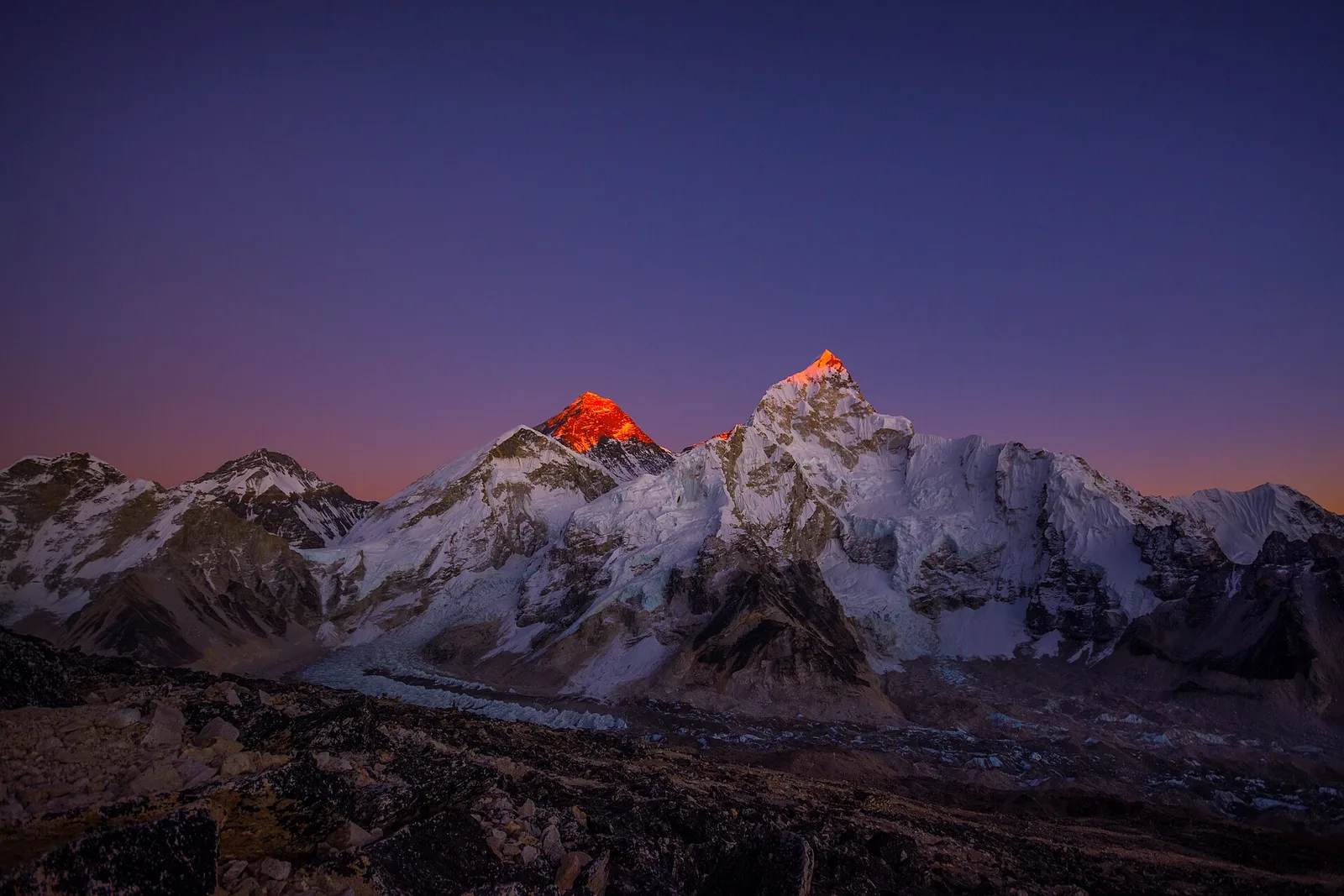
At a glance
- Published
- TopicRecords & People
- ReportingOriginal, by our guides in Pokhara
- Treks coveredEverest Base Camp Helicopter Tour — 1 Day, Everest Base Camp Trek — 12 Days, Everest View Trek — 7 Days
Everyone knows Everest is the highest mountain on Earth. Almost everything else people "know" about it is more surprising than they expect — starting with the fact that its summit was once at the bottom of an ocean. Here are seven facts that make standing in its presence even more astonishing.
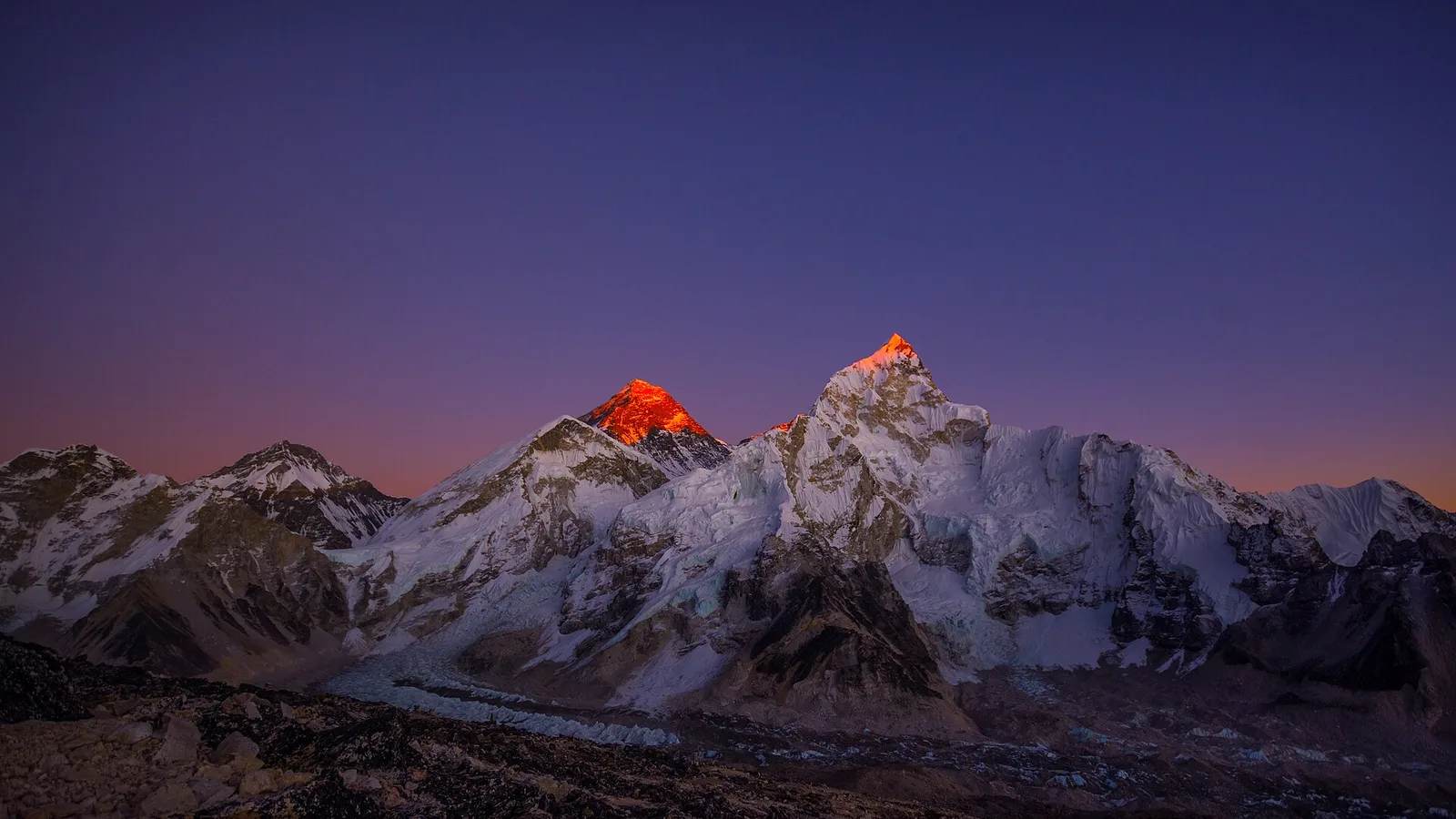
From the trail · Everest


Everest, by the numbers
- Official height: 8,848.86m (joint Nepal–China survey, 2020)
- It is still rising — the Indian plate keeps pushing it up a few mm a year
- The summit rock is marine limestone — once an ancient seabed
- First climbed in 1953 by Edmund Hillary and Tenzing Norgay
The surprises
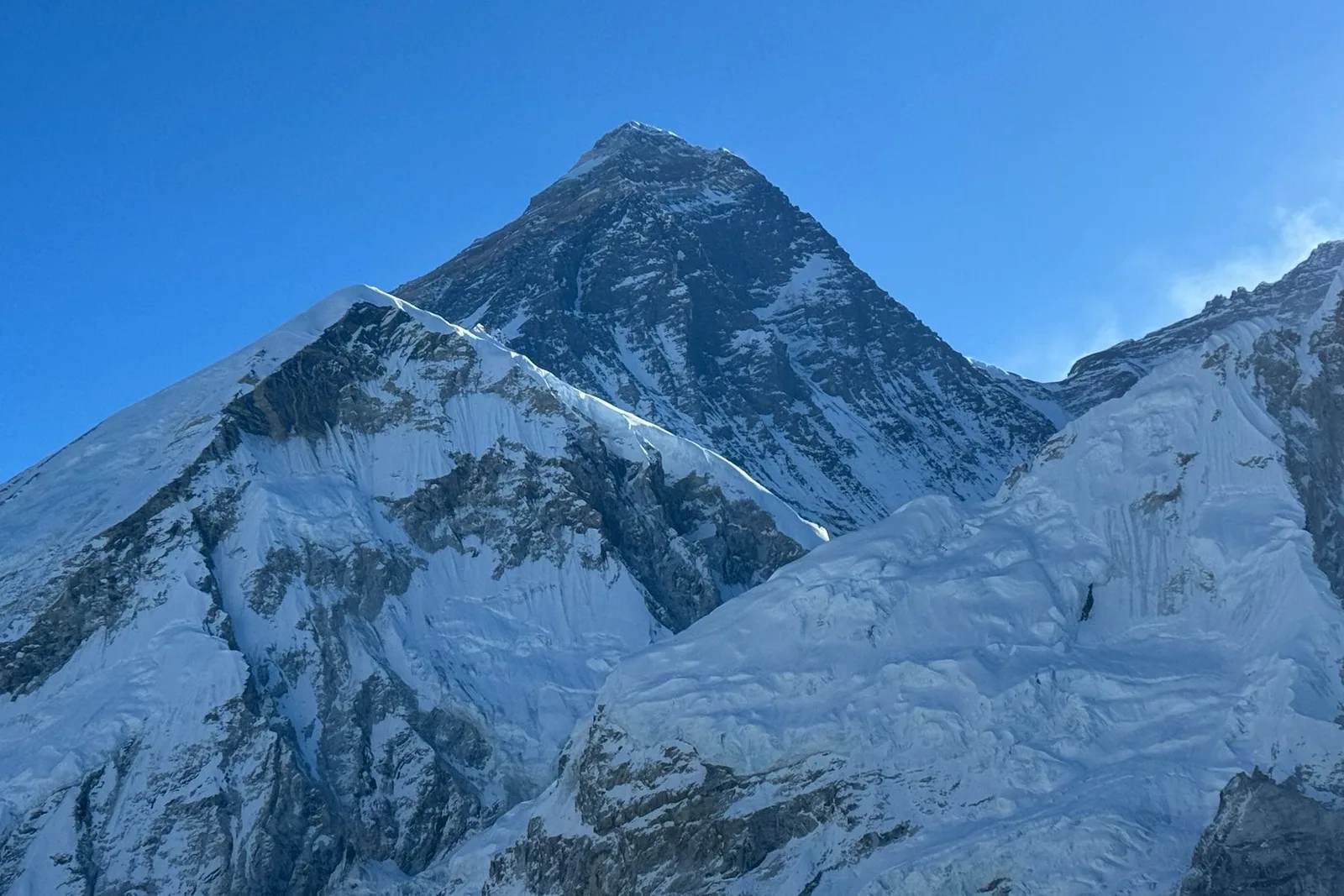
The seabed-to-summit story is real: the top of Everest is made of limestone laid down underwater, lifted nearly nine kilometres into the sky by the collision of India and Asia — and that collision is ongoing, so the mountain is still growing. Above 8,000m lies the "death zone," where there is too little oxygen to survive for long. The mountain carries the name of a British surveyor, Sir George Everest, though Nepalis call it Sagarmatha and Tibetans Chomolungma. And you do not have to climb it to feel all of this — you can stand and look up at it from Base Camp.
| Fact | Detail | |
|---|---|---|
| Height | 8,848.86m | |
| Nepali name | Sagarmatha | |
| Tibetan name | Chomolungma | |
| First ascent | 1953, Hillary & Tenzing | |
| Death zone | Above 8,000m |
What this means for you
The more you know about Everest, the more you want to see it for yourself. You do not need to climb — the trek to Base Camp (or even a helicopter tour) puts you face to face with all of this history and geology. We will get you there.
Source: Travel Himalaya Nepal.
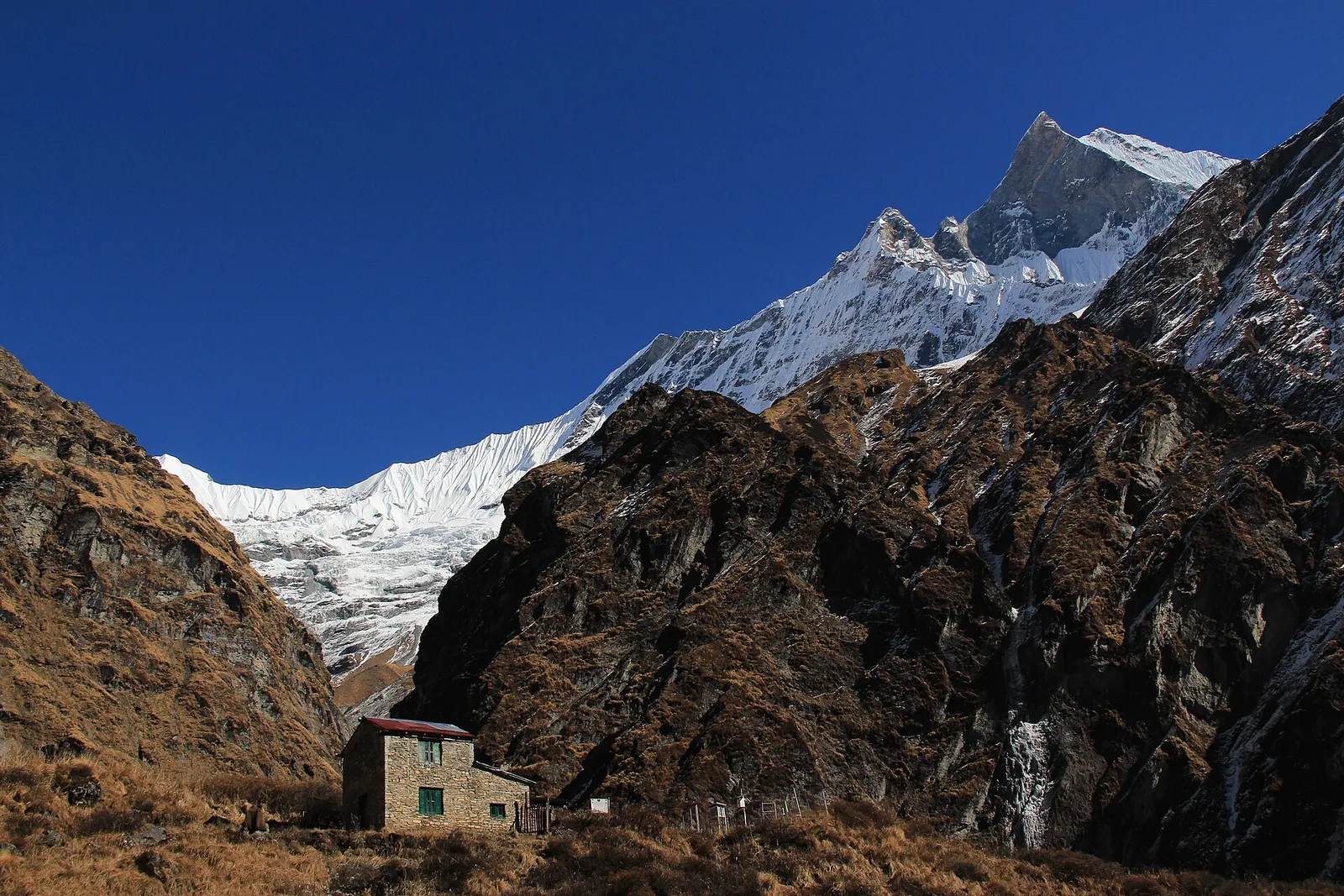
Cover photo: Nir B. Gurung via Wikimedia Commons (CC BY-SA 4.0).
Still running this season
Everest Base Camp Helicopter Tour — 1 Day is running normally
NMA-certified local guides, transparent pricing, 5,000+ treks since 1998. Message us your dates and we'll sort the permits, lodges and logistics — reply within 24 hours, no obligation.
Popular Nepal treks
All treks →
Related coverage
Records & People
There Are 450-Million-Year-Old Seashells Near the Top of Mount Everest — Because It Used to Be Seafloor
The rock forming Everest's summit pyramid is marine limestone packed with ancient sea-creature fossils, laid down in a tropical ocean long before the Himalaya existed.
Records & People
Mount Everest's Official Height Was Wrong for 65 Years, Until Nepal and China Finally Agreed in 2020
The number on every map, 8,848.86 metres, only became official on 8 December 2020, after two countries spent over a decade measuring the same mountain and getting two different answers.
Records & People
Nobody tells you Everest can only be climbed a few days a year, and the jet stream is why
For most of the year a jet stream sits on the summit of Everest with winds over 250 km/h. It lifts north for a few weeks each May when the monsoon pushes it aside, and that short calm is the only time the mountain is climbable.
Records & People
Mount Everest Is Still Growing — and a Hijacked River 47 Miles Away Is Pushing It Up
A 2024 study in Nature Geoscience found the world's tallest mountain gains roughly 2mm a year from an ancient river 'piracy' event on top of the tectonic collision that built it in the first place.
Latest from the desk
Gear & Tech
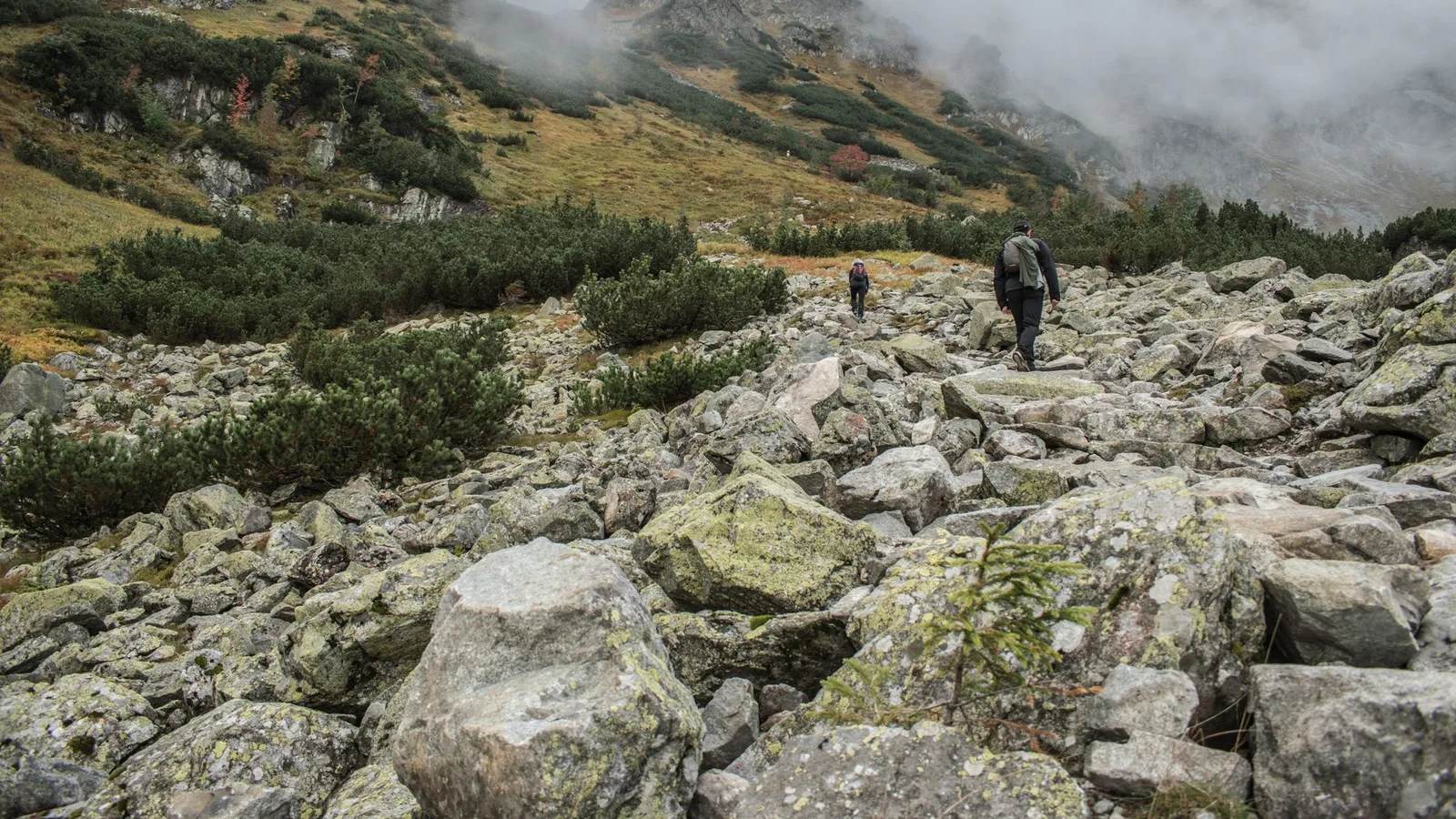
Trail shoes or hiking boots, and what the ankle-support research actually found
Most teahouse trekkers wear more boot than the walk needs, and the ankle-support argument holding that up is thinner than the shops suggest.
Gear & Tech
Merino or synthetic base layers, and what a lab found when it measured the smell
Merino wins the week-long wear, synthetic wins the overnight dry, and the lab reason merino stays fresh is not the bacteria story you have been told.
Safety & Advisories
If someone you know is missing in the Nepal flood, you don't have to fly to Kathmandu
Nepal Police have identified 95 of more than 1,200 bodies recovered. Families abroad can be DNA-profiled at home and send the result in. Here is how it works.