
Nepal's Cliffs Hide 10,000 Man-Made Caves — and No One Knows Who Built Them
High above the Kali Gandaki river in Upper Mustang, ancient 'sky caves' have given up mummies, 600-year-old manuscripts and more questions than answers.
At a glance
- Published
- TopicRecords & People
- Verified againstWikipedia (compiled archaeological record)
- Treks coveredJomsom Muktinath Trek, Upper Mustang Trek — 12 Days, Upper Mustang Trek — 15 Days
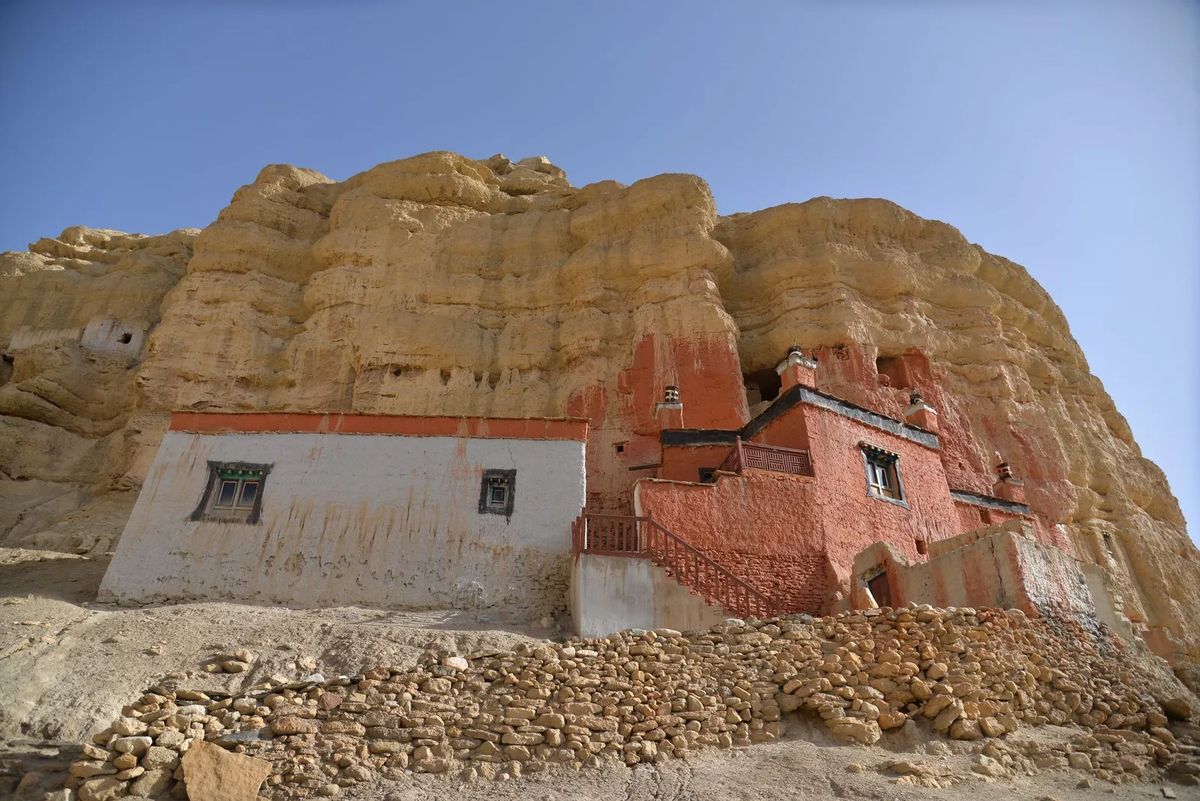
Carved hundreds of feet up sheer desert cliffs, with no visible staircase and no written record of who built them, Upper Mustang's "sky caves" have been keeping secrets for at least 3,000 years. There are roughly 10,000 of them, stacked five storeys high in places, riddling the eroded cliffs of the Kali Gandaki valley — and archaeologists are still working out who dug them, and why.
Key facts
- An estimated 10,000 man-made caves cut into the cliffs of Upper Mustang
- Oldest human remains found inside date to roughly 1,000 BC
- The Chhoser (Shija Jhong) cave alone has 5 storeys and about 40 rooms
- Excavations from the 1990s to 2010 have found mummies, manuscripts and Buddhist art
The caves sit in Mustang District, Nepal's high desert kingdom on the Tibetan plateau's southern edge, in a landscape so dry and wind-carved it barely looks Nepali at all. Local legend says the caves once sheltered a demoness; more sober archaeology suggests they were built and rebuilt over roughly two millennia for at least three different purposes. Since the mid-1990s, when a joint Nepali–University of Cologne team began serious excavation, researchers have peeled back the layers: the oldest chambers, some cut as early as 1,000 BC, appear to have been burial sites; by the 10th century, during a period of regional conflict, similar caves were converted into defensible residential dwellings; by the 1400s, still others had become quiet meditation cells for Buddhist practitioners.
| Period | Team | Discovery |
|---|---|---|
| Mid-1990s | Nepal & University of Cologne | First systematic cave excavations |
| 2007 | US, Italy & Nepal joint team | Buddhist artifacts and paintings |
| 2008 | Follow-up expedition | ~600-year-old skeletons and illuminated manuscripts |
| 2010 | Climbers & archaeologists, Samdzong | 27 human remains, 3rd–8th century |
The 2008 finds were especially striking: manuscripts blending Buddhist and older Bon religious texts, painted 12th–14th century Buddhist artwork, and skeletons packed into chambers that were clearly built for the dead, not the living. Two years later, a joint climbing-and-archaeology team working near Samdzong pulled 27 human remains from a single cluster of caves, many bearing cut marks consistent with sky burial — a practice of preparing bodies on high, exposed ground rather than burying them in the ground, still used in parts of the Tibetan Buddhist world today.
What nobody has fully answered is the engineering question: how a pre-industrial society cut multi-storey chambers with internal ladders and connecting shafts into vertical cliff faces hundreds of feet above the valley floor, with no scaffolding and no modern tools. Some rooms clearly stored grain and water; others were living quarters; others were tombs. The builders left no inscriptions explaining themselves, and Mustang's isolation — it was a restricted area closed to outsiders until 1992 — means the caves went largely unstudied by the outside world until remarkably recently.
What this means for trekkers
You can walk right up to some of this. The Chhoser cave (Shija Jhong) near Chhoser village is open to visitors on the classic Upper Mustang trek, and its five storeys of chambers, ladders and grain-storage rooms are exactly as strange in person as they sound. Upper Mustang remains a restricted area requiring a special permit (arranged through your trekking operator), which is part of why it has stayed this untouched — few trekkers make it here compared to Everest or Annapurna's main circuits, and the region rewards exactly that lower footfall with sites like this.
Ten thousand caves, three thousand years, and a civilization that left its dead — and its questions — hanging in the cliffs. Mustang remains one of the least-visited, most archaeologically strange corners of Nepal, and the sky caves are the reason why.
Source: Wikipedia — Mustang Caves
Cover photo: Rajan Pun via Pexels (Pexels License).
Still running this season
Jomsom Muktinath Trek is running normally
NMA-certified local guides, transparent pricing, 5,000+ treks since 1998. Message us your dates and we'll sort the permits, lodges and logistics — reply within 24 hours, no obligation.
Popular Nepal treks
All treks →
Related coverage
Safety & Advisories
Is the Jomsom–Muktinath Trek Affected by the 2026 Nepal Floods?
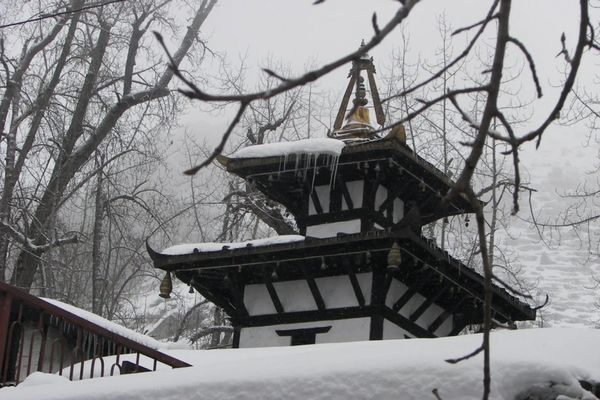
No — Jomsom and Muktinath sit in Mustang, in the rain shadow behind the Himalaya and on a different river from the Rasuwa flood. The trek is running normally; the only thing to plan around is flight-or-jeep access.
Safety & Advisories
Is the Upper Mustang Trek Affected by the 2026 Nepal Floods?
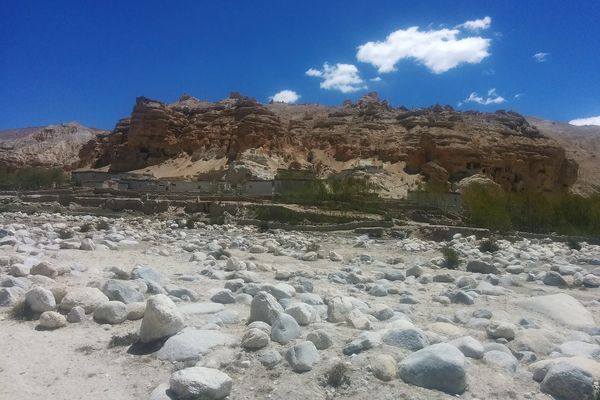
No — and Upper Mustang is one of the driest, safest regions to trek right now. The 26 August flood hit Rasuwa; Mustang sits in the rain shadow behind the Himalaya, dry and open.
Records & People
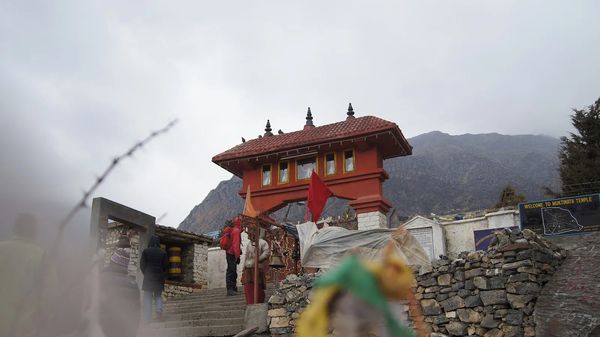
Fire Burns Directly Out of Water at This Himalayan Shrine — and Nobody Lit It
At 3,762 metres in Nepal's Mustang district, natural gas has kept a flame alight beside — and by tradition within — a spring for so long that Hindus and Buddhists both call the same shrine holy.
Records & People
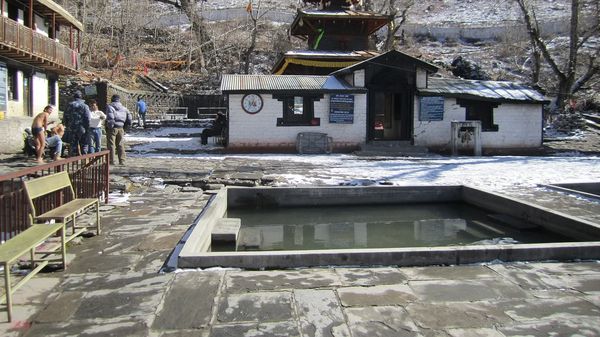
Nepal Has a Temple Where Fire Burns Straight Out of Water, and Nobody Fully Explains Why It Never Goes Out
At 3,710 metres beneath the Thorong La pass, a natural gas seep keeps a flame burning above a spring at Muktinath, a site sacred to both Hindus and Buddhists.
Latest from the desk
Records & People
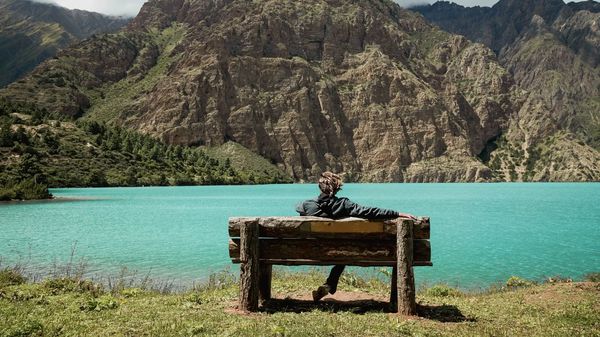
Everyone Calls This Nepal's Deepest Lake. A Government Survey Says It Isn't.
Phoksundo's turquoise water and no-fishing custom are real, but Nepal's own hydrology surveys put the actual depth record on a different lake entirely.
Flights & Access
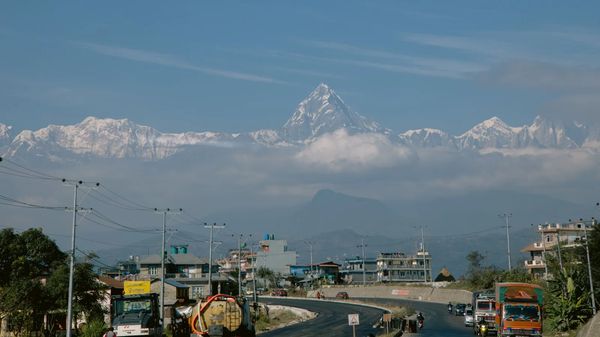
Pokhara Just Got Its First Real International Flight, Three Years After the Airport Opened
flydubai starts daily Dubai–Pokhara flights on 23 September 2026, the first scheduled international airline to serve Nepal's trekking capital since its $216 million airport opened in 2023.
Festivals & Events
Dashain 2027 tika is Saturday 9 October, twelve days earlier than this year
Dashain 2027 runs 30 September to 14 October, tika on Saturday the 9th. Bhai Tika is 31 October. Why the early date matters for an autumn trek.