
Nepal's Valley That Stayed Sealed Off Until 2003 — and Still Takes Two People to Enter
Home to roughly 300 people who still practise a religion older than Buddhism, Nar Phu was closed to every outsider for decades. Here's what it costs to see it now, and why the rules are what they are.
At a glance
- Published
- TopicPermits & Rules
- Verified againstWikipedia
- Treks coveredAnnapurna Circuit Trek — 14 Days, Nar Phu Valley Trek — 14 Days
North of the Annapurna Circuit, tucked against the Tibetan border, there's a valley that most of the roughly one million people who visit Nepal each year have never heard of. Nar Phu wasn't just remote — it was legally off-limits. The Nepali government kept it sealed to foreign trekkers until 2003, and even now you can't simply walk in: you need a special permit, a licensed guide, and a minimum of one other person, because solo trekking here still isn't allowed.
Key facts
- Closed to foreign trekkers until 2003 as a restricted border area
- Home to an estimated 300 people across Nar and Phu villages
- Nar sits at 4,150m, Phu at 4,050m — both above most Everest Base Camp lodges
- Original inhabitants practised Bon, a religion that predates Buddhism in the Himalaya, before converting
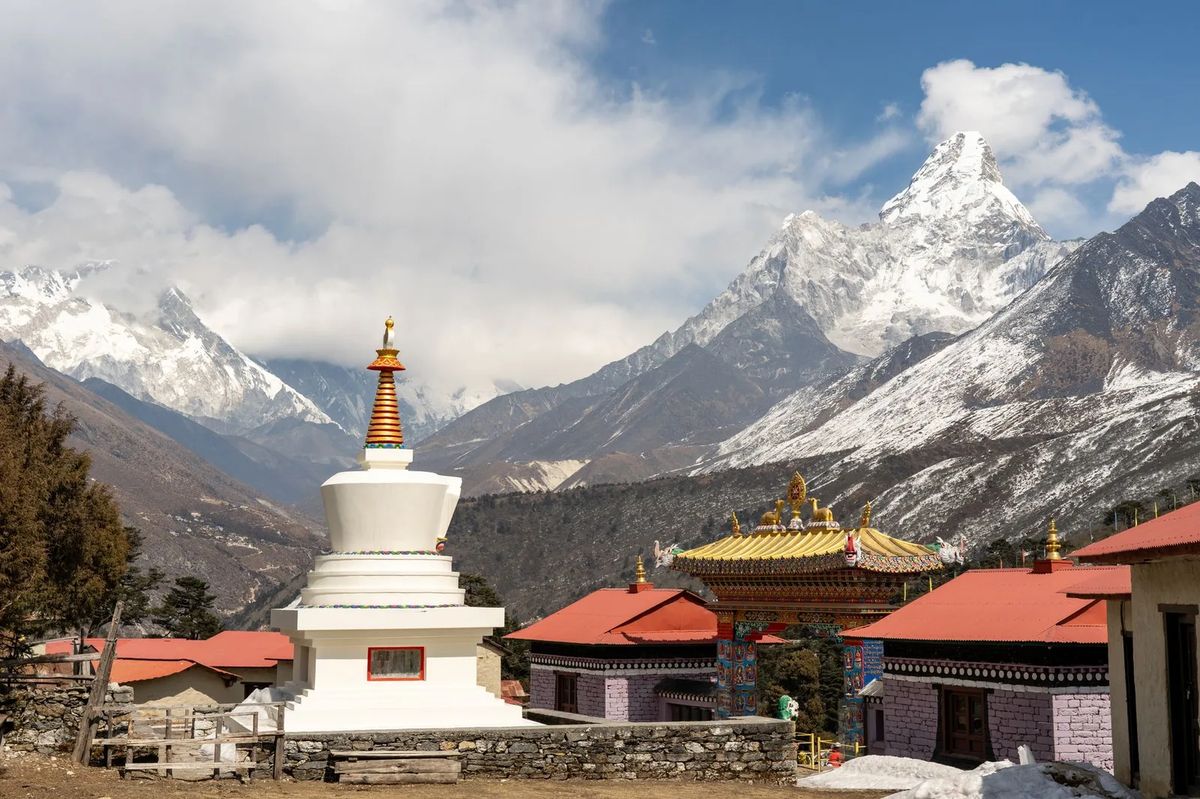
The valley sits between the main Annapurna Circuit trail and the Tibetan plateau, walled in by 7,000m peaks including Kang Guru and Himlung Himal. Phu village is the more dramatic of the two settlements — built up a fortress-like hill with a Buddhist gompa, Yul Gompa, crowning the top, positioned exactly where a defensible lookout over the valley approach would sit. Nar, lower and larger, has three monasteries of the Nyingma school of Tibetan Buddhism. Villagers themselves say their ancestors arrived from Tibet at least a thousand years ago; Nepali government land records point to a more recent 17th- or 18th-century settlement. Either way, before Buddhism took hold, the valley's people followed Bon, the animist religion that existed across the Tibetan plateau long before Buddhist monks arrived — a detail that still shapes local ritual today, layered underneath centuries of Buddhist practice.
What it actually costs to go
| Permit | Cost |
|---|---|
| Restricted Area Permit (Sep–Nov, first 7 days) | $100 |
| Restricted Area Permit (off-season, first 7 days) | $75 |
| Each additional day beyond 7 | $15 |
| Annapurna Conservation Area Permit (ACAP) | $30 |
| TIMS card | $20 |
| Typical all-in permit total | ≈$130–145 |
The restricted-area system, which also covers Upper Mustang, Upper Dolpo and a handful of other border valleys, exists for a straightforward reason: these are sensitive frontier zones close to Tibet, and Nepal manages foreign access to them deliberately, both for security and to slow the pace of change in communities that had almost no outside contact for generations. It's the same logic, and largely the same paperwork process, that governs Nepal's other restricted-area treks — you can't book it as a walk-in the way you can Poon Hill or even the main Annapurna Circuit.
What this means for trekkers
What this means for you
Nar Phu isn't a trek you add on a whim — you need to book with an agency that can process the restricted-area paperwork, travel with at least one companion, and budget roughly two extra weeks and $130–145 in permits beyond a standard Annapurna itinerary. In exchange, you get villages, monasteries and canyon trail that only a few hundred foreign trekkers see in a given year.
Most itineraries run 12–16 days and combine Nar Phu with a stretch of the classic Annapurna Circuit and the Kang La or Thorong La pass, rather than treating it as a standalone trip — which makes sense given how much infrastructure and acclimatization the wider circuit already provides. If a valley that stayed closed until this century is the kind of place you'd go out of your way for, that's exactly the itinerary to ask about.
Source: Wikipedia — Nar Phu, cross-checked against current Nepal restricted-area permit rates published by registered Annapurna-region trekking agencies.
Cover photo: Clinton Weaver via Pexels (Pexels License).
Still running this season
Annapurna Circuit Trek — 14 Days is running normally
NMA-certified local guides, transparent pricing, 5,000+ treks since 1998. Message us your dates and we'll sort the permits, lodges and logistics — reply within 24 hours, no obligation.
Popular Nepal treks
All treks →
Related coverage
Safety & Advisories
Is the Nar Phu Valley Trek Affected by the 2026 Nepal Floods?
No — Nar Phu is a restricted Annapurna-region valley in Manang, on the Marsyangdi, far from the flood-hit Bhote Koshi in Rasuwa, and it is running normally. Here is why the trail is unaffected, plus the one monsoon road caveat.
Trail & Weather
Why Nepal floods every single monsoon, and what it means if you're trekking
Three monsoons, one recurring disaster — floods and landslides strike Nepal every June–September, and here is what the 2024–2026 record shows.
Records & People
Cho Oyu and Shishapangma are closed again this autumn and every 14-peak climber is funnelled into Nepal
The China-Tibet Mountaineering Association has kept Cho Oyu and Shishapangma shut to foreign teams for autumn 2026, and Manaslu absorbs the whole overflow.
Safety & Advisories
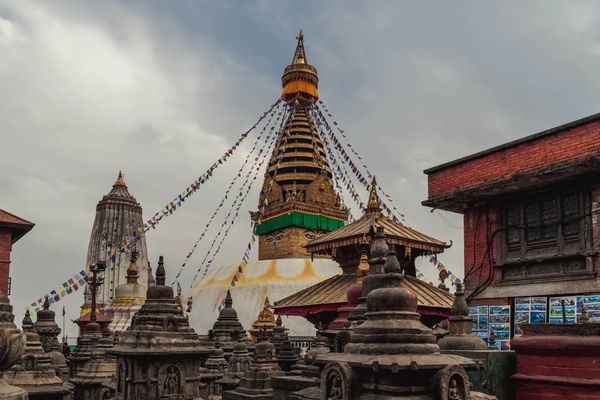
Is a Kathmandu Valley Tour Affected by the 2026 Nepal Floods?
No — Kathmandu is the capital, at about 1,400 m in central Nepal, well south of the Rasuwa flood. The airport is running normally and every UNESCO heritage site in the valley is open. Here is the honest, detailed status.
Latest from the desk
Records & People
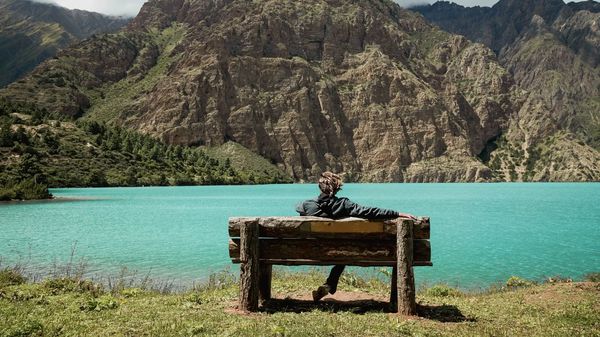
Everyone Calls This Nepal's Deepest Lake. A Government Survey Says It Isn't.
Phoksundo's turquoise water and no-fishing custom are real, but Nepal's own hydrology surveys put the actual depth record on a different lake entirely.
Flights & Access
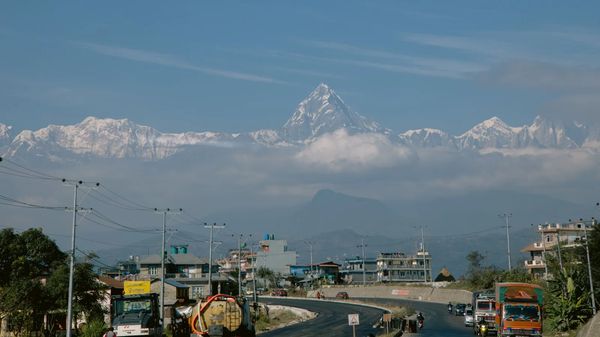
Pokhara Just Got Its First Real International Flight, Three Years After the Airport Opened
flydubai starts daily Dubai–Pokhara flights on 23 September 2026, the first scheduled international airline to serve Nepal's trekking capital since its $216 million airport opened in 2023.
Festivals & Events
Dashain 2027 tika is Saturday 9 October, twelve days earlier than this year
Dashain 2027 runs 30 September to 14 October, tika on Saturday the 9th. Bhai Tika is 31 October. Why the early date matters for an autumn trek.