
Sherpas Carry a Gene From an Extinct Human Species That Lets Them Breathe Where Others Suffocate
The reason your Sherpa guide isn't gasping at 5,000 metres traces back tens of thousands of years to interbreeding with the Denisovans, an extinct human relative known only from a Siberian cave.
At a glance
At Everest Base Camp, 5,364 metres up, trekkers who have trained for months stop mid-sentence to catch their breath. Their Sherpa guide, carrying the heavier pack, keeps talking. This isn't just acclimatisation or a lifetime spent at altitude. Geneticists have traced part of it to a single gene, inherited from a human species that went extinct tens of thousands of years ago.
Key facts
- The gene is called EPAS1, and the high-altitude version carried by Sherpas and Tibetans matches DNA from the Denisovans, an extinct archaic human relative.
- Denisovans are known from a single finger bone found in Siberia's Denisova Cave in 2008, dated to roughly 60,000–80,000 years old; their genome was published in Nature in December 2010.
- Peer-reviewed research (PNAS, 2012) found Sherpas at 3,440 metres have serum erythropoietin levels matching lowlanders at just 1,300 metres — their bodies barely register the thin air that would send others into a hypoxic stress response.
- The variant works by keeping haemoglobin lower, not higher — the opposite of what most people's bodies do at altitude, and a safer adaptation than thickening the blood.
Most people's bodies respond to thin air by producing more red blood cells to carry more oxygen. It works, up to a point — but blood that's too thick raises the risk of clots, strokes and chronic mountain sickness in populations that live permanently at altitude. Sherpas and Tibetans do something different: the EPAS1 variant they carry dials the hypoxia response down rather than up, keeping haemoglobin closer to sea-level normal while their bodies extract oxygen more efficiently elsewhere in the chain. It's a genuinely different physiological strategy, not just a stronger version of everyone else's.
Where the variant came from is the more startling part. When researchers compared the Tibetan and Sherpa version of EPAS1 against the genome sequenced from the Denisova Cave finger bone, the match was too close to be coincidence. At some point, tens of thousands of years ago, the ancestors of today's high-altitude Himalayan populations interbred with Denisovans — a human relative that otherwise vanished from the record entirely, surviving today only as fragments in the DNA of people descended from that encounter. Natural selection then did the rest: on the Tibetan Plateau and in the high valleys of Nepal, carrying the variant meant a real survival advantage, and it spread.
An archaic human population, distinct from Neanderthals, lives across parts of Asia.
Ancestors of Tibetan Plateau and Himalayan populations interbreed with Denisovans, picking up the EPAS1 variant.
Denisova Cave yields the only physical evidence of the species ever found.
Nature reveals the Denisovan genome from that single fossil.
PNAS research directly links the protective EPAS1 variant to Sherpa physiology at altitude.
What this means for trekkers
It's a scientific footnote to something Himalayan trekking has always known by observation: the Sherpa people who guide, cook and carry on treks to Everest, Gokyo and the high climbing peaks aren't just experienced — a real slice of that resilience is written into their biology. It's also a practical reminder for anyone planning a high-altitude trip: your NMA-certified guide's steady pace at 5,000 metres isn't a sign you're moving too slowly, it's a different starting point entirely. Respect the mountain's pace, not theirs.
What this means for you
Altitude sickness isn't weakness — it's biology, and even Sherpas with this adaptation still take Everest seriously. Acclimatise properly, hire NMA-certified guides, and let their genetics do what training alone can't.
Trek where this adaptation matters most, guided by Nepal's own high-altitude specialists, on the Everest Base Camp Trek, the lake-studded Gokyo Ri Trek, or the technical Island Peak Climb.
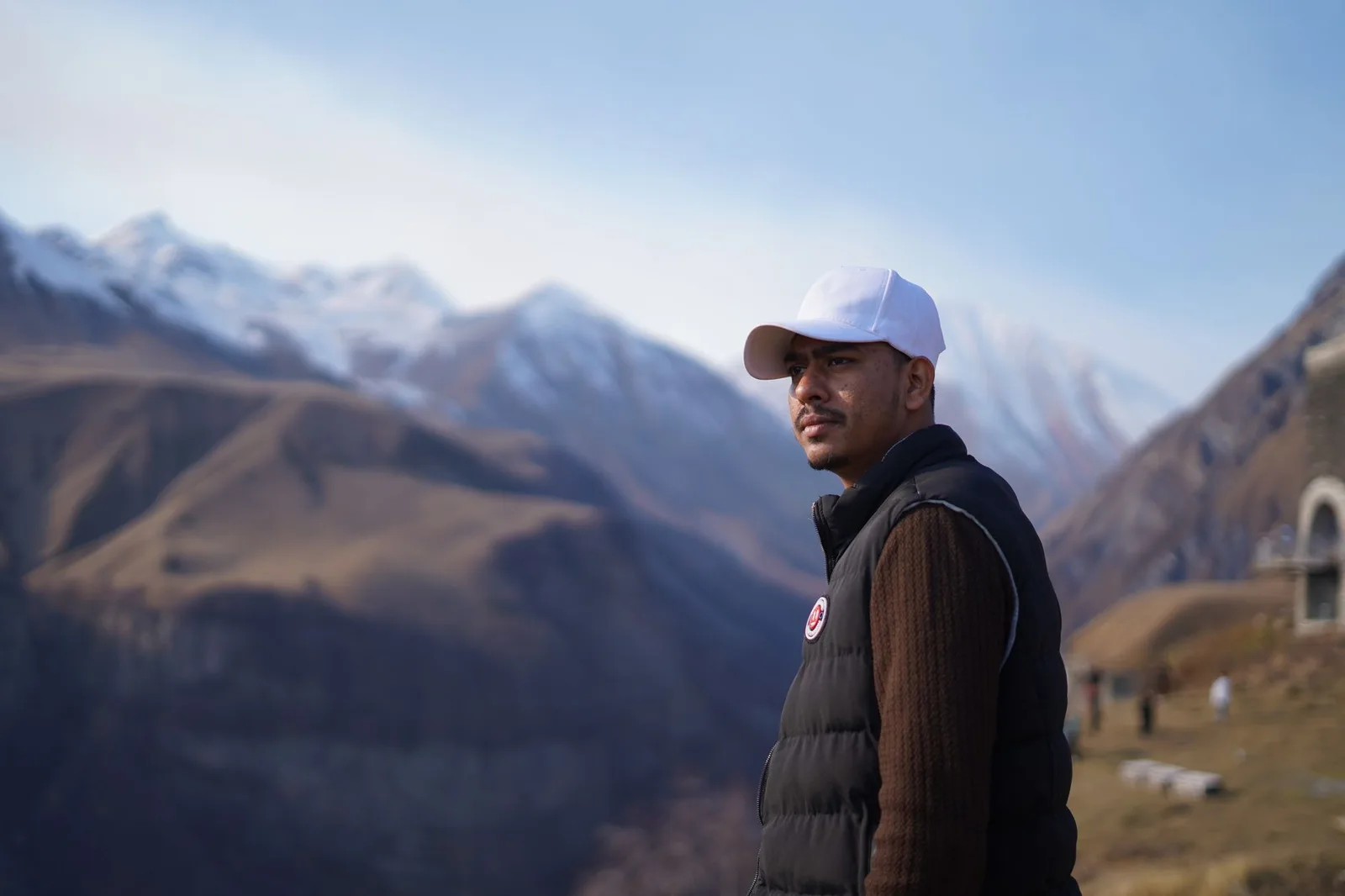
Cover photo: Sajjad Hossen via Pexels (Pexels License).
Planning a trek?
Trek this route with us — Everest Base Camp Trek — 14 Days
NMA-certified local guides, transparent pricing, 5,000+ treks since 1998. Message us your dates and we'll sort the permits, lodges and logistics — reply within 24 hours, no obligation.


Popular Nepal treks
All treks →


Related coverage
Records & People
Sherpas Carry a Gene Variant No Other Human Should Have — It Came From an Extinct Species
Scientists studying why Sherpa guides thrive above 8,000 metres without extra oxygen found the answer partly written by Denisovans, an extinct human relative, and partly in mitochondria that simply burn fuel better.
Records & People
The Bird That Crosses the Himalaya in Eight Hours, Flying Higher Than Everest Base Camp
GPS trackers finally proved how bar-headed geese cross the world's highest mountains twice a year, nonstop, at altitudes that would leave an unacclimatized human unconscious.

Records & People
The World's Highest Marathon Starts at 17,600 Feet — and the Record Is Under 3 Hours 29 Minutes
Every 29 May, roughly 250 runners drop nearly 2,000 vertical metres down the Everest Base Camp trail to Namche Bazaar. Here's what the Tenzing-Hillary Everest Marathon actually involves, and who has run it fastest.

Records & People
He Vanished Near Everest's Death Zone. Six Days Later, Rescuers Found Him Crawling Out of the Khumbu Icefall — Alive.
Hillary Dawa Sherpa, 52, survived six days above 17,000 feet with no food, water or oxygen after a solo fall near Camp 3. Officials are calling it nothing short of a miracle.
Latest from the desk
World Destinations
The Cheapest Months to Visit the World’s Top Destinations in 2026
Shoulder-season timing is the traveller’s cheat code: here is when prices and crowds drop across Japan, Italy, Greece, Thailand, Bali, Iceland and Nepal — and what you trade off.
Records & People
A River Stole Another River 89,000 Years Ago — and It's Still Making Everest Taller Today
Scientists have finally explained why Mount Everest is taller than it should be: an ancient river heist that's still lifting the mountain by up to 2mm a year.
Visas & Entry
Do You Need an International Driving Permit in 2026? (Countries, Cost & How to Get One)
An International Driving Permit is just a translation of your licence — but skip it in the wrong country and your rental (and insurance) can fall apart. Here is who needs one in 2026, the real cost, and why it barely matters in Nepal.