
The Flood That Nearly Erased the Home Village of Everest's Greatest Sherpas
Thame raised Tenzing Norgay, Apa Sherpa and record-holder Kami Rita Sherpa. In August 2024 a glacial lake almost nobody was watching reached the village in as little as 22 minutes - and a new 2026 study explains why.
At a glance
- Published
- TopicClimate & Environment
- Verified againstICIMOD
- Treks coveredEverest Base Camp Trek — 14 Days, Everest Three High Passes Trek — 20 Days, Gokyo Ri Trek — 11 Days
Tenzing Norgay herded yaks there as a boy. Apa Sherpa, who summited Everest a then-record 21 times, was born there. Kami Rita Sherpa, who reached the top for a 32nd time in May 2026, still calls it home. Thame is arguably the single most decorated square kilometre of real estate in mountaineering history. On the afternoon of 16 August 2024, a glacial lake almost nobody outside a handful of scientists had ever heard of very nearly erased it.
Key facts
- A cascading glacial lake outburst flood reached Thame village in as little as 22 to 32 minutes after the lake above it failed, on 16 August 2024
- 14 properties destroyed: a school, a health post, five hotels and seven homes
- More than 135 residents displaced in the ancestral home village of Tenzing Norgay, Apa Sherpa and Kami Rita Sherpa
- Nepal now has 47 glacial lakes classed as potentially dangerous; a new 2026 study reconstructs exactly how Thame's flood happened
22 minutes
At 10:46am Nepal time, the small Thyanbo glacial lake, perched above Thame in the upper Bhote Koshi valley, overtopped its moraine wall. The surge cascaded downhill into a second, larger lake below it, which also breached in turn - a chain reaction scientists call a cascading glacial lake outburst flood, or GLOF. A combined 600,000 cubic metres of water, mud and boulders thundered down the valley and reached Thame village in as little as 22 to 32 minutes. There was no siren, no warning system, no time. Fourteen properties were destroyed outright: a school, a health post, five hotels and seven homes. More than 135 residents were displaced in a matter of minutes, in the ancestral home village of the men who first proved the summit of Everest was reachable at all.
Why the small lakes are the dangerous ones
A study published on the EGUsphere preprint server in 2026 - the archive of the European Geosciences Union - has now reconstructed exactly how it happened, and the finding troubles glaciologists more than a bigger, better-known lake bursting would have. Thyanbo was tiny: barely 0.05 square kilometres before it failed, the kind of pond older hazard maps would not have flagged as a priority. It is part of a much larger pattern - the Hindu Kush Himalaya region holds more than 25,000 glacial lakes, of which 47 are now classified as potentially dangerous across Nepal, Tibet and India, with roughly a million people living within 10 kilometres of one. Tenzing Chogyal Sherpa, a cryosphere analyst at the regional research body ICIMOD, put the injustice bluntly: mountain communities have contributed literally nothing to the greenhouse gas emissions now melting the glaciers above their homes.
| Measure | Figure |
|---|---|
| Glacial lakes, Hindu Kush Himalaya region | 25,000+ |
| Lakes classed potentially dangerous (Nepal, Tibet, India) | 47 |
| People living within 10 km of a glacial lake, High Mountain Asia | ~1,000,000 |
| Thyanbo lake size before breach | 0.05 km2 |
What this means for trekkers
What this means for you
Thame itself sits off the main Everest Base Camp trail, up a side valley three to four hours' walk from Namche Bazaar - most trekkers reach it as a day trip while acclimatising, or pass near it on the Three Passes and Renjo La routes toward Gokyo. It is not a reason to avoid the Khumbu; monitored, well-guided routes through Namche and beyond remain very safe, and disasters like this are exactly why local authorities and trekking operators now track glacial lake advisories closely. It is a reason to trek with an operator that follows real-time trail and hazard advisories, and to treat a guide's route call on any given day as final. The bigger picture, echoed in a separate 2026 study on the Khumbu Glacier's projected ice loss, is that the high Himalaya trekkers fell in love with a decade ago is visibly, measurably changing.
Source: ICIMOD press release on the Thyanbo glacial lake outburst flood, cross-referenced with the 2026 EGUsphere study of the Thame Valley flood.
Cover photo: Clinton Weaver via Pexels (Pexels License).
This story is part of Travel Himalaya Nepal’s in-depth look at how climate change is reshaping the Himalaya.
If you want to help. Nepal’s official relief channel is the government’s Prime Minister’s Disaster Relief Fund — restricted by law to rescue, relief and rehabilitation, audited annually, and it takes international cards directly. We collect nothing and receive nothing. Be careful of account numbers circulating in forwarded messages: disaster fundraising draws scams within days. Our full guide, including two vetted alternatives, is at where to donate for the Nepal floods and how to help.
Still running this season
Everest Base Camp Trek — 14 Days is running normally
NMA-certified local guides, transparent pricing, 5,000+ treks since 1998. Message us your dates and we'll sort the permits, lodges and logistics — reply within 24 hours, no obligation.
Popular Nepal treks
All treks →
Related coverage
Records & People
Mount Everest Is Still Growing — and a Hijacked River 47 Miles Away Is Pushing It Up
A 2024 study in Nature Geoscience found the world's tallest mountain gains roughly 2mm a year from an ancient river 'piracy' event on top of the tectonic collision that built it in the first place.
Records & People
In 1951, an Everest Climber Photographed a Giant Footprint in the Snow. Nobody Has Fully Explained It Since.
Eric Shipton's photo of a 13-inch print near Everest sparked global Yeti mania — DNA science later traced most of the physical 'evidence' back to Himalayan bears.
Culture & Heritage
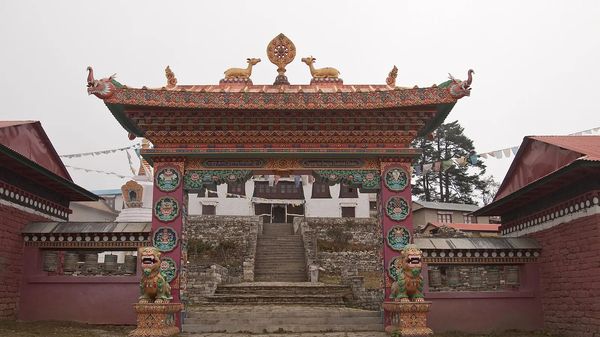
The Sherpa: A Tibetan-Origin People, Not a Job Title (2026)
An ethnic group, not an occupation — the Sherpa of the Khumbu have their own language, Nyingma Buddhist faith and a homeland below Everest, far beyond the mountaineering fame that made their name a household word.
Safety & Advisories
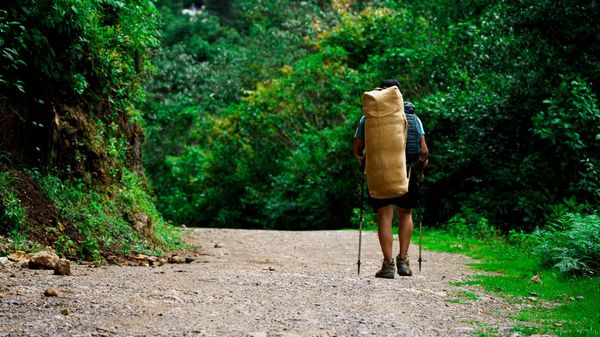
Can You Trek to Everest Base Camp at 82? What the Record and the Research Actually Say
There is no legal or medical age cutoff on the trail to Everest Base Camp, and the current record holder just proved it at 82.
Latest from the desk
Records & People
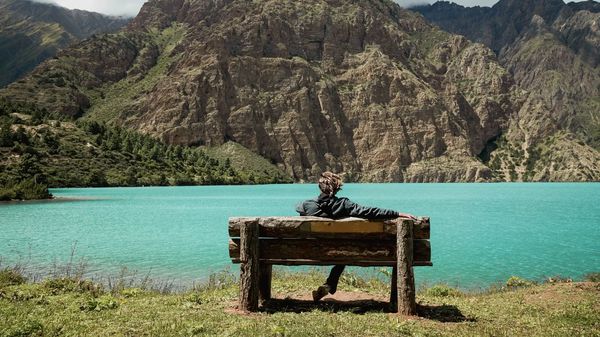
Everyone Calls This Nepal's Deepest Lake. A Government Survey Says It Isn't.
Phoksundo's turquoise water and no-fishing custom are real, but Nepal's own hydrology surveys put the actual depth record on a different lake entirely.
Flights & Access
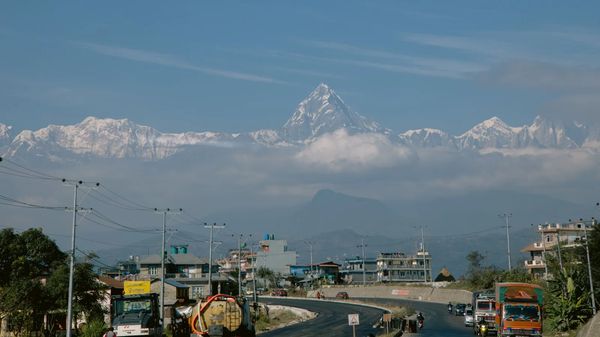
Pokhara Just Got Its First Real International Flight, Three Years After the Airport Opened
flydubai starts daily Dubai–Pokhara flights on 23 September 2026, the first scheduled international airline to serve Nepal's trekking capital since its $216 million airport opened in 2023.
Festivals & Events
Dashain 2027 tika is Saturday 9 October, twelve days earlier than this year
Dashain 2027 runs 30 September to 14 October, tika on Saturday the 9th. Bhai Tika is 31 October. Why the early date matters for an autumn trek.