
A Cancer Survivor Just Beat a 23-Year-Old Everest Speed Record
Ultrarunner Tyler Andrews climbed from Everest Base Camp to the 8,849m summit in 9 hours 55 minutes on May 28, 2026 — the fastest oxygen-assisted ascent ever recorded.
At a glance
- Published · updated
- TopicRecords & People
- Verified againstCBS News
- Treks coveredEverest Base Camp Helicopter Tour — 1 Day, Everest Base Camp Trek — 14 Days
Key facts
- American ultrarunner Tyler Andrews, 36, climbed from Everest Base Camp to the 8,849m summit in 9 hours 55 minutes on May 28, 2026.
- He broke a record that had stood for 23 years — 10 hours 56 minutes, set by Lakpa Gelu Sherpa in 2003.
- Andrews is a cancer survivor who moved from high-school cross country to marathons to elite mountain running.
- The climb used supplemental oxygen and a full support team; the time still awaits formal ratification by Nepal's mountaineering authorities.
Nine hours and fifty-five minutes. That is how long it took Tyler Andrews, a 36-year-old ultrarunner from Concord, Massachusetts, to move from Everest Base Camp to the summit of the world's highest mountain on May 28, 2026 — a climb guided clients usually take four to seven days to complete, camp by camp, with rest days built in to let their blood adjust to the altitude. Andrews did it in under ten hours, on supplemental oxygen, breaking a record that had stood since before most of the climbers on the mountain that season were born.
The previous mark, 10 hours 56 minutes, was set in 2003 by Lakpa Gelu Sherpa — a time so respected in Himalayan climbing that no one beat it for 23 years, despite better forecasting, lighter gear and a generation of elite mountain athletes trying. Andrews took more than an hour off it.
He is an unlikely record holder for the discipline. Andrews' background isn't in a Sherpa climbing family or an expedition dynasty — it's in road running. He ran cross country in high school, moved up to marathons, then pivoted to mountain and trail ultrarunning, where he has set more than 100 Fastest Known Time records worldwide, including speed ascents of Kilimanjaro and Aconcagua. He is also a cancer survivor, a detail his team says shaped how he approached the climb: train relentlessly, respect the mountain, and treat every hour above Base Camp as borrowed time.
| Year | Climber | Time |
|---|---|---|
| 2003 | Lakpa Gelu Sherpa | 10h 56m |
| 2026 | Tyler Andrews | 9h 55m |
The climb was supported rather than solo: Andrews used supplemental oxygen and was accompanied by a team from Dawa Steven Sherpa's Asian Trekking, who managed his food, water, oxygen bottles and route-finding so he could focus purely on moving fast. That distinction matters to climbers — this is a speed record for an oxygen-assisted ascent, not the far rarer no-oxygen speed record, which currently stands at 22 hours 29 minutes. Andrews actually attempted that record earlier in the same May 2026 window and had to turn back, a reminder of how differently the mountain treats climbers with and without bottled oxygen, and how much margin oxygen buys even elite athletes.
Andrews summited on May 28, in one of the last usable weather windows of the spring 2026 season, which closed within days. Nepal's tourism authorities have not yet formally ratified the time — new speed records typically take weeks of paperwork, witness statements and GPS-track verification — but climbing media and Andrews' own team have widely reported the number as a new benchmark for the mountain.
What this means for trekkers
What this means for you
You will never need to move this fast, and that is the point worth taking home. Andrews' record is the extreme edge of what a body can do on Everest, built on years of elite training, a full support team and supplemental oxygen. Nearly everyone else on the mountain that week was doing the opposite: climbing slowly, sleeping at four camps, resting deliberately so their bodies could build the red blood cells that make thin air survivable. That patient, staged approach is exactly how a reasonably fit trekker safely reaches Everest Base Camp itself, 5,364m and no technical climbing required, rather than the summit 3,500m higher. Speed records make headlines; slow acclimatisation is what actually keeps ordinary trekkers healthy at altitude.
If reading about record-breaking speed on Everest has you thinking about the mountain for yourself, the realistic and achievable version is the classic 14-day Everest Base Camp trek — a sane, guide-led pace with proper acclimatisation days built in, ending at the very Base Camp Andrews launched his record from. Prefer to see it without the multi-day walk in? Our Everest Base Camp helicopter tour reaches the same viewpoint in a single day.
Source: CBS News
Cover photo via Pexels (Pexels License).
Still running this season
Everest Base Camp Helicopter Tour — 1 Day is running normally
NMA-certified local guides, transparent pricing, 5,000+ treks since 1998. Message us your dates and we'll sort the permits, lodges and logistics — reply within 24 hours, no obligation.
Popular Nepal treks
All treks →



Related coverage
Records & People
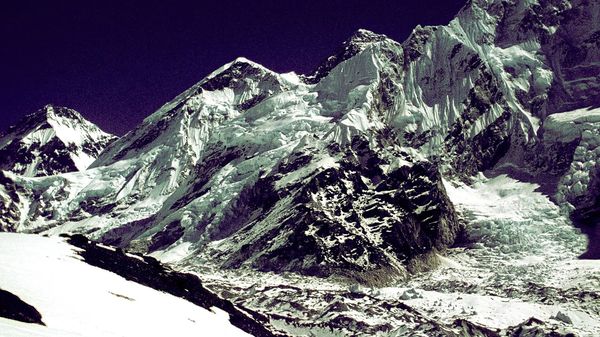
Everest Records: The Fastest, Oldest, and Most Summits
Mount Everest's verified record book — who has summited most, who was oldest and youngest on top, and the fastest ascent ever timed, with every name, number and year sourced.

Flights & Access
Everest Base Camp Trek or Helicopter Tour? The Kala Patthar Reopening Changes the Math in 2026
A shared helicopter can land you on Kala Patthar again after a three-year ban, but it still can't buy you what nine days on the trail does.
Industry & Tourism
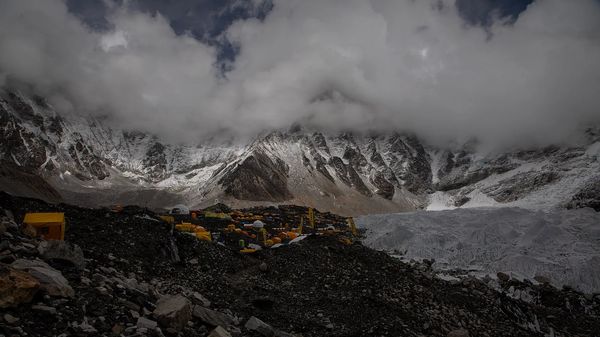
Everest Just Had Its Busiest Climbing Season Ever. Climbers Also Left Behind 90,000 Kilograms of Trash.
A record 701 climbers pushed for the summit this spring, and the mountain's cleanup crews hauled down a record amount of waste right behind them.
Records & People
Nobody tells you Everest can only be climbed a few days a year, and the jet stream is why
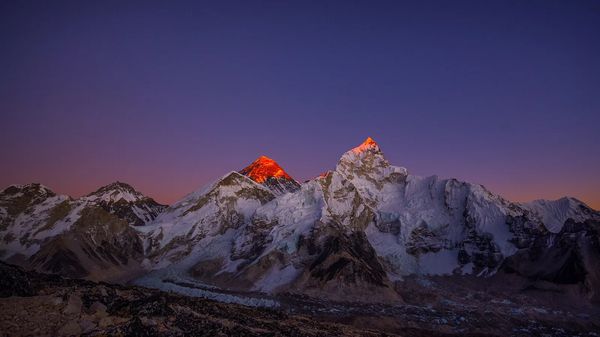
For most of the year a jet stream sits on the summit of Everest with winds over 250 km/h. It lifts north for a few weeks each May when the monsoon pushes it aside, and that short calm is the only time the mountain is climbable.
Latest from the desk
Records & People
Everyone Calls This Nepal's Deepest Lake. A Government Survey Says It Isn't.
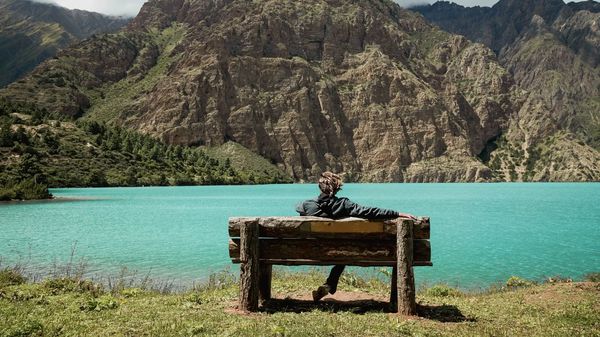
Phoksundo's turquoise water and no-fishing custom are real, but Nepal's own hydrology surveys put the actual depth record on a different lake entirely.
Flights & Access
Pokhara Just Got Its First Real International Flight, Three Years After the Airport Opened
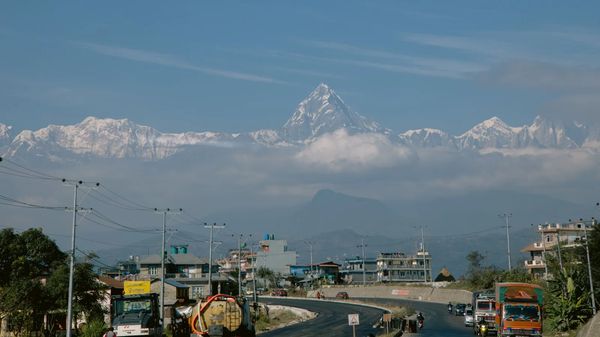
flydubai starts daily Dubai–Pokhara flights on 23 September 2026, the first scheduled international airline to serve Nepal's trekking capital since its $216 million airport opened in 2023.
Festivals & Events
Dashain 2027 tika is Saturday 9 October, twelve days earlier than this year
Dashain 2027 runs 30 September to 14 October, tika on Saturday the 9th. Bhai Tika is 31 October. Why the early date matters for an autumn trek.