
Why Nepal's Flag Is the Only One on Earth That Isn't a Rectangle
Every other nation's flag is a simple rectangle. Nepal's is built from two overlapping triangles, and its exact shape is written into law like a geometry proof.
At a glance
- Published · updated
- TopicRecords & People
- Verified againstWikipedia (compiled historical/constitutional record)
- Treks coveredKathmandu Valley Cultural Tour — 3 Days, Everest Base Camp Trek — 14 Days, Nepal Classic Tour — 7 Days
There are 195 countries in the world. Exactly one of them does not fly a rectangular flag. Nepal's national flag is made of two crimson pennants stacked on top of each other, and its precise shape isn't just a design choice — it's defined in Nepal's constitution with the rigor of a geometry textbook.
Key facts
- Current design formally adopted 16 December 1962, alongside Nepal's new constitution
- Aspect ratio is an irrational number, roughly 1:1.219 — not a clean fraction like every other flag
- The only non-rectangular national flag in use anywhere in the world
- Made of two crimson triangles with a navy-blue border, a moon and a sun
The flag is two "pennons" — long, tapering triangular banners historically carried by cavalry and mounted messengers because they were easy to spot fluttering from a distance — fused into one. That history traces to the Shah dynasty and the 18th-century unification of Nepal under King Prithvi Narayan Shah, when rival branches of the ruling family each flew their own pennant. The modern flag physically merges both, one on top of the other, as a permanent symbol of a unified Nepal.
By the mid-19th century, most Asian nations had switched to rectangular flags, following the European vexillological standard that made mass production, uniform sizing and flagpole hardware simple. Nepal — never colonized, and proud of that distinction — simply never made the switch. Every element carries meaning, laid out below:
| Element | Meaning |
|---|---|
| Crimson red field | Bravery, and Nepal's national flower (rhododendron) |
| Navy-blue border | Peace and harmony |
| Moon (upper triangle) | Coolness, calm, the serene character of the Himalaya |
| Sun (lower triangle) | Strength, energy, resolve |
| Two stacked triangles | The Himalayan mountains, and the unification of two dynastic lines |
The shape has real practical consequences. Because it isn't a simple rectangle, Nepal's flag doesn't fit standard 2:3 or 3:5 international flag-display hardware used at events like the Olympics — at the 2016 Rio Games, Nepali athletes marched behind a rectangular version of the flag with a white background around the two triangles, purely so it would fit the required frame. At home, the true pennant shape flies everywhere from government buildings to mountaineering base camps, unapologetically irregular.
What this means for trekkers
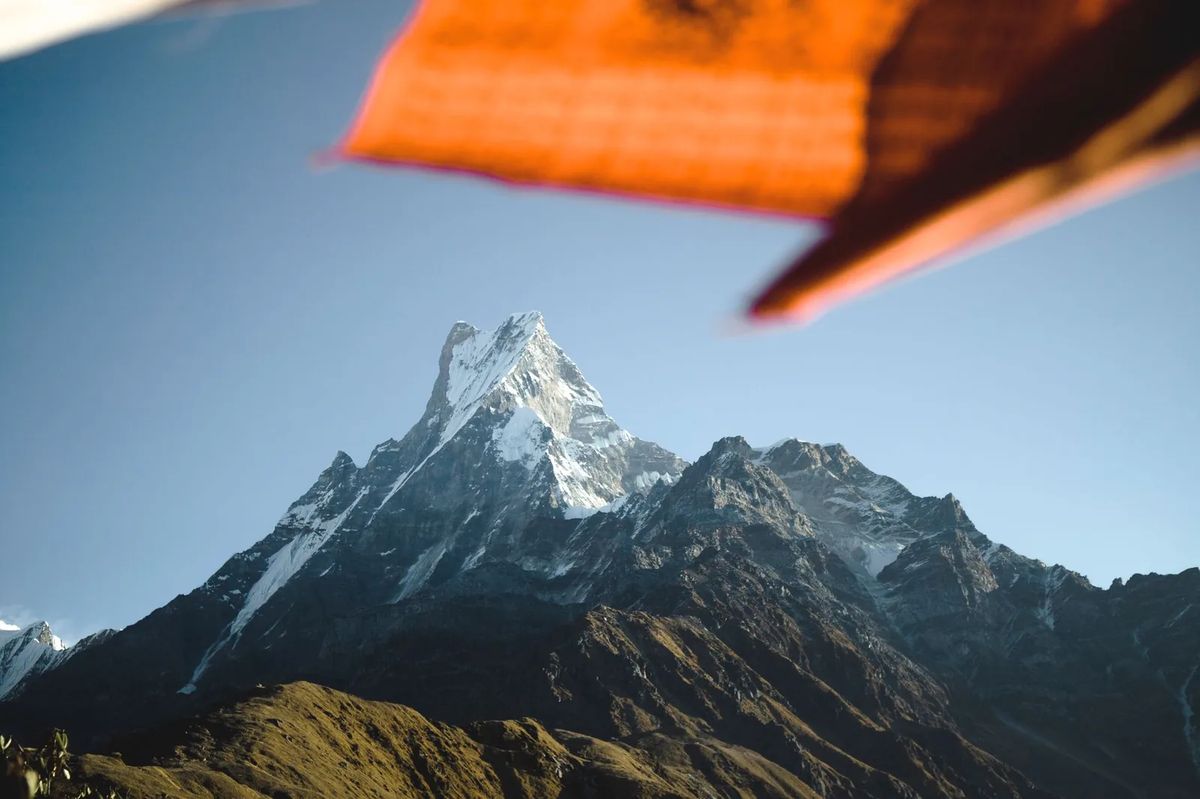
You'll see the real, non-rectangular flag flying constantly once you're on the ground in Nepal — over Kathmandu's Durbar Square, at army and police checkpoints on the trail, and, most memorably, snapping in the wind at high-altitude viewpoints with an 8,000 m peak behind it. It's a small detail most visitors don't clock until someone points it out, and then they can't unsee it: literally the only country on the planet whose flag isn't a rectangle, flying over literally the highest points on the planet.
It's a small piece of cloth with an unusually specific backstory: a flag built from a mathematical formula, two merged cavalry pennants, and three centuries of not bothering to conform. Nepal is the only country that gets to say its flag has never once been a rectangle.
Source: Wikipedia — Flag of Nepal
Cover photo: Ashok J Kshetri via Pexels (Pexels License).
Still running this season
Kathmandu Valley Cultural Tour — 3 Days is running normally
NMA-certified local guides, transparent pricing, 5,000+ treks since 1998. Message us your dates and we'll sort the permits, lodges and logistics — reply within 24 hours, no obligation.
Popular Nepal treks
All treks →
Related coverage
Records & People
Nepal Runs on Its Own Clock: Why the Country Sits 15 Minutes Off Every Neighbor
Land in Kathmandu and you don't just change time zones — you join one of the only places on Earth with a 45-minute offset, fixed to the exact minute of a Himalayan peak.
Culture & Heritage
Kathmandu Valley UNESCO Site: 7 Monument Zones, One Inscription (2026)
Seven monument zones, inscribed together in 1979 as one World Heritage Site, are the cultural gateway every Nepal trek passes through.
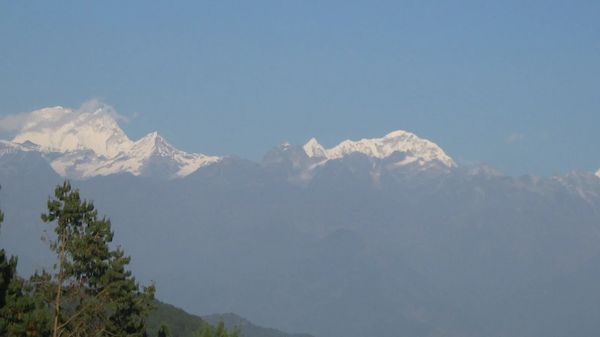
Flights & Access
Nepal Runs Its Clocks 15 Minutes Off Even India, and a Sacred Mountain Is the Reason
Nepal Standard Time is UTC+5:45, one of only three 45-minute time zones on Earth, and the offset is set to the exact longitude of a peak Nepalis consider sacred.
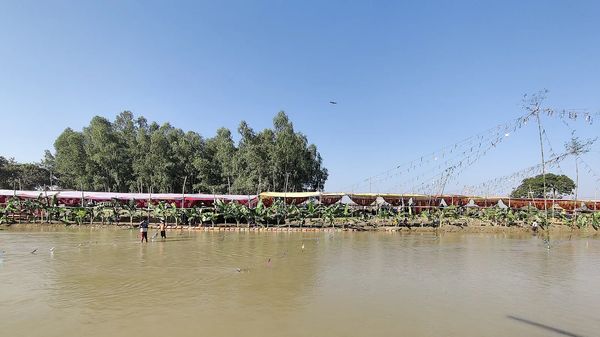
Festivals & Events
Chhath 2026: Nepal's Sun-Worship Festival of the Terai and Mithila Explained
Four days of fasting, river-standing and dawn offerings
Latest from the desk
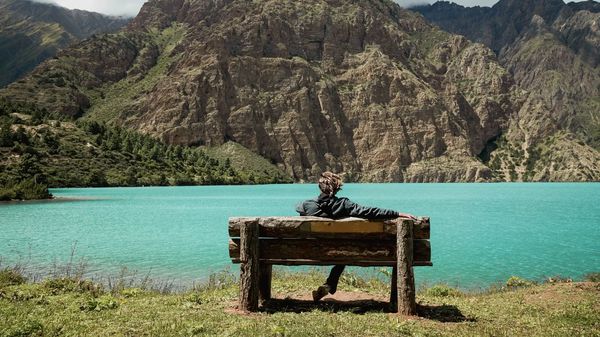
Records & People
Everyone Calls This Nepal's Deepest Lake. A Government Survey Says It Isn't.
Phoksundo's turquoise water and no-fishing custom are real, but Nepal's own hydrology surveys put the actual depth record on a different lake entirely.
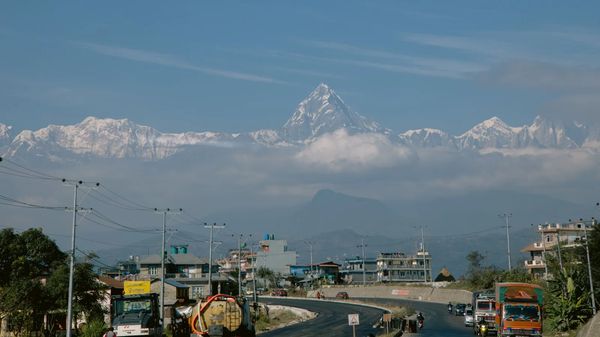
Flights & Access
Pokhara Just Got Its First Real International Flight, Three Years After the Airport Opened
flydubai starts daily Dubai–Pokhara flights on 23 September 2026, the first scheduled international airline to serve Nepal's trekking capital since its $216 million airport opened in 2023.
Festivals & Events
Dashain 2027 tika is Saturday 9 October, twelve days earlier than this year
Dashain 2027 runs 30 September to 14 October, tika on Saturday the 9th. Bhai Tika is 31 October. Why the early date matters for an autumn trek.