
Airline Miles and Points for Beginners in 2026: How to Earn, Redeem, and When Cash Back Wins
A plain-English 2026 guide to how frequent-flyer miles and transferable bank points really work — earning, redeeming, the award sweet spots to Kathmandu, and the honest cases where simple cash back beats points.

At a glance
- Published
- TopicDeals & Routes
- Verified againstWikipedia — Frequent-flyer program
- Treks coveredEverest Base Camp Trek — 14 Days, Kathmandu & Pokhara Tour — 5 Days, Annapurna Base Camp Trek — 9 Days
Air miles look like free travel, and for a disciplined few they nearly are. For everyone else they are a confusing pile of points that quietly lose value while you save them for a trip you never quite book. This is a plain-English guide to how frequent-flyer miles and bank points actually work in 2026 — how you earn them, how you turn them into flights, where the real sweet spots are, and the uncomfortable truth that for many travellers simple cash back wins.
Key facts
- Most large airlines now award miles on how much you spend, not how far you fly — the old distance-based charts have largely given way to revenue-based earning.
- In recent years travellers have earned more miles from co-branded credit and debit cards than from flying itself.
- A mile or point is commonly worth around 1–2 US cents when redeemed for an economy award — but this is an approximate range that varies enormously by program, route and cabin, and airlines value them far lower internally.
- An "award" flight is rarely fully free: you still pay taxes, carrier charges and fees, which on some routes run to hundreds of dollars.
- Three global alliances — Star Alliance, Oneworld and SkyTeam — let you spend one airline's miles on partner flights.
Earning: flying is now the slow way
There are two ways miles land in your account. The first is flying. Airlines once paid roughly one mile per mile flown; today the big carriers mostly pay on ticket price, so a cheap long-haul seat earns less than a pricey short hop. Elite status adds a bonus — typically an extra 25% to 100% — which is why frequent business travellers pull ahead so fast.
The second, and for most people the bigger, source is spending on a points-earning card. Here is the honest framing: those points are only worthwhile if you pay the balance in full every month. Interest on a carried balance dwarfs any conceivable rewards value, so if you do not clear the card monthly, stop reading about points and pay it off first — that is the single most valuable travel-finance move there is.
Airline miles vs transferable bank points
Two things both get called "points" and they behave very differently. Airline miles live in one airline's program and only work for that airline and its alliance partners. Transferable bank points sit in a bank's own program and can be moved to several airline or hotel partners later, or cashed out. Flexibility is their whole advantage: you commit to an airline only when you are ready to book, which protects you if any one program devalues.
| Currency type | Roughly what it's worth | Best used for |
|---|---|---|
| Airline miles (frequent-flyer) | Commonly ~1–2 cents each for economy awards; sometimes more in premium cabins, sometimes far less. Varies by program. | A specific award flight, especially long-haul in a good cabin |
| Transferable bank points | Often a similar ~1–2 cents when moved to the right partner; usually ~1 cent if taken as cash | Flexibility — deciding the airline later |
| Hotel points | Typically under ~1 cent each, and highly variable | Free hotel nights, not flights |
| Cash back | A fixed, known ~1 cent each (1% back = 1 cent per dollar) | Anything at all, with no research and no strings |
Redeeming: where the value is won or lost
Earning is easy; redeeming well is the actual skill. Airlines control how many seats they release for miles using the same yield-management maths that prices cash tickets, so award space on popular dates is genuinely scarce. Some programs still publish a fixed award chart; many have moved to "dynamic" pricing where the mileage price floats with demand — usually meaning more miles for the seats you actually want.
The reliable way to get well above that 1-cent baseline is to spend miles on expensive flights — long-haul routes and premium cabins — where the cash price is high but the mileage price has not risen in step. Redeem miles for a cheap economy hop and you often get roughly what plain cash back would have given you, after more effort. That asymmetry is why experienced travellers hoard for big redemptions and pay cash for small ones.
The beginner mistake to avoid
Do not hoard. The most common rookie error is treating miles like a savings account — banking them for years toward some dream trip. Miles are not money in the bank; they are a currency the airline can devalue whenever it likes, and program rules change frequently and without much warning. A single overnight chart change can quietly raise the price of the exact flight you were saving for. The professionals live by three words: earn and burn. Redeem within a year or so of earning, aim for a clear trip, and never let a big balance sit exposed to the next devaluation.
Why cash back can beat points
Here is the unprofitable thing to say out loud: for a lot of people, plain cash back is the better choice. Cash back has a fixed, honest value — a cent is a cent, it never gets devalued, it never expires the way some miles do, and it takes zero research. Points only pull decisively ahead when you consistently redeem them well above their cash value, which means chasing premium-cabin and long-haul sweet spots and flying on the dates award space exists. If you will mostly book economy on fixed dates, the "worth ~1–2 cents" headline collapses toward 1 cent, and cash back matches or beats it with none of the hassle. Choose points because you enjoy optimising them, not because you assume they are automatically richer.
One more piece of timing sense: award seats follow the same demand curve as cash fares, so the peak-season crunch that makes paid tickets expensive also makes award space vanish. Weighing miles against a paid ticket? Our data-led guide on the cheapest time to book international flights in 2026 covers the booking windows that matter either way.
Using miles to reach Nepal
This is where it gets practical for trekkers. There is no nonstop flight from North America, the UK or most of Europe to Kathmandu, so nearly every award routing connects through a hub — and the Gulf and Middle East carriers are the classic ones into Nepal. Award tickets through Doha, Dubai, Abu Dhabi or Istanbul are common ways to reach Kathmandu on miles, because those airlines and their partners fly the route daily and release award space more predictably than the few Asian connections. Budget for the taxes and carrier fees on top of the miles, and remember an award seat on your ideal October date is scarce — book the moment space appears, not the moment your leave is approved.
Once your miles have landed you in Kathmandu, the mountains are the easy part to plan. We run the classic routes year-round — the 14-day Everest Base Camp trek, the Annapurna Base Camp trek, and gentler Kathmandu and Pokhara tours. Fly in on points; walk in with us.
Cover photo: Media Lens King via Pexels (Pexels License).
Planning a trek?
Trek this route with us — Everest Base Camp Trek — 14 Days
NMA-certified local guides, transparent pricing, 5,000+ treks since 1998. Message us your dates and we'll sort the permits, lodges and logistics — reply within 24 hours, no obligation.


Popular Nepal treks
All treks →


Related coverage
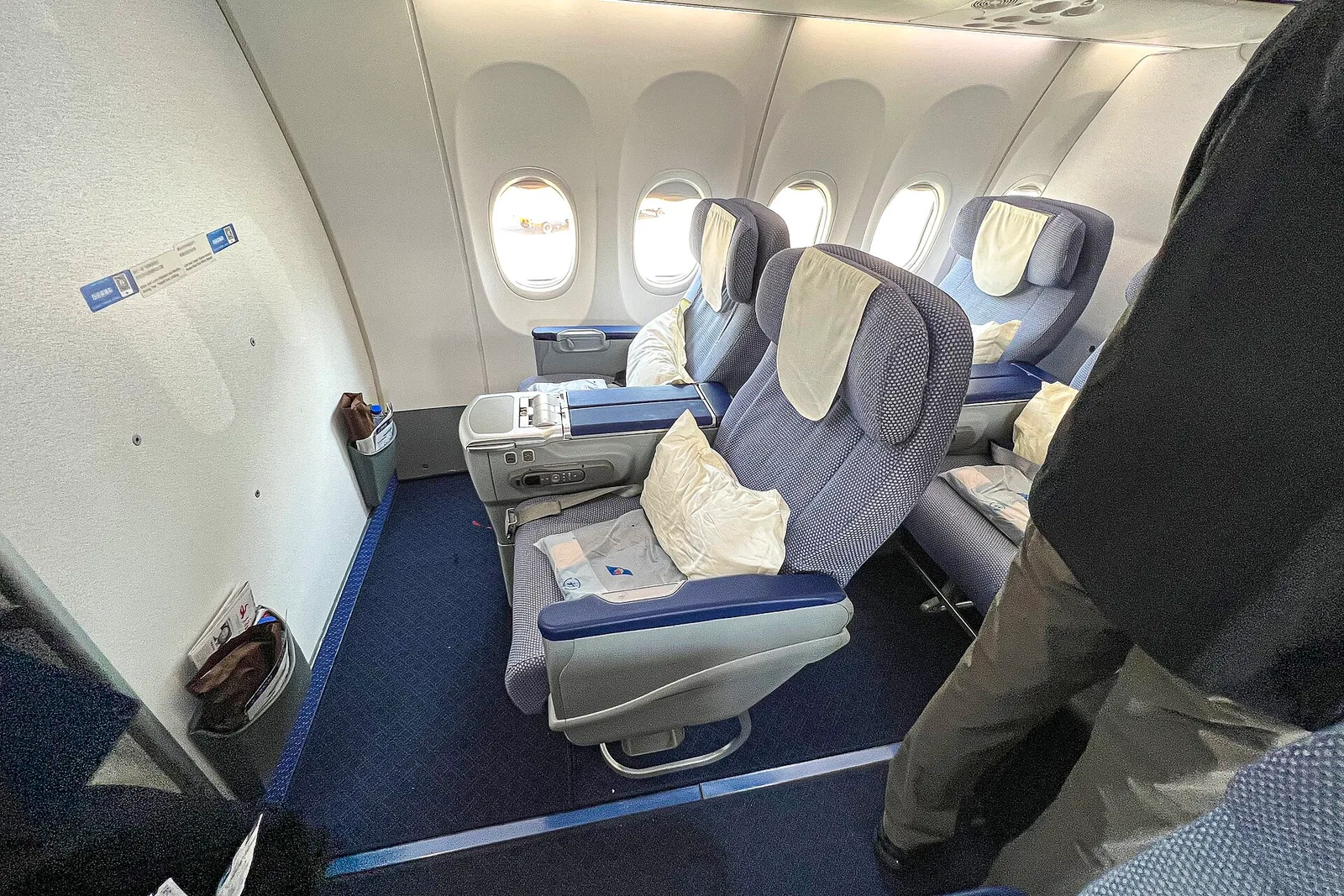
Deals & Routes
How to Fly Business Class for Less in 2026 (Points, Miles, Upgrades & Error Fares)
The legitimate playbook for lie-flat seats at a fraction of the cash fare — transferable points, sweet-spot award redemptions, transfer bonuses, upgrade bids, error fares and positioning flights, as of 2026.

Money & Insurance
What Does Travel Insurance Actually Cover in 2026? (And the Exclusions That Catch People Out)
A plain-English guide to what a travel policy really pays for — medical, evacuation, cancellation, delay and baggage — and the fine-print exclusions that leave travellers with the bill.
Deals & Routes
The Cheapest Time to Book International Flights in 2026 (What the Data Actually Says)
The "book on a Tuesday" rule is dead. Two of the biggest airfare datasets agree on when to actually book — and what it means for flights to Kathmandu.

Flights & Access
Planning a Nepal Trek From Sweden in 2026: Flights, Costs in SEK and a 12-Day Everest Itinerary
No direct Stockholm–Kathmandu flight, but three clean one-stop routes, honest kronor costs and a 12-day Everest Base Camp plan built around Swedish annual leave.
Latest from the desk
Gear & Tech
How to Avoid Roaming Charges Abroad in 2026: eSIM, Local SIM, Roaming Passes and Wi-Fi Calling Compared
A practical decision framework for staying connected overseas without the bill shock — carrier roaming passes, local SIMs, eSIMs and Wi-Fi calling, the EU "roam like at home" rules, and what to do in Nepal.

Records & People
Nepal's Honey Hunters Climb 50-Metre Cliffs on Rope Ladders for a Honey That Can Make You Hallucinate
High in Lamjung's Gurung villages, hunters dangle from handwoven rope ladders to harvest the world's largest honeybee — and a red spring honey potent enough to cause hallucinations in the wrong dose.

Flights & Access
No Commercial Flight Has Ever Crossed Directly Over Mount Everest — Here's the Real Reason Why
Everest's summit sits well within cruising altitude for a jet, but there's no safe way down from there in an emergency — which is exactly why every scheduled route bends around it, not over it.