
No Commercial Flight Has Ever Crossed Directly Over Mount Everest — Here's the Real Reason Why
Everest's summit sits well within cruising altitude for a jet, but there's no safe way down from there in an emergency — which is exactly why every scheduled route bends around it, not over it.
At a glance
- Published
- TopicFlights & Access
- Verified againstSimple Flying
- Treks coveredEBC Trek & Helicopter Return — 10 Days, Everest Base Camp Helicopter Tour — 1 Day, Everest View Trek — 7 Days
Key facts
- Everest's summit sits at 8,849m (29,032ft) — inside the altitude band where most long-haul jets cruise, yet no scheduled airline route crosses directly over it.
- Standard emergency procedure after a cabin decompression is to descend to 10,000ft (3,048m) within minutes so passengers can breathe without masks — a descent that isn't available over terrain that high.
- Minimum safe altitudes charted for the Everest corridor run close to 29,500ft in places, leaving almost no margin for an emergency descent at all.
- Kathmandu's daily tourist 'Mountain Flights' climb to about 25,000ft (7,600m) along the range's southern side — close enough to see Everest, Lhotse, Makalu and Cho Oyu, but never over the summit.
- China additionally restricts most foreign carriers from overflying Tibetan airspace on the mountain's north side, adding a political wall to the physical one.
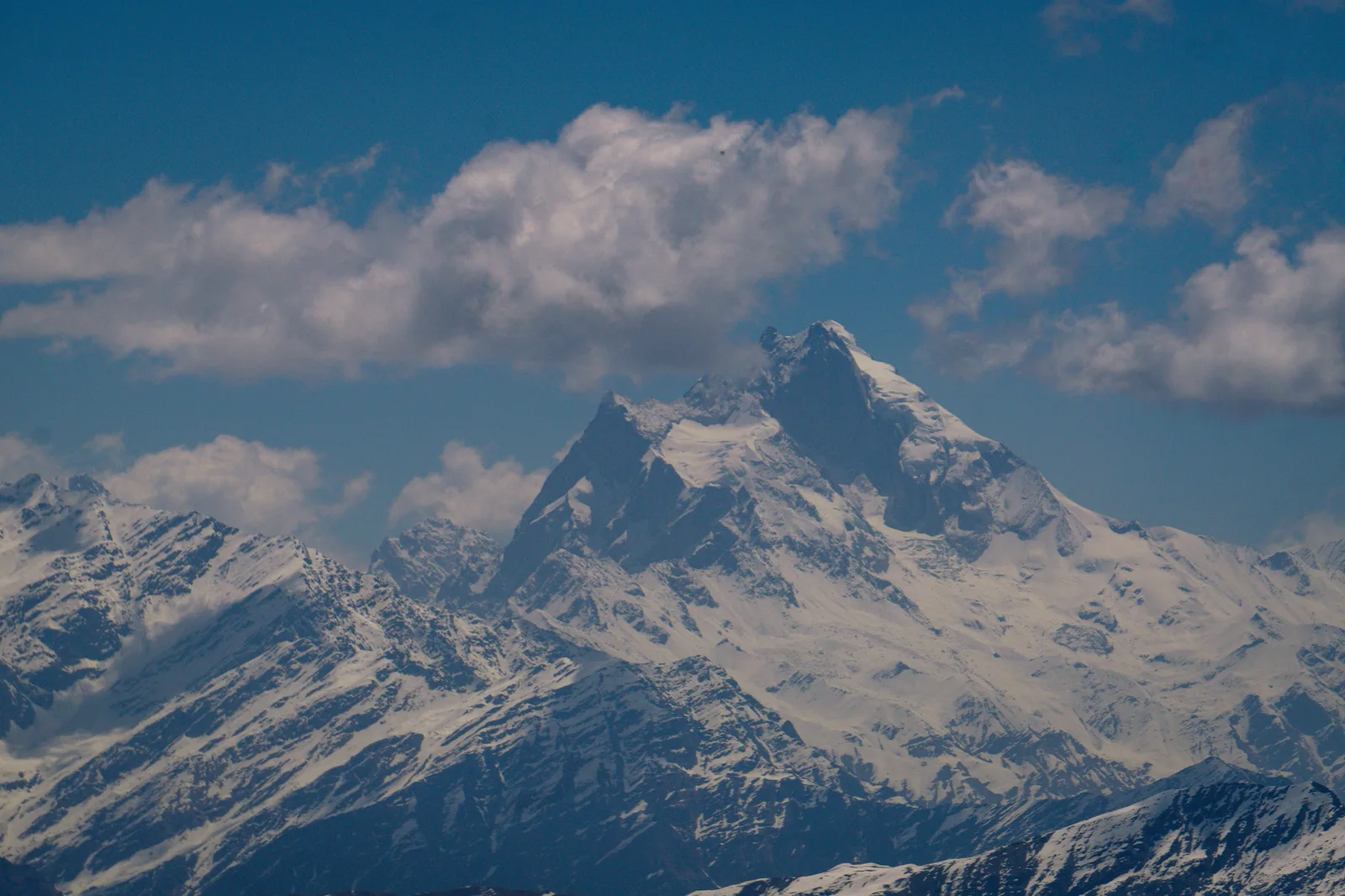
Fly nonstop from Doha to Tokyo, or Delhi to Beijing, and your flight path will visibly bend — a wide, deliberate detour around a narrow belt of Himalayan peaks that includes the highest point on Earth. It looks strange on a flight-tracking app: airliners cruise at 33,000–40,000ft, well above Everest's 29,032ft summit, so on paper there's plenty of room to spare. In practice, no scheduled passenger flight crosses directly over Mount Everest, and the reason has nothing to do with the climb itself and everything to do with what happens if something goes wrong.
Airline emergency procedure for a sudden cabin decompression is blunt: passengers get the drop-down mask, and the crew descends the aircraft to 10,000ft — the altitude at which cabin air has enough oxygen for people to breathe unaided — as fast as it can be done safely, typically within a few minutes. That protocol assumes clear terrain all the way down. Over the Everest corridor there isn't any. Charted minimum safe altitudes in the region run close to 29,500ft in places, meaning regulations and simple rock require an aircraft to stay above roughly the same height as the mountain itself. A jet's emergency oxygen supply for passengers is built to last only around 12–22 minutes at cabin altitude — nowhere near long enough to hold a pattern until the terrain below finally clears.
Weather stacks a second risk on top of the altitude problem. The jet stream regularly slams into the Himalayan wall at well over 100mph, throwing up clear-air turbulence and mountain waves that are hard to forecast and unpleasant, sometimes dangerous, to fly through even at cruise altitude. Airlines that do route reasonably close to the range, largely for great-circle efficiency on Europe–East Asia runs, tend to give the highest peaks a wide lateral berth rather than a narrow one directly overhead. On the mountain's north side, Chinese airspace restrictions over Tibet limit most foreign carriers from overflying the region at all, reinforcing a detour that safety planning would likely produce on its own.
None of this is new. The first aircraft to cross Everest's summit did so on 3 April 1933, when the Houston–Mount Everest expedition sent two modified open-cockpit Westland biplanes over the top at around 100mph, their crews wearing early oxygen equipment and electrically heated suits against air estimated near −45°C — a specialist, one-off flight built for exactly that purpose, not a template anyone has turned into a passenger route in the 90-plus years since.
| Flight type | Typical altitude | Passes directly over the summit? |
|---|---|---|
| Long-haul airliner cruise | 33,000–40,000ft | No — routed around the range |
| Kathmandu Mountain Flight (tourist) | ~25,000ft | No — flies along the south side |
| Everest Base Camp helicopter tour | ~17,600ft (5,364m, at EBC) | No — lands below, alongside the massif |
| 1933 Houston–Everest expedition | ~31,000ft | Yes — the one confirmed exception, a single specialist flight |
What this means for travellers
What this means for you
If you actually want to get close to Everest rather than see it from a cruising airliner's window seventy miles off, air travel within Nepal is the way to do it, not a scheduled jet route. A helicopter tour puts you down at Everest Base Camp itself, around 5,364m, with the mountain's flanks close enough to fill the windscreen; trekking in on foot on the classic route, or a shorter guide-assisted variant, gets you to the same base camp at ground level with weeks rather than minutes to take it in. Either way, nobody — not us, not a scheduled airline — is putting you directly over the summit, and for the same reason the airlines stay clear: there is simply no safe way down from there.
Source: Simple Flying
Cover photo: Jayesh Chaudhary via Pexels (Pexels License).
Planning a trek?
Trek this route with us — EBC Trek & Helicopter Return — 10 Days
NMA-certified local guides, transparent pricing, 5,000+ treks since 1998. Message us your dates and we'll sort the permits, lodges and logistics — reply within 24 hours, no obligation.


Popular Nepal treks
All treks →


Related coverage
Industry & Tourism
There's a Museum on the Everest Trail Where Every Exhibit Was Once Garbage Someone Carried Down the Mountain
At 3,775 metres above Namche Bazaar, Sagarmatha Next turns Everest's decades of climbing waste into art — and it sits directly on the trail every Everest Base Camp trekker already walks.
Flights & Access
Every Everest Trekker Flies Through the World's Most Dangerous Airport — Here's Why There's No Other Way In
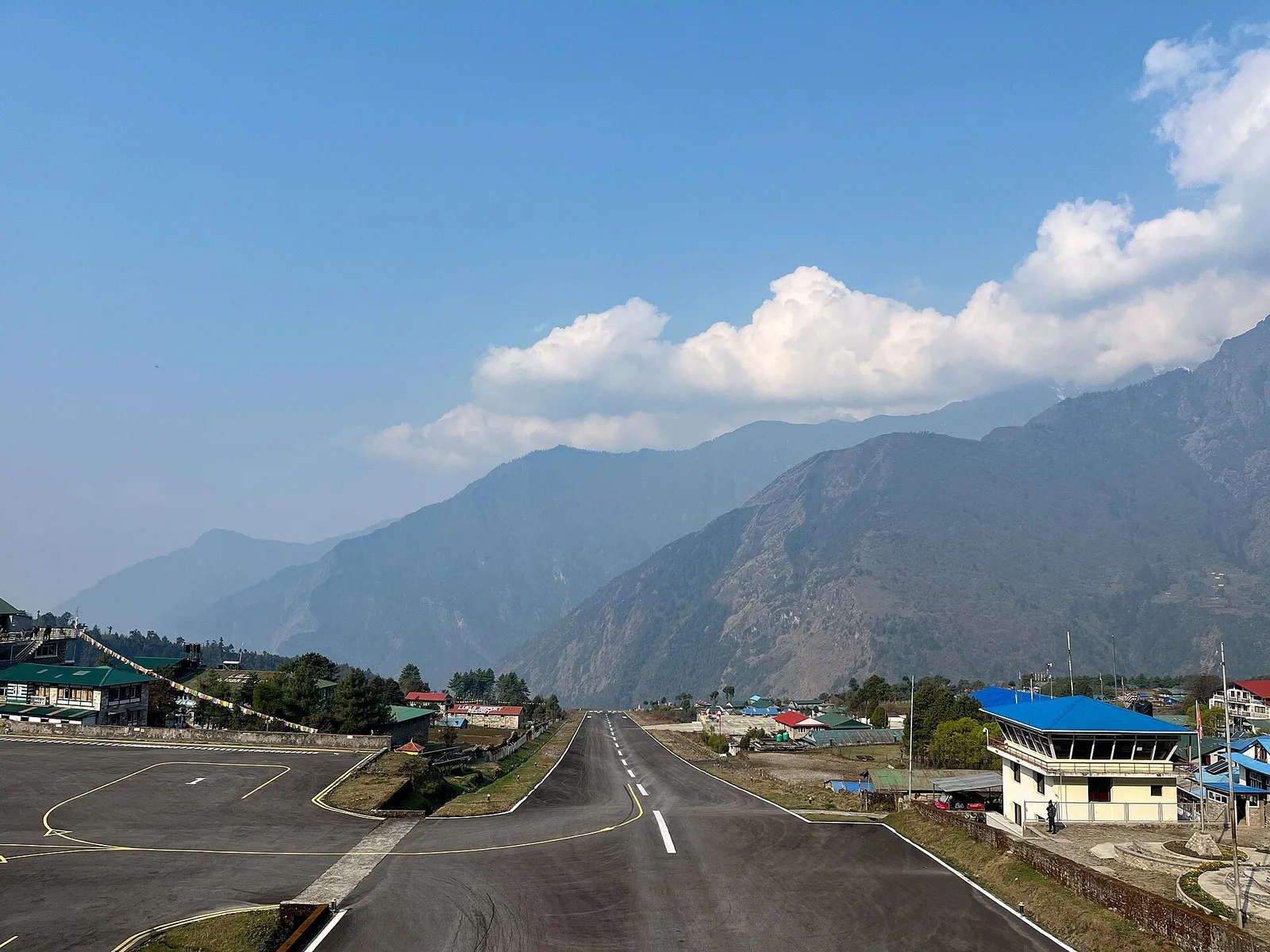
Tenzing-Hillary Airport at Lukla has a 527-metre runway wedged between a mountain wall and a cliff, and pilots need ten prior landings here before they're certified to fly it alone.
Flights & Access
Planning a Nepal Trek From the United States in 2026: Real Flights, Costs and a 14-Day Everest Itinerary
No airline flies nonstop from the US to Kathmandu — here is exactly how Americans actually get there, what a real Everest Base Camp trek costs in dollars, and an itinerary built around the flight.
Flights & Access
The World's Most Dangerous Airport Has No Go-Around Option — and It's the Only Way to Everest
Tenzing-Hillary Airport's runway is shorter than five football pitches, tilts uphill at nearly 12%, and ends in a rock wall on one side and a valley drop on the other — every Everest trekker flies through it anyway.
Latest from the desk

Gear & Tech
How to Avoid Roaming Charges Abroad in 2026: eSIM, Local SIM, Roaming Passes and Wi-Fi Calling Compared
A practical decision framework for staying connected overseas without the bill shock — carrier roaming passes, local SIMs, eSIMs and Wi-Fi calling, the EU "roam like at home" rules, and what to do in Nepal.

Records & People
Nepal's Honey Hunters Climb 50-Metre Cliffs on Rope Ladders for a Honey That Can Make You Hallucinate
High in Lamjung's Gurung villages, hunters dangle from handwoven rope ladders to harvest the world's largest honeybee — and a red spring honey potent enough to cause hallucinations in the wrong dose.

Visas & Entry
Digital Nomad Visas in 2026: Which Countries Offer Them, the Income You Need, and the Tax Catch
A verified 2026 guide to digital nomad visas - Portugal, Spain, Estonia, Croatia, the UAE, Costa Rica and Thailand DTV - with the exact monthly income each demands, how long you can stay, the tax angle, and how to bolt a Himalayan trek onto your base.