
Every Everest Trekker Flies Through the World's Most Dangerous Airport — Here's Why There's No Other Way In
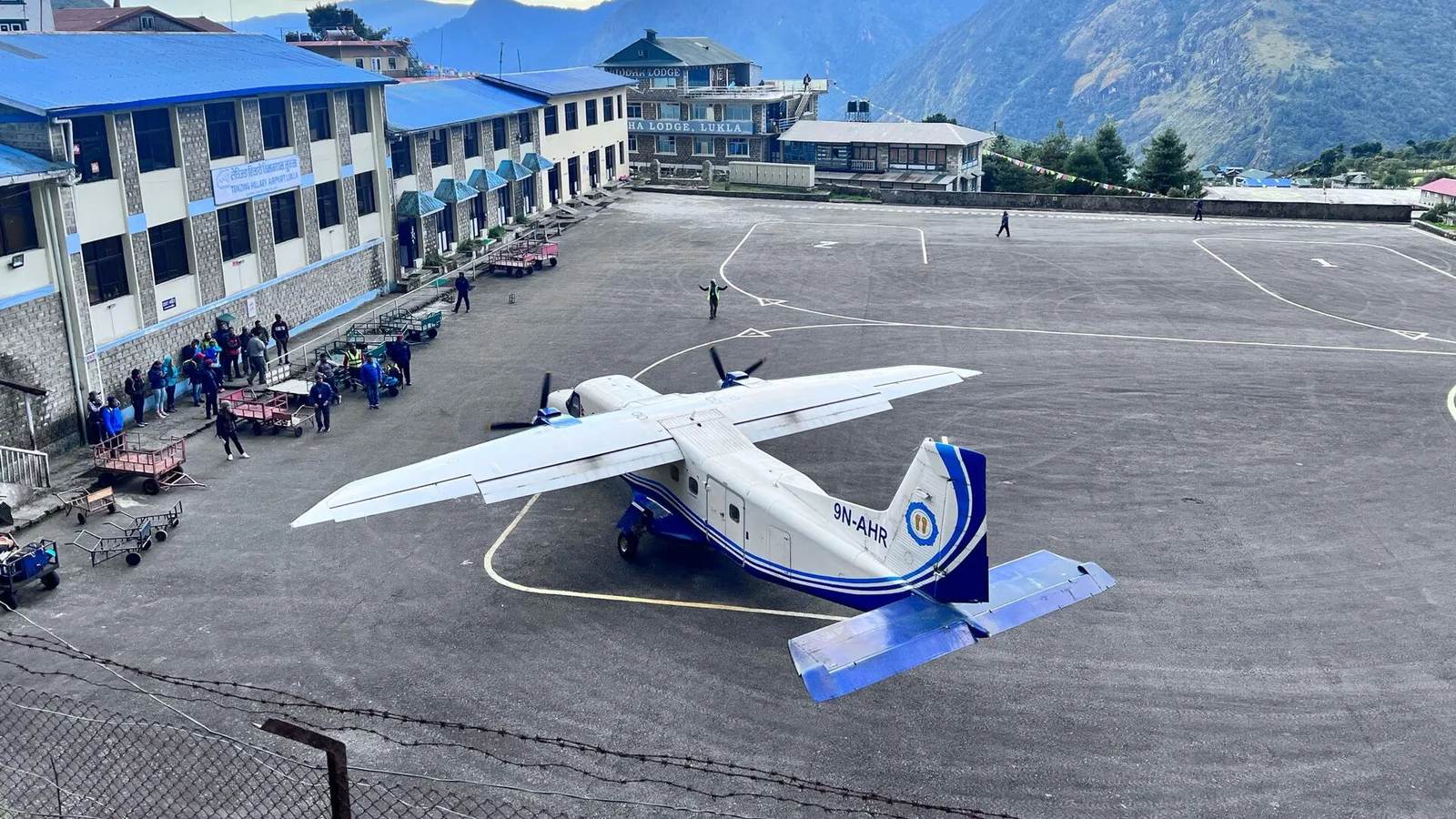
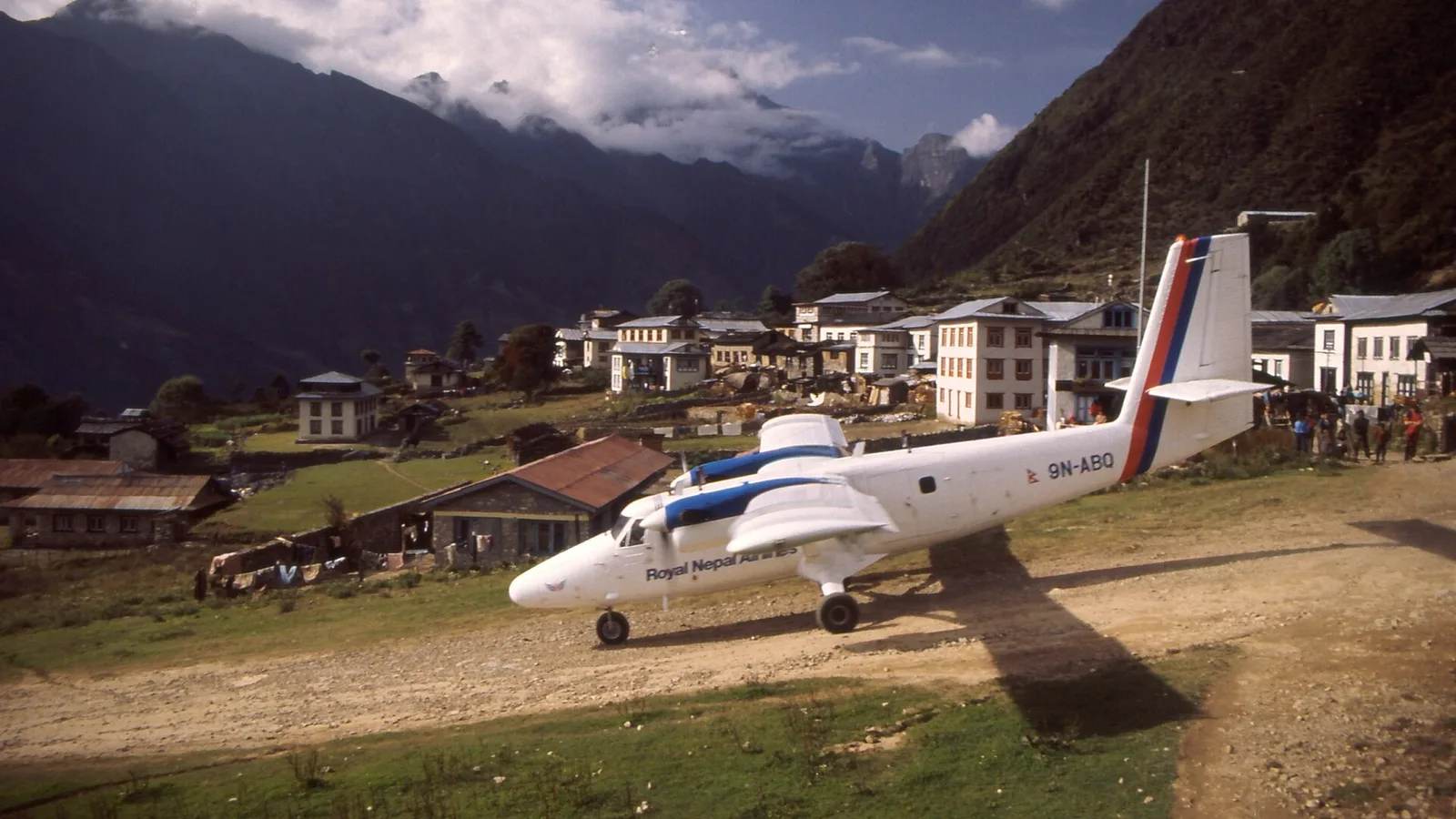
Tenzing-Hillary Airport at Lukla has a 527-metre runway wedged between a mountain wall and a cliff, and pilots need ten prior landings here before they're certified to fly it alone.
At a glance
- Published · updated
- TopicFlights & Access
- Verified againstWikipedia — Tenzing-Hillary Airport
- Treks coveredEBC Trek & Helicopter Return — 10 Days, Everest Base Camp Helicopter Tour — 1 Day, Everest Base Camp Trek — 14 Days
Key facts
- Tenzing-Hillary Airport at Lukla sits at 2,845 metres (9,334 ft) — one of the highest commercial airports on Earth.
- Its paved runway is just 527 metres long and 30 metres wide, built on an 11.7% gradient — a slope, not a flat strip.
- The History Channel's Most Extreme Airports named it the world's most dangerous airport in 2010, a ranking that has stuck for over fifteen years.
- Pilots must log 100 short-takeoff-and-landing (STOL) missions, a year of STOL flying in Nepal, and 10 supervised landings at Lukla itself before they're certified to fly the route solo.
There is no road to Everest Base Camp. No railway, no highway, not even a rough jeep track for the final week of the approach. For almost every one of the tens of thousands of foreigners who trek toward Everest each year, the journey begins the same way: a short flight from Kathmandu, or from Ramechhap in the busiest weeks, that ends on a runway shorter than five city blocks, cut into a mountainside at 2,845 metres.
Tenzing-Hillary Airport, still known to almost everyone simply as Lukla, was built in 1964 under the personal supervision of Sir Edmund Hillary, who needed a way to fly supplies into the Khumbu for the schools and hospitals his Himalayan Trust was building. It started as bare compacted soil and was not paved until 2001. In 2008, the government renamed it Tenzing-Hillary Airport in honour of Tenzing Norgay and Hillary, the first two men confirmed to have reached Everest's summit. In 2010, The History Channel's documentary series Most Extreme Airports gave the runway a different kind of fame, ranking it the single most dangerous airport in the world.
The danger isn't the elevation alone — a handful of other airstrips sit higher. It's the combination: a mountain wall rises immediately off the northern end of the runway, and the southern end simply stops at a cliff into the valley below. There is nowhere to abort. If an approach isn't lined up correctly there is no go-around procedure — the aircraft has to land — which is why only pilots meeting strict experience minimums are certified for the route, and why the airport closes at a moment's notice whenever cloud or crosswind moves in.
| Requirement | Minimum |
|---|---|
| STOL (short takeoff and landing) missions logged | 100 |
| STOL flying experience in Nepal | 1 year |
| Supervised prior landings at Lukla | 10 |
What this means for trekkers
What this means for you

None of this makes the flight unsafe for a passenger doing everything right: fly with an established operator, take the earliest slot before afternoon wind picks up, and build one or two spare days into your schedule before you commit to an onward international flight — weather delays of a day or more are routine, not rare. During the busiest weeks of spring and autumn, flights currently route through Ramechhap's Manthali airport rather than Kathmandu (we cover what that means for autumn 2026 bookings here) — it adds a road transfer but eases the queue at the world's most congested short strip.
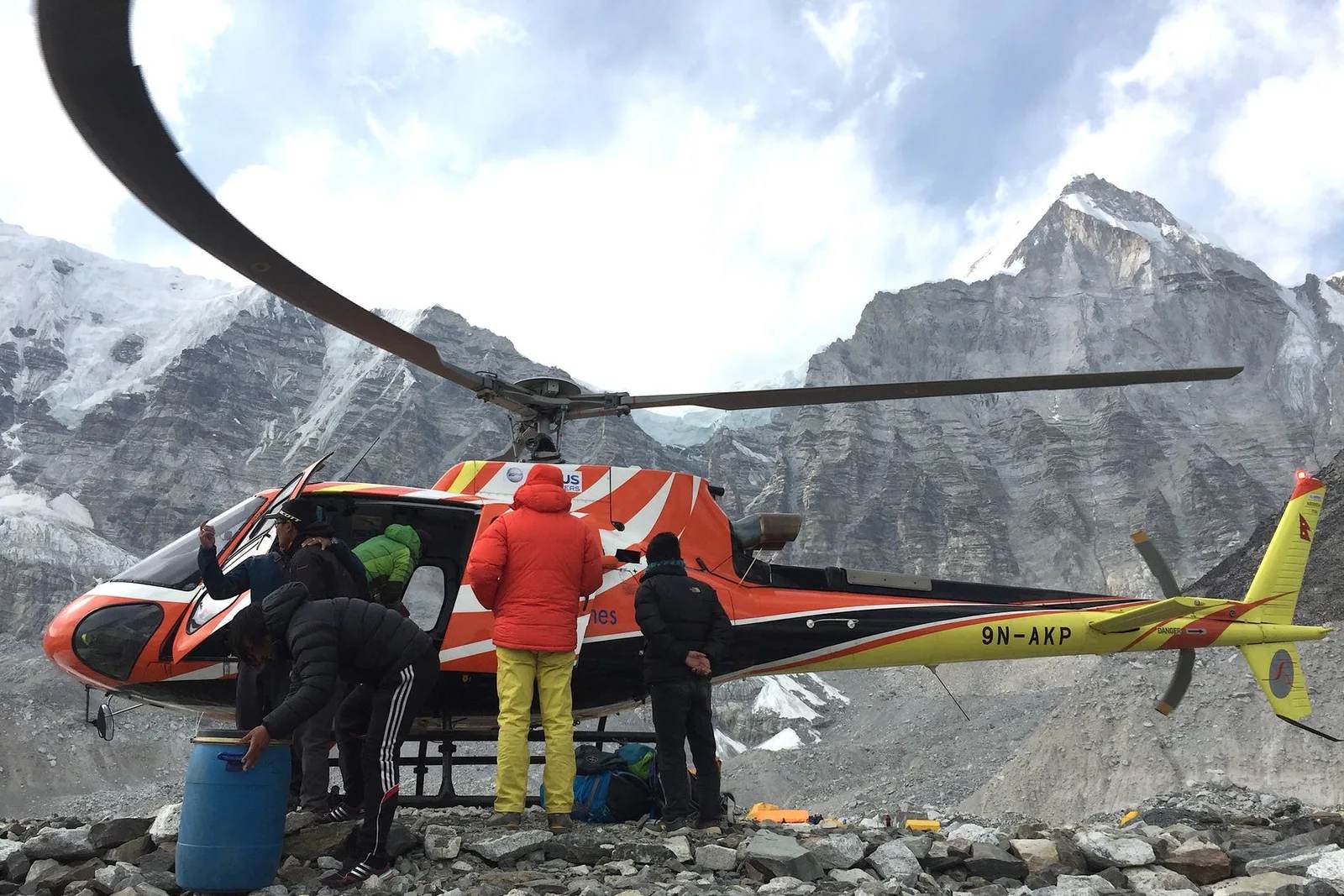
If the runway itself is the part of the trip you'd rather not think about, it isn't the only way in. A helicopter can cover the same route directly from Kathmandu without the fixed-wing approach, on our Everest Base Camp helicopter tour or the trek-in, heli-out itinerary. Most travellers still fly Lukla both ways without incident, on routes like our 14-day Everest Base Camp trek — for the vast majority, the ten minutes of a Lukla landing turn out to be, by a wide margin, the least eventful part of a two-week trek to 5,364 metres.
Source: Wikipedia — Tenzing-Hillary Airport, citing The History Channel's Most Extreme Airports (2010) and published pilot-certification requirements for the route.
Cover photo: Lhasso via Wikimedia Commons (CC BY 4.0). Section photos: photowithom via Pexels (Pexels licence); Brett Jordan via Unsplash (Unsplash licence).
Still running this season
EBC Trek & Helicopter Return — 10 Days is running normally
NMA-certified local guides, transparent pricing, 5,000+ treks since 1998. Message us your dates and we'll sort the permits, lodges and logistics — reply within 24 hours, no obligation.
Popular Nepal treks
All treks →
Related coverage
Flights & Access
How Many Days Do You Actually Need for Everest Base Camp in 2026? Every Itinerary Length Compared
Ten days is possible, fourteen is what most operators actually recommend, and the flight into Lukla is why you should budget more time than either number, not less.

Flights & Access
Everest Base Camp Trek or Helicopter Tour? The Kala Patthar Reopening Changes the Math in 2026
A shared helicopter can land you on Kala Patthar again after a three-year ban, but it still can't buy you what nine days on the trail does.
Trail & Weather
Everest Base Camp or Kilimanjaro: Which Trek Should You Actually Do in 2026?
One is a five-day sprint to 5,895 metres, the other a fourteen-day walk to 5,364 — the honest trade-off between them comes down to acclimatization, not fitness.
Industry & Tourism
Everest Just Had Its Busiest Climbing Season Ever. Climbers Also Left Behind 90,000 Kilograms of Trash.
A record 701 climbers pushed for the summit this spring, and the mountain's cleanup crews hauled down a record amount of waste right behind them.
Latest from the desk
Breaking Permits & Rules
Nepal Just Proposed a Way for Tourists to Travel Without Ever Carrying a Passport
A new Department of Immigration plan would let visitors register once on a mobile app and skip the physical passport for domestic flights, money changers and trekking agencies — but for now, the paper one still needs to stay in your daypack.
Breaking Trail & Weather
Manaslu's Trekking Trail Washed Out This September, So Climbers Are Flying to Base Camp Instead
A flash flood destroyed two bridges on the Manaslu Circuit in early September 2026, and outfitters are now helicoptering climbing teams past the damage while trekkers wait for repairs.
Breaking Safety & Advisories
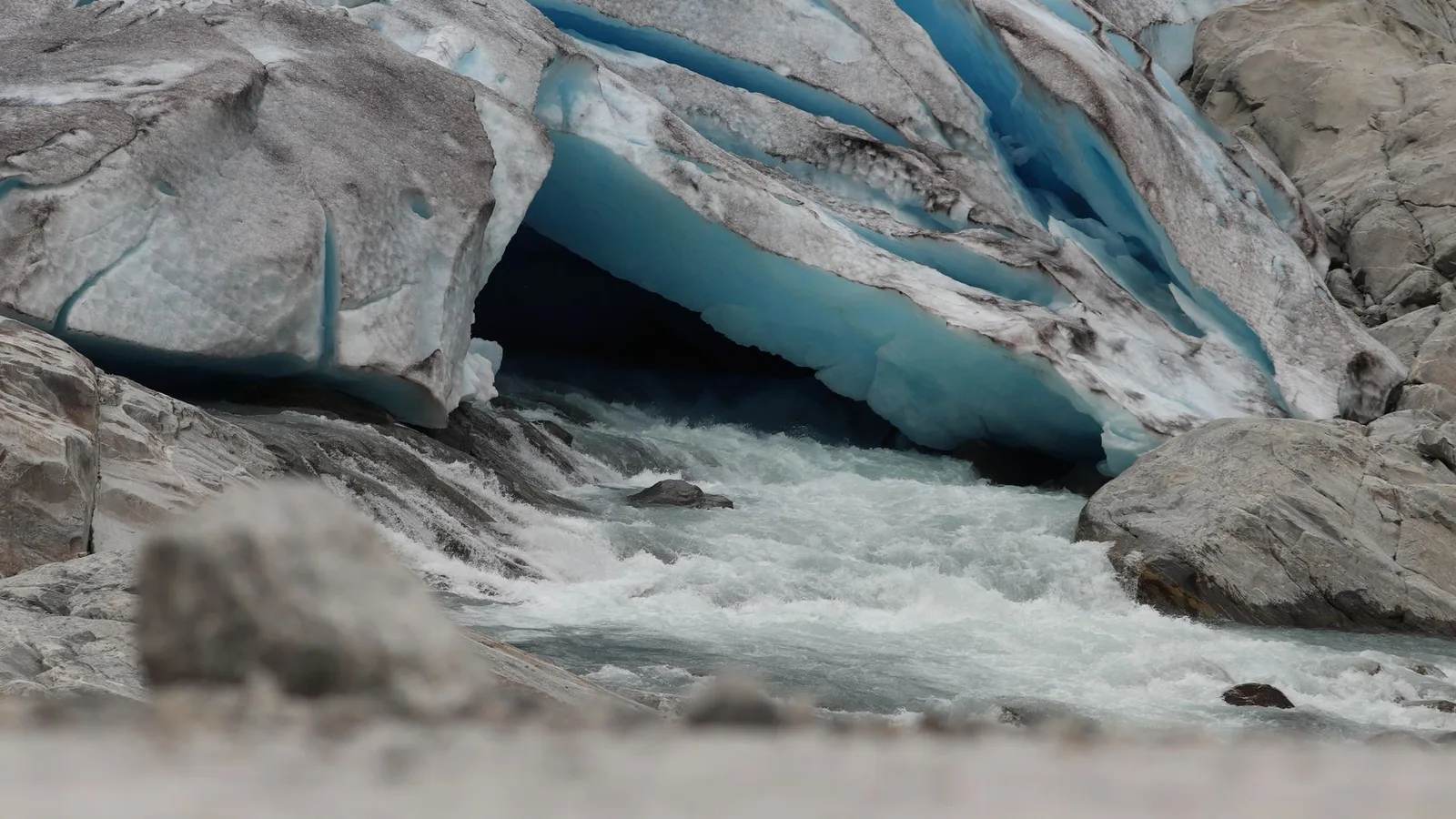
Nearly 2 Billion People Depend on Himalayan Meltwater, and a New Report Says It's About to Peak
A September 2026 study of the Hindu Kush Himalaya's roughly 40,000 glaciers, only 21 of which are monitored on the ground, warns the rivers trekkers cross every day are approaching the point where they stop rising and start shrinking for good.