
Bardia Is Now Nepal's Best Place to See a Wild Tiger (2026)
Nepal's wild tigers have more than tripled since 2009, and far-western Bardia National Park - wild and little-visited on the Karnali river - is now the country's best place to see one. Here is the honest guide to the comeback and your real sighting odds.
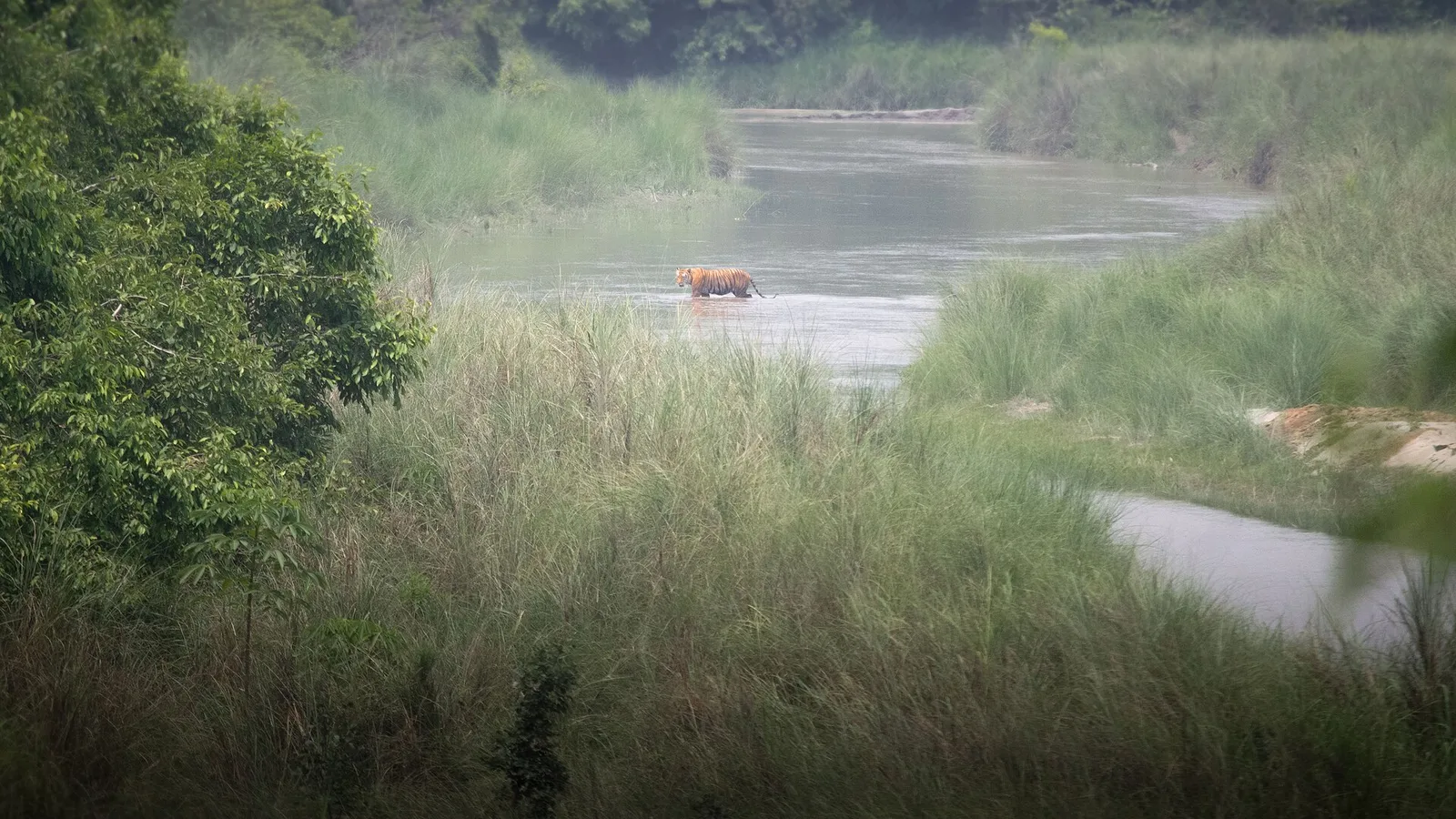
At a glance
- Published
- TopicWildlife & Nature
- Verified againstWikipedia (Bengal tiger; Bardia National Park)
- Treks coveredBardia National Park Safari — 4 Days, Chitwan Jungle Safari — 3 Days
Nepal is famous for its mountains, but one of Asia's great wildlife comebacks is playing out far below the snowline. In the lowland jungle and grassland of the Terai, the wild Bengal tiger — hunted, poisoned and squeezed out of its habitat for most of the twentieth century — is back. Nepal's national tiger count roughly doubled over a single decade, reaching an estimated 355 animals in the 2022 survey. And the best place in the country to see one is not the well-known Chitwan, but the wilder, quieter park in the far west: Bardia.
Nepal's wild tigers at a glance
- Where — Bardia National Park in far-western Nepal, on the Karnali river; also Chitwan and Shuklaphanta in the lowland Terai
- The turnaround — from an estimated 163–235 breeding adults nationally in 2013 to 316–355 tigers in 2022 — roughly a doubling in a decade
- Tx2 — Nepal's recovery is in step with the global Tx2 goal, the international commitment to double the world's wild tigers
- Sighting reality — a wild tiger is never guaranteed; Bardia simply gives you Nepal's best odds
The comeback in numbers
The recovery is one of the best-documented in Asia because Nepal counts its tigers systematically, park by park, using camera traps across the Terai Arc. The first such nationwide survey, run in 2013, put the country's population at roughly 163–235 breeding adults. The next, over the winter of 2017–2018, estimated 220–274 tigers. Nepal's 2022 survey put the national total at 316–355; the latest national census has since pushed the figure higher. Whichever end of those ranges you take, the trajectory is unmistakable: the line has climbed steadily for a decade, and the total has roughly doubled since the first modern count.
| Survey | National estimate | What it shows |
|---|---|---|
| 2013 | 163–235 breeding adults | First systematic camera-trap survey; Bardiya–Banke held 48–62 |
| 2017–2018 | 220–274 tigers | Third nationwide Terai Arc survey |
| 2022 | 316–355 tigers | 2022 national estimate |
Why Bardia is the tiger stronghold
Bardia National Park is the largest and most undisturbed protected area in Nepal's Terai, covering 968 km² of sal forest, riverine grassland and floodplain along the eastern bank of the Karnali river, with the Babai valley running through its heart. Gazetted as a national park in 1988, it shelters at least 53 mammal species and more than 400 kinds of bird, and together with neighbouring Banke National Park it forms a tiger conservation unit of well over 2,000 km² — a landscape big enough for tigers to hold real territories.
What sets Bardia apart for a visitor is not just the tigers but the emptiness. Where Chitwan can see convoys of jeeps at a good sighting, Bardia is remote — a long drive or a short flight from Kathmandu into Nepal's far west — and receives a fraction of the traffic. The reward is a genuinely wild park where the grassland stretches uninterrupted, the Karnali is thick with gharial and dolphins, and a tiger, when it appears, is a wild animal on its own terms rather than a photo-op ringed by vehicles. That combination is why Bardia has earned its reputation as the best place in Nepal to see a wild tiger.
The honest odds of a sighting
Here is the part a good operator will tell you before you book: a wild tiger is never guaranteed, anywhere, ever. Tigers are solitary, largely nocturnal and superbly camouflaged, and they range over huge territories. Even in Bardia, sightings come to those who put in the days — multiple dawn drives, patient waits by the river, and time spent listening for the alarm calls of deer and langur that betray a moving cat. Go for a single afternoon and you are gambling; give it three or four days in the right season and your chances become genuinely good.
Seeing a wild tiger — the honest odds
Nobody can promise you a tiger, and any operator who does is not being straight with you. What you can do is stack the odds: come in the drier months when grass is shorter and animals gather at water, budget several days rather than one, and travel with licensed naturalist guides who read the jungle's alarm calls. Treat the tiger as the possible headline, not the guaranteed one — and let the rhinos, wild elephants, crocodiles and birdlife make the trip worthwhile on their own. That way a tiger is a gift, not a broken promise.
The threats that remain
A doubling is not a finished job. The pressures on Nepal's tigers today are quieter than the poaching that once drove them to the brink, but no less real. Habitat is shrinking and fragmenting as farmland presses against park boundaries, cutting the corridors tigers need to move between reserves. Human–wildlife conflict is the sharpest edge of the recovery: more tigers in a landscape shared with people means more encounters, and Bardia itself saw a grim episode in 2021 when a small number of tigers killed several villagers before being captured and removed. And the monsoon remains a wild card, with the Karnali and Babai in flood able to sweep away cubs and reshape the grasslands. A recovering population still needs its habitat intact and its neighbours on side.
See a wild tiger for yourself
This is the Nepal most visitors never reach. Drop south and west from the Himalaya and you are in tiger country, where dawn jeep drives and walks through the grassland put you in with a real chance of the country's most elusive animal. We build exactly this into our 4-day Bardia National Park Safari, and for travellers short on time there is the more accessible 3-day Chitwan Jungle Safari, itself part of another Terai success story — see our piece on Nepal's one-horned rhino comeback. Both pair beautifully with a Himalayan trek, turning one trip into two very different Nepals.
Nepal set out to double its tigers and, remarkably, did it. Come and see what that looks like on the ground — plan a Bardia tiger safari with us and add the wild Terai to your mountain journey.
Cover photo: Shyamschaudhary via Wikimedia Commons (CC BY-SA 4.0).
This story is part of Travel Himalaya Nepal’s complete guide to Nepal's wildlife and where to see it.
Planning a trek?
Trek this route with us — Bardia National Park Safari — 4 Days
NMA-certified local guides, transparent pricing, 5,000+ treks since 1998. Message us your dates and we'll sort the permits, lodges and logistics — reply within 24 hours, no obligation.


Popular Nepal treks
All treks →


Related coverage
Wildlife & Nature
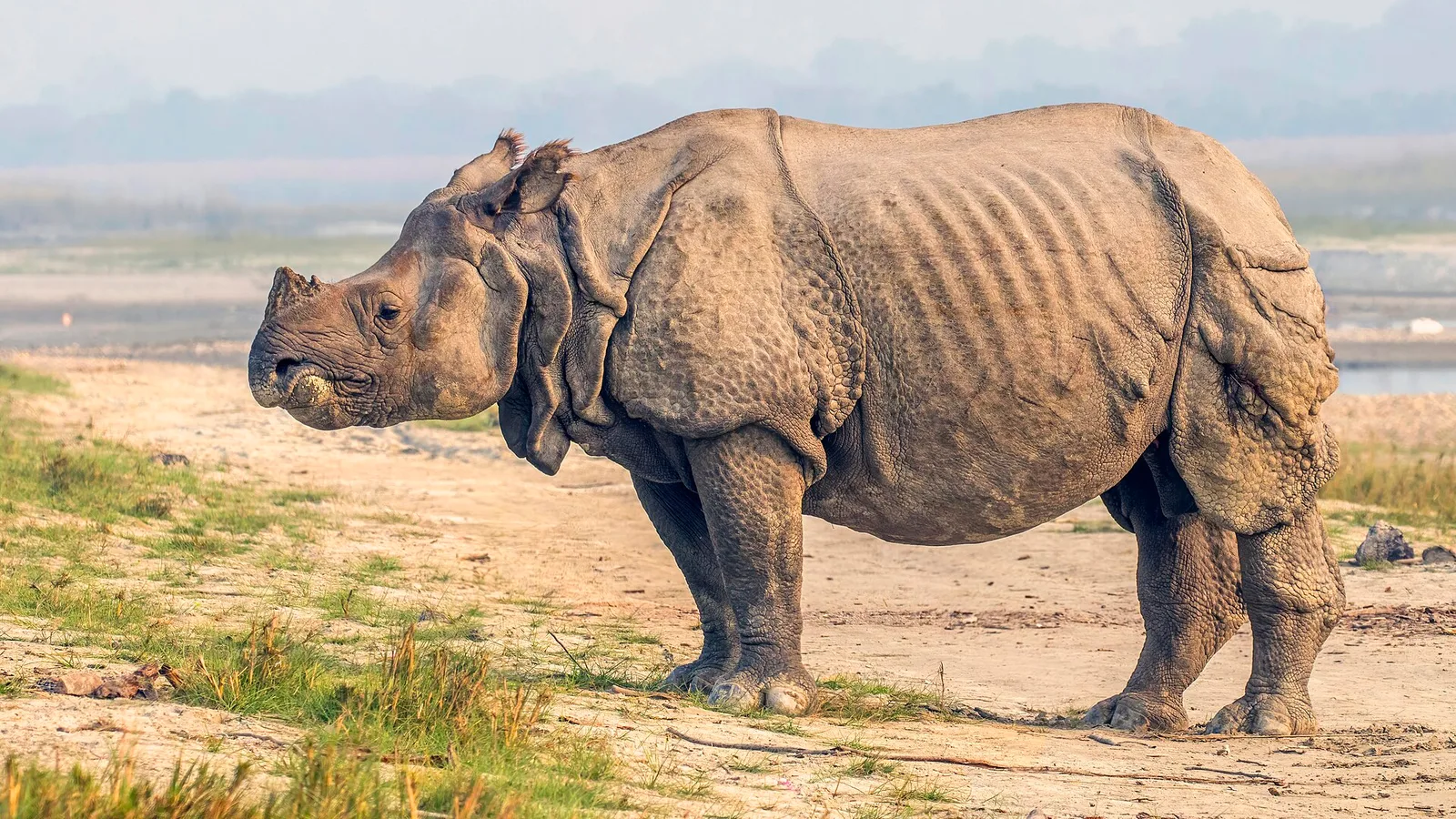
From 95 Rhinos to 600-Plus in Chitwan: Nepal’s One-Horned Rhino Comeback (2026)
Nepal brought its one-horned rhino back from near-extinction — from 95 survivors in Chitwan to a thriving Terai population, through army patrols and community buffer zones.
Wildlife & Nature
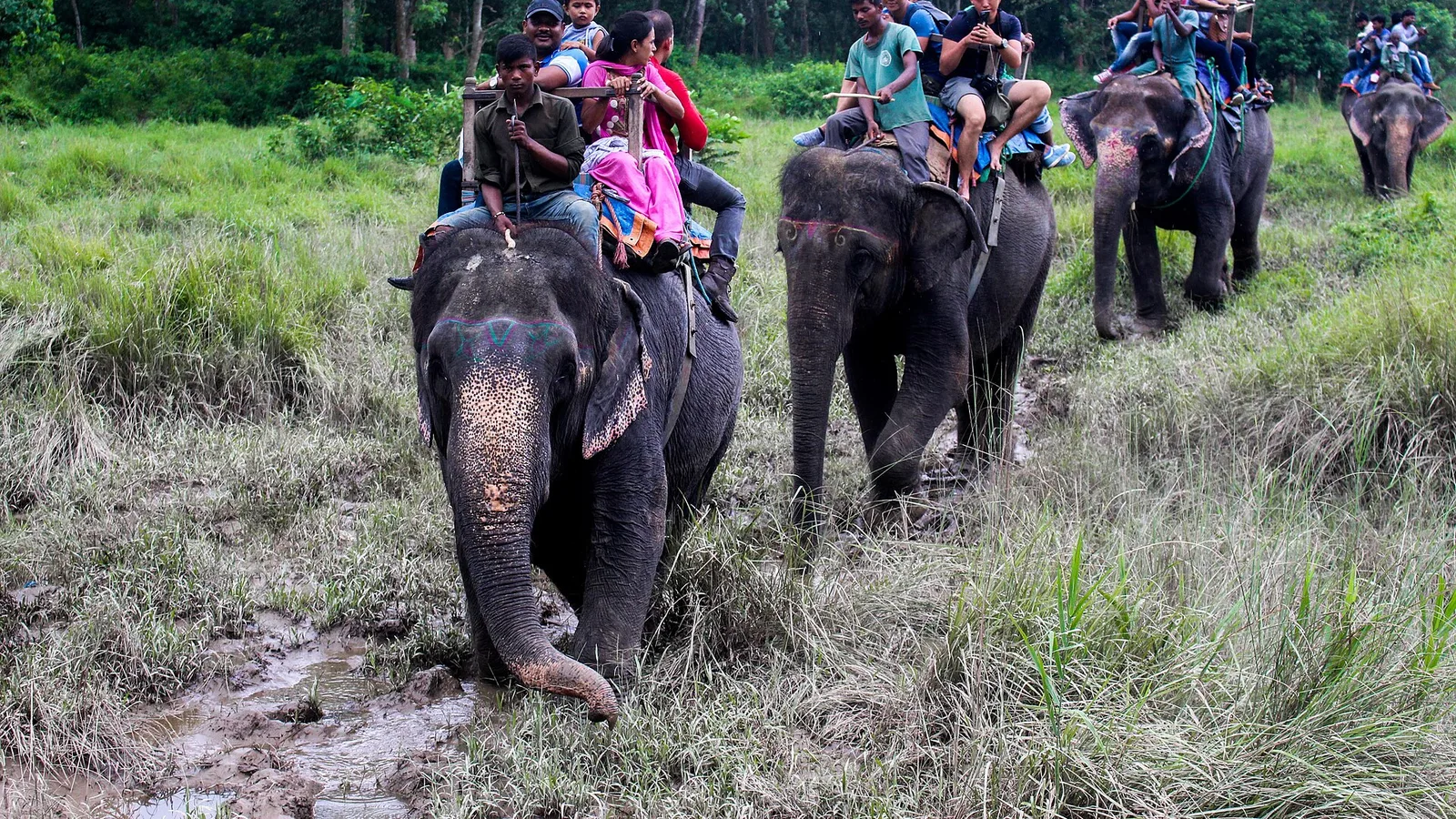
Nepal's Supreme Court Just Ruled on Elephant Safaris in Chitwan — What It Means for Your Jungle Trip
A 62-point court order is pushing Nepal's most famous jungle safari away from riding elephants. Here's what's actually changing in Sauraha, and what your options are now.
Permits & Rules
Do You Need a Guide to Trek in Nepal in 2026? What the Rule Actually Says
Since April 2023, foreign trekkers can not legally walk into a Nepali national park or conservation area alone. Here is exactly where that rule applies, what it costs, and where it does not.
World Destinations
Cheapest Countries to Travel in 2026: Real Daily Budgets, Ranked by Region
From $25-a-day Nepal, Vietnam and Bolivia to the cheapest corners of Europe, a fact-checked guide to where your money goes furthest in 2026 — with honest backpacker daily budgets covering bed, food and local transport, flights excluded.
Latest from the desk
Money & Insurance
Adventure & Activity Travel Insurance in 2026: Why Standard Cover Excludes Rafting, Diving, Skydiving and High Trekking
Scuba, bungee, skydiving, quad bikes, jet skis, rafting, safari, motorbiking and trekking above a certain altitude are the activities standard travel insurance quietly leaves out. Here is how activity tiers and add-ons work, why an undeclared activity can void the whole claim, and how to match cover to your trip.
Climate & Environment
Soot Is Darkening Himalayan Snow and Speeding Its Melt, 2026 Science Shows
Soot darkens Himalayan snow so it absorbs more sunlight and melts faster — a second, faster-acting driver of glacier loss alongside warming, and the one the region could switch off within weeks.
Visas & Entry
Taking a Pet Abroad in 2026: The Rules Most Owners Underestimate
Microchip, rabies vaccination and a waiting period, a health certificate or pet passport, tapeworm treatment and even quarantine — a plain-English guide to taking a pet abroad in 2026, and why it has to start months before you fly.