
Nepal's Wild Tigers Hit a Record 429 in 2026 — Up From 121 in 2009
Nepal's 2026 national census counted a record 429 wild tigers, up from 355 in 2022 and 121 in 2009 — a rare conservation comeback.

At a glance
- Published
- TopicWildlife & Nature
- Verified againstThe Kathmandu Post
- Treks coveredBardia National Park Safari — 4 Days, Chitwan Jungle Safari — 3 Days
In 2009, when Nepal ran its first serious camera-trap count of wild tigers, the number that came back was 121. Nobody expected what happened next: by 2022, that figure had climbed to 355 — nearly tripling in thirteen years, inside a country smaller than the U.S. state of Arkansas. Nepal didn't just hit the global target conservationists had set for it. It blew past it by more than 100 tigers. On 29 July 2026 — International Tiger Day — the results of Nepal's fifth national tiger census landed: 429 tigers — a new record, up from 355 in 2022, per the Department of National Parks and Wildlife Conservation.
Key facts
- Nepal's tiger count rose from 121 (2009) to 355 (2022) — a rise of nearly 200%
- The 2010 global "Tx2" pledge asked tiger-range countries to double wild tiger numbers by 2022; Nepal's own target was 250 — it delivered 355
- The current, fifth national census ran 2,300 camera traps across roughly 8,400 sq km of habitat from December 2025 to March 2026
- Results, released 29 July 2026 (International Tiger Day): a record 429 tigers
The counting method matters here. Nepal doesn't estimate its tigers from paw prints or guesswork — since 2009 it has used camera traps that photograph the unique stripe pattern on each animal, the same way a fingerprint identifies a person. Every four years or so, thousands of motion-triggered cameras go up across the parks that hold Nepal's tiger population: Chitwan, Parsa, Bardiya, Banke and Shuklaphanta. The 2025–26 count began installing cameras on 16 December across three blocks — Chitwan-Parsa, Banke-Bardiya, and Shuklaphanta-Laljhadi — with fieldwork in the Chitwan-Parsa block alone running more than two months.
What makes Nepal's number so unusual is the scale of the ambition it beat. In 2010, leaders from thirteen tiger-range countries — from Russia to India to Indonesia — met in St Petersburg and pledged to double the world's wild tiger population by 2022, a target known in conservation circles as "Tx2". Most countries fell short. Nepal became one of the very first nations to actually hit its Tx2 goal, then kept going: instead of doubling from 121 to roughly 240–250, it climbed to 355, very nearly tripling.
The cost of success
Our guides who work the buffer zones around Chitwan will tell you the tiger comeback isn't free. A near-tripling of a large predator's population inside one of the most densely farmed river valleys in Asia means more tigers moving through community forests, more livestock kills, and more encounters with people gathering firewood or grass at the forest edge. Between July 2021 and July 2022 alone, tigers killed 16 people around Chitwan National Park — compared with 10 deaths from tiger attacks across the previous five years combined, according to Chitwan-based biologist Babu Ram Lamichhane.
What this means for you
None of this should put you off a jungle safari. Guided jeep and canoe safaris inside Chitwan and Bardiya are run by trained naturalist guides who know exactly where tigers move and how to keep a safe distance, and the large majority of conflict incidents happen in community forests outside the park boundary, not on tourist safari routes. If anything it's the opposite: this is now one of the more reliable places on Earth to see a wild Bengal tiger from a safe, guided vehicle — something that was genuinely rare a generation ago.
Census coordinators say this round is measuring more than a headcount. Haribhadra Acharya, the senior ecologist coordinating the count, has said the goal this time is "not only to count tigers but also to understand habitat quality, prey availability and human pressures" — data that will shape how close to villages Nepal lets its tiger population keep growing. Whatever number comes back on 29 July, it will be read two ways at once in Nepal: as one of the great conservation turnarounds of the last twenty years, and as a live question about how many large predators one of the world's most crowded lowland valleys can safely hold.
For travellers, the takeaway is straightforward: Chitwan and Bardiya are, right now, near-guaranteed places to see a wild tiger with a professional guide, at a moment when that population is at its highest recorded level in modern Nepali history. Book a jungle safari and you're seeing the live, numbered result of one of the more remarkable wildlife recoveries anywhere on the planet.
Source: The Kathmandu Post; historical figures via IUCN and National Geographic.
Cover photo: Ambish Kazi via Wikimedia Commons (CC BY-SA 4.0).
This story is part of Travel Himalaya Nepal’s complete guide to Nepal's wildlife and where to see it.
Updated — the 2026 result is in
Nepal’s fifth national tiger survey, released on 29 July 2026 (International Tiger Day), counted a record 429 wild tigers, up from 355 in 2022 — per the Department of National Parks and Wildlife Conservation. The count came from roughly 1,100 camera traps rotated across about 1,900 points over 8,400 sq km of habitat between December 2025 and April 2026.
| Protected area | Tigers (2026) |
|---|---|
| Chitwan National Park | 145 |
| Bardiya National Park | 112 |
| Parsa National Park | 71 |
| Banke National Park | 51 |
| Shuklaphanta National Park | 50 |
| Total | 429 |
The national trajectory: 121 (2009) → 198 (2013) → 235 (2018) → 355 (2022) → 429 (2026) — more than a threefold rise in fifteen years. Source: Department of National Parks and Wildlife Conservation, via The Kathmandu Post and IUCN.
Still running this season
Bardia National Park Safari — 4 Days is running normally
NMA-certified local guides, transparent pricing, 5,000+ treks since 1998. Message us your dates and we'll sort the permits, lodges and logistics — reply within 24 hours, no obligation.


Popular Nepal treks
All treks →


Related coverage
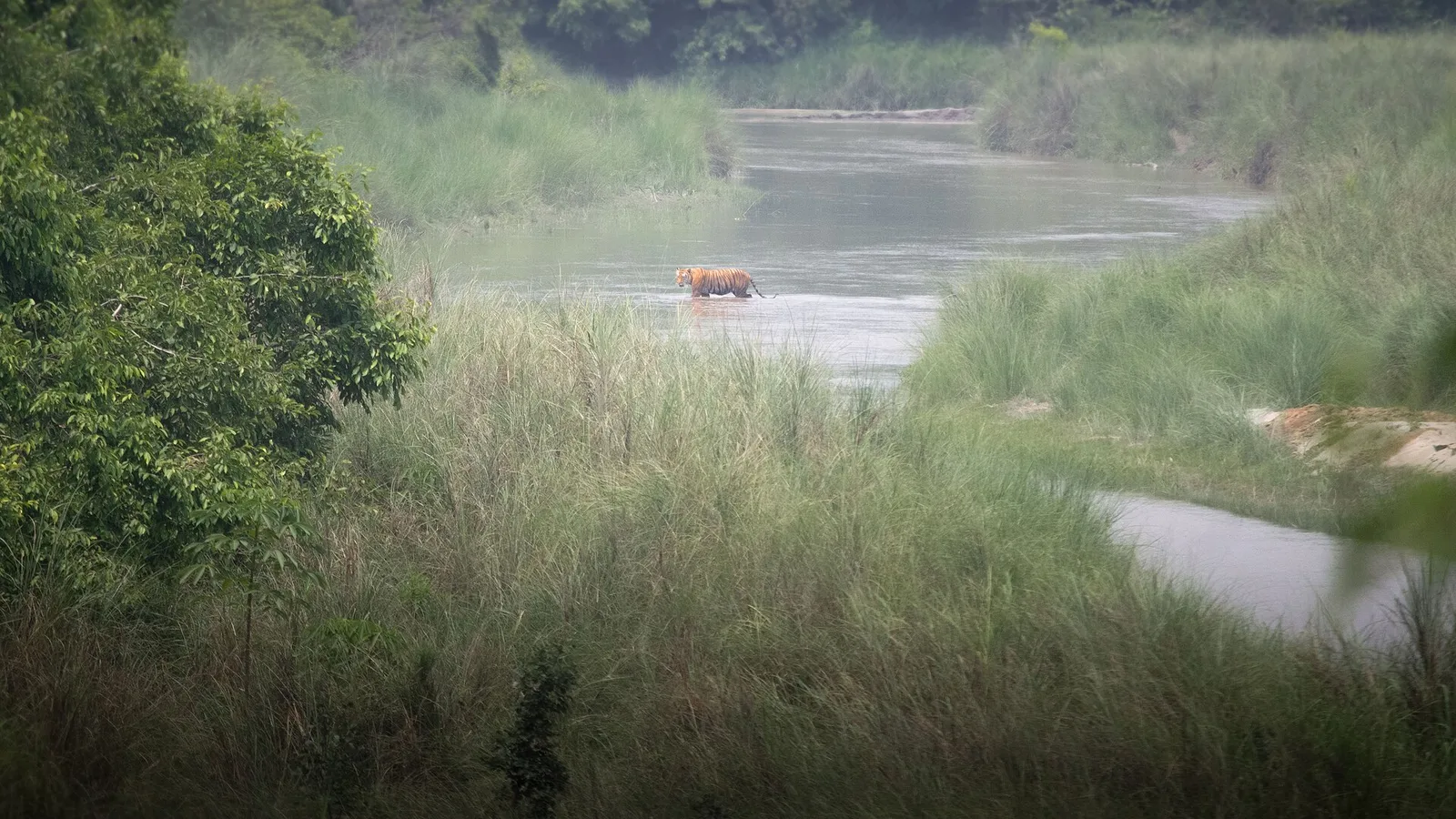
Wildlife & Nature
Bardia Is Now Nepal's Best Place to See a Wild Tiger (2026)
Nepal's wild tigers have more than tripled since 2009, and far-western Bardia National Park - wild and little-visited on the Karnali river - is now the country's best place to see one. Here is the honest guide to the comeback and your real sighting odds.
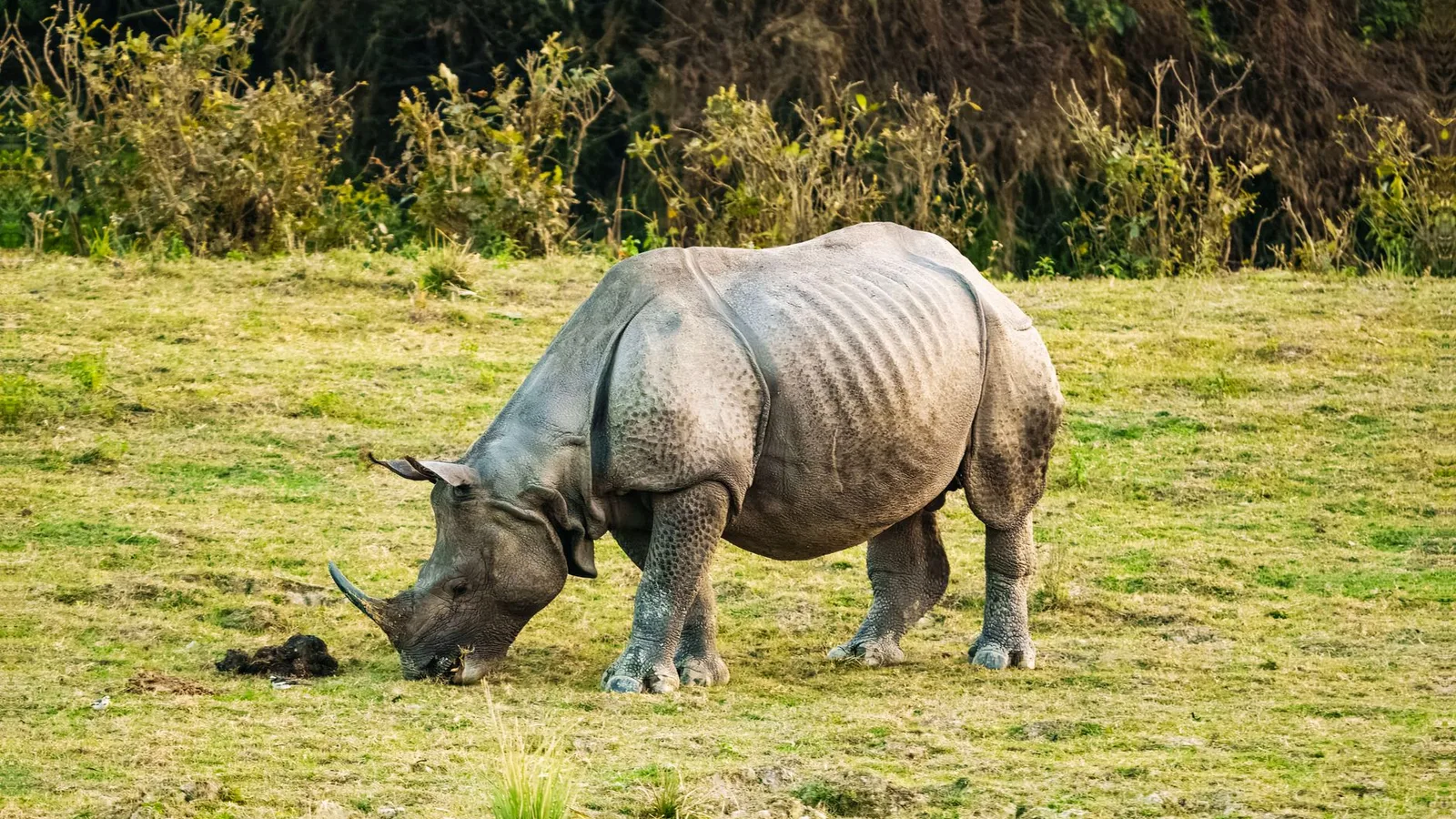
Wildlife & Nature
Nepal Wildlife in 2026: The Iconic Animals and Where to See Them
From the rhinos and tigers of the Terai to the snow leopards of the high Himalaya, a field guide to Nepal's extraordinary wildlife — and how, and where, to actually see it.
Records & People
Nepal's Rhinos Fell to Under 100 Animals. The Last Count Found 752.
The greater one-horned rhino nearly vanished from Nepal twice in living memory — and the same country then built one of Asia's strictest anti-poaching operations to bring it back.
World Destinations
The World’s Best National Parks to Visit in 2026: A Continent-Hopping Bucket List
From Torres del Paine to the Serengeti to Nepal’s own Everest and Chitwan — nine UNESCO-grade parks worth planning a whole trip around, and the season each is best.
Latest from the desk

Records & People
The Yeti Footprint Fooled the World for 70 Years — Then DNA Solved It
A grainy 1951 photograph near Everest launched a global legend, until a 2017 study tested nine 'yeti' samples and found six bears of one kind, three of another, and a dog.

Records & People
The Kathmandu Valley You're Walking Through Used to Be a 200-Metre-Deep Lake
Geologists say the ground beneath Kathmandu's temples and guesthouses sat underwater for the better part of a million years, and the same soft lakebed sediment is a documented reason the city shakes so hard when an earthquake hits.

Safety & Advisories
Travel Vaccinations by Destination in 2026: The Sensible Overview (Routine Jabs, Regional Extras and Nepal)
A calm, accurate guide to routine and travel vaccines by region — from hepatitis A and typhoid to yellow-fever certificates, and why malaria is pills, not a jab.