
Budget vs Full-Service Airlines in 2026: Which Is Really Cheaper Once You Add It All Up?
The headline low fare rarely tells the truth. Here is how budget and full-service airlines really compare on bags, seats, food, changes and connections in 2026 — and when each one is the smarter buy.
At a glance
- Published
- TopicDeals & Routes
- Verified againstWikipedia: Low-cost carrier; Legacy carrier
- Treks coveredAnnapurna Circuit Trek — 13 Days, Everest Base Camp Trek — 14 Days
Key facts
- A budget (low-cost) carrier sells an unbundled fare: the headline price buys the seat and little else, with bags, seat choice, food and changes charged separately. A full-service (legacy/network) carrier sells a bundled fare that typically folds a checked bag, a seat assignment, a meal and entertainment into the ticket.
- Low-cost carriers fly point-to-point, often from secondary airports, with a single aircraft type and fast turnarounds. Full-service carriers run hub-and-spoke networks with connecting flights, interlined "through" baggage and alliance partners.
- The only fair way to compare the two is total cost for your trip — base fare plus every add-on you will actually use — not the number in the search ad.
- Which one wins is not fixed: it flips with trip length, how much you carry, and how likely your plans are to change.
Every few months a budget airline's fare pops up next to a full-service one and looks like free money — half the price for the same city pair. Sometimes it genuinely is. Just as often, by the time you have paid for a bag, chosen a seat and bought a sandwich, the "cheap" ticket has quietly climbed to within a few dollars of the bundled one — and the bundled one came with things the budget fare never offered. This is not the basic-economy trap inside one airline, and it is not a list of sneaky fees; it is the older, simpler question of which type of airline to book in the first place.
Two different business models, not two prices
The difference is structural. A low-cost carrier is built to minimise operating cost and advertise the lowest possible base fare, then earn its margin from ancillary charges — carry-on and checked bags, seat selection, priority boarding, onboard food. It flies point-to-point, frequently from smaller secondary airports with lower fees, runs one or two aircraft types to cut training and maintenance, and turns planes around fast to fly more each day. Almost nothing beyond the seat is included, by design.
A full-service carrier bundles instead of unbundles. The fare usually includes a checked bag, an assigned seat, a meal and in-flight entertainment, and the airline sells across multiple cabin classes. It operates a hub-and-spoke network, which is what makes a single ticket from a small city to the far side of the world possible — with your baggage checked through to the destination and a partner alliance to fall back on. Neither model is "better." They are optimised for different journeys.
| Factor | Budget / low-cost carrier | Full-service carrier |
|---|---|---|
| Base fare | Lowest headline price; the seat and little else | Higher headline price; more is bundled in |
| Bags | Cabin and checked bags usually charged separately | A checked bag is commonly included |
| Seat selection | Nearly always a paid extra | Often included, or free at check-in |
| Food & drink | Buy-on-board only | Meal/snack typically included on longer flights |
| Changes & flexibility | Often expensive or not permitted | More change options, sometimes fee-free fare differences |
| Connections | Point-to-point; self-transfer, re-check bags, separate tickets | One ticket, baggage checked through, protected connections |
| Disruption care | Minimal; rebooking may fall to you | Rebooking on own or partner flights, more support |
Add it all up — the honest calculation
Never compare the two headline fares. Start with the budget base fare and add back only what you truly need for this trip: a cabin bag if it is not free, a checked bag if you cannot travel hand-luggage-only, a seat if you must sit in a particular place, food on a long sector, and — the expensive one — the ability to change your ticket. On a short hop with one small bag, almost none of that applies and the budget fare stays cheap. On a bag-heavy, multi-leg journey, the extras stack up fast and the bundled fare often wins outright. The add-ons are all predictable; the only mistake is adding them at the gate, where they cost the most, instead of at booking. Our guide to the hidden airline fees that cost you hundreds in 2026 lists the typical amounts, and the same logic inside a single airline drives our piece on basic economy fares in 2026.
When each really wins
A budget carrier genuinely wins on short hops, when you travel hand-luggage-only, when the date is fixed and you will not change it, and when you are happy to self-connect. A full-service fare is better value on long-haul, when you must check bags, when the trip involves connections and you want your luggage through-checked on one ticket, and when meals, entertainment and proper disruption care matter — including the protection of being rebooked if a flight fails. Match the airline to the journey, not to the ad.
The connection trap
The single biggest way a budget booking backfires is the self-transfer. Two separate budget tickets are not one journey: if the first flight is late and you miss the second, the second airline owes you nothing, and you re-check and re-pay from scratch. On a full-service ticket the same connection is protected and your bag is already tagged to the destination. For a one-flight trip this is irrelevant; for a two- or three-leg journey it can be the whole ballgame.
What this means for getting to Nepal
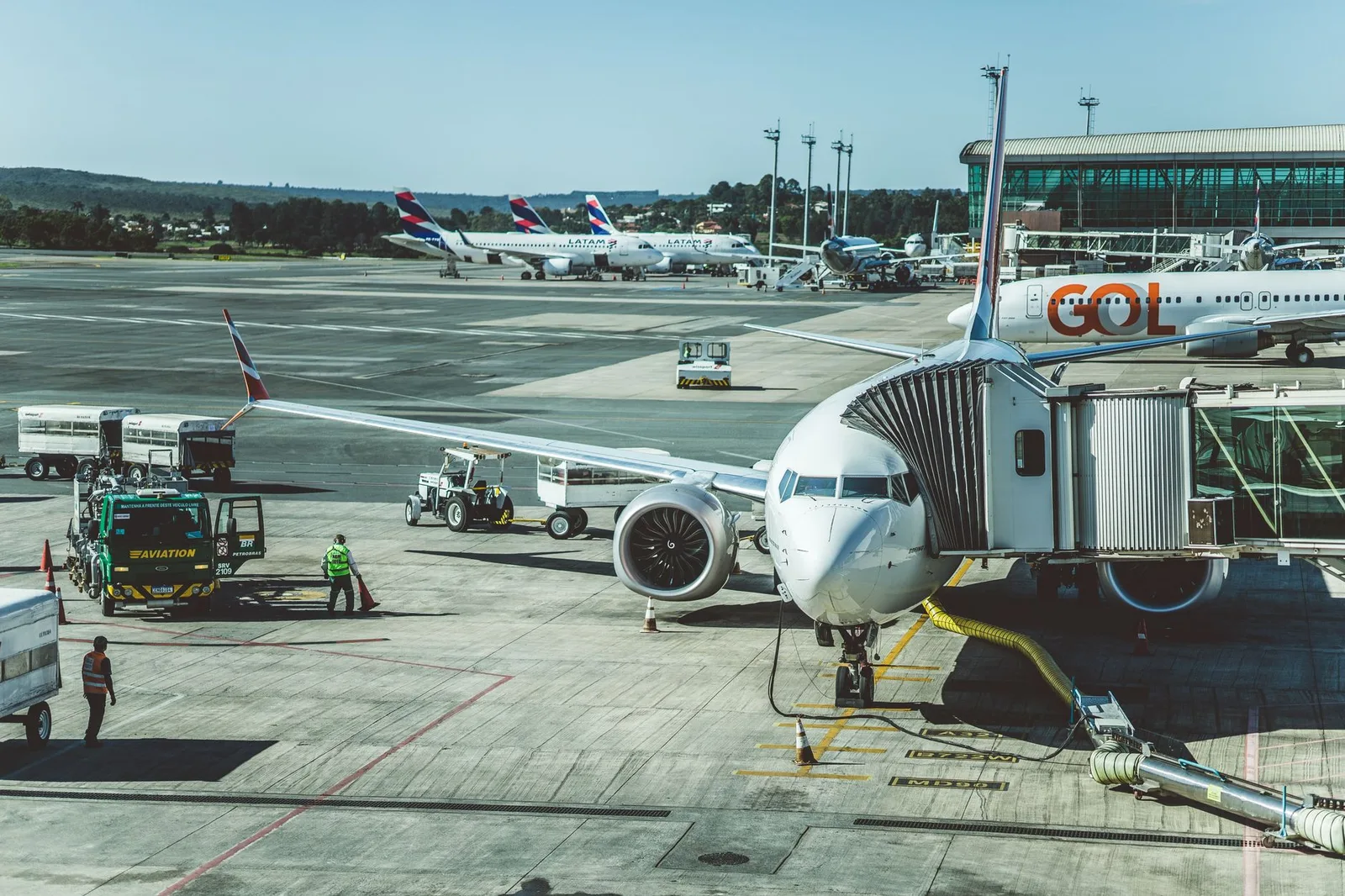
For the long-haul journey to Kathmandu, the maths usually lands on full-service. Trekkers from Europe, North America, Australia and the Gulf almost always route through a hub on a network carrier — commonly the Gulf carriers via Doha, Dubai or Abu Dhabi — where a generous checked-bag allowance for your boots, down jacket and duffel is bundled in, your bag is checked through, and a missed connection is the airline's problem, not yours. That is precisely the trip where a stripped-back budget fare tends to lose once the bag and the connection are priced in. A low-cost hop earns its place only on a short regional leg — a quick sector inside Europe or Asia to reach your long-haul hub — where you are travelling light and the date is locked. Book the cheap short leg cheaply, and let the bundled long-haul fare do the heavy lifting.
Whichever way you fly in, the trek itself starts the moment you land. When your dates are set, our 14-day Everest Base Camp trek and 13-day Annapurna Circuit are built around real Kathmandu arrival and departure days, so the flight you choose slots cleanly into the itinerary.
Cover photo: Rafael Rodrigues via Pexels (Pexels License).
Still running this season
Annapurna Circuit Trek — 13 Days is running normally
NMA-certified local guides, transparent pricing, 5,000+ treks since 1998. Message us your dates and we'll sort the permits, lodges and logistics — reply within 24 hours, no obligation.

Popular Nepal treks
All treks →


Related coverage
Deals & Routes
Round-the-World Tickets in 2026: How Alliance RTW Fares Work, and When to Build Your Own
Alliance round-the-world fares are priced by mileage or continents, flown one direction on a single upfront-booked ticket with a fixed validity. Here is how they work, how they compare with a DIY string of point-to-point flights, and when each one wins.
Deals & Routes
Airline Alliances Explained in 2026: Star Alliance, oneworld and SkyTeam, and How to Pick Your Program
The three global airline alliances, what they really get you — miles, status, lounges and smoother connections — where the perks stop, and how to concentrate your miles in the right frequent-flyer program for Nepal-bound routings.

Money & Insurance
Travel Money in 2026: Cash vs Debit vs Credit vs Prepaid Cards — What to Carry and How to Spend It
No single method wins abroad. Here is how cash, debit, credit and prepaid multi-currency cards really compare on fees — plus the dynamic-currency-conversion trap to dodge, how much cash to carry, and why Nepal’s trail runs on rupees.

Deals & Routes
Error Fares and Mistake Fares in 2026: How Airline Pricing Slips Happen, and How to Book One Safely
Airlines occasionally publish a wildly underpriced fare by mistake. Here is how these pricing slips happen, how deal hunters find them, and the honest catch: the airline may honour it, or may cancel it.
Latest from the desk

Records & People
Mount Everest Was Named After a Man Who Never Saw It and Asked Not to Be
Sir George Everest never set foot near the mountain, never wanted his name on it, and wasn't even the one who proved it was the tallest on Earth.
Gear & Tech
Do You Need an RFID-Blocking Wallet in 2026? The Honest Answer on Contactless-Card Skimming
Contactless "skimming" from someone brushing past you is rare and overhyped. Here is what actually threatens your card abroad — and the free five-minute setup that beats any gadget.
Safety & Advisories
The Nepal flood video with 7 million views was AI-generated, and here's how to check the next one
Nepal's Press Council has ordered 72 accounts to take content down. Here are the fakes that travelled furthest, and the three checks that catch nearly all of them.