
The World's Highest Marathon Starts at Everest Base Camp — and Nobody Has Beaten a 2006 Record Since
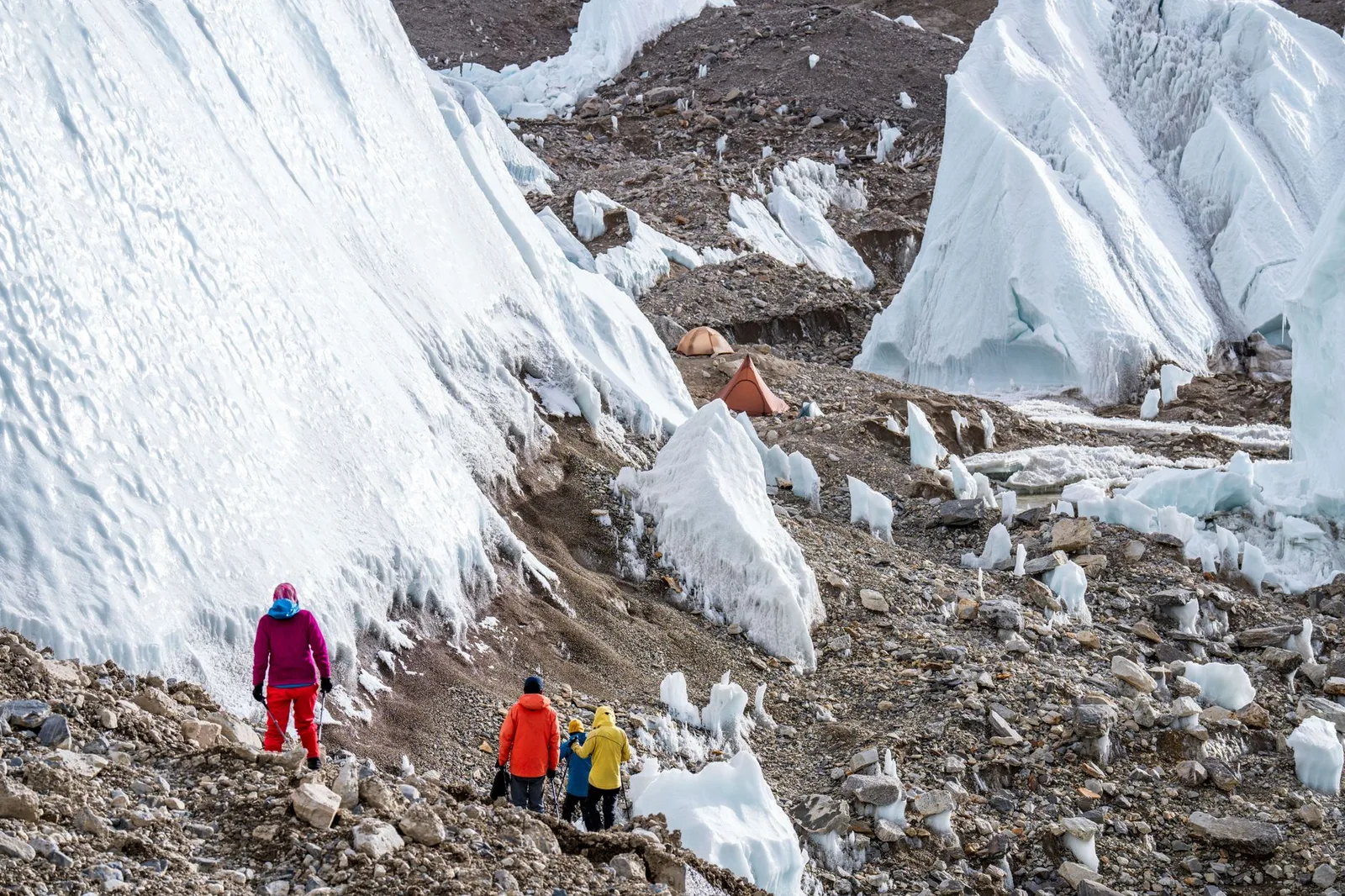
The Tenzing-Hillary Everest Marathon drops 1,920 vertical metres over 26.2 miles from the base of the world's tallest mountain — and a Nepali runner's course record has now survived twenty straight years of attempts.
At a glance
- Published
- TopicRecords & People
- Verified againstAmerican Trail Running Association (ATRA)
- Treks coveredEverest Base Camp Trek — 14 Days, EBC Trek & Helicopter Return — 10 Days, Everest Base Camp Trek — 12 Days
Every 29 May, a few hundred runners line up at 5,334m above sea level — thinner air than the summit of most of the world's highest peaks outside the Himalaya and Karakoram — and start running. Not climbing. Running. The Tenzing-Hillary Everest Marathon, first held in 2003 to mark the 50th anniversary of Edmund Hillary and Tenzing Norgay Sherpa's first ascent of Everest, is recognised as the world's highest marathon: a full 42.195km (26.2 miles) that begins at Everest Base Camp and ends 1,920 vertical metres lower in the Sherpa capital, Namche Bazaar.
Key facts
- Starts at Everest Base Camp, 5,334m — the highest start line of any certified marathon on Earth.
- Finishes 1,920m lower in Namche Bazaar (3,414m), 42.195km away.
- The course record, 3 hours 28 minutes 27 seconds, was set by Nepali runner Deepak Rai in 2006 — and has stood for twenty years.
- Run every 29 May, the anniversary of the first successful summit of Everest in 1953.
The route itself is the point. Runners don't get a flat road — they get the actual Khumbu trekking trail that thousands of trekkers walk each season, minus the two-week acclimatisation schedule. It drops past Gorak Shep, Lobuche, Pheriche and Tengboche's monastery, crosses swinging suspension bridges, climbs back over the Kongma La ridge shoulder near Dingboche, then finally descends the switchbacks into Namche. At altitudes where most visitors are told to walk slowly and breathe deliberately, competitors are sprinting downhill on loose rock with roughly half the oxygen available at sea level.
Two record times define just how extreme that gap is. Nepali runner Deepak Rai finished the full marathon in 3:28:27 back in 2006 — a time that would be respectable at sea level and borders on inexplicable at altitude. Two decades of elite trail runners, acclimatised guides and international ultra-athletes have tried to beat it. Nobody has. The fastest non-Nepali finisher on record, France's Antoine Bonfils, came in at 4:50:10 — over 80 minutes slower. For everyone else, 10 to 15 hours is typical, and simply finishing at that altitude is the actual achievement.
What this means for trekkers
You don't have to race it
You do not need to be a marathon runner to stand at that same start line. Every runner in this race first has to trek in to Base Camp along the same trail our Everest Base Camp trek follows over 12–14 days, acclimatising properly instead of racing the clock. If flying is more your pace than 26.2 miles of it, our EBC helicopter return trip gets you to the same base camp — and the same view down the valley the marathon runners are about to drop through — without a single mile of running required. The village the race finishes in, Namche Bazaar, sits directly below the world's most famous mountain airstrip; read our piece on why Lukla has no go-around option for how most runners and trekkers actually get in and out of the Khumbu.
Source: American Trail Running Association (ATRA)
Cover photo: Lu Li via Pexels (Pexels License).
Planning a trek?
Trek this route with us — Everest Base Camp Trek — 14 Days
NMA-certified local guides, transparent pricing, 5,000+ treks since 1998. Message us your dates and we'll sort the permits, lodges and logistics — reply within 24 hours, no obligation.


Popular Nepal treks
All treks →


Related coverage

Records & People
The World's Highest Marathon Starts at 17,600 Feet — and the Record Is Under 3 Hours 29 Minutes
Every 29 May, roughly 250 runners drop nearly 2,000 vertical metres down the Everest Base Camp trail to Namche Bazaar. Here's what the Tenzing-Hillary Everest Marathon actually involves, and who has run it fastest.
Records & People
Fewer Than 1,000 Foreigners a Year Trek to Kanchenjunga Base Camp. Everest Sees That Many in a Week. Here's Who the 2026 Trek Suits
Seventy years after Joe Brown and George Band summited the world's third-highest mountain and stopped short of its final steps out of respect for local belief, we compare the remote Kanchenjunga Base Camp Trek against Everest and Annapurna on cost, permits, difficulty and crowds.

Records & People
He Lost Both Legs in a Barracks Collapse. He Just Climbed Everest Using Only His Arms.
Russian veteran Rustam Nabiev spent about a week — instead of the usual three or four days — hauling himself past the Khumbu Icefall and up the world's highest mountain without prosthetic legs, becoming the first person on record to summit Everest this way.
Records & People
The First Omani Woman to Summit Everest Died Chasing All 14 of the World's Highest Peaks
Nadhira Al Harthy failed her first mountain in 2015, then reached Everest's summit four years later. On July 30, 2026, an avalanche below Camp III on Pakistan's Broad Peak ended her climb toward the 8,000-metre club.
Latest from the desk

Deals & Routes
How to Travel Europe on a Budget in 2026 (Rail Passes, Cheap Regions & When to Go)
Rail passes, the cheapest regions and the right months to go — a 2026 guide to seeing Europe cheap, with real cost tables.
Industry & Tourism
Nepal Now Has the World's Second-Highest Bungee Jump — 228 Metres Into the World's Deepest Gorge
Only Macau Tower stands taller. The Kushma Bungee drops jumpers 228 metres into the Kali Gandaki gorge, squeezed between two 8,000-metre giants a couple of hours from Pokhara.
Visas & Entry
Do You Need a Transit Visa in 2026? The Airport-Connection Rules That Catch People Out
A layover is not always the free pass travelers assume. Here is when a connecting flight needs its own visa — the US, UK, Schengen and China rules for 2026, and what they mean for anyone flying to Kathmandu.