
The World Has Three Different 'Tallest Mountains' — and Everest Only Wins One
Above sea level, Everest is unbeatable. Measure from base to summit, or from the centre of the Earth, and two other mountains take the crown — here's the real math behind the record everyone assumes is simple.
At a glance
- Published
- TopicRecords & People
- Verified againstScienceBlog.com
- Treks coveredEverest Base Camp Helicopter Tour — 1 Day, Everest Base Camp Trek — 14 Days, Gokyo Ri Trek — 11 Days
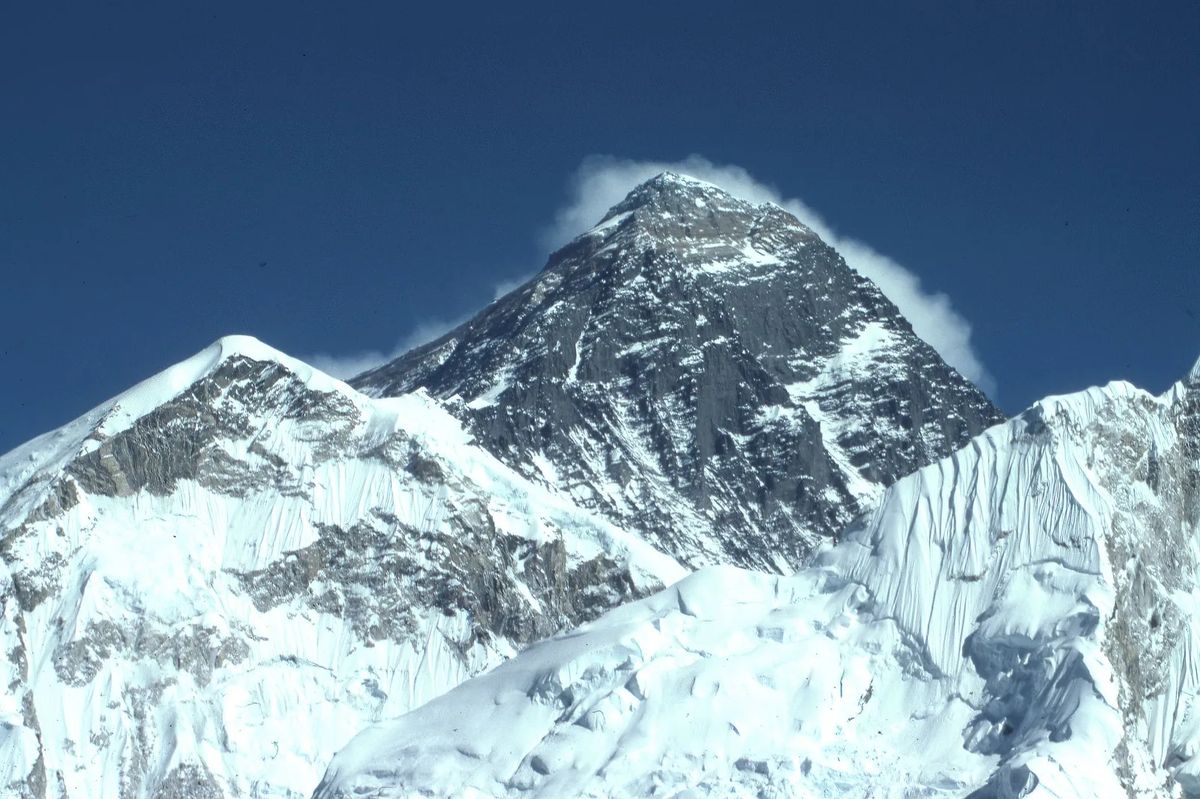
Ask anyone which mountain is the tallest on Earth and they'll say Mount Everest without hesitation. They're right — and also, depending on how you define 'tallest', completely wrong. Measure by three different, equally legitimate methods, and you get three different champions: Everest, a Hawaiian volcano most of which sits underwater, and an Ecuadorian peak more than 2,500 metres shorter than Everest that nonetheless pokes deeper into space.
Key facts
- Everest's official summit height is 8,848.86 metres above sea level, confirmed by a joint Nepal-China survey completed in 2020.
- Hawaii's Mauna Kea rises just 4,207.3 metres above sea level — but measured from its true base on the Pacific seafloor, it stands 10,211 metres tall, about 1.36 km more than Everest.
- Ecuador's Chimborazo summit, at only 6,268 metres above sea level, sits roughly 2,100 metres farther from the centre of the Earth than Everest's summit.
Everest wins the category most people actually mean: highest point above sea level, the number climbers train for, pay permit fees for, and risk their lives for. That figure, 8,848.86 metres, is the result of a years-long joint Chinese-Nepali resurvey completed in 2020, replacing the long-used 1955 Survey of India figure of 8,848 metres — Nepal's negotiators had insisted the true summit height be confirmed jointly rather than taken from either country's older data. It's the number written into Nepal's permit paperwork and every itinerary that ends at Everest Base Camp, itself sitting at 5,364 metres, looking up at a summit still nearly 3.5 vertical kilometres higher.
Why a shorter mountain can 'win'
Sea level itself is not a fixed ruler — it's only a convenient, human reference point measured along the geoid, Earth's average sea-surface shape. Two other measurements ignore that convention entirely, and both dethrone Everest.
| Mountain | Above sea level | Wins by |
|---|---|---|
| Mount Everest, Nepal/Tibet | 8,848.86 m | Highest point above sea level |
| Mauna Kea, Hawaii, USA | 4,207.3 m (10,211 m base-to-summit) | Tallest base-to-summit — most of it is underwater |
| Chimborazo, Ecuador | 6,268 m | Farthest point from Earth's centre — closest point to space |
Mauna Kea's trick is straightforward: it's a volcano built up from the floor of the Pacific Ocean, roughly six kilometres below the surface, and only its top 4,207.3 metres break the waterline. Add the submerged base back in and it totals 10,211 metres from root to summit — taller than Everest by more than a kilometre, just mostly invisible under water.
Chimborazo's trick is stranger. Earth isn't a perfect sphere; it's an oblate spheroid, bulging outward at the equator because of the planet's own rotation. The equatorial radius (6,378.137 km) is about 21.4 km larger than the polar radius (6,356.752 km). Chimborazo sits just over a degree south of the equator, almost exactly on that bulge, so its summit — at only 6,268 metres above sea level — works out to roughly 6,384.4 km from the planet's centre. Everest's summit, tucked up near 28 degrees north where the bulge has already tapered off, sits at about 6,382.3 km from centre. Subtract the two and Chimborazo's peak is about 2,100 metres farther out into space than Everest's, despite being 2,580 metres shorter by the sea-level yardstick.
What this means for trekkers
What this means for you
None of this changes the number that matters on the ground in Nepal: 8,848.86 metres is still the highest point a human being can stand on this planet's surface, no asterisk needed. The 'three tallest mountains' trivia is really a reminder of how differently we can measure the same world — Everest's record is about altitude and thin air, the exact conditions that make trekking to Everest Base Camp or flying past the summit on a helicopter tour a genuinely different physical experience than 'climbing' a taller mountain measured from an ocean floor you'll never see or breathe thin air on. If the science of Everest's height interests you, we've also covered why Everest is still growing, millimetre by millimetre, for a reason that has nothing to do with plate tectonics, and the Gokyo Ri trek gives you one of the best long-range views of that summit from a ridge of your own.
For our guides in Pokhara, this is mostly a great pub-quiz fact to have ready on the trail — sea-level altitude, the measurement that actually determines how hard it is to breathe at 8,000 metres, will always be Everest's alone. Trekkers heading into the Everest region this autumn will still be looking up at the same 8,848.86 metres regardless of what's happening on a volcano in Ecuador or a submerged seamount in the Pacific.
Source: ScienceBlog.com
Cover photo: Dick Hoskins via Pexels (Pexels License).
Still running this season
Everest Base Camp Helicopter Tour — 1 Day is running normally
NMA-certified local guides, transparent pricing, 5,000+ treks since 1998. Message us your dates and we'll sort the permits, lodges and logistics — reply within 24 hours, no obligation.
Popular Nepal treks
All treks →
Related coverage
Records & People
Everest Isn't the Deadliest 8,000m Mountain. Annapurna Is — and It's Not Close
Guinness World Records has certified Annapurna I as the deadliest Himalayan giant, with a death-to-summit ratio over five times Everest's. Here's the real math behind the title, and why the trek to its base camp is nothing like the climb.

Flights & Access
Everest Base Camp Trek or Helicopter Tour? The Kala Patthar Reopening Changes the Math in 2026
A shared helicopter can land you on Kala Patthar again after a three-year ban, but it still can't buy you what nine days on the trail does.
Industry & Tourism
Everest Just Had Its Busiest Climbing Season Ever. Climbers Also Left Behind 90,000 Kilograms of Trash.
A record 701 climbers pushed for the summit this spring, and the mountain's cleanup crews hauled down a record amount of waste right behind them.
Records & People
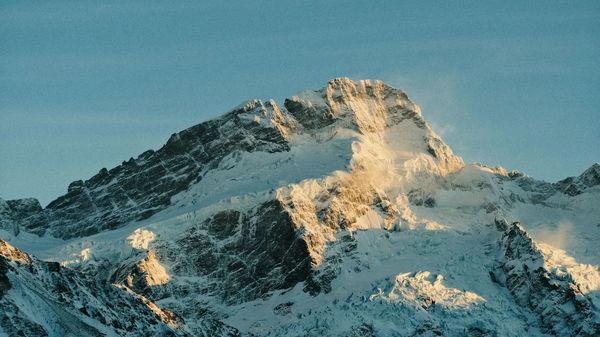
Mount Everest Is Still Growing — and a Hijacked River 47 Miles Away Is Pushing It Up
A 2024 study in Nature Geoscience found the world's tallest mountain gains roughly 2mm a year from an ancient river 'piracy' event on top of the tectonic collision that built it in the first place.
Latest from the desk
Records & People
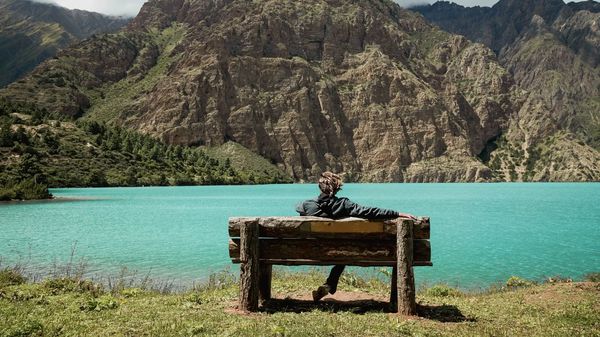
Everyone Calls This Nepal's Deepest Lake. A Government Survey Says It Isn't.
Phoksundo's turquoise water and no-fishing custom are real, but Nepal's own hydrology surveys put the actual depth record on a different lake entirely.
Flights & Access
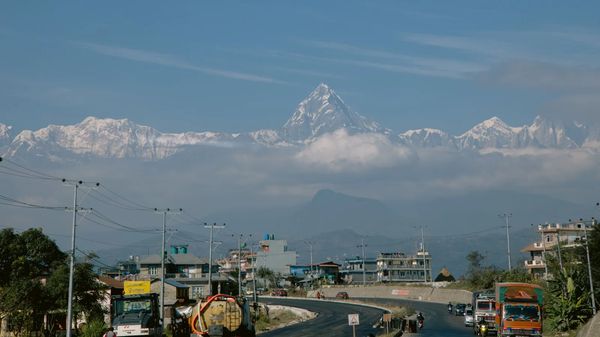
Pokhara Just Got Its First Real International Flight, Three Years After the Airport Opened
flydubai starts daily Dubai–Pokhara flights on 23 September 2026, the first scheduled international airline to serve Nepal's trekking capital since its $216 million airport opened in 2023.
Festivals & Events
Dashain 2027 tika is Saturday 9 October, twelve days earlier than this year
Dashain 2027 runs 30 September to 14 October, tika on Saturday the 9th. Bhai Tika is 31 October. Why the early date matters for an autumn trek.