
Everest Is Still Growing — and the Reason Isn't What You'd Think
The world's tallest mountain gains roughly two millimetres a year, and a 2024 study found the biggest driver isn't the collision of continents — it's a river gorge 75 kilometres away.
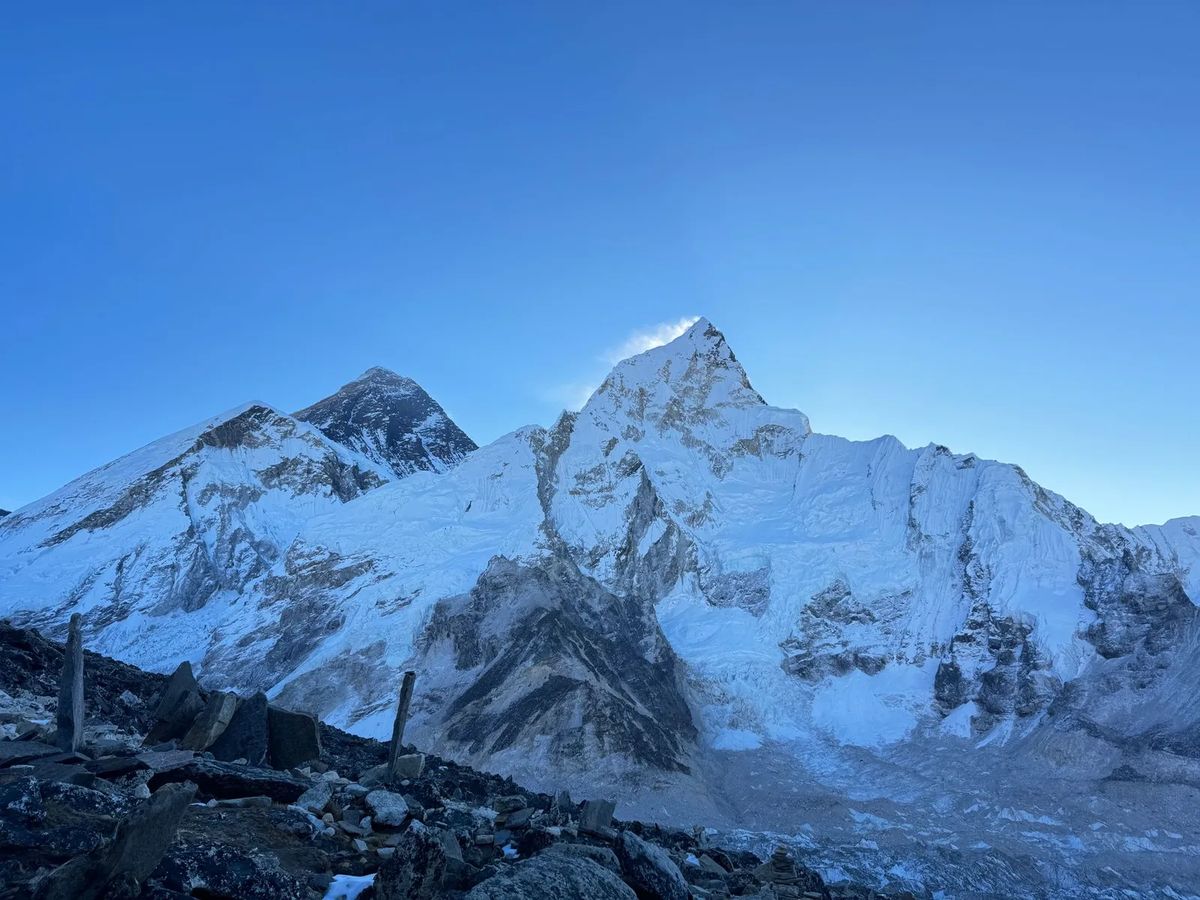
At a glance
- Published
- TopicRecords & People
- Verified againstUCL News
- Treks coveredEverest Base Camp Trek — 14 Days, Gokyo Ri Trek — 11 Days, Makalu Base Camp Trek — 18 Days
Everest is not finished growing. Every year, the world's tallest mountain gains a little more height — and until recently, nobody could fully explain why. A 2024 study in Nature Geoscience found that a big part of the answer has nothing to do with the collision of the Indian and Eurasian plates that built the Himalaya in the first place. It's a river, 75 kilometres away, that has spent the last 89,000 years quietly eating away at a gorge — and lifting Everest as it goes.
Key facts
- Everest is gaining roughly 2 millimetres of height a year, on top of any tectonic uplift
- Researchers estimate the mountain has grown 15 to 50 metres over the past 89,000 years
- The mechanism: erosion from a river gorge 75 km away, where the Arun river merged with the Kosi river network
- Neighbouring peaks Lhotse and Makalu are being lifted by the same process — Makalu, closest to the Arun, slightly more
The process is called river piracy: roughly 89,000 years ago, the Arun river was captured by the Kosi river system, merging into a single, much more powerful drainage network. That combined river has spent the millennia since carving a deep gorge through the rock roughly 75 kilometres from Everest. As millions of tonnes of rock and sediment have been washed away, the crust beneath the region has lost weight — and, like a cushion released from pressure, sprung back upward. Geologists call this isostatic rebound. The research team, led by Dr Xu Han at the China University of Geosciences with contributions from Adam Smith and Dr Matthew Fox at UCL, modelled the effect and found it could account for Everest's extra 15 to 50 metres — and for an ongoing uplift of about 2mm a year, over and above whatever the Indian and Eurasian plates are doing underneath.
Not just Everest
Lhotse, the world's fourth-highest peak, and Makalu, the fifth-highest, sit in the same stretch of the Himalaya and are being pushed upward by the same rebound. Makalu, positioned closest to the Arun's new course, appears to be rising slightly faster than its two neighbours. All three peaks, in other words, owe part of their extreme height not only to the ancient plate collision that raised the Himalaya, but to a river that changed course tens of thousands of years after the mountains already existed.
It's a strange thought for anyone who has stood at Everest Base Camp: the mountain overhead is not a static fact, fixed the moment the plates first collided, but something still quietly rising underfoot — by roughly the thickness of a coin, every single year. Nepal and China's most recent joint survey, using GPS receivers carried to the summit, put Everest's official height at 8,848.86 metres in 2020 — a figure that will already be very slightly out of date by the time you read this. For how the first-ever calculation of that height was made, a full century before GPS existed, see our piece on the mathematician who computed Everest's height from more than 150 kilometres away.
What this means for you
None of this changes the trek — 2mm a year is invisible on any human timescale, and the Everest Base Camp and Makalu Base Camp trails you'd actually walk aren't shifting under your boots. But it's a genuinely rare thing to stand next to a mountain that is measurably, scientifically still growing while you're on it. Guides on our Everest and Makalu routes point out the Arun valley from several viewpoints along the trail — now you'll know why it matters.
Source: UCL News, reporting on research published in Nature Geoscience.
Cover photo: Prabin Sunar via Pexels (Pexels License).
Still running this season
Everest Base Camp Trek — 14 Days is running normally
NMA-certified local guides, transparent pricing, 5,000+ treks since 1998. Message us your dates and we'll sort the permits, lodges and logistics — reply within 24 hours, no obligation.
Popular Nepal treks
All treks →
Related coverage
Records & People
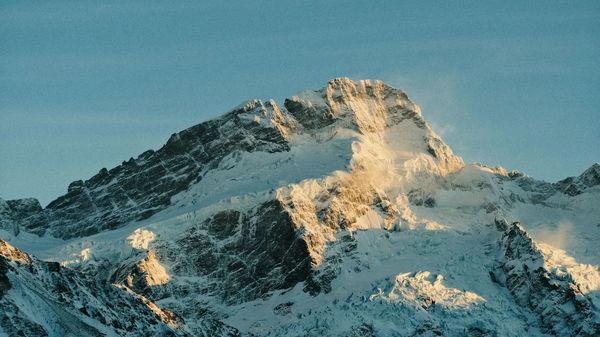
Mount Everest Is Still Growing — and a Hijacked River 47 Miles Away Is Pushing It Up
A 2024 study in Nature Geoscience found the world's tallest mountain gains roughly 2mm a year from an ancient river 'piracy' event on top of the tectonic collision that built it in the first place.
Records & People
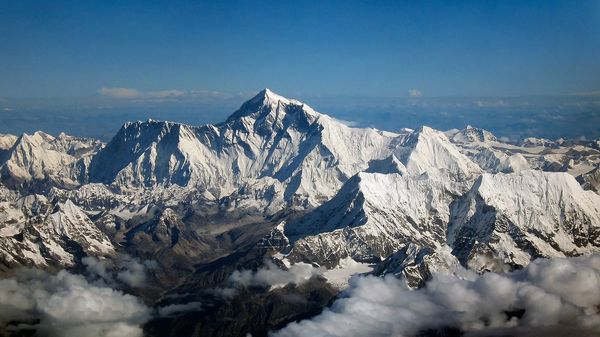
Mount Everest Was Named After a Man Who Never Saw It and Asked Not to Be
Sir George Everest never set foot near the mountain, never wanted his name on it, and wasn't even the one who proved it was the tallest on Earth.
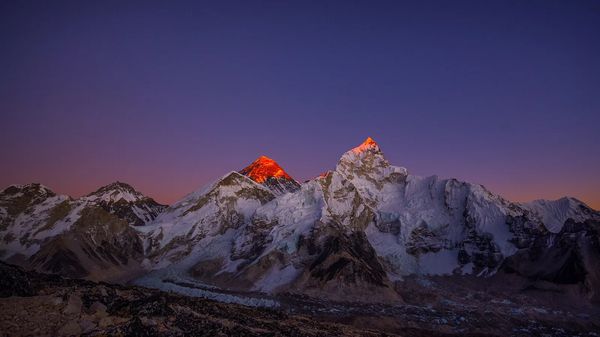
Records & People
Nobody tells you Everest can only be climbed a few days a year, and the jet stream is why
For most of the year a jet stream sits on the summit of Everest with winds over 250 km/h. It lifts north for a few weeks each May when the monsoon pushes it aside, and that short calm is the only time the mountain is climbable.
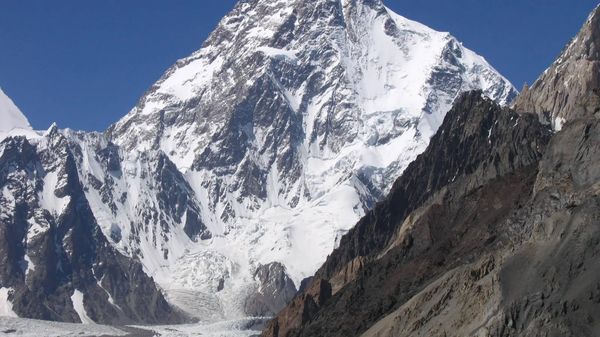
Records & People
K2 vs Everest: Which Is Harder to Climb? The Honest Head-to-Head (2026)
K2 is 238 m shorter than Everest but kills roughly one climber in ten — a dimension-by-dimension comparison of height, technical difficulty, weather, rescue and death rate, and why K2 is “the Savage Mountain.”
Latest from the desk
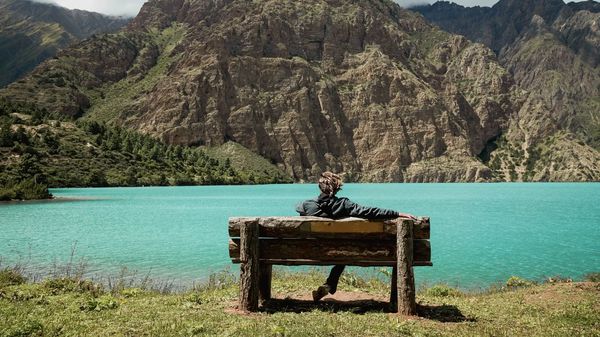
Records & People
Everyone Calls This Nepal's Deepest Lake. A Government Survey Says It Isn't.
Phoksundo's turquoise water and no-fishing custom are real, but Nepal's own hydrology surveys put the actual depth record on a different lake entirely.
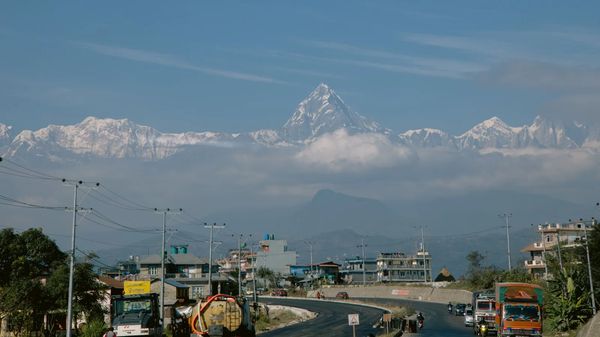
Flights & Access
Pokhara Just Got Its First Real International Flight, Three Years After the Airport Opened
flydubai starts daily Dubai–Pokhara flights on 23 September 2026, the first scheduled international airline to serve Nepal's trekking capital since its $216 million airport opened in 2023.
Festivals & Events
Dashain 2027 tika is Saturday 9 October, twelve days earlier than this year
Dashain 2027 runs 30 September to 14 October, tika on Saturday the 9th. Bhai Tika is 31 October. Why the early date matters for an autumn trek.