
The Man the World's Tallest Mountain Is Named After Never Once Saw It
Everest was measured by an Indian mathematician the British empire barely credited, named after a surveyor who begged them not to, and didn't get its Nepali name until a historian rediscovered it in 1939.
At a glance
- Published
- TopicRecords & People
- Verified againstThe Kathmandu Post
- Treks coveredEverest Base Camp Trek — 14 Days, Everest Base Camp Helicopter Tour — 1 Day, Everest View Trek — 7 Days
Sir George Everest never laid eyes on Mount Everest. Not once. He spent three decades running the Great Trigonometrical Survey of India, retired to England in 1843, and died in 1866 — a decade after the mountain bearing his name was confirmed as the highest point on Earth, and 87 years before anyone stood on its summit. He even asked the Royal Geographical Society not to use his name, arguing it couldn't be written in Hindi and that a local name should stand instead. They named it after him anyway.
Key facts
- The mountain's height was first calculated in 1852 by Radhanath Sikdar, an Indian mathematician working as a Survey "computer," using theodolite readings taken from up to 240km away — British surveyors were barred from entering Nepal or Tibet
- Sikdar's result: almost exactly 29,000 feet; his boss added 2 feet so it would not look like a suspiciously round estimate
- The modern, satellite-verified height, jointly announced by Nepal and China in December 2020: 8,848.86 metres (29,031.7 ft) — Sikdar was off by barely 30 feet, with no satellites at all
- Nepal's own name for the mountain, Sagarmatha, was not publicised until 1939, by historian Baburam Acharya — who insisted he had only rediscovered an old name, not invented one
Before any of that, Tibetans and Sherpas already had a name: Chomolungma, "Goddess Mother of the World," used for centuries by the communities who actually lived in its shadow. British surveyors, forbidden from crossing into Nepal or Tibet to check for a local name up close, catalogued the peak only as "Peak b," then "Peak XV," triangulating its height from stations on the Indian plains far to the south. When Andrew Waugh, the Survey's superintendent, forwarded Sikdar's 1852 calculation, he sat on it for four years — checking and rechecking the numbers before finally announcing in March 1856 that Peak XV, at 29,002 feet, was the tallest mountain ever measured. Only in 1865 did the Royal Geographical Society rename it Everest, overruling the objections of the man himself.
Survey chief Andrew Waugh spots an unnamed peak from over 200km away and logs it as "Peak XV."
Indian mathematician Radhanath Sikdar computes Peak XV as the world's highest, close to 29,000 feet, from trigonometric readings alone.
The Royal Geographical Society names the peak Mount Everest, after a surveyor who had asked them not to.
Tenzing Norgay and Edmund Hillary reach the top — 101 years after its height was first calculated from a river plain hundreds of kilometres away.
Nepal and China jointly announce a satellite-verified height of 8,848.86 metres, ending decades of dispute.
What this means for anyone planning the trip
What this means for you
Fly into Nepal today and you will see all three names still doing separate jobs. Officially, Nepal calls it Sagarmatha — "Forehead of the Sky" — the name in every domestic permit and park document, including the entry paperwork for Sagarmatha National Park itself. Tibetans still call it Chomolungma. Everywhere else in English, it is simply Everest, honouring a man who was already retired and half a world away when his name was attached to it. None of the three names belonged to the mountain by popular local vote — each was fixed by whoever happened to be doing the paperwork at the time. What has not changed is the trek itself: the same Khumbu valley Sikdar computed from a river plain 200km distant is now walked by thousands of trekkers a season on routes like our Everest Base Camp trek and the shorter Everest View trek, both of which end with the same mountain in view — whichever of its three names you use.
Source: The Kathmandu Post
Cover photo: Pratikxox via Pexels (Pexels License).
Planning a trek?
Trek this route with us — Everest Base Camp Trek — 14 Days
NMA-certified local guides, transparent pricing, 5,000+ treks since 1998. Message us your dates and we'll sort the permits, lodges and logistics — reply within 24 hours, no obligation.


Popular Nepal treks
All treks →


Related coverage
Records & People
More Than 200 Climbers Are Still on Everest. Here's Why Nobody Brings Them Down.
Since the first recorded deaths in 1922, upward of 300 people have died attempting the world's highest mountain — and the physics of altitude means most of them never leave it.
Records & People
Snow Leopards Vanished From the Everest Region in the 1960s. A DNA Study Just Found 24 Living There Again
Sagarmatha National Park is famous for one mountain — but genetic testing shows the ghost cats that disappeared from its slopes two generations ago have quietly recolonised it.
Industry & Tourism
There's a Museum on the Everest Trail Where Every Exhibit Was Once Garbage Someone Carried Down the Mountain
At 3,775 metres above Namche Bazaar, Sagarmatha Next turns Everest's decades of climbing waste into art — and it sits directly on the trail every Everest Base Camp trekker already walks.
Flights & Access
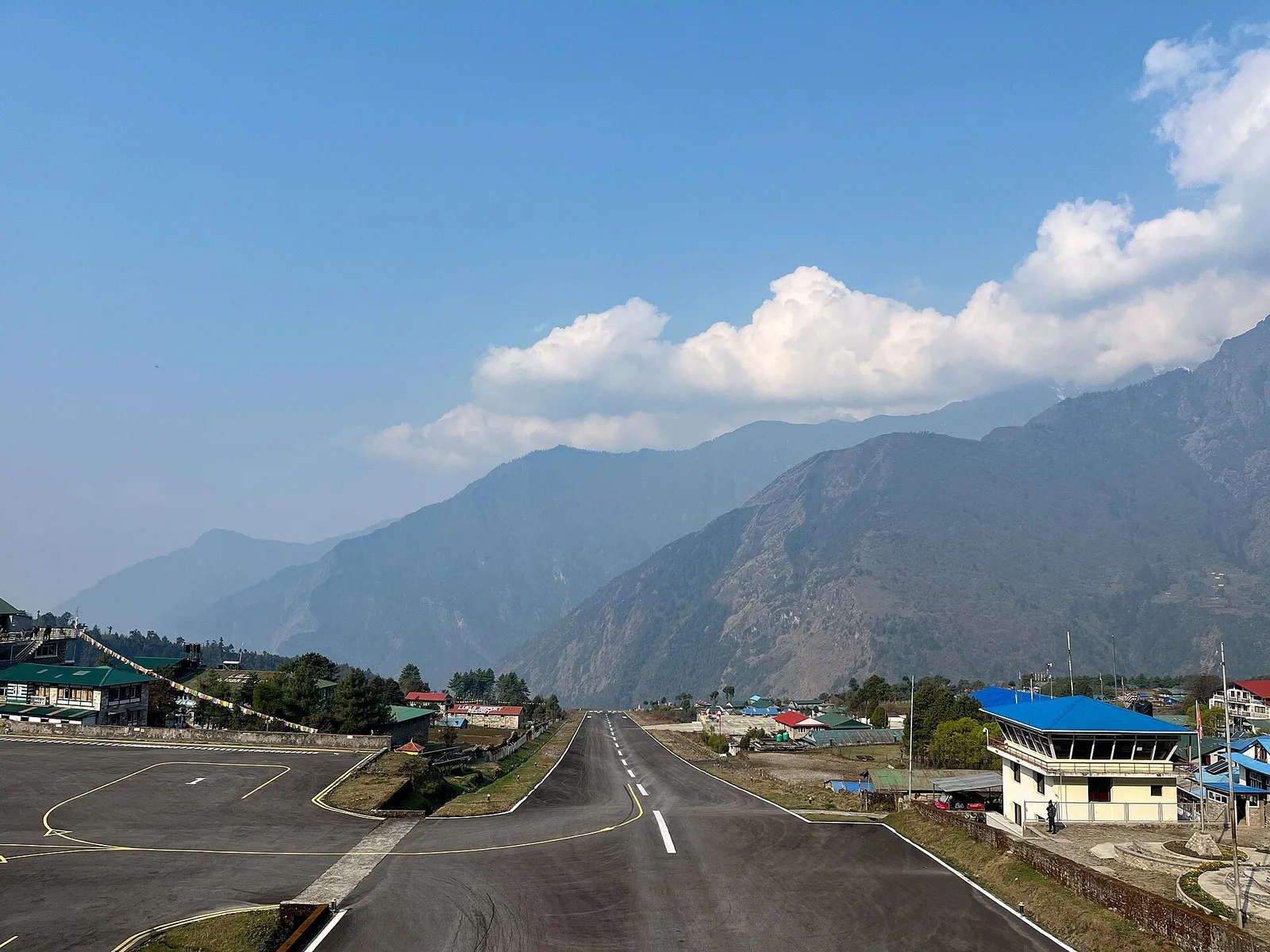
Every Everest Trekker Flies Through the World's Most Dangerous Airport — Here's Why There's No Other Way In
Tenzing-Hillary Airport at Lukla has a 527-metre runway wedged between a mountain wall and a cliff, and pilots need ten prior landings here before they're certified to fly it alone.
Latest from the desk

Gear & Tech
Travel Adapters & Power Banks in 2026: What to Pack (and the Airline Rules You'll Break by Accident)
Nepal runs 230V on Type C/D/M plugs, and your power bank flies in the cabin only — up to 100Wh with no approval, 100-160Wh with permission, over 160Wh banned. The 2025 crackdown, the watt-hour maths, and a charging plan that beats teahouse fees.
Flights & Access
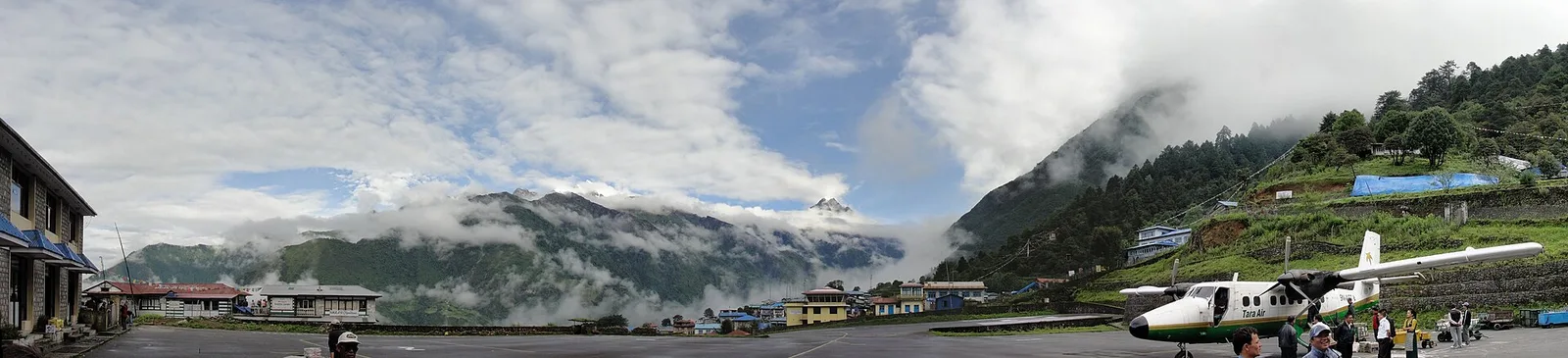
The World's Most Dangerous Airport Has No Go-Around Option — and It's the Only Way to Everest
Tenzing-Hillary Airport's runway is shorter than five football pitches, tilts uphill at nearly 12%, and ends in a rock wall on one side and a valley drop on the other — every Everest trekker flies through it anyway.
Money & Insurance
Travel Insurance for Seniors in 2026: Cover, Costs & the Age-Limit Traps
Why premiums jump after 65, the age caps that quietly refuse you, and how an active over-65 gets cover that actually holds on Everest and Annapurna.