
Nepal's Gokyo Lakes Turn an Impossible Turquoise Every Autumn, and Rock Dust Is Why
Six sacred glacial lakes above Everest sit higher than almost any freshwater on Earth, and the colour that makes trekkers stop mid-stride comes down to stone ground fine enough to float.
At a glance
- Published
- TopicRecords & People
- Verified againstNepal Tourism Board
- Treks coveredEBC via Gokyo Lakes Trek — 15 Days, Gokyo Ri Trek — 11 Days, Gokyo Valley & Lakes Trek — 12 Days
Walk two weeks up the Dudh Kosi valley toward Everest and, instead of turning left for base camp, turn right at Sagarmatha National Park's western edge. The trail climbs beside the Ngozumpa Glacier, the longest ice river in the entire Himalaya, and ends at a chain of lakes so vividly blue-green that first-time trekkers assume a filter has been applied to their own eyes. It hasn't. The colour is real, it changes by the week, and it has a precise physical explanation.
Key facts
- Gokyo is a chain of six glacial lakes strung along the Ngozumpa Glacier, the Himalaya's longest at roughly 36km
- The lakes sit between 4,700m and 5,000m elevation, the world's highest freshwater lake system
- Gokyo and its wetlands, 7,700 hectares in total, became a Ramsar Wetland of International Importance in 2007
- Gokyo Ri, the viewpoint above the lakes, tops out at 5,357m and shows four 8,000m peaks at once
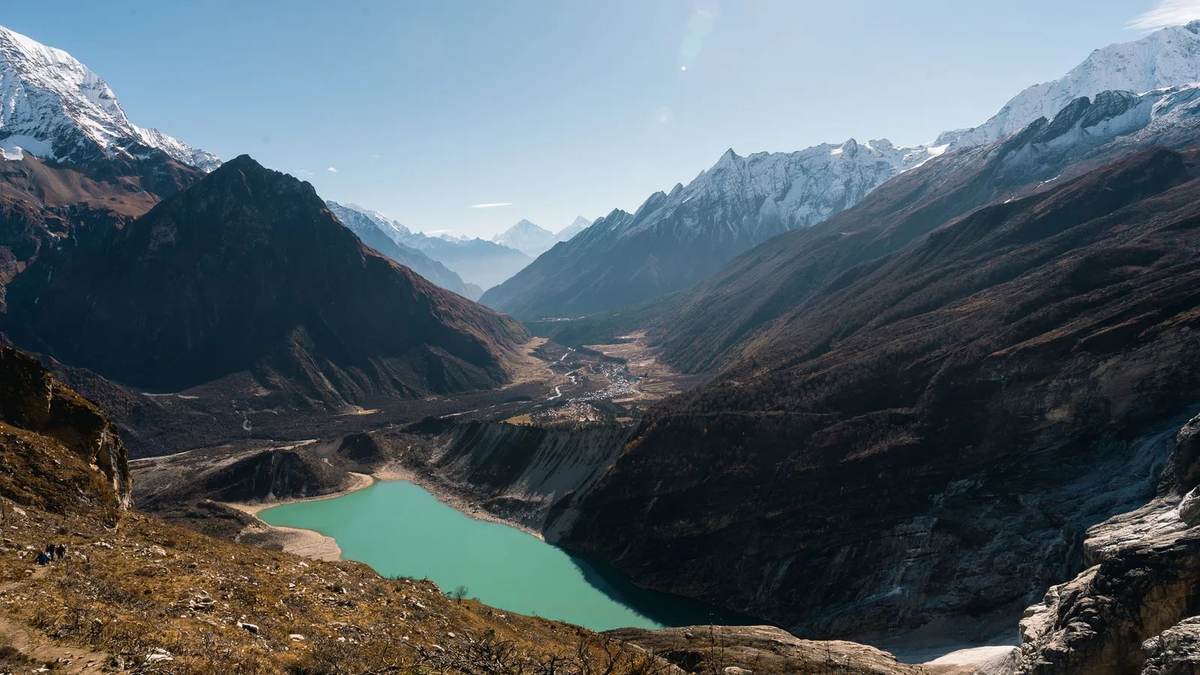
The science is called glacial flour. As the Ngozumpa Glacier grinds slowly down the valley, its own weight crushes the bedrock underneath into particles finer than table salt. Meltwater carries that rock dust into the lakes, where it stays suspended near the surface rather than sinking. Sunlight hitting those countless tiny mineral grains scatters at short wavelengths — the blues and greens — while the longer red and orange wavelengths get absorbed. The result is a shade of turquoise no dye or algae could produce, and it shifts through the trekking season: sharpest and most saturated in the clear, steady melt of autumn, muddier and duller when monsoon silt clouds the water in summer.
The six lakes are not identical, and Sherpa and Tibetan names for each reflect centuries of use as a herding and pilgrimage route rather than a trekking one. The third lake, Dudh Pokhari, sits beside Gokyo village itself and is the largest and most photographed; it is also the site of a Janai Purnima pilgrimage each August, when Hindu and Buddhist worshippers climb to bathe in water considered sacred at any temperature. The sixth and highest, Ngozumpa Tsho, sits directly against the glacier's flank at the top of the system.
Gokyo Ri itself is the reason most trekkers make the detour. From its summit — a steep three-hour pre-dawn climb from Gokyo village — four of the world's fourteen 8,000-metre peaks are visible in a single sweep: Everest, Lhotse, Makalu and Cho Oyu, with the turquoise lakes and the grey ridge of the Ngozumpa Glacier laid out directly below. It is widely regarded, including by veteran Everest region guides, as a better single viewpoint than Kala Patthar, without the crowds that gather on the base camp trail.
What this means for trekkers
What this means for you
Timing decides how good the colour looks. Late September through November gives the clearest water and the strongest turquoise, once monsoon runoff has settled and before winter ice starts forming at the lake edges. Spring (April–May) works too, with slightly less saturated colour but better odds of stable weather for the Gokyo Ri sunrise climb. Either way, this is high-altitude terrain above 5,000m — the same acclimatisation rules that apply to Everest Base Camp apply here, and most itineraries route via Gokyo as an extension or alternative to the base camp trail rather than a separate trip.
For anyone building an Everest region itinerary, the Gokyo Ri Trek reaches the lakes and viewpoint directly, while the Everest Base Camp & Gokyo Lakes trek combines both classic objectives — base camp and the turquoise lake chain — crossing the Cho La pass between them.
Sources: Nepal Tourism Board, Ramsar Sites Information Service, and published glaciology on rock-flour light scattering in glacial lakes.
Cover photo: Arjay Neyra via Pexels (Pexels License).
Still running this season
EBC via Gokyo Lakes Trek — 15 Days is running normally
NMA-certified local guides, transparent pricing, 5,000+ treks since 1998. Message us your dates and we'll sort the permits, lodges and logistics — reply within 24 hours, no obligation.
Popular Nepal treks
All treks →
Related coverage
Safety & Advisories
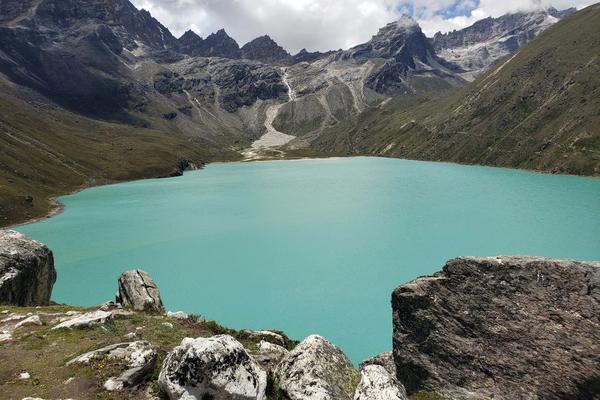
Is the Gokyo Lakes Trek Affected by the 2026 Nepal Floods?
No — the Gokyo valley in the Everest region is running normally. The 26 August flood hit Rasuwa in the north, not the Khumbu. Here is why Lukla flights and the Gokyo Lakes trail are unaffected.
Records & People
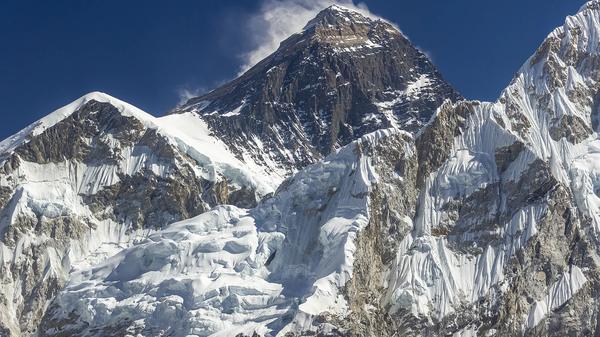
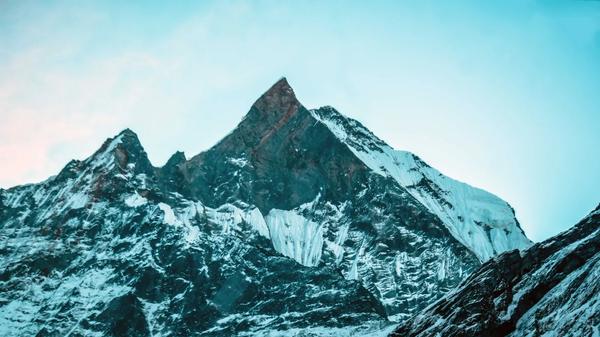
Everyone has seen the Everest traffic jam photo, this is what standing in that line actually does to you
In 2019 a record 381 permits funnelled onto Everest during just two good-weather days put hundreds of climbers in a single queue above 8,000 m. Eleven died. The crowd, not the mountain, was the danger.
Records & People
There Are 450-Million-Year-Old Seashells Near the Top of Mount Everest — Because It Used to Be Seafloor
The rock forming Everest's summit pyramid is marine limestone packed with ancient sea-creature fossils, laid down in a tropical ocean long before the Himalaya existed.
Records & People
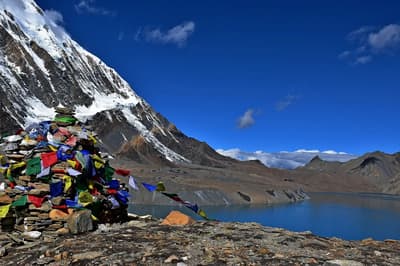
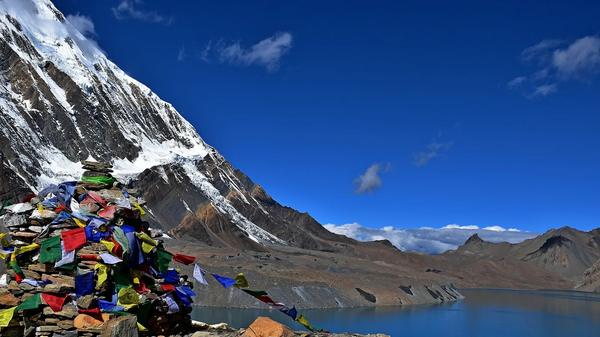
Tilicho Lake Is Called 'The World's Highest Lake.' It Isn't Even Nepal's Highest Anymore
Every trekking brochure calls Tilicho the world's highest lake. At 4,919m it's spectacular — but a Nepali lake discovered in 2019 already beats it, and the real global record sits over 1,400m higher, inside a volcano.
Latest from the desk
Records & People
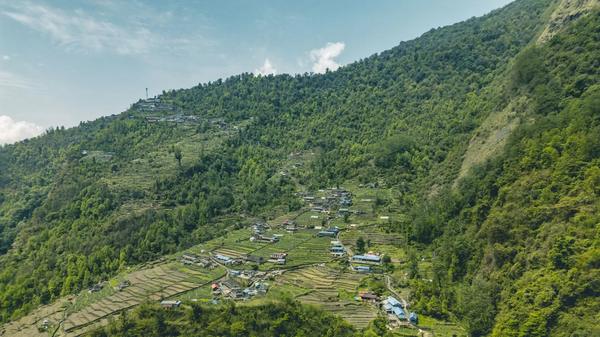
Nobody Tells You Nepal's National Flower Turns Whole Mountainsides Crimson Every Spring
Nepal's national flower isn't grown in a garden bed — it's a forest tree that turns entire hillsides red for about six weeks a year, and the bloom climbs the mountain in a predictable wave.
Gear & Tech
Waterproof jackets fail in a way the label never warns you about
A jacket can be sold as waterproof at 1,500 mm. What the ratings actually measure, why yours feels like it leaks, and the details worth more than the number.
Gear & Tech
New hiking boots ruin more trips than bad weather does
Buying boots the week before you fly is the most common gear mistake there is. What needs breaking in, what does not, and why socks matter more.