
Nobody Tells You Nepal's National Flower Turns Whole Mountainsides Crimson Every Spring
Nepal's national flower isn't grown in a garden bed — it's a forest tree that turns entire hillsides red for about six weeks a year, and the bloom climbs the mountain in a predictable wave.
At a glance
- Published
- TopicRecords & People
- Verified againstNepal Tourism Board / HOP Nepal rhododendron trekking guide
- Treks coveredGhorepani Poon Hill Trek — 4 Days, Ghorepani Poon Hill Trek — 5 Days, Mardi Himal Trek — 4 Days
Most countries pick a national flower that fits in a vase. Nepal picked a tree that can grow over 18 metres tall, covers entire mountain ranges, and for a few weeks each spring turns whole hillsides the colour of fresh blood from a distance. It's called lali gurans in Nepali — literally 'red rhododendron' — and if you've seen a trekking photo from Nepal with a crimson forest framing snow peaks, that's what you were looking at.
Key facts
- Rhododendron arboreum has been Nepal's national flower since the 1960s, and Nepal hosts over 32 recorded rhododendron species — more than almost anywhere else on Earth
- Nearly 28 of those 32 species grow within a single ridge system in eastern Nepal, the Tinjure–Milke–Jaljale (TMJ) range
- Forests bloom in a wave: lower slopes around 2,000m turn red from late February, higher slopes above 3,500m flower white and lavender into May
- The Ghorepani–Poon Hill trail passes through forest widely described as the largest rhododendron forest on Earth
The reason it blooms in a wave rather than all at once comes down to elevation and temperature, exactly the same mechanic that staggers autumn leaf colour down a mountain in reverse. Nepal's rhododendron belt runs from roughly 1,500m to 4,000m, and different species and even different colour forms of the same species are adapted to narrow temperature bands within that range. The lowest forests, closest to Pokhara and the mid-hills, flower deep crimson first — usually the last week of February into March. As spring warms upward, the colour front climbs with it, reaching 3,000m+ forests by mid-April, where the blooms shift toward pink, white and even pale lavender varieties adapted to colder, thinner air. By late May the show is mostly over until the following year.
Nowhere is the density more extreme than the Tinjure–Milke–Jaljale ridge in Nepal's far east, a roughly 30km stretch straddling Sankhuwasabha, Terhathum and Taplejung districts that botanists and trekking guides alike call the rhododendron capital of Nepal. It holds close to 28 of the country's 32-plus recorded species in one contiguous forest, a concentration researchers have studied since at least the 1980s for how tightly the species zone by altitude along a single ridgeline.
| Elevation | Typical bloom window | Dominant colour |
|---|---|---|
| ~1,500–2,000m | Late Feb – early Apr | Deep crimson red |
| 2,000–3,000m | Mid Mar – mid Apr | Red, pink |
| 3,000–3,500m | Mid Apr – early May | Pink, rose |
| 3,500m+ | Late Apr – May | White, lavender |
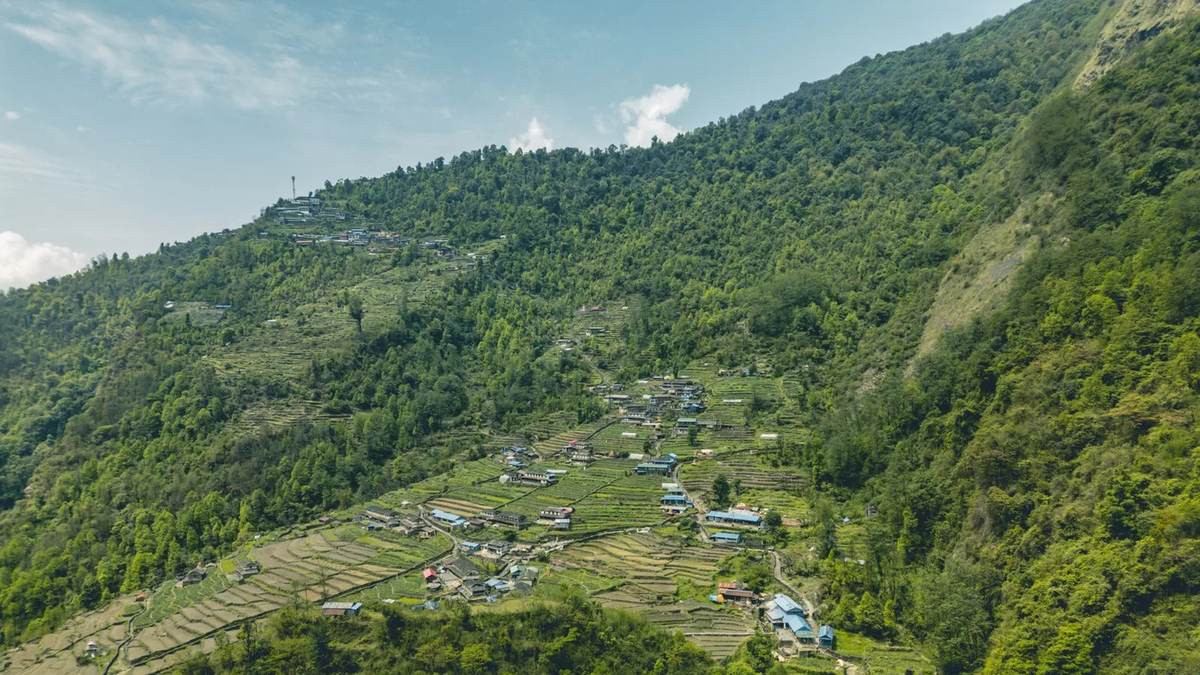
The more famous forest, at least among trekkers, is the one along the Ghorepani–Poon Hill trail in the Annapurna region. The classic sunrise viewpoint at Poon Hill looks out over Dhaulagiri and Annapurna South, but by early April the actual foreground is a rolling sea of red canopy, and the approach trail from Tikhedhunga to Ghorepani climbs almost entirely through it. Guides here treat the bloom the way ski resorts treat snowfall — checked daily, reported to incoming groups, and used to time departures within a given week rather than just a given month.
What this means for trekkers
What this means for you
If the forest itself is the point, not just the mountain views, aim for the last week of March into the first two weeks of April — the window when Poon Hill's mid-altitude forest is at peak red and the higher passes are usually still snow-free. A week either side and you'll catch buds or bare branches instead of full bloom, since the flowering window at any single altitude band lasts only two to three weeks.
The Ghorepani Poon Hill Trek is timed exactly for this window and climbs through the densest part of the forest on the way to the sunrise viewpoint; a faster 4-day version covers the same bloom corridor for trekkers short on time.
Sources: Department of Plant Resources (Nepal), Kanchenjunga Conservation Area records on Tinjure-Milke-Jaljale species diversity, and current-season Ghorepani-Poon Hill trekking operator reporting.
Cover photo: Abdul Kayum via Pexels (Pexels License).
Still running this season
Ghorepani Poon Hill Trek — 4 Days is running normally
NMA-certified local guides, transparent pricing, 5,000+ treks since 1998. Message us your dates and we'll sort the permits, lodges and logistics — reply within 24 hours, no obligation.
Popular Nepal treks
All treks →
Related coverage
Records & People
Nobody tells you Everest can only be climbed a few days a year, and the jet stream is why
For most of the year a jet stream sits on the summit of Everest with winds over 250 km/h. It lifts north for a few weeks each May when the monsoon pushes it aside, and that short calm is the only time the mountain is climbable.
Records & People
Machapuchare Is the Nepal Mountain Nobody Has Ever Been Allowed to Summit (2026)
At 22,943 feet, Machapuchare towers over the Annapurna Sanctuary, and by Nepal's own law, no one has legally set foot on its true summit since a British team turned back 150 feet short of it in 1957.
Records & People
The Himalayan Peak So Sacred Nepal Has Never Once Let Anyone Legally Climb It
Machapuchare's twin summit rises 6,993 metres above Pokhara — and for more than sixty years, Nepal has refused every application to stand on top of it.
Records & People
The 22,943-Foot Himalayan Peak No One Has Ever Officially Stood On
In 1957 a British team stopped 150 feet short of Machapuchare's summit and kept their word never to finish it — Nepal has banned every climber from trying since.
Latest from the desk
Records & People
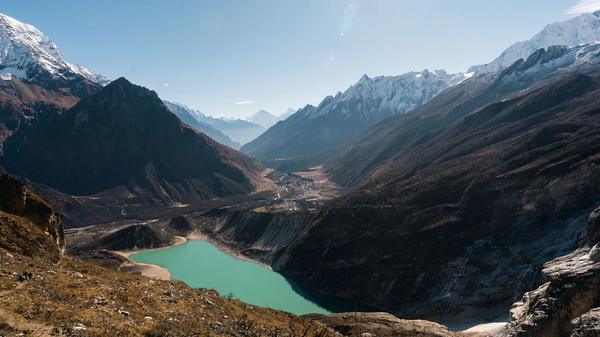
Nepal's Gokyo Lakes Turn an Impossible Turquoise Every Autumn, and Rock Dust Is Why
Six sacred glacial lakes above Everest sit higher than almost any freshwater on Earth, and the colour that makes trekkers stop mid-stride comes down to stone ground fine enough to float.
Gear & Tech
Waterproof jackets fail in a way the label never warns you about
A jacket can be sold as waterproof at 1,500 mm. What the ratings actually measure, why yours feels like it leaks, and the details worth more than the number.
Gear & Tech
New hiking boots ruin more trips than bad weather does
Buying boots the week before you fly is the most common gear mistake there is. What needs breaking in, what does not, and why socks matter more.