
Why some 8,000-metre peaks get climbed thousands of times and others almost never
Everest has over 12,000 ascents and Cho Oyu thousands more; Annapurna I and Kangchenjunga barely a few hundred each. The gap between the most-climbed and least-climbed eight-thousanders is not about height.
At a glance
- Published
- TopicRecords & People
- ReportingOriginal, by our guides in Pokhara
- Treks coveredAnnapurna Base Camp Trek — 9 Days, Everest Base Camp Trek — 14 Days
People talk about the fourteen 8,000-metre peaks as if they were one brutal club, but the climbing record tells a very different story. Everest has been summited more than 12,000 times. Cho Oyu, its quiet neighbour, has thousands of ascents too. At the other end, Annapurna I and Kangchenjunga have only a few hundred summits each across the whole history of mountaineering. The gap between the most-climbed and least-climbed eight-thousanders is enormous — and it is not really about height. It is about danger, access, and whether a mountain can be guided.
At a glance
- Everest and Cho Oyu account for the vast majority of all 8,000-metre summits ever recorded.
- The least-climbed 8000ers are not the highest — they are the most dangerous, remote or technical.
- Popularity tracks “guidability”: fixed ropes, established commercial routes and reachable base camps.
- A low summit count and a high death rate tend to go together, because the same hazards deter climbers.
The most climbed, and why
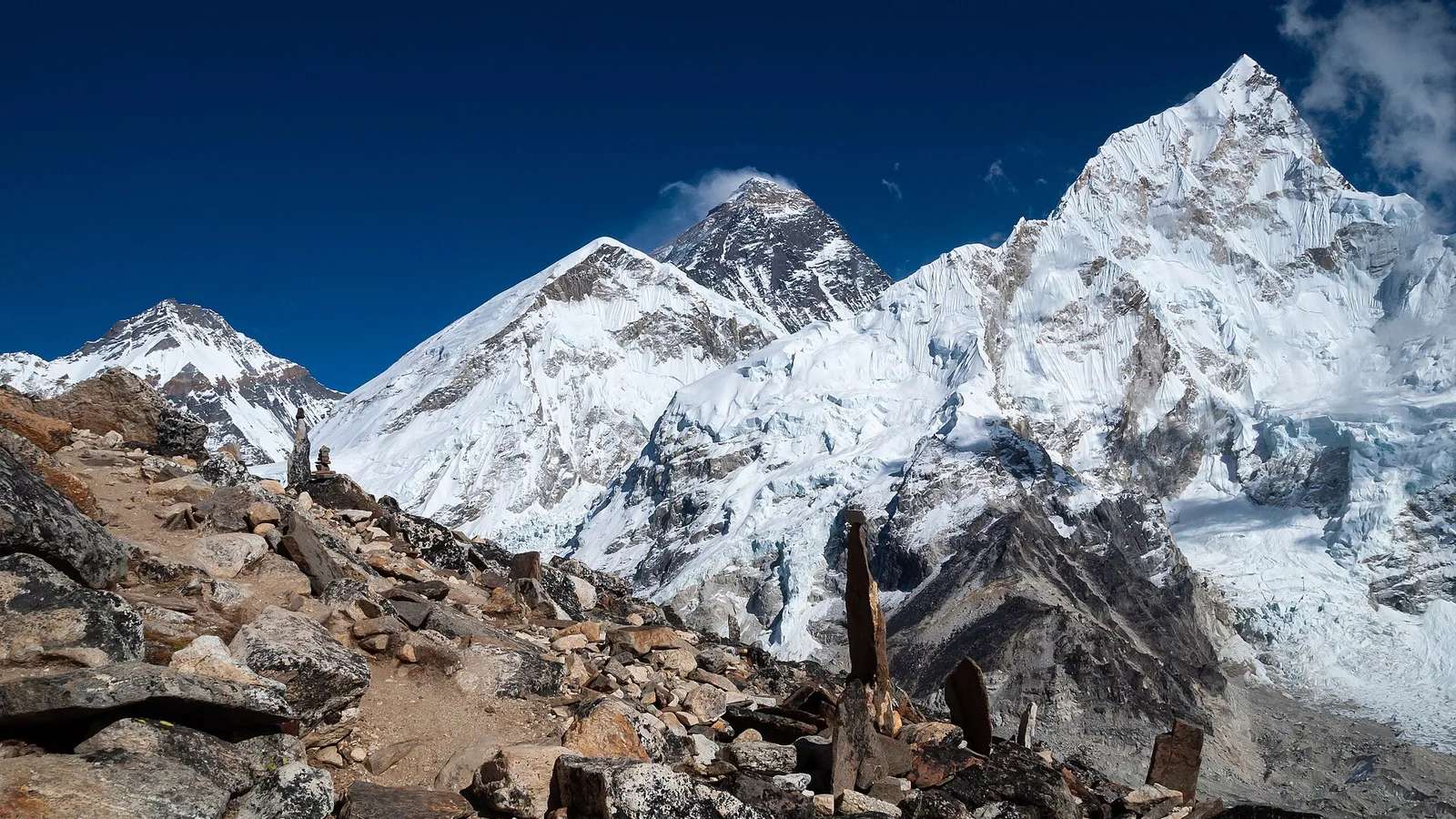
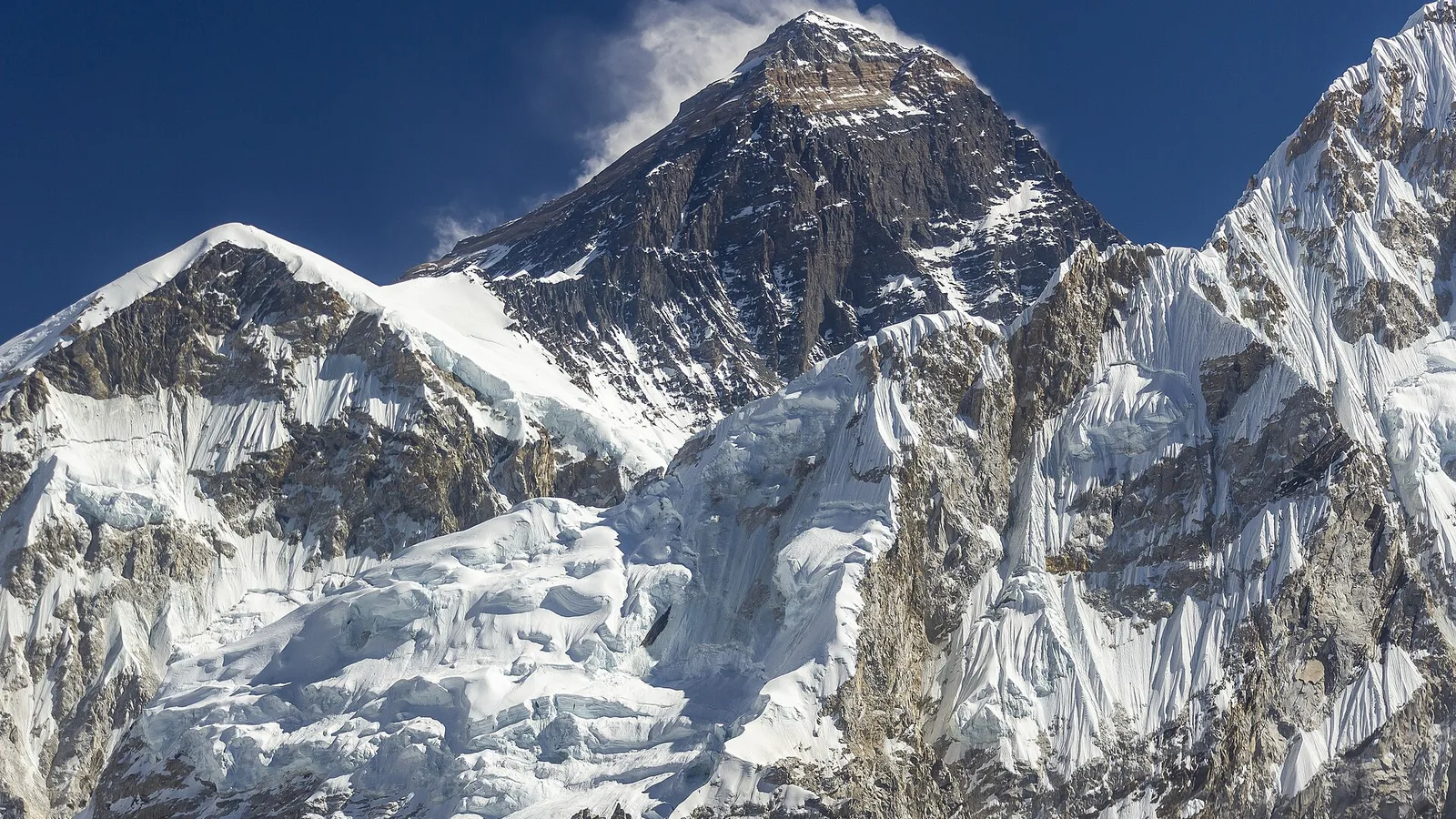
Everest is in a league of its own, with over 12,000 recorded ascents and more than 7,500 different people having reached the top. That is not because it is easy — it is because it is the highest, so it draws the ambition and the money, and decades of commercial operation have wrapped it in fixed ropes, stocked camps and Sherpa support. Second on the list is Cho Oyu (8,188 m), widely regarded as the most accessible 8,000-metre peak: a non-technical standard route, a drivable approach on the Tibetan side, and a strong safety record have made it the classic “first 8000er.” After those two the numbers fall away sharply. Gasherbrum II in the Karakoram is one of the few others with roughly a thousand ascents; most of the fourteen are counted in the hundreds.
| Peak | Height | Approx. summits | Deaths | Fatality rate |
|---|---|---|---|---|
| Everest (Nepal/China) | 8,849 m | most climbed | ~295+ | ~3–4% |
| Cho Oyu (Nepal/China) | 8,188 m | ~3,680 | ~50 | ~1.4% |
| Gasherbrum II (Pakistan/China) | 8,035 m | ~1,000 | ~23 | ~2.3% |
| Lhotse (Nepal/China) | 8,516 m | ~700 | ~18 | ~2.6% |
| Manaslu (Nepal) | 8,163 m | ~650 | ~81 | ~12% |
| Makalu (Nepal/China) | 8,485 m | ~410 | ~41 | ~10% |
| Nanga Parbat (Pakistan) | 8,126 m | ~400 | ~83 | ~21% |
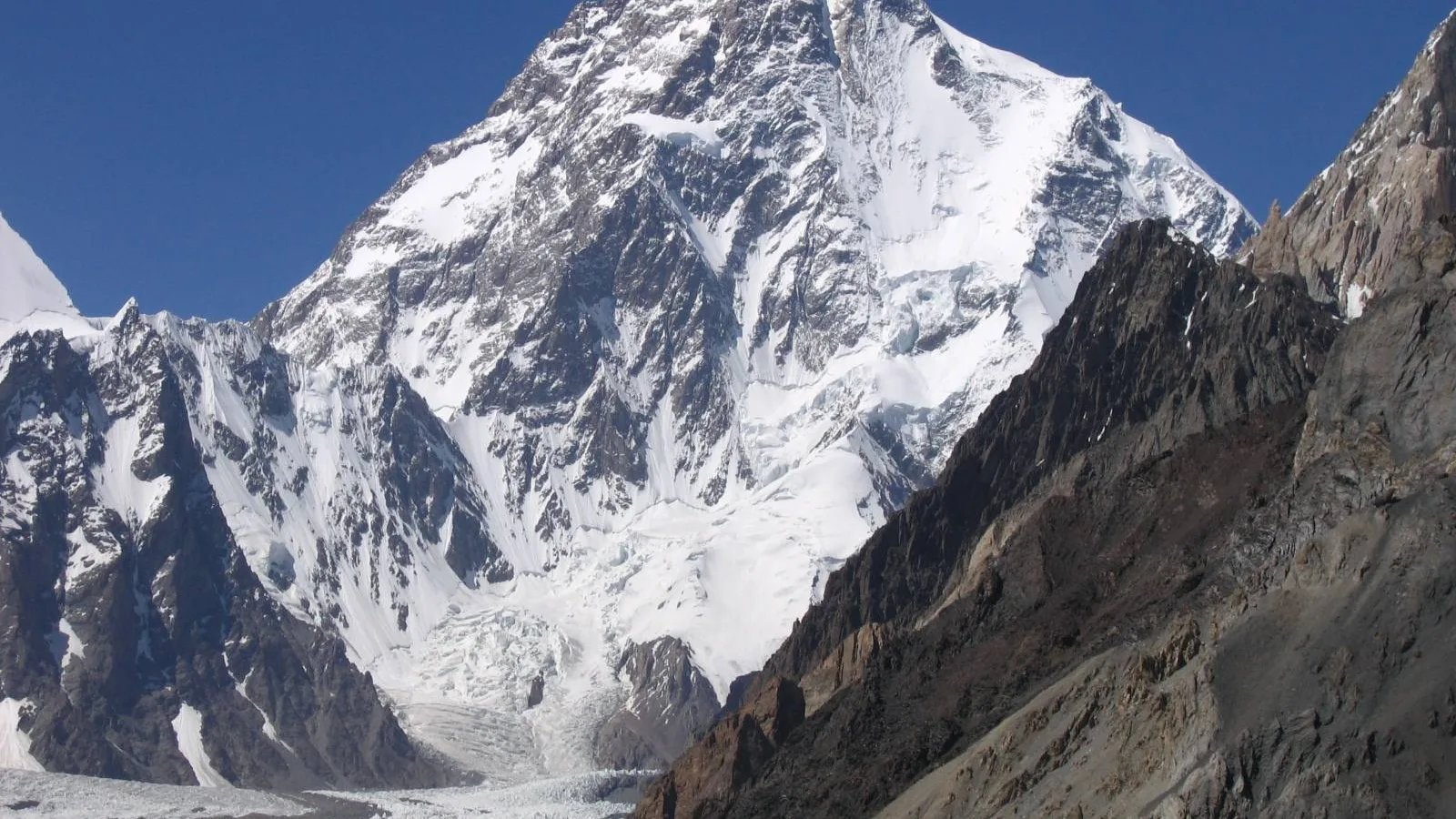
| K2 (Pakistan/China) | 8,611 m | ~367 | ~84 | ~23% |
| Kangchenjunga (Nepal/India) | 8,586 m | ~300 | ~45 | ~15% |
| Annapurna I (Nepal) | 8,091 m | ~261 | ~71 | ~27% |
These figures come from a single compiled dataset (MountainIQ, drawing on the Himalayan Database) so the peaks can be ranked side by side; they are cumulative and keep growing every season, and different sources count summits and deaths slightly differently. Everest’s “12,000+” total from the Himalayan Database is compiled to a later cut-off than the comparative row above, which is why the two Everest numbers differ.
The least climbed, and why
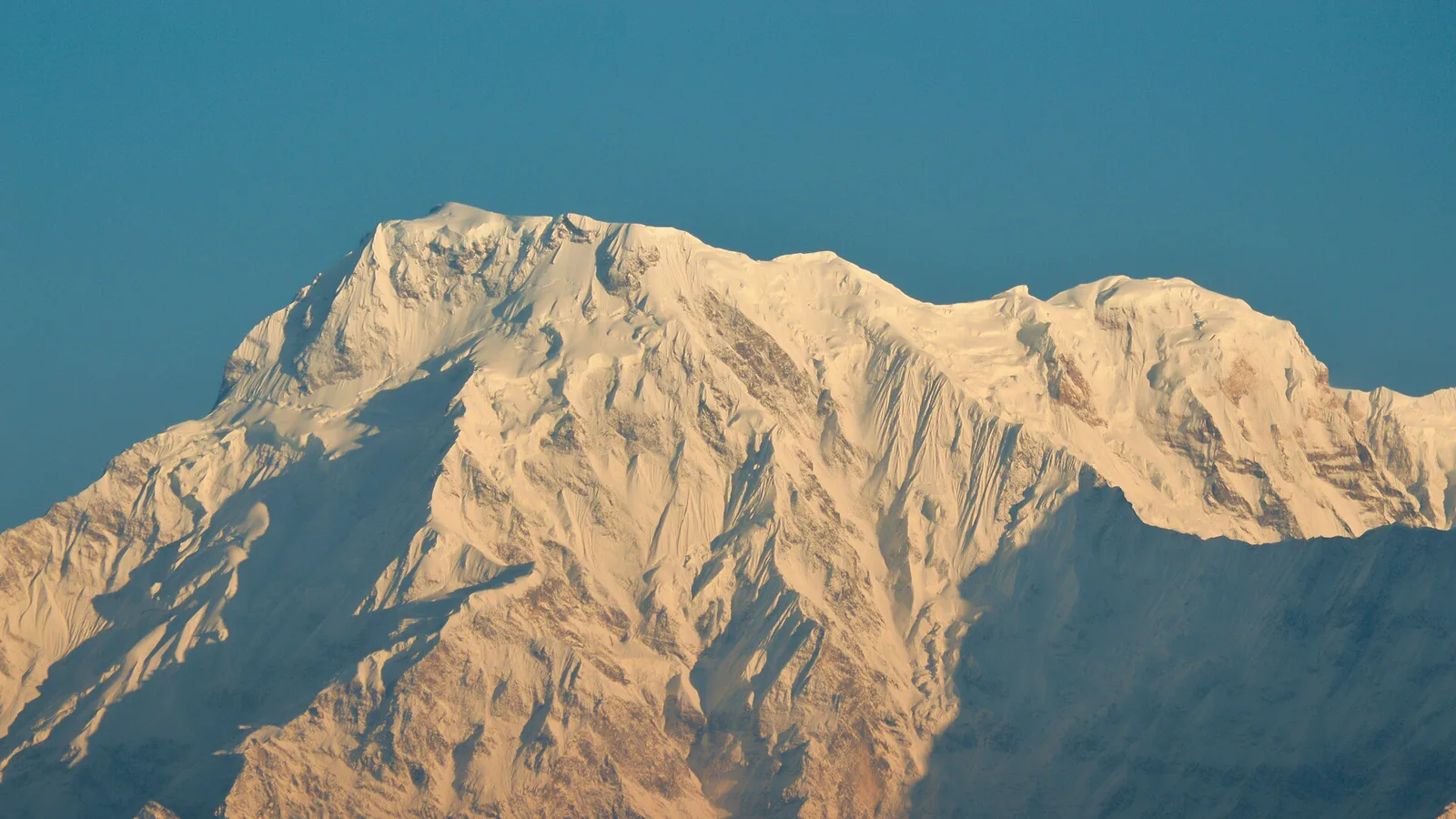
The bottom of the list is telling. Annapurna I, the very first 8,000er ever climbed, has among the fewest total ascents of all fourteen — and the highest death rate, roughly one fatality for every four summiteers. Its north face runs beneath hanging seracs that fall on their own schedule; skill does not remove that hazard, so climbers stay away. Kangchenjunga, the third-highest mountain on Earth, is remote, storm-prone and long, with only around 300 ascents. The technical Karakoram giants — K2, Nanga Parbat, Gasherbrum I — combine severe difficulty with a harsh, hard-to-reach range. In short, the least-climbed 8000ers are the ones that cannot be tamed into a guided, roped, high-success expedition. We break down why Annapurna I is the deadliest 8000er by fatality ratio in its own piece.
What the gap really measures
The lesson of these numbers is that summit count is a measure of accessibility, not of how “hard” a mountain feels to stand beneath. Height barely predicts popularity: the 8,188 m Cho Oyu is climbed a hundred times for every ascent of the shorter, deadlier Annapurna I. What a peak’s numbers actually track is whether it has a route that can be secured, an approach that can be reached, and a hazard profile that a well-run expedition can manage. Where all three line up, thousands go. Where objective danger dominates, the mountain stays empty — and, grimly, deadly.
Every ascent on these lists cost something. Behind the tidy totals are decades of expeditions, and behind the death columns are real climbers and the Sherpa and porter teams who share the risk. We publish the figures to inform, never to keep score. If you want to understand the Himalaya from the ground rather than the summit, message us on WhatsApp at +45 91 71 72 19 or via our contact page.
Walk to the foot of the giants — safely
You do not need to be a mountaineer to stand beneath these peaks. Our treks reach the base camps of the most storied 8000ers with no climbing hazard at all.
- Annapurna Base Camp Trek — 9 days · the amphitheatre under the deadliest 8000er
- Everest Base Camp Trek — 14 days · beneath the most-climbed mountain on Earth
Sources. Everest cumulative ascents and unique summiters: The Himalayan Database (via Explorersweb and haexpeditions), through 2025. Comparative summit, death and fatality-rate figures for all fourteen peaks: MountainIQ, “Eight Thousanders,” drawing on the Himalayan Database, 2023–2026. Cho Oyu accessibility: Alpenglow Expeditions and Adventure Consultants. Annapurna and Kangchenjunga ascent counts and hazards: MountainIQ, Guinness World Records and Wikipedia. Cumulative figures grow each season and counting methods vary; numbers are given as published.
Cover photo: Vyacheslav Argenberg via Wikimedia Commons (CC BY 4.0).
Still running this season
Everest Base Camp Trek — 14 Days is running normally
NMA-certified local guides, transparent pricing, 5,000+ treks since 1998. Message us your dates and we'll sort the permits, lodges and logistics — reply within 24 hours, no obligation.


Popular Nepal treks
All treks →


Related coverage
Records & People
Nims Purja's Project Possible: All 14 Peaks in 6 Months, 6 Days
How Nirmal 'Nims' Purja climbed every 8,000-metre mountain in 189 days in 2019, shattering a record that had stood almost eight years — and how the speed record has fallen twice since. Every date and time sourced.
Records & People
The Most Dangerous 8,000m Peak: Annapurna I's Fatality Rate
By the summit-to-death ratio, Annapurna I is the deadliest of the fourteen 8,000-metre peaks — what the Himalayan Database and Guinness numbers actually say, next to K2 and Everest.

Records & People
He Climbed Everest Four Times in 15 Days — Guinness Just Made It Official
Rope-fixing, a solo push, a client summit, then solo again: Nepali guide Tashi Gyalzen Sherpa's four ascents in May 2025 are now the certified record for the most Everest summits in a single season.
Records & People
Nobody tells you Everest can only be climbed a few days a year, and the jet stream is why
For most of the year a jet stream sits on the summit of Everest with winds over 250 km/h. It lifts north for a few weeks each May when the monsoon pushes it aside, and that short calm is the only time the mountain is climbable.
Latest from the desk
Records & People
Everyone has seen the Everest traffic jam photo, this is what standing in that line actually does to you
In 2019 a record 381 permits funnelled onto Everest during just two good-weather days put hundreds of climbers in a single queue above 8,000 m. Eleven died. The crowd, not the mountain, was the danger.
Safety & Advisories
Altitude Sickness Explained: AMS vs HACE vs HAPE, and the Rules That Prevent Them (2026)
Altitude sickness is not one illness but three — AMS, HACE and HAPE. Here is how to tell them apart, the symptoms that signal an emergency, and the four golden rules that prevent all three.
Records & People
K2 vs Everest: Which Is Harder to Climb? The Honest Head-to-Head (2026)
K2 is 238 m shorter than Everest but kills roughly one climber in ten — a dimension-by-dimension comparison of height, technical difficulty, weather, rescue and death rate, and why K2 is “the Savage Mountain.”