
Nims Purja's Project Possible: All 14 Peaks in 6 Months, 6 Days
How Nirmal 'Nims' Purja climbed every 8,000-metre mountain in 189 days in 2019, shattering a record that had stood almost eight years — and how the speed record has fallen twice since. Every date and time sourced.
At a glance
- Published
- TopicRecords & People
- ReportingOriginal, by our guides in Pokhara
- Treks coveredAnnapurna Base Camp Trek — 9 Days, Everest Base Camp Trek — 14 Days
In 2019 a former Gurkha and UK Special Forces soldier from Myagdi in western Nepal set out to climb all fourteen of the world’s 8,000-metre peaks inside a single year. Nirmal “Nims” Purja — Nimsdai — did it in six months and six days. The previous record had stood at almost eight years. It remains one of the most extraordinary feats in the history of high-altitude mountaineering, and it is worth understanding exactly what he did, and how the record has moved since.
The 189-day sprint
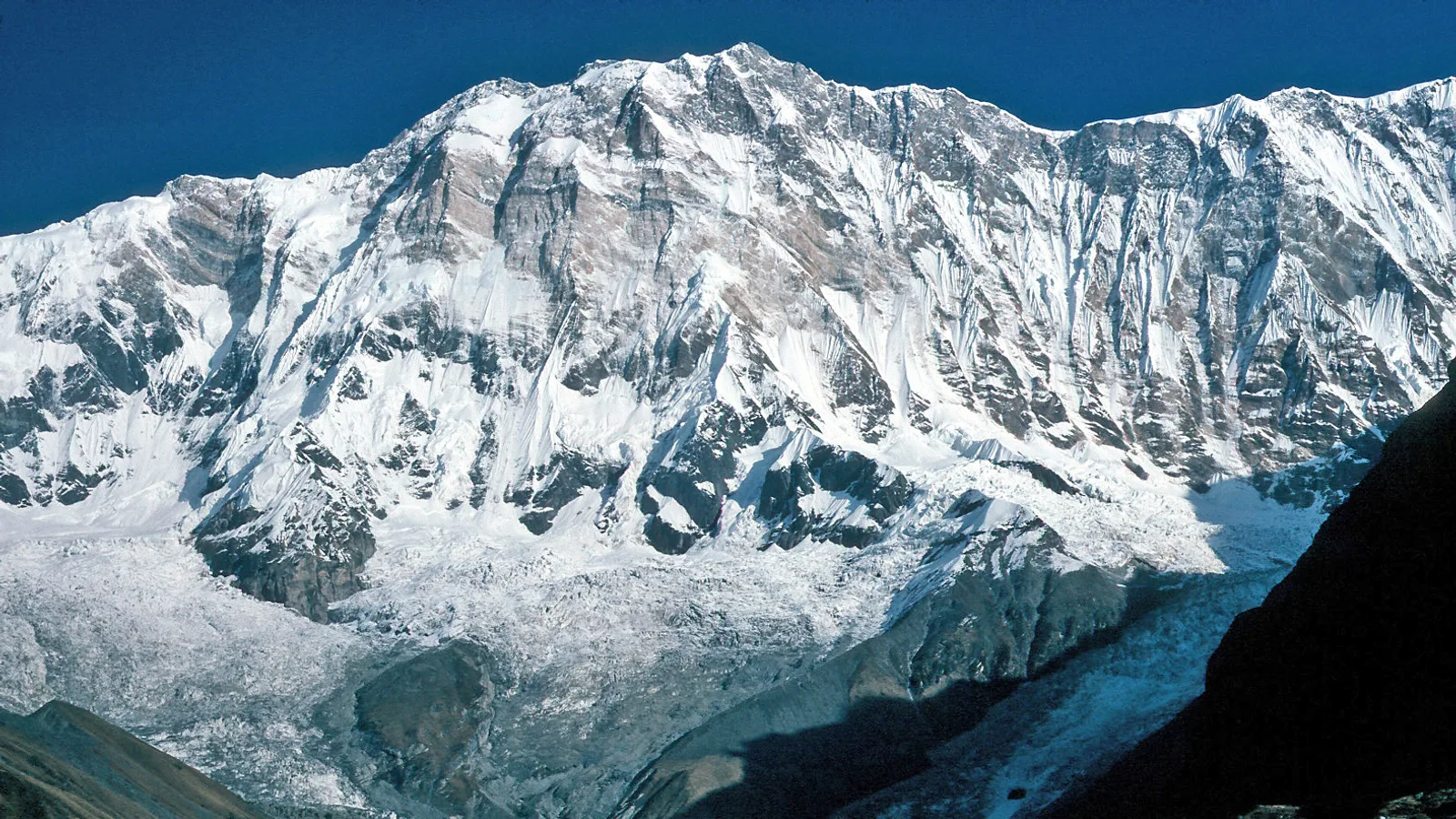
Purja opened Project Possible on Annapurna I on 23 April 2019 and closed it on Shishapangma in Tibet on 29 October 2019. In between he climbed the eight peaks in Nepal, the five in Pakistan’s Karakoram, and the two in Tibet, moving between mountains and countries at a pace no one had attempted before. In the spring he summited Everest, Lhotse and Makalu — three of the five highest mountains on Earth — inside roughly 48 hours. In the Pakistan season he took on K2, the hardest of them all, in a year when many teams turned back.
Purja was open about how it was done, and that honesty matters. He used supplemental oxygen, fixed ropes and a strong team of Nepali climbers; he used helicopters to move between base camps within the rules each range allowed; and he leaned on the same Sherpa expertise that carries almost every commercial summit. The achievement was the human engine and the logistics, not a claim of climbing alone and unaided. He beat the old mark held by Kim Chang-ho of South Korea, who had climbed all fourteen without supplemental oxygen over 7 years, 10 months and 6 days, finishing in 2013.
| Holder | Time | Notes | Completed |
|---|---|---|---|
| Reinhold Messner (Italy) | 16 years | First person ever, no oxygen | 1986 |
| Kim Chang-ho (South Korea) | 7 yrs 10 mths | Fastest before 2019, no oxygen | 2013 |
| Nirmal Purja (Nepal) | 6 mths 6 days | With oxygen & team support | 2019 |
| Kristin Harila & Tenjen Sherpa | 92 days | Current fastest, with oxygen | 2023 |
How the record fell again
Records exist to be broken, and this one was — comprehensively. In 2023 the Norwegian climber Kristin Harila and Nepali guide Tenjen “Lama” Sherpa climbed all fourteen in just 92 days, finishing on K2 on 27 July 2023. Their partnership cut Purja’s time by more than half, and like his, it depended on a superb Sherpa team, oxygen and finely tuned logistics. It is the mark that stands today. Nepali climbers have set the deeper records too: Sanu Sherpa became the first person to climb all fourteen eight-thousanders twice, a feat of endurance that gets far less attention than the speed runs.
None of these ascents is a template for a first Himalayan trip. They are the work of full-time professional mountaineers operating at the edge of what is survivable, and the edge is real. We wrote about the human cost of the 8,000ers in our guide to the 14 eight-thousanders ranked by height and danger, and about Purja’s earlier no-oxygen mark in his Everest–Lhotse record.
In memory
Both men who set these records have since been lost to the mountains they loved. Tenjen Lama Sherpa died in an avalanche on Shishapangma in October 2023, only weeks after the 92-day record. Nirmal Purja was killed in an avalanche on Broad Peak in the summer of 2026. We record their achievements here with respect, and without pretending the risk was ever anything but total.
What the numbers really mean
Behind every one of these times is a Nepali team — the rope-fixers, the load-carriers, the guides who go up first and come down last. Purja said it himself, again and again: the record belonged to his team as much as to him. That is the part of the story we most want travellers to carry away. You do not have to climb an eight-thousander to walk in their country. The trails to the foot of these giants are open to anyone reasonably fit, and they are where most people fall in love with the Himalaya in the first place.
The walk-in, not the summit
You can stand beneath these mountains without ever entering the death zone. The classic trek to Everest Base Camp looks straight up at the peaks these records were set on. Message us on WhatsApp at +45 91 71 72 19 or through our contact page.
See the 8,000ers from the ground
Trek to the foot of the giants
These are the two eight-thousander approaches we put people on most:
- Everest Base Camp Trek — 14 days · the walk to 5,364 m beneath Everest, Lhotse and Nuptse
- Annapurna Base Camp Trek — 9 days · into the sanctuary below Annapurna I, where Project Possible began
Sources. Project Possible dates and 6-months-6-days record: Nimsdai / Project Possible, Guinness World Records, and the documentary 14 Peaks: Nothing Is Impossible (2019). Previous record, Kim Chang-ho, 7 yrs 10 mths (2013): public mountaineering record. First to climb all 14, Reinhold Messner (1986): historical record. Fastest ascent, Kristin Harila & Tenjen Sherpa, 92 days completed 27 July 2023: The Himalayan Times, Explorersweb. Tenjen Lama Sherpa lost on Shishapangma, October 2023: The Himalayan Times, Explorersweb. Nirmal Purja lost on Broad Peak, 2026: The Kathmandu Post (31 July 2026).
Cover photo: Wolfgang Beyer via Wikimedia Commons (CC BY-SA 3.0).
Still running this season
Everest Base Camp Trek — 14 Days is running normally
NMA-certified local guides, transparent pricing, 5,000+ treks since 1998. Message us your dates and we'll sort the permits, lodges and logistics — reply within 24 hours, no obligation.


Popular Nepal treks
All treks →


Related coverage
Records & People
The World's Highest Marathon Starts at Everest Base Camp — and Nobody Has Beaten a 2006 Record Since
The Tenzing-Hillary Everest Marathon drops 1,920 vertical metres over 26.2 miles from the base of the world's tallest mountain — and a Nepali runner's course record has now survived twenty straight years of attempts.
Records & People
Everest Records: The Fastest, Oldest, and Most Summits
Mount Everest's verified record book — who has summited most, who was oldest and youngest on top, and the fastest ascent ever timed, with every name, number and year sourced.
Records & People
The 22,943-Foot Himalayan Peak No One Has Ever Officially Stood On
In 1957 a British team stopped 150 feet short of Machapuchare's summit and kept their word never to finish it — Nepal has banned every climber from trying since.

Records & People
He Climbed Everest Four Times in 15 Days — Guinness Just Made It Official
Rope-fixing, a solo push, a client summit, then solo again: Nepali guide Tashi Gyalzen Sherpa's four ascents in May 2025 are now the certified record for the most Everest summits in a single season.
Latest from the desk
Records & People
The Most Dangerous 8,000m Peak: Annapurna I's Fatality Rate
By the summit-to-death ratio, Annapurna I is the deadliest of the fourteen 8,000-metre peaks — what the Himalayan Database and Guinness numbers actually say, next to K2 and Everest.
Records & People
The Deadliest Avalanches in the Nepal Himalaya
From the 2014 Khumbu Icefall to the earthquake that swept Everest Base Camp in 2015 — the deadliest avalanches in Nepal's mountains, their causes and tolls, recorded with respect.
Industry & Tourism
Annapurna Circuit vs Tour du Mont Blanc: Which Great Loop in 2026?
Nepal's Thorong La at 5,416m against the Alps' hut-to-hut classic. One tests your lungs, the other grinds your legs — here's the honest, numbers-first comparison of two of the world's great trekking loops.