
Nepal’s first woman helicopter captain flew nearly 100 rescues in six days
Priya Adhikari has flown over 1,000 Himalayan rescues. In the week after the Bhote Koshi flood she flew about a hundred, into places with nowhere to land.

At a glance
- Published
- TopicRecords & People
- Verified againstNDRRMA, UN News and AFAR; interview by No Next Question
- Treks coveredAnnapurna Base Camp Trek — 9 Days, Everest Base Camp Trek — 14 Days, Manaslu Circuit Trek — 14 Days
Key facts
- Priya Adhikari is Nepal’s first woman helicopter captain, and flew roughly 100 rescue missions in six days after the 26 August flood.
- More than 200 survivors were lifted out in the first 48 hours of the operation.
- She has flown over 1,000 rescue missions in the Himalaya across her career.
- NDRRMA puts the Nepal toll at 903 dead, 1,473 injured and 4,247 missing.
One woman has captained a helicopter in Nepal, and in the six days after the Bhote Koshi flood she flew about a hundred rescue missions in one. Priya Adhikari lifted survivors out of Rasuwa from places where putting an aircraft down was barely possible, and carried the dead out of valleys that no longer matched the map. More than two hundred people were evacuated in the first two days alone.
This is a country where helicopters are not a luxury but the only ambulance that reaches most of it. When the Lhende and the Bhote Koshi came down on 26 August and took the road with them, the aircraft became the entire rescue system north of Trishuli. Adhikari was one of the pilots flying it.
Who is Priya Adhikari?
She is 40, and she was a flight attendant before she was a pilot. In 2010 she took a ride in a helicopter and, in her own words to AFAR, thought: “What the hell is this? I want to fly this machine.” She went to the Philippines for the licence, came back, and by 2018 was flying full time. She flies an H125 for Shree Airlines out of Kathmandu.
Becoming a captain in Nepal takes hours in the logbook that nobody hands you. She worked 365 days a year to accumulate them. Along the way she has flown more than a thousand rescues in the Himalaya — the sick, the injured, the stranded, the frozen — and she has never climbed Everest, though she has put a helicopter down on ground most climbers would need a rope to reach.
What the flying actually involved
The hard part of a mass rescue is not the flying. It is the traffic. Adhikari described a valley with twenty helicopters working it at once, all talking, all headed for the same pick-up point:
“Just imagine 20 helicopters flying in that valley, continuously talking with each other. That is actually a little bit of pressure, to navigate and to radio at the same time, to know who is doing what and where. And we are going to the same place, evacuating from the same place, with five or six helicopters landing. So we need to talk with each other very frequently.”
That is the picture worth holding: a single narrow Himalayan valley, filled with cloud and rotor wash, with more aircraft in it than most Nepali airports handle in a morning, and no radar. Separation is maintained by voice. Everyone is going to the same square of gravel because it is the only square of gravel left.
| Figure | Nepal | Tibet (TAR) |
|---|---|---|
| Confirmed dead | 903 | 16 |
| Missing | 4,247 | 546 |
| Injured | 1,473 | — |
| Foreign nationals among the missing | 592 | — |
The flood began on the morning of 26 August, destroyed the Gyirong checkpoint on the China–Nepal border, and struck settlements along roughly 72 km of the Trishuli. Figures are NDRRMA’s and remain provisional; the missing count is far larger than the confirmed dead, which is what a debris flow through occupied valleys does to a casualty list.
She is not the only woman in Nepali rescue aviation, and the records are different
It is worth being precise, because the two get conflated. Adhikari’s first is the captaincy — command of the aircraft. Phunjo Jhangmu Lama holds a different one: Nepal’s first female helicopter long-line rescuer, the person who goes down the wire to the casualty, and who also holds the women’s Everest speed record. Two women, two jobs, two firsts, both in an aviation culture that had neither a decade ago.
What this means if you are trekking here
Helicopter rescue is the reason a serious problem at altitude in Nepal is survivable, and it is worth understanding before you need it. Three things are true at once and travellers usually only know the first.
It is fast — a well-run evacuation from the Khumbu reaches a Kathmandu hospital inside a couple of hours. It is weather-dependent — the same cloud that grounds the fleet does not care about your itinerary, and in the monsoon a helicopter is simply not always coming. And it is expensive enough to ruin you if your policy does not cover it: the bill runs into thousands of dollars and a lot of standard travel insurance quietly excludes trekking altitude. Check the altitude ceiling on your policy, not just that the word “helicopter” appears in it.
For the current picture on the ground, our live flood tracker carries the district-by-district status, and which regions are actually open is updated as roads reopen. The short version has not changed: the damage is concentrated in one corridor in northern Rasuwa. Everest, Annapurna and Manaslu are running normally.
What we would say
Nepal’s rescue system is small, improvised and better than it has any right to be, and it is staffed by people flying a hundred sorties in a week with a radio instead of radar. If you trek here, respect it: buy cover that actually pays for the altitude you are going to, and do not treat a helicopter as a shortcut off a mountain you should have walked down.
Still running this season
Everest Base Camp Trek — 14 Days is running normally
NMA-certified local guides, transparent pricing, 5,000+ treks since 1998. Message us your dates and we'll sort the permits, lodges and logistics — reply within 24 hours, no obligation.


Popular Nepal treks
All treks →


Related coverage
Safety & Advisories
Your Nepal Trekking Guide Just Spent the Week Learning to Keep You Alive Above 4,000m
Days before Nepal's autumn trekking season opens, two of the country's oldest mountain-safety institutions ran back-to-back wilderness first-aid courses for working guides, drilling CPR, patient evacuation and the earliest signs of altitude sickness.
Records & People
Nepal Runs on Its Own Clock: Why the Country Sits 15 Minutes Off Every Neighbor
Land in Kathmandu and you don't just change time zones — you join one of the only places on Earth with a 45-minute offset, fixed to the exact minute of a Himalayan peak.
Breaking Safety & Advisories
Barrier Lake Above Nepal Breaches — Fresh Flood Risk Down the Bhote Koshi–Trishuli After the Rasuwa Disaster (2026)
A barrier lake on the Tibet border has breached — Nepal’s Bhote Koshi–Trishuli corridor faces a fresh, secondary flood threat days after the 26 August Rasuwa disaster. Here is what is confirmed, what is not, and what to do if you are downstream.

Money & Insurance
How to Make a Travel Insurance Claim in 2026 (and Actually Get Paid)
Report incidents on the day, keep every receipt, claim inside the deadline, and know who pays first — plus how to escalate to the ombudsman if you're unfairly refused.
Latest from the desk
World Destinations
Underrated Alternatives to Overtouristed Destinations in 2026: Swap the Crowd for Its Quieter Twin
Skip the ticketed queues at Venice, Santorini, Bali and Dubrovnik. Here are the quieter, cheaper equals — from Bologna and Naxos to Kotor, the Faroes and Nepal's Manaslu — that deliver the same experience with a fraction of the crowds.
Records & People
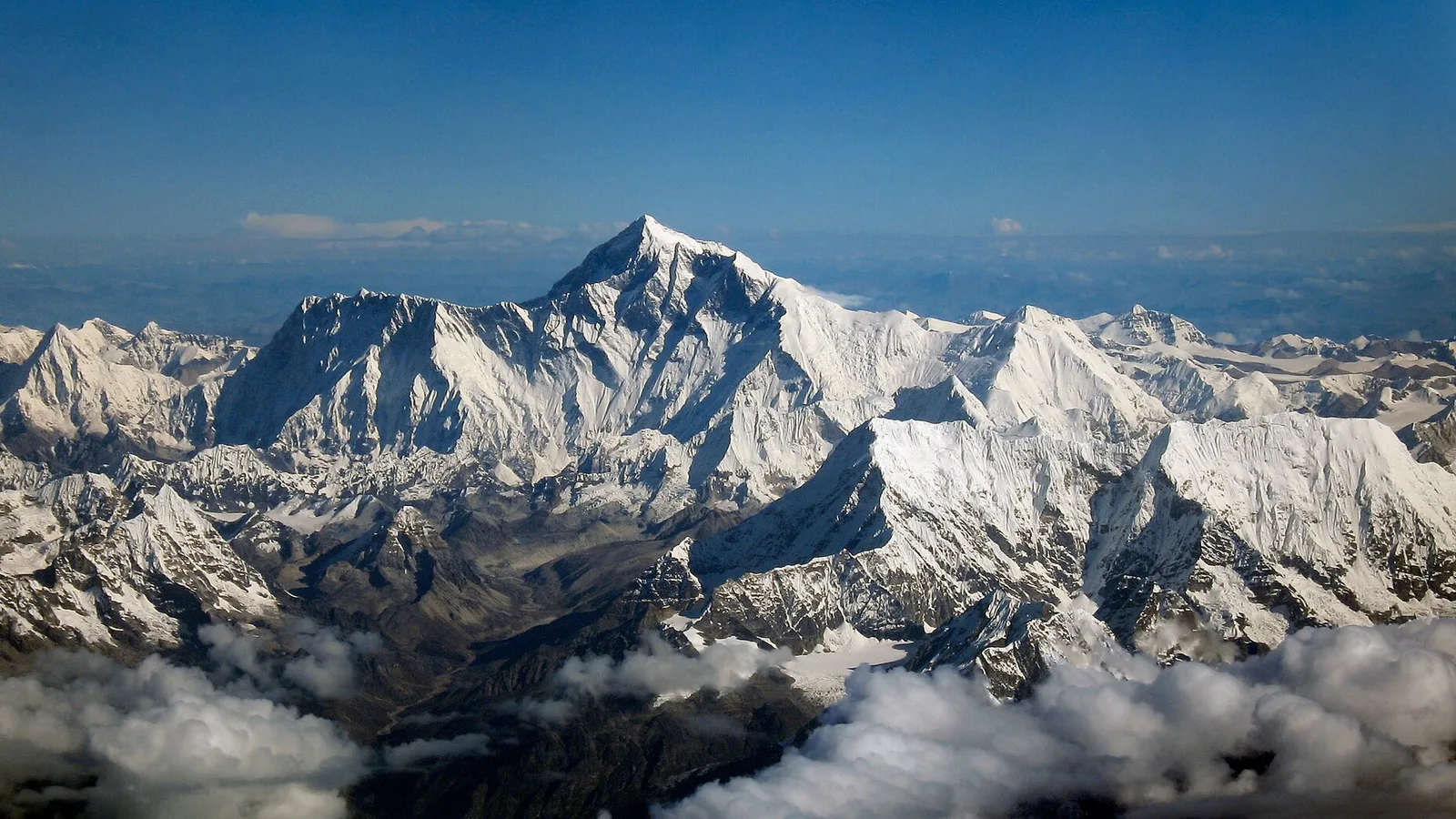
Mount Everest Was Named After a Man Who Never Saw It and Asked Not to Be
Sir George Everest never set foot near the mountain, never wanted his name on it, and wasn't even the one who proved it was the tallest on Earth.
Deals & Routes
Budget vs Full-Service Airlines in 2026: Which Is Really Cheaper Once You Add It All Up?
The headline low fare rarely tells the truth. Here is how budget and full-service airlines really compare on bags, seats, food, changes and connections in 2026 — and when each one is the smarter buy.