
592 foreign nationals are still missing in the Nepal flood, here is who your family should actually call
Nepal's disaster authority counts 592 foreign nationals among the missing after the 26 August flood. Here is the official route for families abroad.
At a glance
- Published
- TopicSafety & Advisories
- Verified againstNepal Ministry of Foreign Affairs / NDRRMA
- Treks coveredAnnapurna Base Camp Trek — 7 Days, Everest Base Camp Trek — 14 Days
Nepal’s National Disaster Risk Reduction and Management Authority counts 592 foreign nationals among the missing after the 26 August flood on the Nepal–Tibet border, out of 4,247 unaccounted for nationally. If someone you know is on that list, one official route actually does something: the Emergency Control Room at Nepal’s Ministry of Foreign Affairs, on +977 9744441227 or +977 9744441228 (7am–10pm Nepal time, WhatsApp enabled) and [email protected]. It was set up on 27 August to trace foreign nationals, and every embassy in Kathmandu coordinates through it.
Every figure below is provisional and moving. Nepal’s own officials say so, and the reason matters — see our running flood log for the national picture.
Key facts
- 592 foreign nationals among 4,247 missing in Nepal — NDRRMA, 9am on 31 August
- A further 127 Nepalis travelling with those tourists are also unaccounted for
- Nepal’s foreign ministry put it at around 590 missing from 39 countries, with 323+ foreign nationals rescued, on 31 August
- Official family route: MoFA Emergency Control Room, +977 9744441227 / +977 9744441228, [email protected]
- Inside Nepal, the government hotlines are 1234 (toll-free) and 1144
- All counts are provisional — police, army, hospital and hydropower lists are still being reconciled
Why so many foreigners were on one road
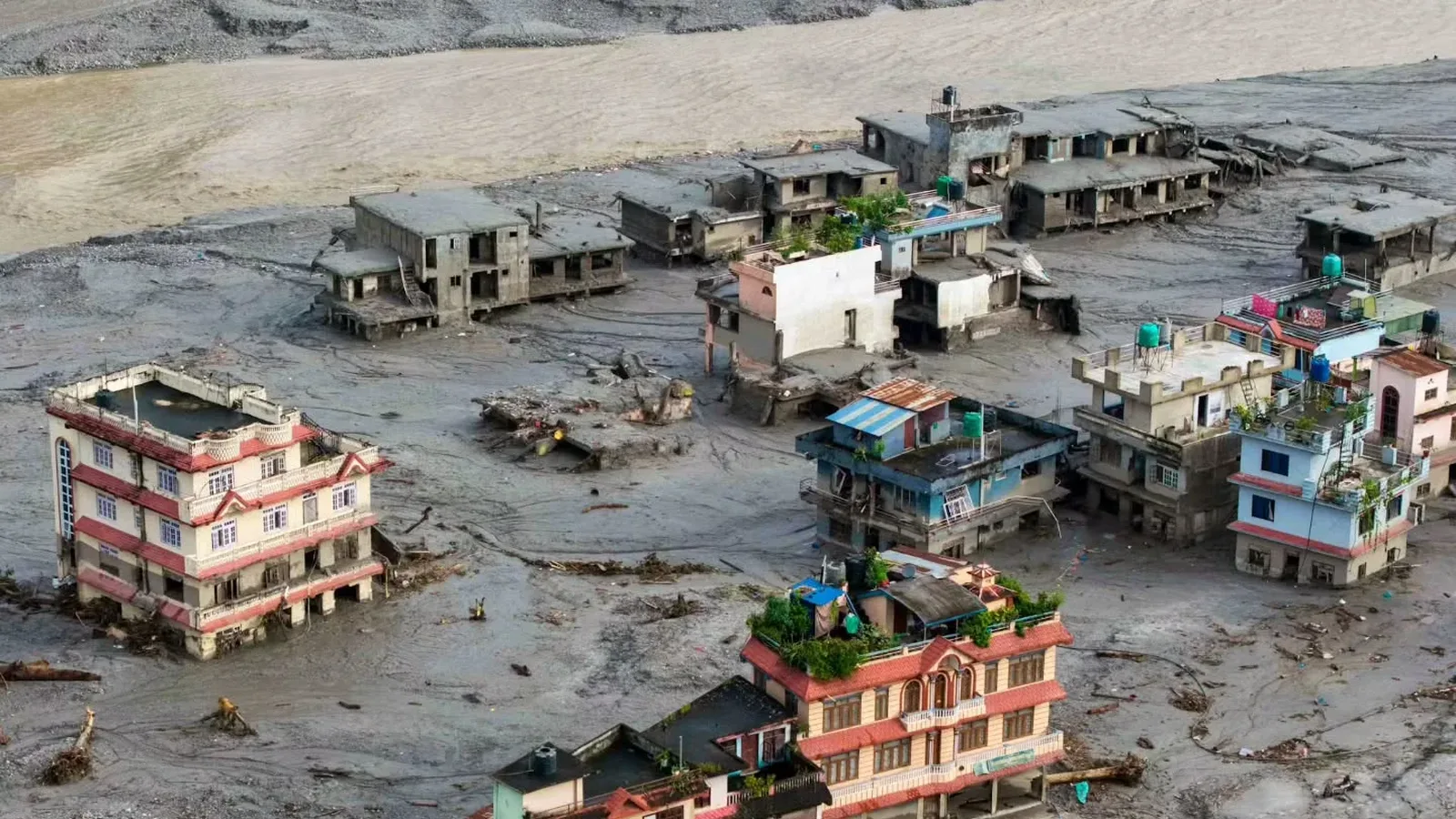
Rasuwagadhi is not a trekking accident. It is a border post — the only overland road from Nepal into Tibet — and late August is the peak of the Kailash Mansarovar pilgrimage season, reopened this year after a five-year pause, with at least 25,000 Indian pilgrims expected through in 2026. On the morning of 26 August a queue of vehicles was waiting to clear immigration; more than 300 were reported swept away, and the Gyirong Port complex was destroyed. One pilgrimage group alone had 77 travellers holding 19 nationalities there.
That explains a nationality list this long on a road most trekkers have never heard of. The second cluster is the hydropower schemes along the Bhote Koshi, whose workforce accounts for 933 of the missing. What the flood did to the border is in our report on the Kerung crossing.
The nationality breakdown, and why it keeps moving
The clearest official breakdown Nepal has published came from the foreign ministry at 15:30 Nepal time on 28 August, covering 632 foreign nationals from 33 countries. It is a snapshot of one afternoon, not a register.
| Nationality | Affected | Found | Missing |
|---|---|---|---|
| India | 178 | 85 | 93 |
| China | 100 | 16 | 84 |
| United States | 68 | 2 | 66 |
| Ukraine | 53 | 0 | 53 |
| Malaysia | 51 | 0 | 51 |
| Australia | 35 | 0 | 35 |
| Canada | 25 | 0 | 25 |
| All 33 countries listed that day | 632 | 122 | 511 |
Three days later the same ministry described around 590 missing from 39 countries. The country count rose while the missing count fell, and both are correct: more nationalities surfaced as manifests were recovered, while people out of contact were reached. NDRRMA spokesperson Shanti Mahat put it plainly on 31 August — “it is difficult for us to say exactly how many of those reported missing are actually missing”. Lists arrive separately from local governments, police, the army, national parks and hydropower operators, and one person can sit on several.
What governments are actually doing
The Emergency Control Room is the single clearing house, and Nepal has asked missions, aid agencies, families and the public to route enquiries through it rather than social media. Identification is the slow part. DNA samples are being taken from every recovered body before burial so families can be matched later, and unidentified bodies have gone to 21 hospitals across several districts because Nepal lacks the mortuary refrigeration. An 18-strong Indian forensic DNA team arrived on 29 August; a Singapore Disaster Victim Identification team is being coordinated.
Embassies work their own lists in parallel. The UK’s Rapid Deployment Team has opened a Family Support Centre at the British Embassy in Kathmandu, 0900–1900 daily. The US State Department said on 31 August that approximately 85 Americans remained missing. India’s external affairs ministry called 320 Indian nationals uncontactable on 28 August, stressing the figure was fluid. Australia’s foreign minister said at least 34 of its unaccounted-for citizens were pilgrims. On the Tibetan side, 261 foreign nationals from 23 countries are listed separately again.
What to do if someone is unaccounted for
One, register the person with your own foreign ministry’s consular emergency line — that is what puts them on the list your embassy in Kathmandu works from. Two, contact Nepal’s Emergency Control Room directly; it takes contact from families, not only embassies. Three, have the details ready: name exactly as printed in the passport, passport number, nationality, date of birth, last known location and date, tour or pilgrimage operator, vehicle or group name, and a recent photograph. Four, do not travel to the disaster zone to search. The corridor is under a do-not-travel designation, and private searches pull capacity away from people still being dug out.
| Who | Contact | Notes |
|---|---|---|
| Nepal MoFA Emergency Control Room | +977 9744441227 · +977 9744441228 · [email protected] | 7am–10pm NPT, WhatsApp enabled. The central desk for foreign nationals |
| Nepal government hotlines (from inside Nepal) | 1234 toll-free · 1144 | Nepali language; both published in FCDO travel advice |
| United Kingdom | +977 (0)1 4237100 from Nepal · +44 (0)207 008 5000 from the UK | Family Support Centre at the British Embassy, Kathmandu, 0900–1900 daily |
| United States | +1 888 407 4747 from the US or Canada · +1 202 501 4444 from abroad | State Department Overseas Citizens Services, 24/7 |
| India | +977 9851316807, WhatsApp enabled | Embassy of India, Kathmandu emergency helpline |
| Australia | +61 2 6261 3305 from overseas · 1300 555 135 within Australia | Consular Emergency Centre; Australian Embassy Kathmandu +977 1 437 1678 |
| Every other country | Your foreign ministry’s 24/7 consular emergency line | They coordinate with Kathmandu on your behalf |
What this means for you
Two things, having guided here since 1998. A name on a missing list in the first week of a disaster this size is not a verdict — the list is a reconciliation problem before it is anything else, and the number has moved in both directions every day. And register through official channels rather than crowdsourced spreadsheets. Nepal’s foreign ministry has asked people to stop circulating unverified information, and the reason is not bureaucracy: one wrong entry costs somebody days to unwind, and those days come out of the search.
Questions families are asking
Is 592 the number of foreign nationals confirmed dead?
No. It is the number listed as missing or out of contact, which is a different thing entirely. Most of the 903 bodies recovered by 31 August have not been identified, and more than 10,000 people have been rescued, over 323 of them foreign nationals.
Why do countries give different numbers for their own citizens?
Each government counts its own way. Nepal counts people reported to Nepali authorities; foreign ministries count citizens whose families have registered them, which pulls in dual nationals and residents Nepal may list under another flag. Nepal recorded 68 US nationals affected on 28 August; Washington described roughly 85 Americans missing on 31 August. Neither is wrong.
How will a body be identified?
By DNA, matched later against relatives’ samples. Foreign families do this through their embassy in Kathmandu rather than directly. It is slow, and given the condition of the recovery sites it is the only reliable method available.
Should I fly to Kathmandu?
Only if your embassy asks you to. The city and airport are operating normally, but the flood corridor carries do-not-travel advice covering a far smaller area than the headlines suggest — we mapped it in our piece on the US Level 4 zone. Everest, Annapurna, Pokhara and the Kathmandu Valley sit outside it.
Were trekkers caught in this?
Barely. Syabrubesi, the road-head for Langtang, is inside the corridor and those routes are paused, but the missing foreign nationals are overwhelmingly border travellers and pilgrims who were in vehicles.
Figures: NDRRMA situation report, 9am 31 August 2026; Nepal MoFA flash-flood updates of 27 and 28 August and the spokesperson’s briefing of 31 August 2026; FCDO Nepal travel advice, updated 30 August 2026.
Still running this season
Annapurna Base Camp Trek — 7 Days is running normally
NMA-certified local guides, transparent pricing, 5,000+ treks since 1998. Message us your dates and we'll sort the permits, lodges and logistics — reply within 24 hours, no obligation.

Popular Nepal treks
All treks →


Related coverage

Climate & Environment
Nepal Has Mapped 2,070 Glacial Lakes. The One That Burst Was Not On the List.
A new ICIMOD and UNDP inventory counts 3,624 glacial lakes and flags 47 as dangerous — 42 of them in the Koshi basin. The lake that killed at least 165 people in August was not among them, because it did not exist the day before.
Safety & Advisories
Nepal's missing hydropower tunnel workers and the Rasuwagadhi search that found nobody inside
Rescuers reached the end of the Rasuwagadhi tunnel and found no one there, and it did not bring 93 workers home because most of them were never in the tunnel.
Safety & Advisories
The Bhote Koshi flood took Timure in about seven minutes, here's how four people got out
Four named survivors describe running uphill as the market disappeared behind them, and a CCTV timestamp shows how little warning anyone downstream actually had.

Safety & Advisories
Japan's PM Takaichi Offers Condolences to Nepal and Prays for the Missing
Japan's PM Sanae Takaichi offered condolences to Nepal's flood victims and voiced concern for missing Japanese nationals after the 2026 disaster.
Latest from the desk
Safety & Advisories
Nepal's flood camps are running out of water and medicine, and the doctors are warning about an epidemic
Four health facilities in Rasuwa are destroyed, Trishuli Hospital has lost its bridges and its medicines, and 1,000 people are in camps with no clean water.
Climate & Environment
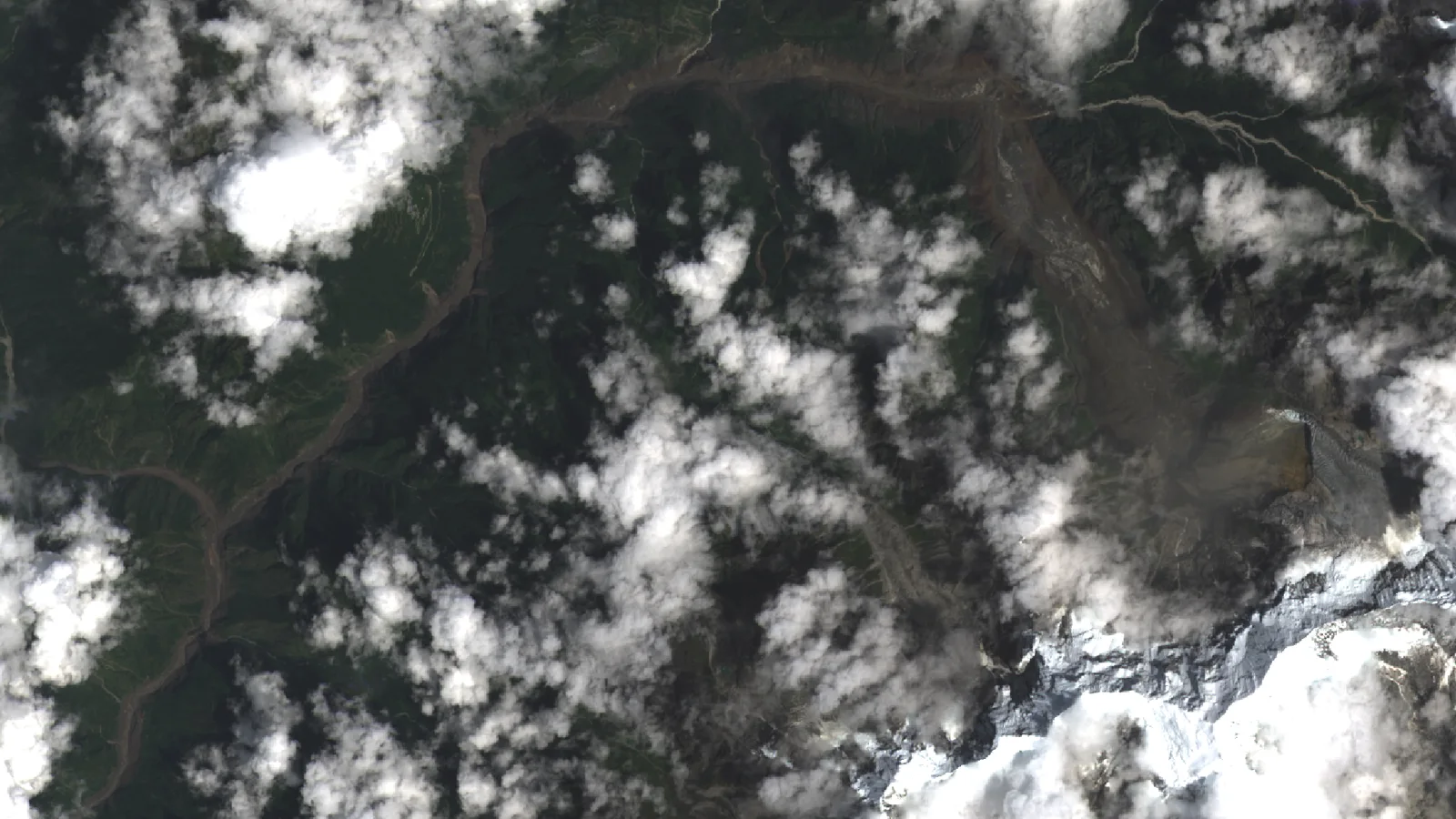
The Langtang Lirung collapse wasn't a glacial lake flood, and that changes which mountains Nepal has to watch
A week of satellite, seismic and drone analysis has settled one thing — no lake burst above Rasuwa. The next one may not come from a lake either.
World Destinations
Best Budget European City Breaks in 2026: Great-Value Cities Where a Weekend Costs a Fraction of London or Paris
From Kraków and Budapest to Porto, Sofia and Tirana — the European cities where an old-town weekend costs a fraction of London, Paris or Zurich, why each is cheap, what to see, and the best season to go.