
He Summited Everest and Lhotse — Twice Each — in Ten Days. No One Had Ever Done That.
A Chinese climber just became the first person in mountaineering history to complete the ‘double-double’ — Everest, Lhotse, Everest, Lhotse, all inside the same ten-day window.
At a glance
- Published
- TopicRecords & People
- Verified againstThe Kathmandu Post
- Treks coveredAma Dablam Base Camp Trek — 10 Days, Everest Base Camp Trek — 14 Days, Island Peak Climbing — 18 Days
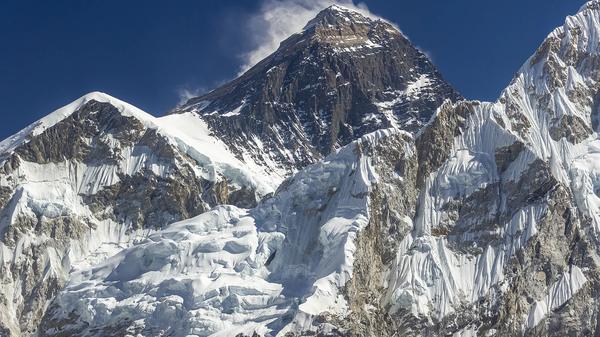
Between 17 and 26 May 2026, one climber stood on top of two of the world's five highest mountains four separate times. Not four different climbers — one person, climbing Everest, then Lhotse, then Lhotse again, then Everest again, all inside a single ten-day window most trekkers would spend just walking to base camp.
Key facts
- Chinese climber Gexi Luori summited Everest (8,848.86m) and Lhotse (8,516m) — twice each — inside ten days in May 2026.
- It is being reported as the first ‘double-double’ in high-altitude climbing history: both 8,000m peaks, twice, in one season.
- The gap between his two Everest summits was just 9 days, 20 hours and 15 minutes.
- He never descended below Camp 4, around 7,900m, between climbs.
| Date | Peak | Height | Time (NPT) |
|---|---|---|---|
| 17 May | Everest | 8,848.86m | 7:01am |
| 18 May | Lhotse | 8,516m | 7:50am |
| 25 May | Lhotse | 8,516m | 7:50am |
| 26 May | Everest | 8,848.86m | 3:30am |
To understand why this is unusual, you need to know what ‘not descending below Camp 4’ actually means. Camp 4, the South Col, sits at roughly 7,900m — inside what climbers call the death zone, where the body is slowly dying regardless of skill or preparation, and where a single night is normally close to the limit before descent. Luori's team kept him operating in and around that altitude for the better part of ten days, ferrying between two 8,000m summits without the multi-day recovery drop to Base Camp that almost every other climber on the mountain takes between attempts. It is, in effect, running back-to-back marathons at an altitude where most people can barely hold a conversation.
Luori is not a Sherpa guide, but his climb still depended entirely on the same rope-fixing and route-prep chain that Sherpa teams rebuild every spring after the Khumbu Icefall reforms over winter — the ropes his team clipped into were fixed by icefall doctors just weeks earlier, and the ladders across the crevasses reset by hand after the previous season's route was buried in snow. Fast, repeated 8,000m climbing is possible today largely because that fixing and logistics chain has become dramatically faster and more reliable than it was even a decade ago.
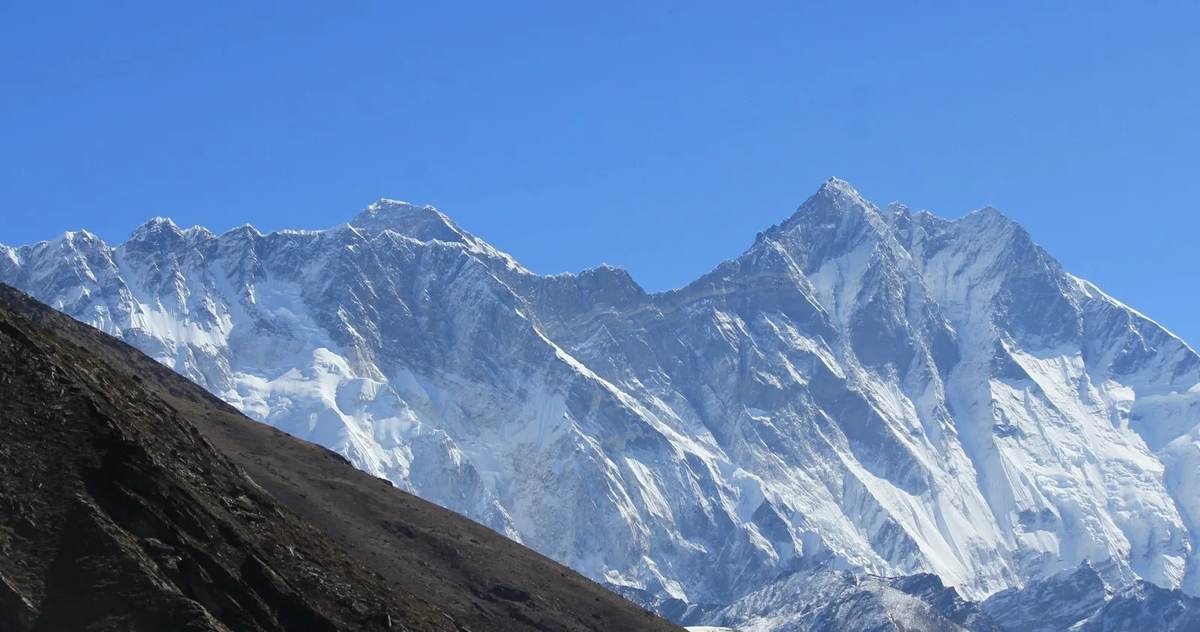
The feat happened during what several outlets already call one of the biggest Everest seasons on record — 2026 saw summit numbers on the Nepal side alone climb past 950, part of a spring that also included 274 climbers reaching the top in a single day. Luori's climb didn't grab the same headlines as the crowding stories, but among mountaineers it's the kind of result that quietly resets what's considered physiologically possible above 8,000m.
What this means for trekkers
What this means for you
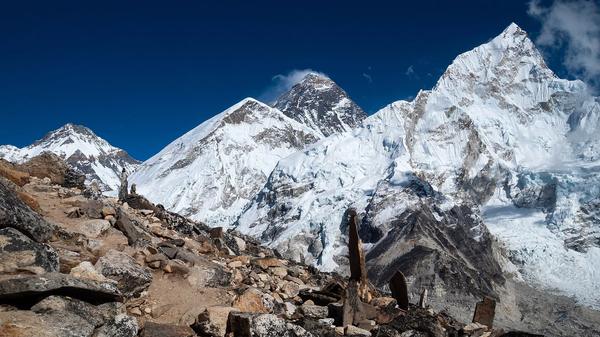
You don't need Luori's oxygen tolerance to stand where this happened. Everyone walking to Everest Base Camp passes directly beneath the Khumbu Icefall and the route toward the South Col where this record was set — same trail, same villages, same acclimatisation rhythm, just stopping at 5,364m instead of continuing to 8,848m. If climbing an 8,000m peak yourself is the real draw, the short weather window that makes feats like this so risky is exactly why most first-time climbers start on a trekking peak like Island Peak or Ama Dablam Base Camp before ever considering the big two.
Records like this one are also a reminder of how much has changed on the mountain since the era most people still picture when they hear ‘Everest expedition.’ Supplemental oxygen, daily-maintained fixed ropes and rotating Sherpa support teams now make a Camp-4-to-Camp-4 turnaround possible in a way that would have been unthinkable a generation ago. None of that makes the death zone safer in absolute terms — it just means the ceiling on what a well-supported, exceptionally fit climber can attempt keeps rising each season.
Source: The Kathmandu Post.
Cover photo: Sumita Roy Dutta via Wikimedia Commons (CC BY-SA 4.0).
Still running this season
Ama Dablam Base Camp Trek — 10 Days is running normally
NMA-certified local guides, transparent pricing, 5,000+ treks since 1998. Message us your dates and we'll sort the permits, lodges and logistics — reply within 24 hours, no obligation.
Popular Nepal treks
All treks →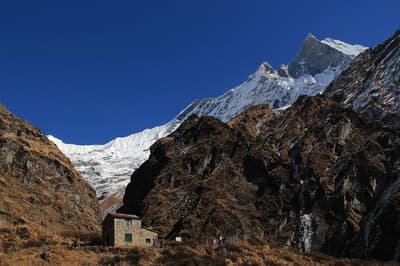
Related coverage
Records & People
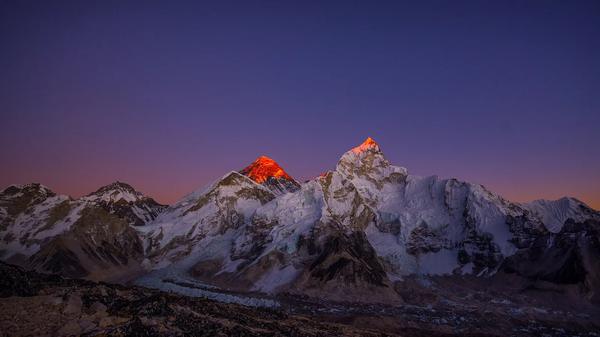
Nobody tells you Everest can only be climbed a few days a year, and the jet stream is why
For most of the year a jet stream sits on the summit of Everest with winds over 250 km/h. It lifts north for a few weeks each May when the monsoon pushes it aside, and that short calm is the only time the mountain is climbable.
Records & People
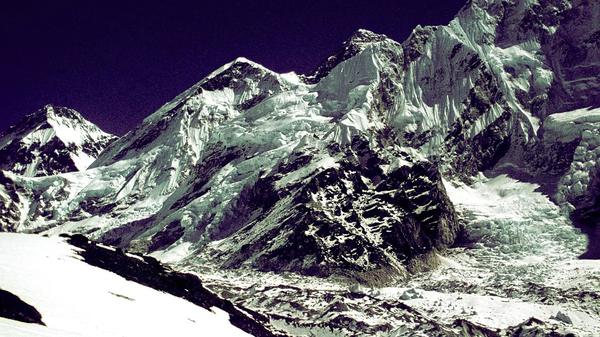
Everest Records: The Fastest, Oldest, and Most Summits
Mount Everest's verified record book — who has summited most, who was oldest and youngest on top, and the fastest ascent ever timed, with every name, number and year sourced.
Records & People
Why some 8,000-metre peaks get climbed thousands of times and others almost never
Everest has over 12,000 ascents and Cho Oyu thousands more; Annapurna I and Kangchenjunga barely a few hundred each. The gap between the most-climbed and least-climbed eight-thousanders is not about height.
Records & People
Everyone has seen the Everest traffic jam photo, this is what standing in that line actually does to you
In 2019 a record 381 permits funnelled onto Everest during just two good-weather days put hundreds of climbers in a single queue above 8,000 m. Eleven died. The crowd, not the mountain, was the danger.
Latest from the desk
Records & People
Nepal's Gokyo Lakes Turn an Impossible Turquoise Every Autumn, and Rock Dust Is Why
Six sacred glacial lakes above Everest sit higher than almost any freshwater on Earth, and the colour that makes trekkers stop mid-stride comes down to stone ground fine enough to float.
Records & People
Nobody Tells You Nepal's National Flower Turns Whole Mountainsides Crimson Every Spring
Nepal's national flower isn't grown in a garden bed — it's a forest tree that turns entire hillsides red for about six weeks a year, and the bloom climbs the mountain in a predictable wave.
Gear & Tech
Waterproof jackets fail in a way the label never warns you about
A jacket can be sold as waterproof at 1,500 mm. What the ratings actually measure, why yours feels like it leaks, and the details worth more than the number.