
Nepal Has 397 Snow Leopards - and GPS Collars Just Caught Them Sneaking Into China and India
The Himalayan nation's first-ever national census reveals a healthy population of the world's most elusive big cat - one that ignores international borders far more than anyone assumed.
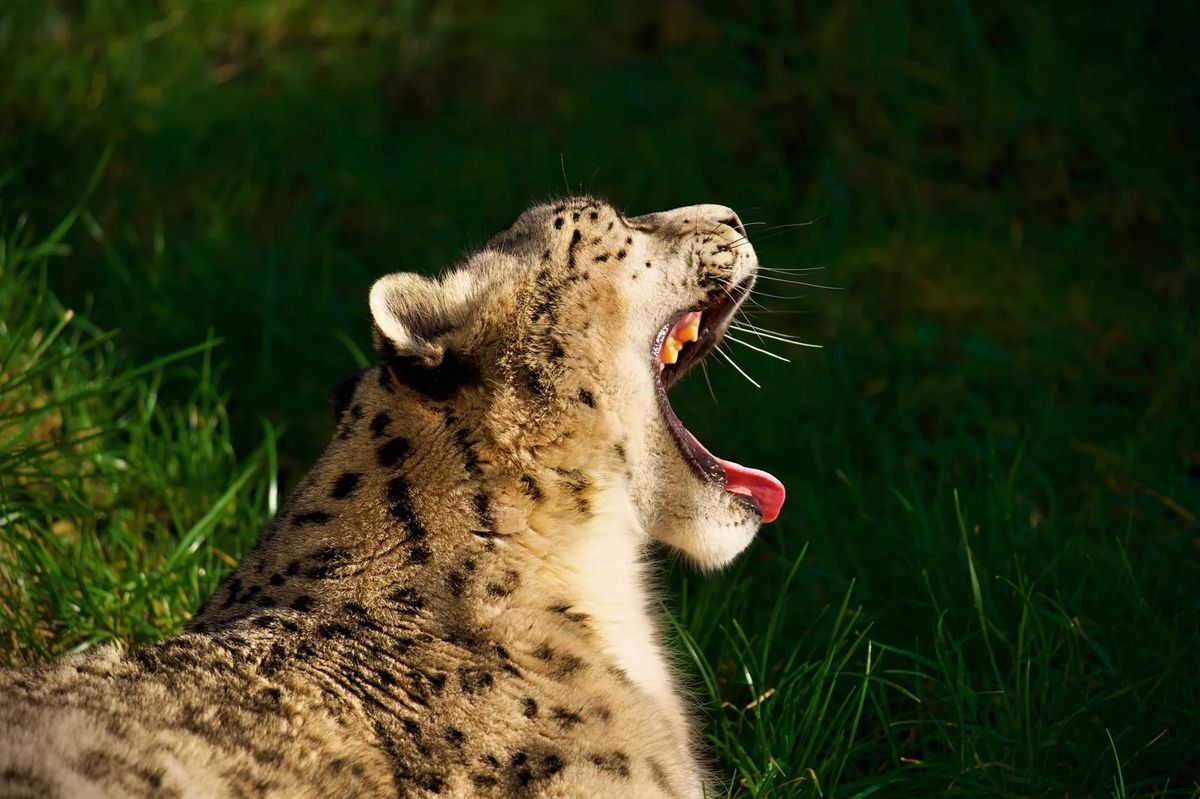
At a glance
- Published · updated
- TopicRecords & People
- Verified againstMongabay
- Treks coveredAnnapurna Base Camp Trek — 9 Days, Kanchenjunga Base Camp Trek — 22 Days, Limi Valley Trek — 20 Days
One collared snow leopard crossed into Tibet and back seven times without anyone in Kathmandu knowing it had left the country. Another patrolled a range of 312 square kilometres of Kanchenjunga's cliffs and glacier moraine, alone. For an animal so elusive that Himalayan herders traditionally called it the ghost of the mountains, 2025 was the year Nepal finally caught up with the legend: the country's first-ever national snow leopard count, followed by GPS data that rewrote the rulebook on how far the cat actually roams.
Key facts
- Nepal has completed its first-ever national snow leopard count: an estimated 397 cats (range 331-476), announced 23 April 2025
- That is roughly 10 percent of the entire global snow leopard population, inside one small Himalayan country
- GPS collars fitted in Kangchenjunga Conservation Area show individual cats roam territories up to 97 times larger than earlier studies assumed
- Three of four collared leopards crossed into China or India repeatedly, spending up to a third of their tracked time outside Nepal
A count 60 years overdue
Nepal has been considered a stronghold for Panthera uncia for decades, but until 23 April 2025 nobody had ever put a firm number on the national population. The estimate - a joint effort by the government's Department of National Parks and Wildlife Conservation, WWF Nepal, the National Trust for Nature Conservation and university researchers - synthesised a decade of camera-trap surveys, genetic sampling and habitat modelling collected between 2015 and 2024 across three landscapes: Kanchenjunga in the far east, the Annapurna massif in the centre, and Humla in the remote west. The result: an estimated 397 snow leopards, with a plausible range of 331 to 476, at a national average density of 1.56 cats per 100 square kilometres of habitat. For a country Nepal's size, that works out to roughly a tenth of the entire world's snow leopard population.
The cats with no respect for a border
The population count answered one question; a smaller, stranger study answered another. Between 2013 and 2017, WWF Nepal researchers fitted GPS collars on four snow leopards in the Kangchenjunga Conservation Area and tracked them for between 20 and 659 days. Published in the journal Integrative Conservation in March 2025, the results startled even the biologists who ran it: home ranges turned out to be six to 97 times larger than earlier, pre-GPS estimates had assumed. One male covered 312 square kilometres. Two females covered 310 and 102 square kilometres. Three of the four leopards crossed into China or India repeatedly - five to seven times each - spending between 10 and 34 percent of their tracked time outside Nepal altogether. One cat was recorded at 5,848 metres, the highest elevation ever documented for the species anywhere on Earth. National borders are human constructs, lead researcher Samundra Subba of WWF Nepal put it - snow leopards simply do not recognise them.
| Question | What was assumed | What the 2025 data found |
|---|---|---|
| National population | Unknown - no count existed | 397 (331-476) |
| Typical home range | Well under 100 km2 | Up to 312 km2 |
| Does it stay in Nepal | Assumed largely resident | 10-34% of time abroad |
| Highest elevation recorded | Not documented | 5,848 m |
What this means for trekkers
What this means for you
Your odds of actually spotting one on a trek remain slim - that is rather the point of an animal that can vanish into scree at twenty paces. But the same conservation economics that made this count possible are concentrated exactly where our high-altitude routes run: Kanchenjunga in the east, Humla's Limi Valley in the far west, and the Annapurna sanctuary in between. Conservation area entry fees, community-run livestock insurance schemes and solar predator-deterrent lights - funded largely by trekking permits and guided expeditions - are the reason herders who once killed snow leopards in retaliation for lost livestock now report sightings to researchers instead. Every trekker on these routes is, in a small way, part of why the count came back at 397 rather than a fraction of that.
It follows on from Nepal's tiger population nearly tripling over the past decade - see our earlier report on Nepal's TX2 tiger census. Source: Mongabay, reporting on the Department of National Parks and Wildlife Conservation / WWF Nepal national assessment and the peer-reviewed GPS telemetry study published in Integrative Conservation.
Cover photo: Naomi Lacroix via Pexels (Pexels License).
Still running this season
Annapurna Base Camp Trek — 9 Days is running normally
NMA-certified local guides, transparent pricing, 5,000+ treks since 1998. Message us your dates and we'll sort the permits, lodges and logistics — reply within 24 hours, no obligation.
Popular Nepal treks
All treks →
Related coverage

Records & People
Nepal’s first woman helicopter captain flew nearly 100 rescues in six days
Priya Adhikari has flown over 1,000 Himalayan rescues. In the week after the Bhote Koshi flood she flew about a hundred, into places with nowhere to land.
Records & People
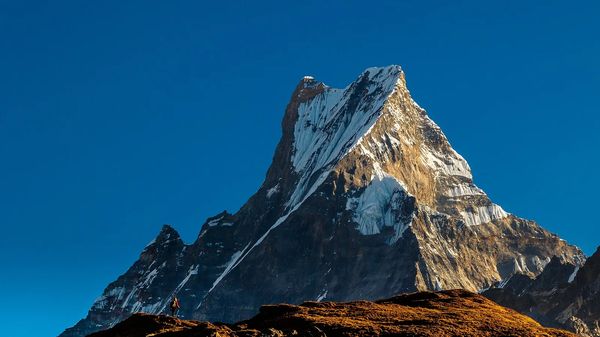
The Himalayan Peak So Sacred Nepal Has Never Once Let Anyone Legally Climb It
Machapuchare's twin summit rises 6,993 metres above Pokhara — and for more than sixty years, Nepal has refused every application to stand on top of it.
Records & People
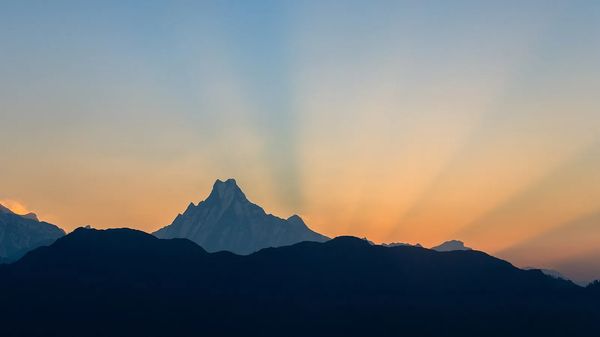
The 22,943-Foot Himalayan Peak No One Has Ever Officially Stood On
In 1957 a British team stopped 150 feet short of Machapuchare's summit and kept their word never to finish it — Nepal has banned every climber from trying since.
Records & People
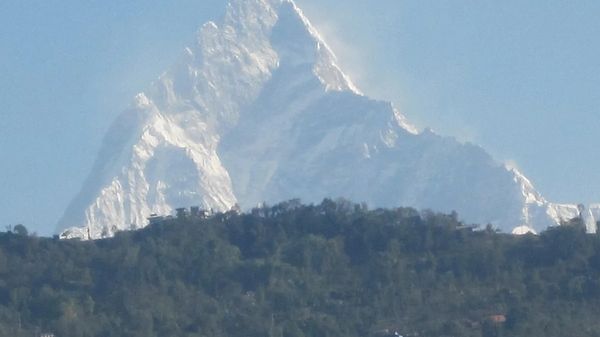
Machapuchare Is the Nepal Mountain Nobody Has Ever Been Allowed to Summit (2026)
At 22,943 feet, Machapuchare towers over the Annapurna Sanctuary, and by Nepal's own law, no one has legally set foot on its true summit since a British team turned back 150 feet short of it in 1957.
Latest from the desk
Records & People
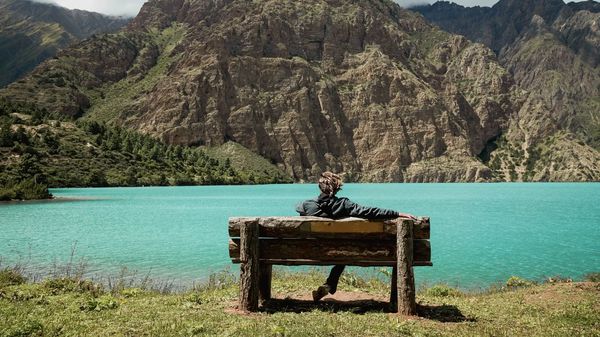
Everyone Calls This Nepal's Deepest Lake. A Government Survey Says It Isn't.
Phoksundo's turquoise water and no-fishing custom are real, but Nepal's own hydrology surveys put the actual depth record on a different lake entirely.
Flights & Access
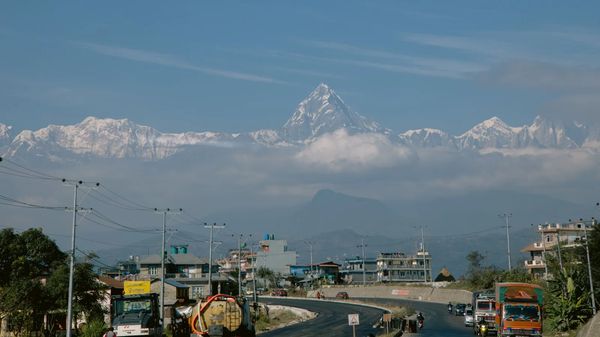
Pokhara Just Got Its First Real International Flight, Three Years After the Airport Opened
flydubai starts daily Dubai–Pokhara flights on 23 September 2026, the first scheduled international airline to serve Nepal's trekking capital since its $216 million airport opened in 2023.
Festivals & Events
Dashain 2027 tika is Saturday 9 October, twelve days earlier than this year
Dashain 2027 runs 30 September to 14 October, tika on Saturday the 9th. Bhai Tika is 31 October. Why the early date matters for an autumn trek.