
The Only Helicopter Ever to Land on the Summit of Everest — and Why Nobody Has Done It Since
In May 2005 a French test pilot set his skids on the roof of the world for 3 minutes and 50 seconds; twenty-one years later, the record still stands.

At a glance
- Published
- TopicFlights & Access
- Verified againstFAI (World Air Sports Federation)
- Treks coveredEBC Trek & Helicopter Return — 10 Days, Everest Base Camp Helicopter Tour — 1 Day, Everest Base Camp Trek — 14 Days
At 07:08 on the morning of 14 May 2005, a small helicopter did something most people in aviation considered impossible: it set its skids down on the summit of Mount Everest, 8,848 metres above sea level. The pilot, a French former fighter pilot named Didier Delsalle, sat alone on the highest point on Earth for exactly 3 minutes and 50 seconds. Then he lifted off, flew back down to Lukla — and the next morning, did the whole thing again.
Twenty-one years later, nobody has ever repeated it. As guides who watch helicopters work the Khumbu every single season, we think this is one of the great untold stories of the mountain — and it explains a lot about what helicopters can and cannot do for trekkers today.
The flight everyone said couldn't be done
Delsalle was a test pilot for Eurocopter, and his machine was, remarkably, an almost standard AS350 B3 "Squirrel" — the same type that flies rescue missions in Nepal to this day. His team stripped about 120 kg from it, including the passenger seats, to extend its range and coax more performance from the thin air.
And the air is the whole problem. At 8,848 metres, air density is only about a third of what it is at sea level — so the rotor blades have far less to bite into and the engine far less oxygen to burn. Then there is the wind: the summit sits in the jet stream's neighbourhood, where gusts can pass 200 km/h. Delsalle described updraughts of roughly 65 knots (about 120 km/h) at the top — strong enough, in his words, to throw the aircraft off the peak the moment he lowered the power. He held the machine against the snow with the rotors still flying, waited out the required time for the record, and flew home. The World Air Sports Federation (FAI) certified it as the highest helicopter landing in history — and he returned on 15 May and landed again, "to make sure it's repeatable." No one else has ever managed it.
What helicopters really do on Everest today
Delsalle's flight was an empty, stripped aircraft flown by a factory test pilot in a rare weather window. Day-to-day Himalayan flying happens much lower — but it has its own records. On 21 May 2013, Italian pilot Maurizio Folini, flying the same AS350 B3 type, pulled an injured climber off Everest at 7,800 metres on a longline — the highest helicopter rescue ever performed, with the casualty carried on a rope beneath the aircraft because landing was out of the question.
| Feat | Year | Altitude | Aircraft |
|---|---|---|---|
| Summit landing — Didier Delsalle (twice) | 2005 | 8,848 m | AS350 B3 |
| Highest longline rescue — Maurizio Folini | 2013 | 7,800 m | AS350 B3 |
| Previous rescue record (Annapurna) | 2010 | 6,900 m | Fishtail Air / Air Zermatt |
What this means for trekkers
Helicopters are the Khumbu's safety net, not a taxi. In practice, rescue flights work reliably up to around Camp 2 (6,400 m) — well above any trekking route — which is why we insist every trekker carries insurance covering helicopter evacuation to 6,000 m. The physics that stopped everyone after Delsalle is the same physics that makes acclimatisation, not aviation, your real safety plan up high.
The good news: you can legally fly the same skies Delsalle did — just a little lower. An Everest Base Camp helicopter tour lands at Kala Patthar (5,545 m) for a sunrise view of the summit pyramid, and many trekkers now walk in and fly out of the Khumbu by heli. It remains, minute for minute, the most spectacular flying on the planet — twenty-one years after one French test pilot proved just how far a helicopter can go.
Source: FAI — World Air Sports Federation
Cover photo: Clinton Weaver via Pexels (Pexels License).
Still running this season
EBC Trek & Helicopter Return — 10 Days is running normally
NMA-certified local guides, transparent pricing, 5,000+ treks since 1998. Message us your dates and we'll sort the permits, lodges and logistics — reply within 24 hours, no obligation.


Popular Nepal treks
All treks →


Related coverage
Industry & Tourism
Everest Just Had Its Busiest Climbing Season Ever. Climbers Also Left Behind 90,000 Kilograms of Trash.
A record 701 climbers pushed for the summit this spring, and the mountain's cleanup crews hauled down a record amount of waste right behind them.
Flights & Access
Lukla Is the World's Most Dangerous Airport — and There's No Way to Abort the Landing
A 527-metre runway that ends in a cliff, an 11.7% uphill slope, and pilots who need a year of Nepal experience before they're allowed to try it — meet the airstrip every Everest trekker has to survive first.
Records & People
In 1951, an Everest Climber Photographed a Giant Footprint in the Snow. Nobody Has Fully Explained It Since.
Eric Shipton's photo of a 13-inch print near Everest sparked global Yeti mania — DNA science later traced most of the physical 'evidence' back to Himalayan bears.
Records & People
Nobody tells you what it really costs to climb Everest so I added up every dollar
Why a guided Everest expedition runs from about US$35,000 to well over US$100,000 — the permit, the oxygen, the Sherpa team and the logistics, line by line, with real 2026 numbers.
Latest from the desk

World Destinations
Underrated Alternatives to Overtouristed Destinations in 2026: Swap the Crowd for Its Quieter Twin
Skip the ticketed queues at Venice, Santorini, Bali and Dubrovnik. Here are the quieter, cheaper equals — from Bologna and Naxos to Kotor, the Faroes and Nepal's Manaslu — that deliver the same experience with a fraction of the crowds.
Records & People
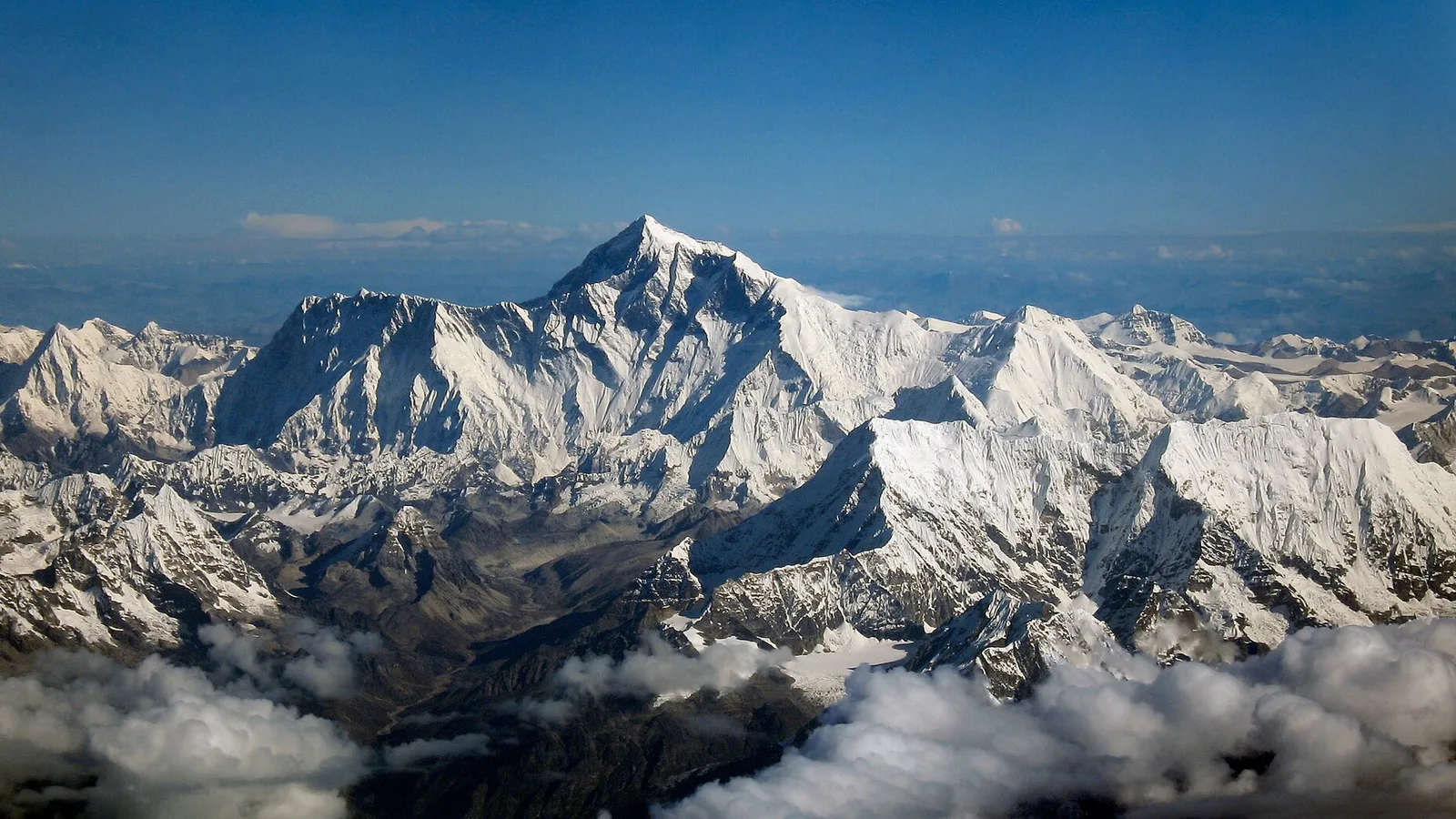
Mount Everest Was Named After a Man Who Never Saw It and Asked Not to Be
Sir George Everest never set foot near the mountain, never wanted his name on it, and wasn't even the one who proved it was the tallest on Earth.
Deals & Routes
Budget vs Full-Service Airlines in 2026: Which Is Really Cheaper Once You Add It All Up?
The headline low fare rarely tells the truth. Here is how budget and full-service airlines really compare on bags, seats, food, changes and connections in 2026 — and when each one is the smarter buy.