
Nepal trekking news that actually changes your trip, updated for autumn 2026
The permit rules, fines, airfares, flight routes and road closures that changed for Nepal trekkers in 2026 — what to act on for an autumn booking, and what to ignore.
At a glance
- Published
- TopicTrail & Weather
- ReportingOriginal, by our guides in Pokhara
- Treks coveredAnnapurna Circuit Trek — 13 Days, Annapurna Base Camp Trek — 9 Days, Everest Base Camp Trek — 14 Days
Six things changed for trekkers in Nepal during 2026, and all six are still in force for the autumn season: restricted-area permits moved online, the two-person minimum for restricted districts was scrapped, the Upper Mustang permit switched from a flat US$500 to US$50 per day, domestic airfares fell 14.87 percent, Pokhara gained its first scheduled international route from 23 September, and the 26 August Rasuwa flood closed the Langtang region and cut the Kathmandu–Pokhara highway. Nothing changed in the Everest or Annapurna permit schedules. Anyone holding an autumn booking needs to act on two of these — the road closure and the flight — and can ignore the rest.
What changed in 2026, at a glance
- March 2026: restricted-area permits available online before arrival; the fine for trekking without a licensed guide set at NPR 12,000
- March 2026: the two-trekker minimum for Nepal’s 13 restricted districts scrapped
- 2026: Upper Mustang permit changed from a flat US$500 / 10 days to US$50 per person per day
- July 2026: domestic airfares cut 14.87 percent after an aviation fuel price reduction
- 23 September 2026: flydubai begins daily Dubai–Pokhara service
- 26 August 2026: Rasuwa flood; Langtang, Gosaikunda and Tamang Heritage suspended
- 30 August 2026: Prithvi Highway cut at Krishnabhir; Kathmandu–Pokhara road closed both ways
- Unchanged: ACAP NPR 3,000 + TIMS NPR 2,000; Everest Base Camp NPR 3,000 + NPR 2,000, no TIMS
The Permit Rules That Changed
Two March 2026 decisions by the Department of Immigration did more for independent trekkers than anything since the restricted-area system was created. Permits for the 13 restricted districts can now be applied for online before arrival, and the long-standing requirement for a minimum of two trekkers on a restricted-area permit was removed. A solo traveller can now legally hold a Manaslu, Upper Mustang or Dolpo permit in their own name, without a paper partner.
The same package attached a price to the guide rule. Trekking without a licensed guide where one is required now carries a fine of NPR 12,000. The rule itself is not new; the enforcement mechanism is. Details of both changes are in the report on Nepal’s online trek permit system and on the scrapping of the two-person minimum.
Upper Mustang moved separately. The flat US$500 charge covering ten days was replaced by US$50 per person per day, which cut the entry cost for anyone doing a short trip to Lo Manthang and raised it for anyone staying beyond ten days. Figures and worked examples are in the report on the US$50-per-day Upper Mustang permit.
| Where | Permits required | Cost per person | Changed in 2026? |
|---|---|---|---|
| Annapurna — ABC, Poon Hill, Mardi, Circuit | ACAP + TIMS | NPR 5,000 | No |
| Everest Base Camp | Sagarmatha NP + Khumbu Pasang Lhamu municipality | NPR 5,000 | No — and no TIMS |
| Upper Mustang | Restricted-area permit + ACAP | US$50/day + NPR 3,000 | Yes — was US$500 flat |
| Manaslu, Dolpo and 11 other restricted districts | Restricted-area permit | varies by district | Yes — solo now allowed, apply online |
| Trekking without a required guide | — | NPR 12,000 fine | Yes — new penalty |
Full fee detail for the Annapurna set, including where to buy and what the checkpoints actually inspect, is in the ACAP permit and TIMS card guide. The Khumbu figures, including why no TIMS card is issued there, are on the Everest Base Camp permit page.
Getting In and Around Got Cheaper, Then Harder
Nepal Oil Corporation reduced aviation fuel prices in July 2026 and regulators passed the saving into fares, cutting domestic airfares by 14.87 percent. The reduction applies on Kathmandu–Lukla, Kathmandu–Pokhara and Pokhara–Jomsom, the three routes most trekkers actually buy. Route-by-route figures are in the report on the July fare cut.
From 23 September, flydubai begins a daily Dubai–Pokhara service, the first scheduled international route into Pokhara International Airport. For trekkers connecting from Europe, the Gulf, Australia or India it removes a Kathmandu domestic transfer and lands an hour from the Annapurna road-heads. Detail is in the report on the flydubai Pokhara route.
Then the road side reversed. About 20 metres of the Prithvi Highway subsided at Krishnabhir in Dhading on 30 August, closing the Kathmandu–Muglin section in both directions. Police estimate at least a month to restore traffic. Because Krishnabhir sits above the Muglin junction, road access from Kathmandu to Pokhara, Chitwan, Lumbini and the Annapurna trailheads is cut at a single point. Two Gorkha detours are open and add several hours — see the report on the Krishnabhir collapse.
Which Regions Are Open, and Which Are Not
Everest, Annapurna, Manaslu, Kanchenjunga, Dhaulagiri, Dolpo and Upper Mustang are open and running for autumn 2026. Langtang, Gosaikunda and the Tamang Heritage Trail are suspended following the 26 August Rasuwa flood, and bookings on those routes are paused rather than rescheduled. The Rasuwagadhi–Timure–Syabrubesi corridor carries a US Level 4 “do not travel” designation, the only one in the country; the nationwide advisory remains Level 2.
A live region-by-region status, updated through the season, is maintained at Nepal trekking conditions right now. The advisory wording is unpicked in the read of the US Level 4 zone, and the state of the border road to Tibet in the Rasuwagadhi–Kerung report.
Two Changes Further Out
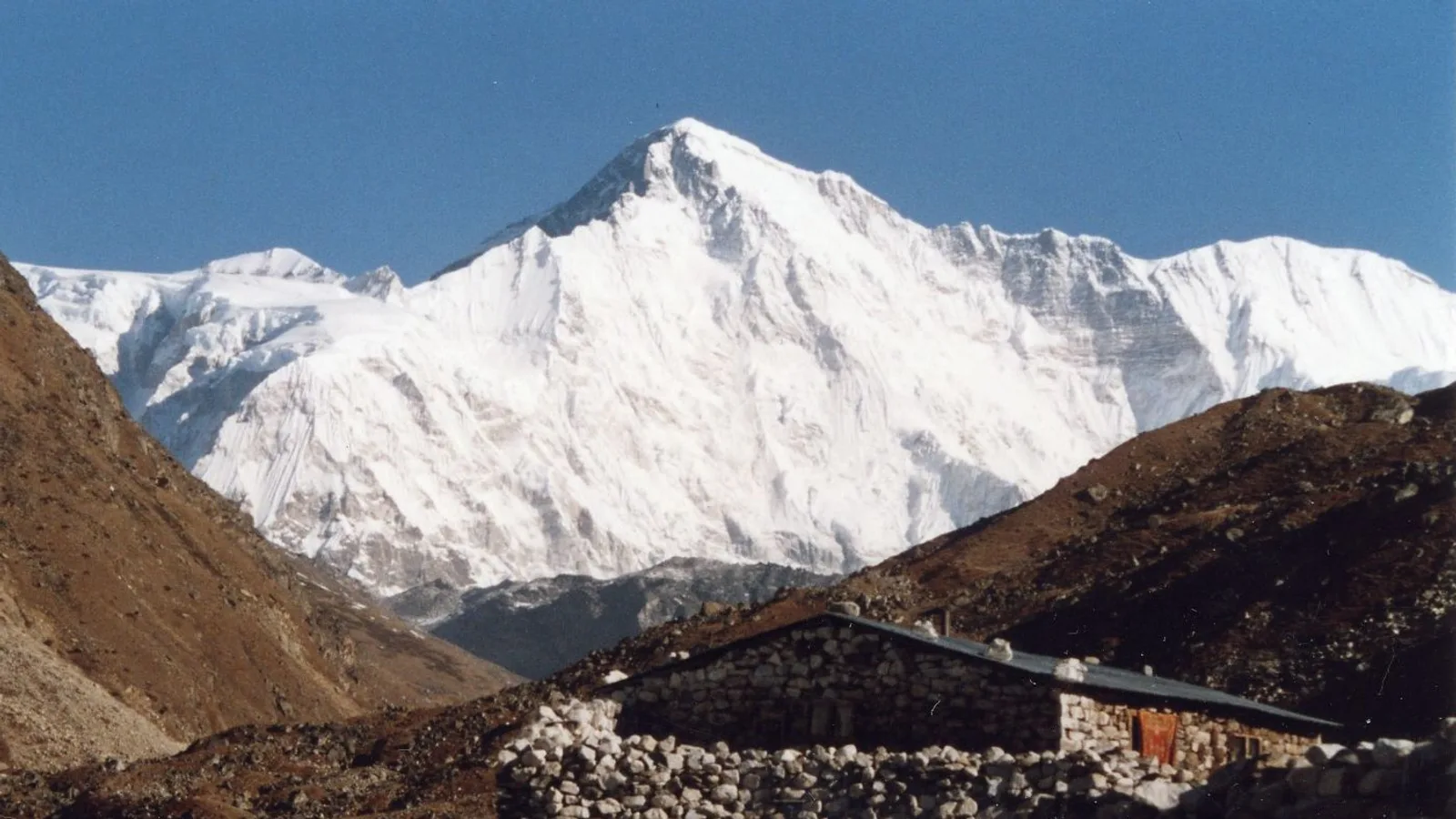
The China-Tibet Mountaineering Association has kept Cho Oyu and Shishapangma closed to foreign teams for autumn 2026, which pushes 14-peak climbers onto Manaslu and tightens the season there. Separately, the Investment Board approved financing for the 81 km Birethanti–Muktinath cable car in July 2026, a Rs 55 billion project that would eventually change how pilgrims and trekkers reach Muktinath. Neither affects an autumn 2026 booking. Both change what the Annapurna region looks like within a few years.
Restricted-area permits go online; the two-trekker minimum is scrapped; the no-guide fine is set at NPR 12,000.
Domestic airfares cut 14.87 percent; the Muktinath cable car clears its financing hurdle.
Langtang, Gosaikunda and Tamang Heritage suspended; the border road to Tibet destroyed.
The Prithvi Highway subsides at Krishnabhir, cutting the road from Kathmandu to Pokhara.
Daily flydubai service from Dubai begins, an hour from the Annapurna trailheads.
What This Means for an Autumn Booking
What this means for you
Two items on this list require action. If a Kathmandu–Pokhara road transfer is in an existing itinerary, it needs to become a flight, and the operator should be arranging that rather than the traveller absorbing a detour of several hours. If a booking is on Langtang, Gosaikunda or Tamang Heritage, it is suspended and needs rebooking onto another region rather than a later date. Everything else on this list is either an improvement or has no effect on an autumn departure. Permit fees in the Annapurna and Everest regions have not moved, so any quote citing a 2026 fee rise for those two regions is wrong.
Common Questions
Did Nepal trekking permit fees rise in 2026?
Not in the Annapurna or Everest regions. ACAP remains NPR 3,000 and TIMS NPR 2,000; Sagarmatha National Park entry remains NPR 3,000 with the Khumbu municipality permit at NPR 2,000. The Upper Mustang permit changed structure, from US$500 flat to US$50 per day.
Can a solo trekker get a Manaslu or Upper Mustang permit now?
Yes, since March 2026. The two-person minimum was removed for all 13 restricted districts. A licensed guide is still required.
Is Everest Base Camp affected by the floods?
No. The Khumbu is on the Dudh Koshi, a different river system, and access via Lukla or Ramechhap was unaffected by the 26 August event.
Can you still reach Pokhara from Kathmandu?
By air, yes — 25 minutes, several flights daily. By road the Prithvi Highway is closed at Krishnabhir with a repair estimate of at least a month, and the Gorkha detours add several hours.
Is the overland route to Tibet open?
No. The Rasuwagadhi–Kerung crossing has been closed since 26 August and no reopening date has been announced. Kathmandu–Lhasa flights are the remaining option.
When is this page next updated?
This is a dated briefing covering calendar 2026 to 31 August. Road and river conditions in Nepal change week to week; the live status page is the one to check before travelling.
Booked for autumn, or still deciding?
Ask us what any of this means for your specific dates — we are based in Pokhara and we would rather tell you a route is disrupted than move you onto it.
Message us on WhatsApp → · Ask us about your dates →
Everest Base Camp Trek — 14 Days · Annapurna Base Camp Trek — 9 Days · Annapurna Circuit Trek — 13 Days
Compiled from Travel Himalaya Nepal desk reporting through 2026, each item linked to its own sourced report. Permit fees verified against the Nepal Tourism Board and Department of Immigration schedules current at 31 August 2026. Flood figures are provisional.
Cover photo: Abdul Kayum via Pexels (Pexels License).
Still running this season
Everest Base Camp Trek — 14 Days is running normally
NMA-certified local guides, transparent pricing, 5,000+ treks since 1998. Message us your dates and we'll sort the permits, lodges and logistics — reply within 24 hours, no obligation.


Popular Nepal treks
All treks →


Related coverage
Safety & Advisories
Nepal Trekking Conditions Right Now: Region-by-Region Status After the 2026 Floods
Which trails are open, which access roads are cut, and what autumn 2026 actually looks like — updated through the season by a team based in Pokhara.
Trail & Weather
Spring or Autumn? The Data-Backed Answer to When You Should Trek Nepal in 2026
Real temperature, rainfall and crowding numbers for the Everest and Annapurna regions — not opinion — settle which season actually suits your trek.
Trail & Weather
When Does Nepal's Monsoon End? Autumn Trekking Season Opens Late September 2026
The monsoon withdraws by late September, opening Nepal's clearest trekking window of the year — October and November.
Safety & Advisories
Altitude Sickness on Holiday in 2026: It Hits Tourists in High Cities and Sights, Not Just Trekkers
You do not have to climb a mountain to get altitude sickness. Cusco, La Paz, Lhasa and the ski slopes all sit high enough — here is how AMS works, the golden rules, and why fitness and age will not save you.
Latest from the desk
Safety & Advisories
Is Pokhara safe from the floods? Yes, but getting there from Kathmandu is the real problem
Pokhara and Kaski district were not hit by the 26 August 2026 flood, which came down a different river system about 150 km east. The road in from Kathmandu is the part that is broken.
Gear & Tech
Portable Wi-Fi and Travel Routers in 2026: Do You Actually Need One?
A pocket Wi-Fi box, a travel router, a phone hotspot, an eSIM or a local SIM — an honest buyer’s guide to what each does, when a device is worth it, and why none of them help where there’s no signal.
Records & People
Cho Oyu and Shishapangma are closed again this autumn and every 14-peak climber is funnelled into Nepal
The China-Tibet Mountaineering Association has kept Cho Oyu and Shishapangma shut to foreign teams for autumn 2026, and Manaslu absorbs the whole overflow.