
The short version
See Everest in one hour from Kathmandu — no trek, no altitude. An honest local guide to the Everest mountain flight: what you'll see, window-seat facts, best season, real cost, and how it compares to a helicopter tour or trekking to Base Camp.
- The Everest mountain flight is a one-hour scenic flight out of Kathmandu that cruises east along the Himalayan wall to Everest (8,849m) and back — you never land, you never gain altitude.
- Every seat is a window seat. These are small aircraft with a single seat either side of the aisle, and the crew brings passengers to the cockpit one at a time for the head-on Everest view.
- It costs typically around US$200–250 per person (confirm the current fare — it moves with the season and the airline) and departs early morning, roughly 6:30–7:30am, when the air is clearest.
- It is weather-dependent. Cloud grounds it; monsoon months are a gamble. Book it for early in your trip so you have spare mornings to try again.
- It shows you Everest — it does not take you to Everest. For that you either trek or fly by helicopter.
Everest without the trek
The Everest mountain flight is a one-hour scenic flight from Kathmandu that cruises along the Himalaya to Mount Everest and back. For travellers without the time, the fitness, or the two weeks a base-camp trek demands, it is the easiest way on Earth to see the highest mountains up close. I have put parents, grandparents, and clients recovering from surgery on this flight and watched them come back down glowing. And I will be honest with you throughout this guide — because a few things you read elsewhere about these flights are half-true, and one of them I would rather talk you out of.


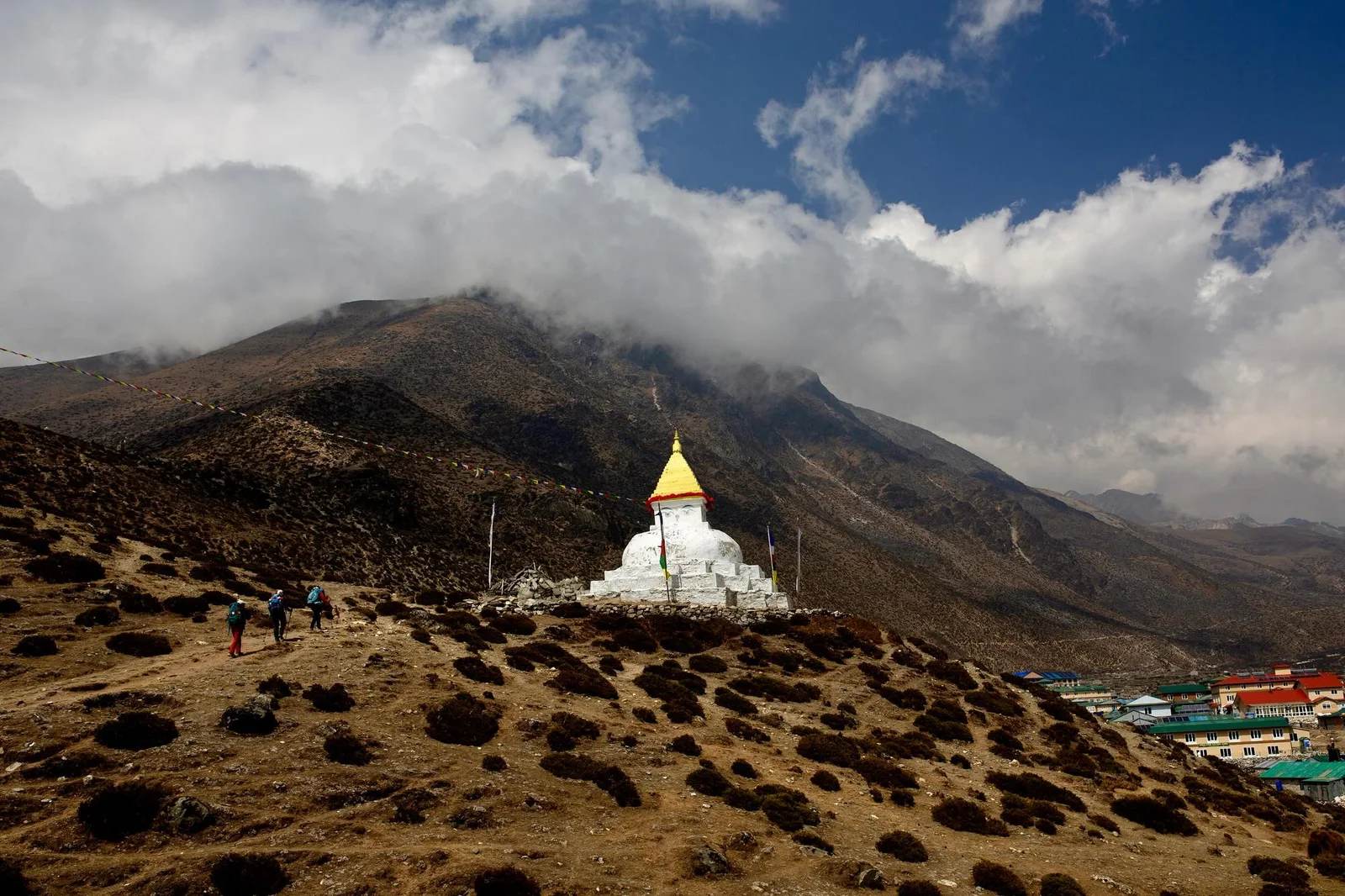
 Kala Patthar — Everest, Nepal" loading="lazy">

What you actually see, in the order you see it
Kathmandu sits south of the main Himalayan chain, so the moment you climb out of the valley the whole range is laid out to your north like a saw blade. The aircraft turns east and runs the length of that blade toward the Everest massif. From west to east you pass, roughly in order, Langtang Lirung and the Langtang group, Dorje Lakpa, Gauri Shankar, Melungtse, Cho Oyu (8,188m), Gyachung Kang, Pumori, Nuptse, Lhotse (8,516m) and finally the black pyramid of Everest (8,849m) itself. The plane holds off a respectful distance — you are not skimming the summit, you are looking across perhaps 20 to 30 kilometres of thin air at peaks that dwarf everything around them. Then it banks and flies the same wall back the other way, which matters for where you sit (more on that below).
Which side of the plane — the honest version
You will read everywhere that you must fight for a left-hand (A) seat because the mountains are on the left. That is half right, and I want you to understand why it barely matters. On the outbound leg — heading east with the range to the north — the mountains are on your left. But the aircraft turns around near Everest and flies back west, and now the same peaks are on the right. On top of that, these are small planes where every single seat is a window seat (one seat each side of a narrow aisle), and the cabin crew walks passengers up to the cockpit one at a time so everyone gets the head-on view down the nose at Everest. So yes, if you have a choice, a left/A seat gives you the first, cleanest look on the way out — but no one on this flight is stuck staring at an engine cowling. The window seat is the product; the airline sells it that way on purpose.
Mountain flight, helicopter, or trek? An honest comparison
"Seeing Everest" means three very different experiences at three very different price points. Here is how they really stack up — the helicopter and trek figures are our own live prices, per person, and vary with group size:
| Option | Time | Effort | How close you get | From (per person) |
|---|---|---|---|---|
| Mountain flight (scenic, no landing) | ~1 hour | None — no acclimatisation | You view Everest from ~20–30km through a window | ~$200–250 (market rate; confirm fare) |
| EBC Helicopter Tour — 1 Day | ~4–5 hours | Very low — a short, guided high-altitude stop | You land in the Khumbu and stand among the peaks, breakfast with Everest in view | from $1,680 |
| Everest Base Camp Trek (12–14 days) | 12–14 days | High — daily walking, real acclimatisation | You stand at Base Camp (5,364m) and on Kala Patthar looking up at Everest | from $1,700 |
The flight is the cheapest and easiest by a wide margin, and the only one that asks nothing of your lungs or your knees. The helicopter day tour is the middle path — you actually touch the Khumbu and feel the altitude for an hour, without the fortnight. The trek is the real thing, and nothing on this list replaces it.
Best time to fly, and why weather rules everything
Go in the early morning, full stop — around 6:30 to 7:30am the air over the range is coldest, stillest and clearest, and cloud tends to build through the day. For the season, favour October and November (the post-monsoon window, when the sky is scrubbed clean) and clear, cold winter mornings from December into February. Spring (March–April) is generally good early in the day before the afternoon haze. The one time I tell people to think twice is the monsoon (June to mid-September), when the range is often walled off in cloud and flights are cancelled or refunded far more than they fly.
Cost & airlines
Mountain flights are operated by carriers such as Buddha Air, Yeti Airlines and Shree Airlines, and typically cost in the region of $200–250 per person for the hour — treat that as an indicative market range and confirm the current fare when you book, because it shifts with season and operator. We are not a mountain-flight airline ourselves; when clients ask, we book the seat for them alongside the rest of their trip so it is one less thing to organise on the ground.
Who this flight is for
It is made for travellers who are short on time — you can see Everest before breakfast and still tour Kathmandu the same day. It is made for anyone who cannot trek to altitude: older parents, guests with heart or knee or breathing conditions, families with young children. And it is a genuine bonus even for fit trekkers who simply want an aerial perspective on the range they are about to walk into. It pairs beautifully with a Kathmandu cultural tour for a short, mountain-rich first visit to Nepal.
Who this flight is NOT for
If you are fit, you have two weeks, and what you actually want is to stand in the Everest region, the mountain flight is not your trip — it will feel like watching the concert from the car park. It is also a poor bet for anyone visiting only in the deep monsoon, when the odds of clear skies are low and you may spend three mornings at the domestic terminal watching the departures board and never leave the ground. And it is not a substitute for acclimatised, close-up mountain time: it gets you nowhere near the trail, the villages, the monasteries, or the feeling of altitude that makes the Khumbu the Khumbu.
The honest bit
Here is the thing I would tell my own family. If you are reasonably fit and you have the days, the flight is a weak substitute for the real Everest — an hour behind glass will never touch the morning you climb Kala Patthar in the dark and watch the first sun hit the summit while you gasp in the cold. Given the choice and the time, trek. But if you are that traveller who can't — the mother who won't make it past 3,000m, the father whose knees are done, the couple with only four days in Nepal — then do not let anyone make you feel it is second-best. For you, this one hour is the best hour you will spend in Nepal, and I will happily book it. Telling you honestly which camp you fall into is worth more to me than selling you the wrong dream.
Tips from the ground
Book for early in your trip so a cancelled morning still leaves you a backup. If you get a choice of seat, take a left-hand (A) window for the outbound leg, but don't stress if you can't — you'll get your cockpit turn. Keep the camera ready, but also just look; the scale never survives a phone screen. Dress normally — the cabin is heated and comfortable. And clear a relaxed morning around it; a 6:30am departure that slips to 8am for weather is completely normal.
Frequently asked questions
How much does an Everest mountain flight cost and how long is it?
An Everest mountain flight lasts about one hour and typically costs in the region of $200–250 per person — treat that as an indicative market range and confirm the current fare, as it varies by season and airline. Flights depart Kathmandu early morning (around 6:30–7:30am) when skies are clearest, operated by carriers such as Buddha Air, Yeti Airlines and Shree Airlines.
Will I get a window seat on the mountain flight?
Yes. These flights use small aircraft where every passenger has a guaranteed window seat — one seat each side of the aisle, so no one is stuck on an interior seat. The crew also invites passengers to the cockpit one by one for the head-on Everest view. A left-side (A) seat is a slight bonus on the outbound leg but not essential, because the plane turns around and flies the range back the other way.
What happens if the flight is cancelled for weather?
Cloud grounds these flights and cancellations are refunded, but you lose the morning. That is why we tell every client to book the flight for the first or second morning of their trip rather than the last — so a wash-out still leaves a spare day to try again. In the monsoon (June to mid-September) cancellations are common; October–November and clear winter mornings are the safest bet.
Is the mountain flight better than trekking or a helicopter tour?
They are different experiences. The flight is the cheapest, fastest and easiest way to see Everest, but you view it from a distance and never leave the plane. Our EBC helicopter day tour actually lands you in the Khumbu among the peaks, and the Everest Base Camp trek puts you on the ground at 5,364m. If you are fit and have two weeks, trek. If you can't, the flight is the right call.
Private Everest departures on any date, hand-picked NMA guides, and 25+ years on these trails. Tell us your dates — we usually reply within a few hours.
Browse Everest treks & tours → Read the Everest guide →
Written by
Travel Himalaya NepalPokhara-based, NMA-certified trekking guides. We’ve led 5,000+ treks across the Annapurna and Everest regions since 1998 — every word here comes from the trail. More from this author →
Share this article
Ready to Trek?
From reading about it to standing on it
Our Pokhara-based guides have been doing this since 1998. Tell us your dates and fitness level — we'll build your perfect itinerary. Free, no obligation.
Why trek with our licensed agencyMore guides like this
Popular trips to consider
Free Trekker's Insider Guide
Permits, packing lists, cost breakdowns — no fluff.
We send one useful email. You can unsubscribe anytime.