The short version
Spring (March–May) is Nepal's second-best trekking season — warm days, the rhododendron bloom, and the Everest climbing season, when trekkers reach a Base Camp alive with expeditions. Month-by-month conditions, the best spring treks with real prices, and the one honest trade-off (afternoon haze) from a Pokhara guide since 1998.
- Spring (March–May) is Nepal's second-best trekking season — a whisker behind autumn. You get warm days, long daylight, and the famous rhododendron bloom colouring the mid-hills red and pink.
- It is also the mountaineering season: Everest and the other big peaks are climbed in spring, so trekkers who reach Everest Base Camp in April walk into a living tented city of expeditions preparing to summit.
- The one honest trade-off versus autumn is afternoon haze. Mornings are clear and sharp; heat and dust build a milky haze most afternoons, more so as you move into May.
- Late March to mid-April is the sweet spot — full rhododendron colour, warm nights, and clearer air than late May.
I'm Laxman, and I've been running treks out of Pokhara since 1998. People always ask me for the "best" month, and my honest answer is that Nepal has two great seasons, not one. Autumn gets the postcards, but spring is the season I quietly love more — the hills are alive with colour, the nights aren't as brutally cold, and there's an electricity on the Everest side you only get in March, April and May. Here's what to expect, month by month, and how to plan around spring's one real weakness. For the full-year picture, see our best time to trek in Nepal guide.
Spring at a glance: what changes month to month
Spring is not one block of weather. It swings from cool, clear late-winter air in early March to hot, hazy pre-monsoon afternoons by late May. The mountains stay in good shape high up throughout, but conditions lower down change a lot. Roughly how the season unfolds on our routes:
| Month | Typical conditions | What it means for you |
|---|---|---|
| March | Cool, often the clearest air of spring. Cold nights, occasional lingering snow on high passes. | Rhododendrons just starting low down (below ~2,500m). Fewer trekkers than April. High passes like Thorong La may still hold snow early in the month. |
| April | Peak spring — warm days, blooming forests, and the main Everest expedition month. Some afternoon haze building. | The best all-round window. Rhododendron forests in full colour at 2,500–3,500m. Everest Base Camp is a full tented city. Trails are busy but not autumn-busy. |
| May | Hot and hazy lower down, milky afternoons, first pre-monsoon thunderstorms possible late month. Still excellent high up. | Great for high-altitude objectives before the rains; less pleasant for low forest walking. Start very early each day for views. Summit pushes on Everest happen mid-to-late May. |
The rhododendron: spring's signature
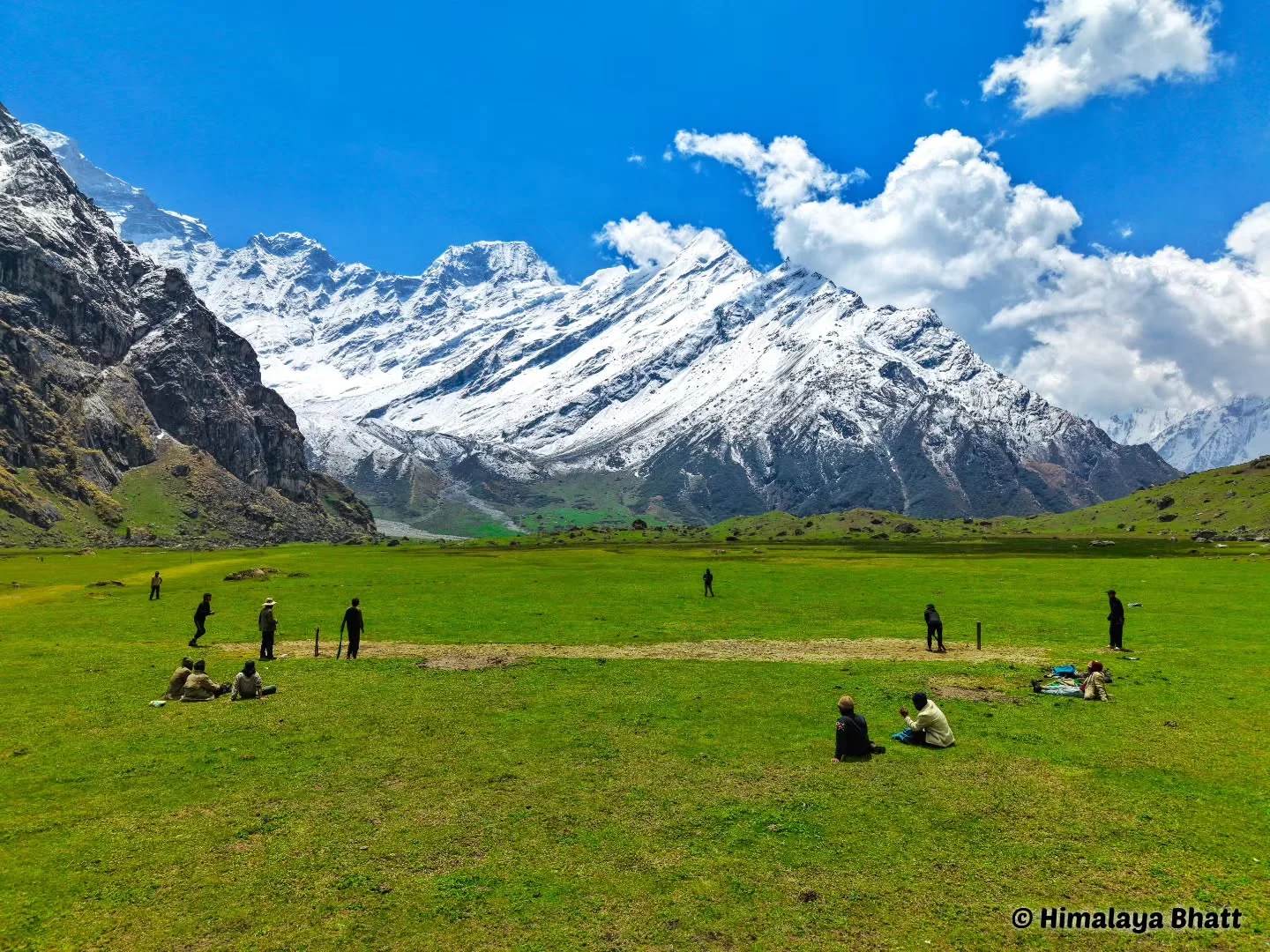
If spring has one calling card, it is the laligurans — the rhododendron, Nepal's national flower. From late March through April, whole hillsides in the mid-mountains turn crimson, pink and white beneath the white peaks. It is one of the most beautiful things you can see in Nepal, and it only happens in spring.
The bloom follows elevation. It starts low, around 2,000–2,500m, in mid-March, then climbs to about 3,500m by mid-to-late April as the warmth moves uphill. That's why timing and route matter: the densest displays are on the mid-hill forest trails — Ghorepani and Poon Hill, the lower Annapurna Base Camp forests, Mardi Himal's ridge, and the lower Langtang valley. We wrote a whole separate guide to chasing the flower — see our Nepal rhododendron trek guide for the exact routes and dates.
Spring is the mountaineering season — and you can feel it
Here is what most autumn trekkers never experience: spring is when the Himalaya is climbed. Everest, Lhotse, Makalu and the other giants are almost all summited in spring, because the weather windows open in May before the monsoon arrives — and that has a wonderful side-effect for trekkers.
If you walk to Everest Base Camp in April, you don't arrive at an empty rubble field the way autumn trekkers do — you arrive at a living city of hundreds of tents, Sherpa teams fixing the route through the Khumbu Icefall, and climbers acclimatising for their summit pushes. For a lot of our EBC guests, watching that expedition machine at work is the real highlight, more than the base-camp marker itself. Spring is the only season you get it.
Best treks in spring
Almost every trek works in spring, but these show the season off best. Prices below are the solo (1-person, private) rate — per-person cost drops noticeably in a small group, and we run private departures on any date.
The classic short rhododendron trek — forested ridges and a sunrise panorama over Annapurna and Dhaulagiri. Our 7-day Poon Hill–style route is from $670. Peak bloom late March–April.
A forested approach into a high amphitheatre of peaks, superb in spring with rhododendron on the lower half. Our 7-day ABC trek is from $800; longer 9–13 day versions add acclimatisation and Pokhara time.
A quieter high ridge bursting with spring blooms and close-up Annapurna and Machapuchare views. Best walked early in the day before the afternoon haze rises off the valleys.
Trek amid the buzz of the climbing season as expeditions gather. Our 12-day EBC trek is from $1,700, the 14-day version from $1,850. April is prime.
A rhododendron-lined valley close to Kathmandu, warm and green in spring and far less crowded than the Annapurna and Everest regions.
High passes are generally open as the snow melts through spring. Our 13-day Annapurna Circuit is from $1,400. Early March can still hold snow on Thorong La.
The honest trade-off: haze and heat
I'd rather tell you the weak spot than have you find it on the trail. Spring's one genuine downside versus autumn is afternoon haze. As the land heats through the day, moisture and dust build a milky veil over the valleys, and the crisp all-day clarity you get in October simply isn't there. By May it's pronounced lower down, along with real heat in the foothills and the first pre-monsoon thunderstorms late in the month.
The fix is simple and it's the most useful advice in this article: start walking early. Spring mornings are clear and sharp — the haze is an afternoon problem. Guests on the trail at first light get their panoramas; those who linger over a slow breakfast often walk into a midday whiteout and wonder where the mountains went.
Who spring is not ideal for
Spring isn't the right answer for everyone, and I'd rather steer you honestly:
- If crystal, all-day mountain clarity is your top priority — for pure, sharp views from morning to dusk, autumn (October–November) genuinely wins. The post-monsoon air is cleaner and holds all day. Come in autumn.
- If you're sensitive to heat, low-elevation forest walking in May can be sweaty and tiring, and Kathmandu and the foothills get hot. Stick to March–April, or pick a route that gains altitude quickly.
- If you want the quietest possible trails, spring is popular — though still below the October crush.
Spring vs autumn, in one line
Autumn gives you the crispest post-monsoon clarity; spring gives you warmth, flowers, longer days and climbing-season energy, at the cost of a little afternoon haze. Both are excellent — there's no wrong choice, only the one that fits what you most want to see.
Packing note
The classic spring mistake is dressing for the warm days and forgetting the cold nights. Days at altitude are pleasant, even hot in the sun, but nights above 3,500m still drop well below freezing right through spring — pack breathable layers plus a proper down layer and a good sleeping bag for the high lodges and camps.
The bottom line
Spring is a superb time to trek Nepal — warm, colourful and lively, with good views high up and the passes open. Time it for late March to mid-April for the rhododendrons, pack for cold nights, start early to beat the haze, and book ahead.
Browse our best treks in Nepal to pick a spring route, read the rhododendron trek guide to time the bloom, or contact us to plan your March–May trip. We usually reply within a few hours.
When is the best time to see rhododendrons in Nepal?
Late March to mid-April is the sweet spot. The bloom starts low (around 2,000–2,500m) in mid-March and climbs to about 3,500m by mid-to-late April. Forest routes like Ghorepani/Poon Hill, lower Annapurna Base Camp, Mardi Himal and lower Langtang give the densest displays. See our rhododendron trek guide for exact timing.
Is spring or autumn better for trekking in Nepal?
Both are excellent. Autumn (October–November) has the crispest post-monsoon clarity that lasts all day. Spring (March–May) offers warmer weather, rhododendron blooms, longer days and climbing-season energy, but with more afternoon haze. Choose autumn for pure all-day views, spring for flowers, warmth and the buzz of the expedition season.
Can I see Everest Base Camp during the climbing season?
Yes — that's one of spring's biggest draws. Everest is climbed in spring, so trekkers who reach Base Camp in April walk into a tented expedition city with Sherpa teams and climbers preparing to summit. It's completely different from the empty camp autumn trekkers see. Our 12-day and 14-day EBC treks (from $1,700 and $1,850 solo) are timed for it.
How do I get the clearest mountain views in spring?
Start walking at first light. Spring mornings are usually clear and sharp; heat and dust build a milky haze most afternoons, worse as you head into May. Being on the trail early is the single most effective thing you can do for views and photos.


Private departures on any date, hand-picked NMA guides, and 25+ years on the trail. Tell us your dates — we usually reply within a few hours.
Browse all treks & tours →
Written by
Travel Himalaya NepalPokhara-based, NMA-certified trekking guides. We’ve led 5,000+ treks across the Annapurna and Everest regions since 1998 — every word here comes from the trail. More from this author →
Share this article
Ready to Trek?
From reading about it to standing on it
Our Pokhara-based guides have been doing this since 1998. Tell us your dates and fitness level — we'll build your perfect itinerary. Free, no obligation.
Why trek with our licensed agencyMore guides like this
Popular trips to consider
View all treks & toursFree Trekker's Insider Guide
Permits, packing lists, cost breakdowns — no fluff.
We send one useful email. You can unsubscribe anytime.