
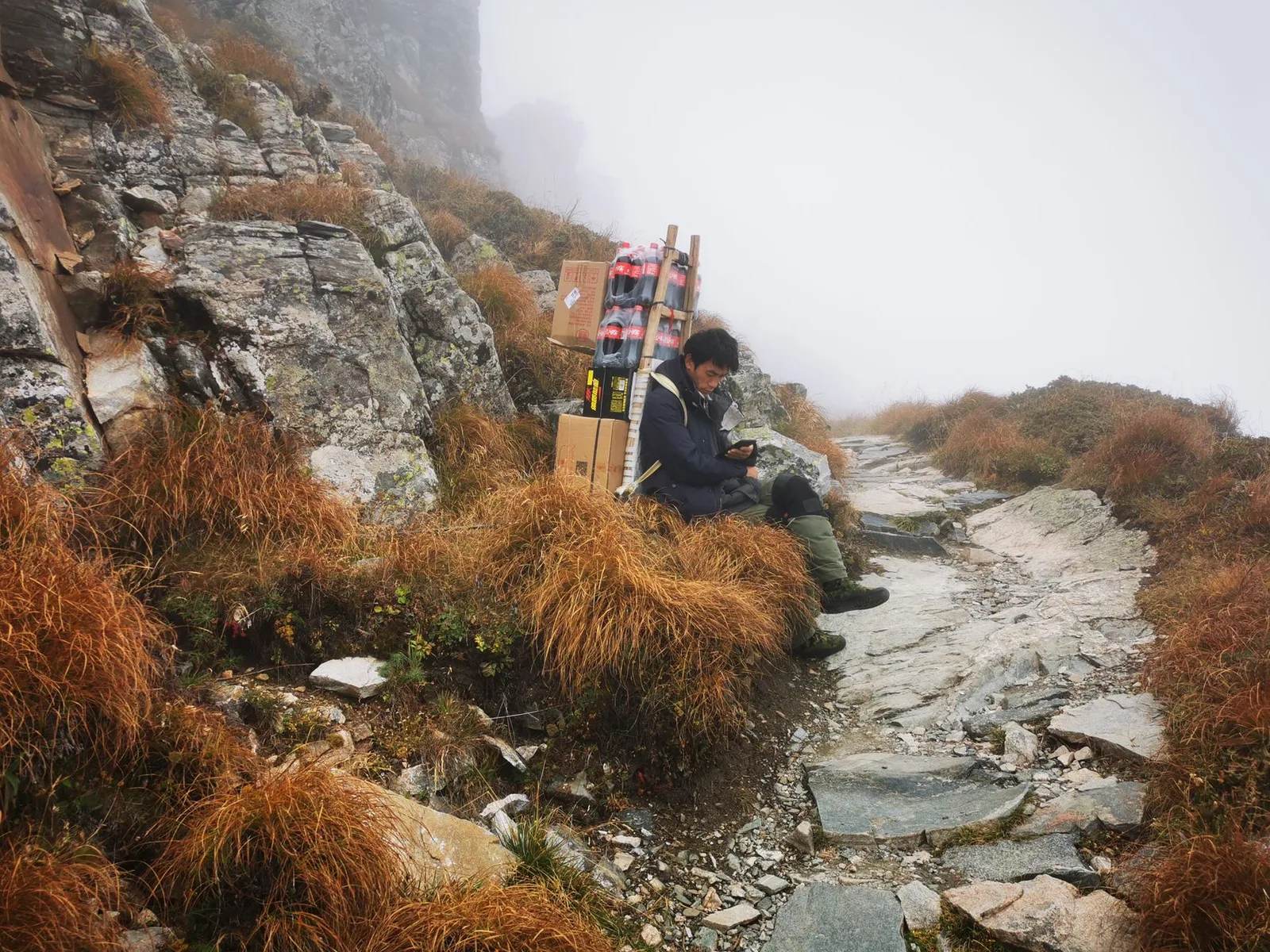
The short version
Should you hire a porter for your Nepal trek? An honest local-guide answer: what porters, porter-guides and guides each do, fair weight limits and welfare, real costs and tipping, and who can skip a porter and carry their own bag.
- Most people should. A porter carries your main duffel so you walk with a light daypack — on Nepal's stone staircases that is the difference between enjoying the mountains and grinding under 15kg.
- Keep the load fair: around 20kg on top of the porter's own kit, and never more than 25kg. A good operator enforces this; you should too.
- Cost is modest — typically around US$18–25/day for a porter (confirm the current rate with us) — and the money goes straight to a mountain family.
- Some people genuinely don't need one — a fit trekker on a teahouse route who packs light can carry their own bag. That's an honest call, and we'll tell you if it's yours.
- If you do hire one, the ethics are non-negotiable: fair wage, warm gear and boots at altitude, shelter, food and insurance. Never underpay or overload a porter to save money.
I have organised treks out of Pokhara since 1998, and the porter question comes up on almost every enquiry — usually phrased apologetically, as if hiring one were a guilty extravagance. It is not. A porter is the single thing that most changes how a first trek feels, and it also carries more real ethical weight than anything else in trekking. Here is the honest version: who a porter is for, who can skip one, what fair treatment means, and what it costs.
What a porter actually does
A porter carries your main bag — your duffel — so you walk with only a light daypack. That is the whole job, and on a Himalayan trail it matters more than newcomers expect. Days on the Everest Base Camp route or the Annapurna trails are long climbs on uneven stone steps at thinning altitude. Carrying your full kit turns a beautiful day into an endurance test; handing the weight over lets you actually look up at the mountains you came for.
Here is the detail almost nobody tells you before they arrive: your porter walks ahead of you to the next lodge. He is fitter and faster, so you will not see your duffel again until evening. Your daypack must therefore carry everything you need during the walking day: water, sun protection, a warm layer, a rain shell, camera, valuables and any medication. Every single season, someone packs their down jacket deep in the duffel, the porter strides ahead, and they arrive shivering at a windy viewpoint with their only warm layer three hours up the trail. Pack your daypack as if the duffel does not exist until dinner.
Porter, porter-guide, or guide-only?
These are three different jobs, and matching the right one to your trek saves money and frustration. A porter carries and nothing else. A guide leads, navigates, reads the weather and your health, and handles permits and logistics, but carries little of yours. A porter-guide combines the two: a lighter load plus basic guiding and company. On straightforward teahouse routes a porter-guide is often the sweet spot; on remote, high or restricted-area treks you want a full guide and a separate porter.
| Role | What they do | Best for | Rough cost |
|---|---|---|---|
| Porter | Carries your duffel only. Little English, no navigation or guiding. | Confident, experienced trekkers who just want the weight off their back on a marked route. | ~US$18–25/day |
| Porter-guide | Carries a lighter load and provides basic route-finding, lodge help and company. | Solo trekkers and couples on popular teahouse routes (lower Annapurna, Everest View, Poon Hill) wanting value plus a bit of guiding. | ~US$20–28/day |
| Guide only | Leads, navigates, manages permits, safety and altitude; carries little or none of your gear. | High, remote or restricted-area treks (Manaslu, Upper Mustang, high passes) where judgement matters more than muscle. | ~US$25–35/day |
Rates above are the typical range on the ground — confirm the current rate with us when you book, as it moves with season and region. One porter is commonly shared between two trekkers. Whether you need a guide at all is a separate question we cover in do you need a guide to trek Nepal.
Weight limits — and why they are the whole ethical debate
The International Porter Protection Group (IPPG) exists because porters, not clients, were the ones dying on these trails. Its guidance is simple and we hold to it: a porter should carry roughly 20kg of client load on top of his own kit, and a responsible operator caps the total near 20–25kg. That is not a soft suggestion — overloading wrecks backs and knees over a career, and leaves a porter caught in bad weather unable to move fast enough to get down.
This is why we weigh duffels and push back on bags that are too heavy. If two trekkers' bags together exceed a fair load, that is a second porter, not a heavier one. When an operator quietly lets one man carry 35kg to save you the cost of a second porter, that saving comes directly out of that man's body.
Porter welfare: the non-negotiables
The hardest truth in Nepali trekking history is that many of the people who died in these mountains were porters, not clients — sent up to altitude in cheap shoes and thin cotton, with no warm shelter and no insurance if something went wrong. It still happens with operators who treat porters as disposable. Fair treatment is not charity, it is the baseline, and every time it means:
- A fair, agreed wage — paid in full, not shaved down after the trek.
- Proper clothing and footwear for altitude — real boots, a warm jacket, gloves, hat and sunglasses, checked before departure.
- An enforced weight limit — around 20kg of your load, 25kg absolute ceiling.
- Adequate food and warm shelter — a heated room and enough to eat, not a draughty dining-hall floor.
- Insurance and rescue cover — the same duty of care to the man carrying your bag as to you.
Who does not need a porter
Now the unprofitable part, straight. Plenty of people pay for a porter they did not really need, and I would rather you spend that money on a longer trip or a better sleeping bag. You can comfortably carry your own bag if all of these are true:
- You are genuinely fit and used to walking multi-day routes with a pack.
- You are on a teahouse trek — sleeping and eating in lodges, so you are not carrying a tent, stove or food.
- You pack light and disciplined: a 7–10kg pack, not a 15kg one full of "just in case".
- You are on a shorter, lower route — a Poon Hill, an Everest View, a Langtang — rather than three weeks over high passes.
If that is you, carry your own bag with a clear conscience. A porter is not a moral obligation; treating one fairly if you hire one is. If you are unsure, tell us your route and fitness honestly and we will give you a real answer — even when it is "save the money on this one."
What it costs, and hiring a porter through us
As a rough guide a porter runs around US$18–25 a day, a porter-guide a little more, a full guide more again — but treat those as ballpark and confirm the current figure with us, as it shifts with season and region. When you book a trek with us you can simply add a porter to your booking, so a 1:1 porter carries your main bag and you never have to negotiate a rate on the trail or wonder whether the man carrying your gear is paid and insured properly. That part is on us.
Tipping your porter
Tipping is expected and genuinely matters to a porter's income. The norm is roughly US$5–8 per trek day, given at the end. Hand it over personally with your thanks — pool it as a group if you shared him. It is a real part of what he earns, not a rounding error.
The bottom line
For most first-time and average-fitness trekkers, a porter is the best money you will spend on the trip: it turns a hard slog into the walk you imagined, and channels income straight to a mountain family. If you are strong, packing light and on an easy teahouse route, you can skip it honestly. Either way, the one rule that never bends: if you hire a porter, equip him, pay him, insure him, and do not overload him.
Frequently asked questions
How much weight does a porter carry?
Around 20kg of your load on top of his own kit, with a responsible ceiling near 25kg — the IPPG guidance we follow. If two trekkers' bags together go over that, the answer is a second porter, never a heavier load on one man.
Do I still need a daypack if I have a porter?
Absolutely. The porter walks ahead to the next lodge with your duffel, so your daypack must carry water, layers, rain shell, camera, valuables and medicine for the whole walking day. One porter is also commonly shared between two trekkers.
How much should I tip my porter?
Roughly US$5–8 per trekking day, given directly at the end of the trek with your thanks.
What if I am fit — can I skip the porter?
If you are genuinely fit, packing light and on a teahouse route, yes. There is no shame in carrying your own bag, and we will tell you honestly when a porter is not worth the cost for your trip.
See our responsible trekking commitments, browse our treks — you can add a porter to any booking — or contact us and we will arrange a fairly-treated porter or guide for your dates.


Private departures on any date, hand-picked NMA guides, and 25+ years on the trail. Tell us your dates — we usually reply within a few hours.
Browse all treks & tours →Featured image: AiDun via Pexels.

Written by
Travel Himalaya NepalPokhara-based, NMA-certified trekking guides. We’ve led 5,000+ treks across the Annapurna and Everest regions since 1998 — every word here comes from the trail. More from this author →
Share this article
Ready to Trek?
From reading about it to standing on it
Our Pokhara-based guides have been doing this since 1998. Tell us your dates and fitness level — we'll build your perfect itinerary. Free, no obligation.
Why trek with our licensed agencyMore guides like this
Popular trips to consider
View all treks & toursFree Trekker's Insider Guide
Permits, packing lists, cost breakdowns — no fluff.
We send one useful email. You can unsubscribe anytime.