
The short version
Plan the standalone Tilicho Lake Trek for 2026: 11-day out-and-back route, ACAP and TIMS permits, costs, best season, acclimatisation and safety from a Pokhara operator.
- One of the highest large lakes on earth at roughly 4,919 m, set in a glacial amphitheatre west of Manang.
- This is the standalone out-and-back route via Besisahar/Chame to Manang, then Tilicho Base Camp and the lake, returning the same way — not the full Thorong La circuit.
- No restricted-area permit needed — just ACAP (NPR 3,000 for foreigners) and a TIMS card (~NPR 2,000).
- Acclimatisation is the whole ballgame; the climb to nearly 5,000 m makes a rest day in Manang non-negotiable.
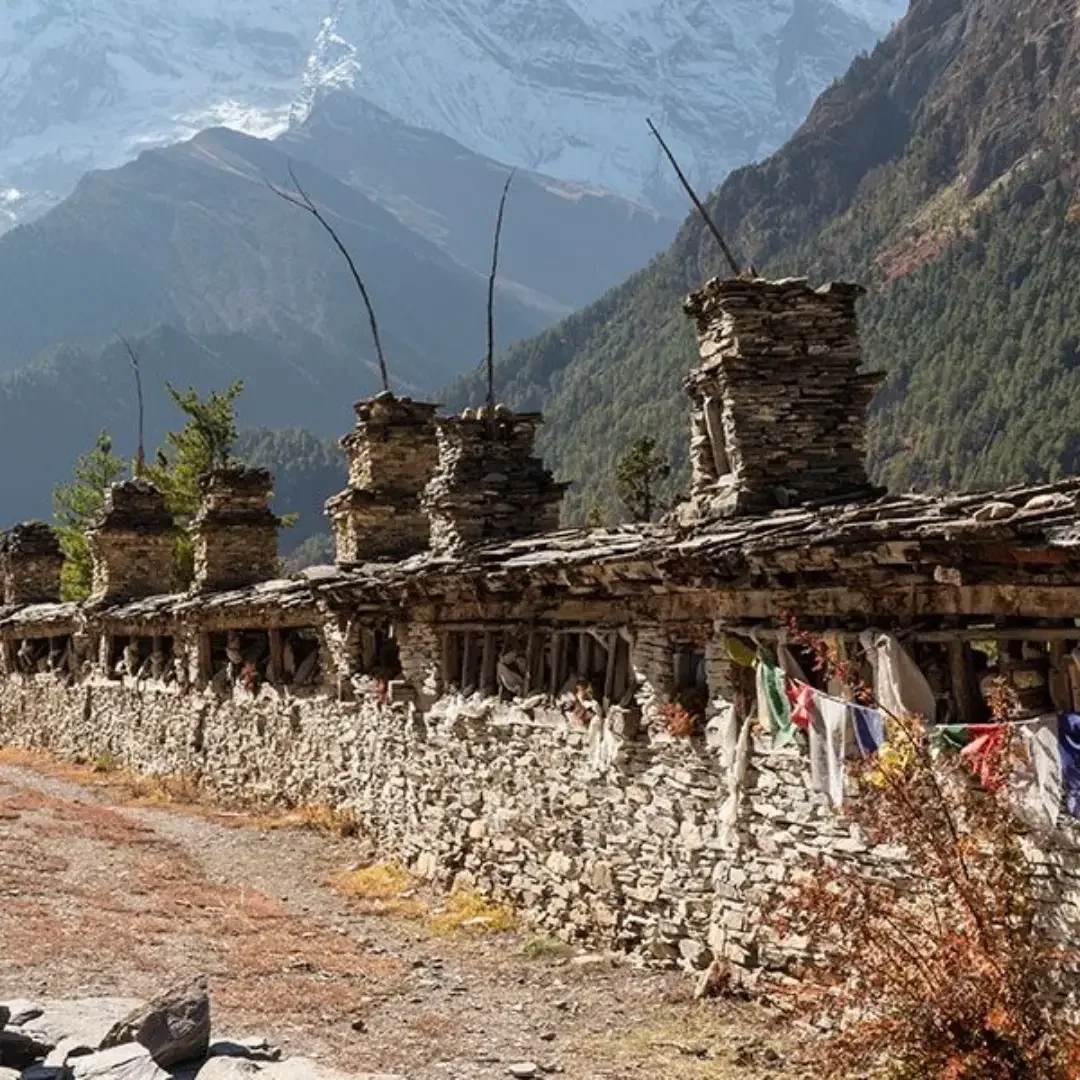
The Tilicho Lake Trek is one of the most rewarding short-to-mid adventures in the Annapurna region — a focused journey to a turquoise glacial lake that sits at roughly 4,919 metres, ranking among the highest large lakes in the world. As a Pokhara-based operator running Annapurna trips since 1998, we love this route because it delivers genuine high-altitude grandeur without committing you to the three-week Annapurna Circuit. This guide covers the standalone 2026 itinerary, permits, costs, the best season, and how to stay safe near 5,000 metres.


Why trek to Tilicho Lake
Most people meet Tilicho as a side trip on the Annapurna Circuit, but the standalone trek treats the lake as the destination in its own right. You walk into the heart of the Manang valley, ringed by the giants of the Annapurna and the dramatic Tilicho Peak, then climb to a vast frozen-and-thawing lake that feels utterly remote. Because the trail is an out-and-back, you can keep the trip to around eleven days end to end while still earning serious altitude. For trekkers who want a high-mountain lake and big Himalayan scenery on a tighter schedule, it is hard to beat. Our full package is the 11-day Tilicho Lake Trek, and the wider region is covered in our Annapurna trekking guide.
Route and itinerary overview
The standalone route is a there-and-back journey rather than a loop over a pass. In broad strokes:
- Days 1–3: Drive from Kathmandu to Besisahar and on towards Chame by jeep, then begin walking up the Marsyangdi valley through pine forest and apple country.
- Days 4–6: Trek through Upper Pisang and Ngawal towards Manang (~3,540 m), taking the high, scenic variant for better acclimatisation and views.
- Day 7: A vital acclimatisation and rest day in Manang with a short hike higher before sleeping low.
- Days 8–9: Climb to Tilicho Base Camp (~4,150 m) along the famous landslide-prone traverse, then make the pre-dawn push to Tilicho Lake (~4,919 m) and return to base camp.
- Days 10–11: Retrace the valley to a road head, drive out to Pokhara or Kathmandu.
Day counts vary slightly with road conditions and how much you choose to walk versus jeep, so treat this as a framework rather than a fixed schedule.
Difficulty and fitness
We rate the Tilicho Lake Trek as strenuous. The daily distances are moderate, but the combination of high sleeping altitudes, long ascent days, and the exposed approach to base camp makes it tougher than a teahouse classic like Ghorepani. The final morning to the lake is a steep, cold climb at altitude where the air holds roughly half the oxygen of sea level. You do not need technical skills — no ropes or crampons in normal conditions — but you should arrive trek-fit, comfortable walking six to seven hours on consecutive days, and ideally have done some hill training beforehand.
Permits and 2026 cost
The good news for planning: Tilicho is not in a restricted area, so you do not need an expensive special permit. For 2026 you need two documents:
- ACAP (Annapurna Conservation Area Permit): NPR 3,000 for foreign nationals (NPR 1,000 for SAARC nationals).
- TIMS card: approximately NPR 2,000 through a registered agency. Enforcement on Annapurna trails has been inconsistent in recent seasons, but we still arrange it so you are fully covered at checkpoints.
Both are easily issued in Kathmandu or Pokhara, and we handle the paperwork for our clients. For a full breakdown of every Nepal permit see our trekking permits hub, and you can model the full trip price with our trek cost calculator. As a rough guide, a guided standalone Tilicho trek typically runs around USD 850–1,300 per person depending on group size and service level.
Best time to trek
The two prime windows are spring (March to May) and autumn (September to November). Autumn brings the most stable skies and crisp, clear views of the Annapurna massif, while spring adds rhododendron colour at lower elevations and gradually warming days. We generally steer clients away from the monsoon (June to August), when the landslide-prone section near Tilicho Base Camp is at its most hazardous and cloud often hides the lake, and from deep winter, when heavy snow can close the approach entirely. For a month-by-month view across Nepal, see our best time to trek guide.
How to get there
The trailhead sits in the Manang district, reached overland from Kathmandu or Pokhara. The usual approach is a drive to Besisahar and then a rough jeep ride up the Marsyangdi road towards Chame, where the walking begins. The road has crept higher up the valley over the years, which shortens the trek but also means a long, bumpy transfer day. On the way out, many trekkers prefer to finish towards Pokhara, our home base, which is the more relaxed gateway to the Annapurnas and a good place to recover with a lakeside rest day.
Accommodation: teahouse versus camping
The Tilicho route is almost entirely a teahouse trek, which keeps it comfortable and affordable. Villages like Chame, Pisang and Manang have well-established lodges with private-ish rooms, hearty dal bhat, bakeries and even cafes. The one rugged link is Tilicho Base Camp, where accommodation is basic, beds are limited in peak season, and nights are very cold. Camping is rarely necessary on this route, but having a reliable agency means your guide can secure base-camp beds and plan timing so you are not left without a room high on the mountain.
Packing essentials
Because you sleep near 4,200 m and climb close to 5,000 m, pack for genuine cold even in the trekking seasons. Priorities include a warm down jacket, a four-season sleeping bag, insulated layers, sturdy broken-in boots, sun protection and trekking poles for the loose base-camp traverse. Bring a refillable bottle and purification so you are not buying plastic, plus a small personal first-aid kit. Our Nepal trekking packing list has the complete season-by-season rundown.
Standalone Tilicho versus the full Circuit + Tilicho package
This is the question we field most often. The standalone trek goes in and out via Manang and the lake, topping out at the lake itself (~4,919 m) and returning the same valley — around eleven days, no high pass. The full 17-day Annapurna Circuit with Tilicho Lake instead continues from Manang over the Thorong La pass (~5,416 m) to Muktinath and down the Kali Gandaki, adding Tilicho as a highlight along the way. Choose the standalone trek if your priority is the lake, you are short on time, or you want to avoid a 5,400 m pass. Choose the full circuit if you want the complete loop, the pass crossing, and a wider variety of landscapes — and have nearly three weeks to spend.
Altitude and safety
Climbing to almost 5,000 metres in a fairly short trek makes acclimatisation the single most important factor. The cardinal rule is to ascend gradually and never skip the Manang rest day; a slow profile and good hydration dramatically reduce your risk of acute mountain sickness. Watch for headaches, nausea, dizziness and disturbed sleep, and treat worsening symptoms as a signal to descend rather than push on. We brief every group on recognising altitude illness and carry a first-aid kit and oximeter; for a deeper primer, read our guide to altitude sickness prevention and treatment. The approach to base camp also crosses a notoriously loose, landslide-prone slope, so we time that section for the early morning when the ground is most stable and footing is best.
How high is Tilicho Lake?
Tilicho Lake sits at roughly 4,919 metres (about 16,138 feet), which makes it one of the highest large lakes anywhere in the world.
Do I need a special restricted-area permit for Tilicho?
No. Tilicho lies within the Annapurna Conservation Area but is not a restricted zone, so you only need an ACAP permit (NPR 3,000 for foreigners) and a TIMS card (~NPR 2,000), both of which we arrange.
How long does the standalone Tilicho Lake Trek take?
Plan on about eleven days from Kathmandu and back, including drive days, the Manang acclimatisation day, and the out-and-back to the lake. Road conditions can shift this by a day or so.
How is it different from the Annapurna Circuit with Tilicho?
The standalone trek goes in and out via Manang to the lake with no high pass (~11 days). The full 17-day circuit continues over the Thorong La (~5,416 m) to Muktinath and beyond, adding Tilicho along the route.
When is the best time to do this trek?
Spring (March to May) and autumn (September to November) are ideal, with autumn offering the clearest mountain views. We avoid the monsoon and deep winter because of landslide and snow risk on the base-camp approach.
Is the trek dangerous because of altitude?
With a sensible, gradual itinerary and a proper Manang rest day, most fit trekkers manage well. The keys are slow ascent, hydration and honest monitoring of symptoms — our guides are trained to recognise and respond to altitude illness.
Private Annapurna departures on any date, hand-picked NMA guides, and 25+ years on these trails. Tell us your dates — we usually reply within a few hours.
Browse Annapurna treks & tours → Read the Annapurna guide →
Written by
Travel Himalaya NepalPokhara-based, NMA-certified trekking guides. We’ve led 5,000+ treks across the Annapurna and Everest regions since 1998 — every word here comes from the trail. More from this author →
Share this article
Ready to Trek?
From reading about it to standing on it
Our Pokhara-based guides have been doing this since 1998. Tell us your dates and fitness level — we'll build your perfect itinerary. Free, no obligation.
Why trek with our licensed agencyMore guides like this
Popular trips to consider
Free Trekker's Insider Guide
Permits, packing lists, cost breakdowns — no fluff.
We send one useful email. You can unsubscribe anytime.