
The short version
Everest vs Annapurna, decided by days, altitude and budget rather than pretty photos. Difficulty, cost, crowds, the Lukla factor, live guided prices, plus who each region is NOT for — with two decision tables.
- Everest (Khumbu): the most iconic trek on earth. Higher (5,545m), harder, pricier, and busier on the main trail — but nothing else feels like standing under Chomolungma. Budget 12–14 days.
- Annapurna Base Camp: lower ceiling (4,130m), shorter, the friendliest first big Himalayan trek, ending in a mountain amphitheatre. Budget 7–9 days.
- Annapurna Circuit: the most varied trek in Nepal — jungle to high desert, four cultures, a 5,416m pass. Budget 14–18 days.
- The real question is not "which is prettier" — it is how many days you have, how high you want to sleep, and what you can spend. This guide answers all three.
The Two Capitals of Himalayan Trekking
Every year, Nepal's two great trekking regions — the Khumbu (Everest) and the Annapurna Conservation Area — together host more than 150,000 trekkers. These are not similar experiences. They suit different trekkers, different budgets, different time windows, and different ideas of what a Himalayan trek should feel like. This comparison is built on the question we hear most in our office: "Which one should I do?"
The Quick Summary
- Everest Base Camp (EBC): The most iconic trek in the world. Harder, higher, more expensive, more crowded on the main trail, but the mountain — Chomolungma — is unlike anything else.
- Annapurna Base Camp (ABC): More accessible altitude-wise, shorter, good for first-time high-altitude trekkers, dramatic mountain sanctuary amphitheatre.
- Annapurna Circuit: The greatest circuit trek in the world — diverse landscapes, multiple ethnic groups, Thorong La Pass (5,416m), long but endlessly rewarding.
Altitude and Difficulty
EBC route: Maximum altitude at Kala Patthar 5,545m (the best Everest viewpoint), Base Camp 5,364m. The altitude is the main challenge — even fit trekkers with proper acclimatisation days get headaches above Namche (3,440m). The trail itself is not technically difficult; it's a walking route. Requires 12–14 days minimum with a proper acclimatisation profile.
ABC route: Maximum altitude 4,130m. Significantly lower — most trekkers without altitude issues handle it well in 7–9 days. The ascent through the Modi Khola gorge is steep (3,000m of gain over four days) but the lower ceiling reduces serious AMS risk.
Annapurna Circuit: Maximum altitude at Thorong La Pass 5,416m, crossed in a single 6–8 hour day. Genuinely demanding — a bad-weather day on Thorong La is dangerous. Full circuit takes 15–21 days. The road has encroached on the lower sections (Besisahar to Chame now mostly by jeep); the upper circuit from Chame to Muktinath is still trail.
Scenery
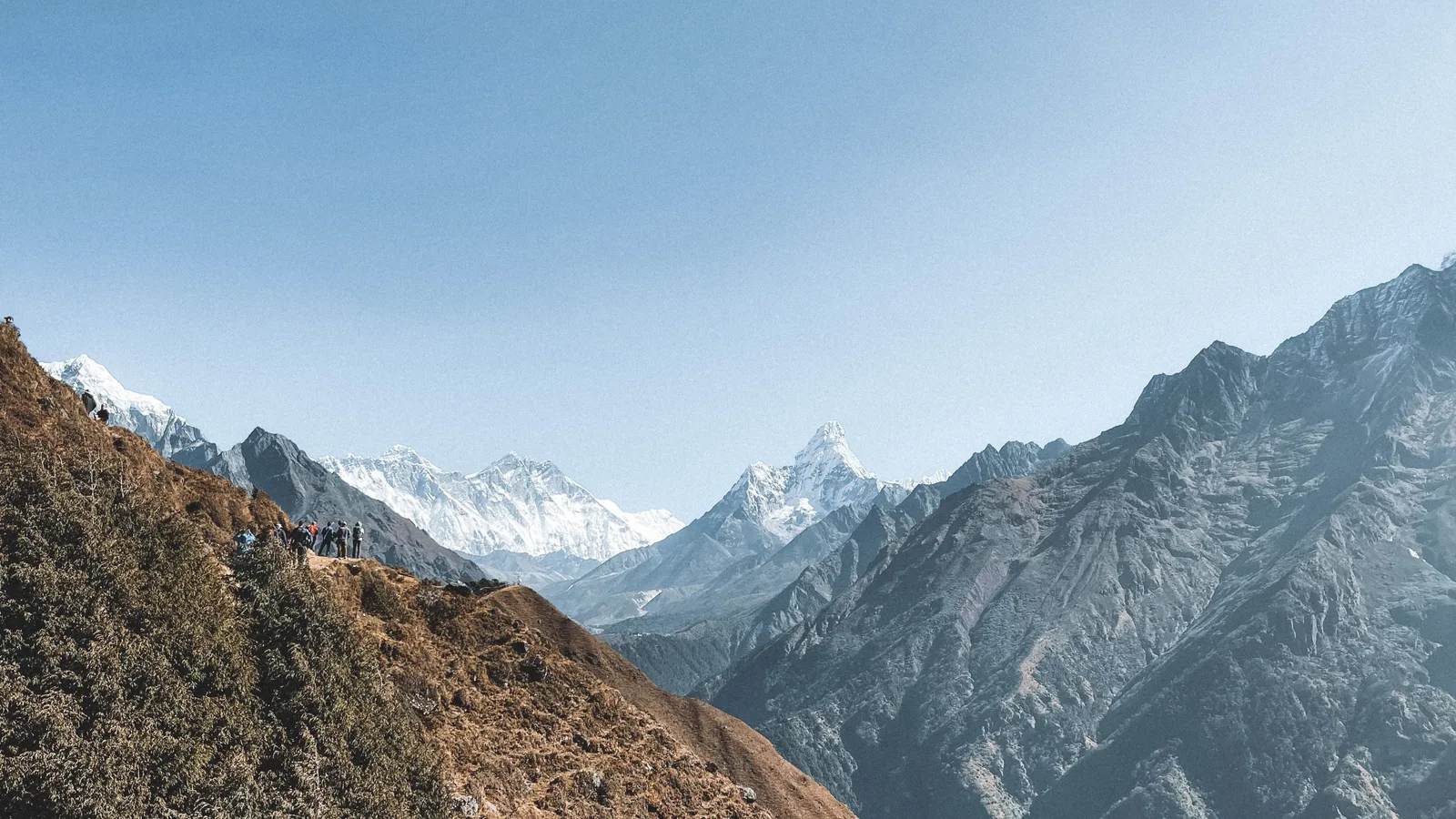
Everest region: Everything is dominated by the mountain. The approach through Sagarmatha National Park is dramatic — giant boulders, suspension bridges over roaring rivers, yak trains, and Sherpa monasteries. The Khumbu icefall is visible from Base Camp. Ama Dablam (6,812m), arguably the world's most beautiful mountain, towers over Dingboche. The scenery is concentrated and vertically intense.
Annapurna region: More varied. The Circuit crosses from subtropical forest (1,000m) through alpine pasture to high desert in three weeks — the landscape changes every two days. The Annapurna Sanctuary (ABC route) delivers the most enclosed, dramatic amphitheatre in Nepal: on a clear dawn you are ringed by 360 degrees of 6,000m+ peaks.
Cost Comparison
EBC (14 days, independent): Permits (Sagarmatha + Khumbu municipality) + flight Kathmandu–Lukla ~USD 200 each way + teahouse food and lodging USD 35–55/day above Namche. Total roughly USD 1,400–1,800 per person independent. Guided with porter, we run it from USD 1,700 (12-day, solo).
ABC (9 days, independent): Permit + bus Pokhara–trailhead + teahouse USD 25–35/day. Total roughly USD 600–900 independent. Guided, from USD 920 (9-day, solo).
Annapurna Circuit (14–18 days, independent): Permit + bus/jeep to trailhead + teahouse USD 25–45/day. Total roughly USD 900–1,400 independent. Guided, from USD 1,600 (14-day, solo).
The single biggest cost line that separates the two regions is the Lukla flight. That ~USD 400 round trip, and its habit of cancelling for days, is what makes Everest both pricier and logistically riskier than anything in Annapurna, where you simply drive from Pokhara to the trailhead.
| Region / route | Days | Max altitude | Guided from (solo) | Getting to trailhead |
|---|---|---|---|---|
| Everest Base Camp (12-day) | 12 | 5,545m | USD 1,700 | Fly to Lukla (weather-dependent) |
| Everest Base Camp (14-day) | 14 | 5,545m | USD 1,850 | Fly to Lukla (weather-dependent) |
| Annapurna Base Camp (9-day) | 9 | 4,130m | USD 920 | Drive from Pokhara |
| Annapurna Circuit (14-day) | 14 | 5,416m | USD 1,600 | Drive from Kathmandu/Besisahar |
The Lukla factor — why Everest is logistically harder
This is the difference that does not show up in a photo. Getting to the Annapurna trailheads is a drive on a road; getting to Everest means a flight into Lukla, one of the most weather-sensitive airstrips in the world. In peak October, Lukla flights are routinely cancelled or shuffled for days, and a knock-on delay can eat your acclimatisation buffer or your flight home. Many trekkers now fly via Manthali (Ramechhap) — a pre-dawn four-hour drive from Kathmandu — to dodge the worst of the congestion, which adds a broken night to the trip. None of this exists on the Annapurna side: you leave Pokhara after breakfast and start walking the same day. If reliability and simplicity matter to you, that alone can settle the choice before scenery even enters the conversation.
Crowding
EBC in October is crowded — Namche Bazaar fills with trekkers every evening and the trail between Namche and Tengboche can feel like a highway. The lodges are excellent and the community vibe is good, but solitude is not on offer on the main route. Gokyo Lakes (a common alternative) is significantly quieter. Annapurna ABC in October is also busy, but the gorge approach feels more enclosed and less like an airport queue. The Circuit above Thorong La drops off sharply in trekker numbers.
When to Go
Both regions share the same optimal windows: October–November (clearest skies, coolest temperatures, peak season) and March–April (rhododendrons on Annapurna, good visibility). Avoid the May–September monsoon for both, though Upper Mustang — in the Annapurna rain shadow — is excellent in June–August. EBC in December–February is quieter and colder (−20°C nights above Namche) but doable with proper gear. ABC below 3,000m in winter is actually pleasant.
Everest is our higher-value sale — more days, the Lukla flight, a bigger crew. And I still steer a lot of first-timers to Annapurna. If you have never slept above 4,000m, do not make your debut at 5,545m with a non-refundable Lukla flight hanging over you. Cut your teeth on ABC, learn how your body handles altitude, and come back for Everest knowing you can. A great first trek beats a miserable famous one.
Who each region is NOT for
- Everest is not for the tight schedule. Under 12 days on the ground (plus a Lukla buffer day) and you are either flying home sick or not summiting Kala Patthar. If your calendar is fixed and short, choose Annapurna.
- Everest is not for the altitude-anxious first-timer. 5,545m is no place to discover you get severe AMS. Build up to it.
- Annapurna Circuit is not for the two-week traveller who wants zero road. The lower jeep track is real; if a pristine footpath the whole way matters more than the pass, ABC or the Everest trail will disappoint you less.
- Neither region is for the untrained. Both are multi-day, multi-hour walking on steep ground. Train your legs before you fly.
Which Should You Choose?
| If you... | Choose |
|---|---|
| Want to say you've been to Everest Base Camp | EBC |
| Have 7–9 days and limited altitude experience | ABC |
| Want the most diverse, culturally rich trek | Annapurna Circuit |
| Are on a tight budget | ABC or Circuit |
| Want the most dramatic single mountain | EBC (Everest) |
| Want the most beautiful mountain amphitheatre | ABC (Annapurna Sanctuary) |
| Want fewer crowds | Circuit (upper section) or Gokyo Lakes |
See the 12-day Everest Base Camp Trek (from USD 1,700 solo) or the fuller 14-day EBC (from USD 1,850). On the Annapurna side, the 9-day ABC starts at USD 920 and the 14-day Circuit at USD 1,600. Still deciding between the two Annapurna routes? Read ABC vs Circuit.

Written by
Bishnu AdhikariPokhara-based, NMA-certified trekking guides. We’ve led 5,000+ treks across the Annapurna and Everest regions since 1998 — every word here comes from the trail. More from this author →
Share this article
Ready to Trek?
From reading about it to standing on it
Our Pokhara-based guides have been doing this since 1998. Tell us your dates and fitness level — we'll build your perfect itinerary. Free, no obligation.
Why trek with our licensed agencyMore guides like this
Popular trips to consider
View all treks & toursFree Trekker’s Insider Guide
Permits, packing lists, cost breakdowns — no fluff.
We send one useful email. You can unsubscribe anytime.