
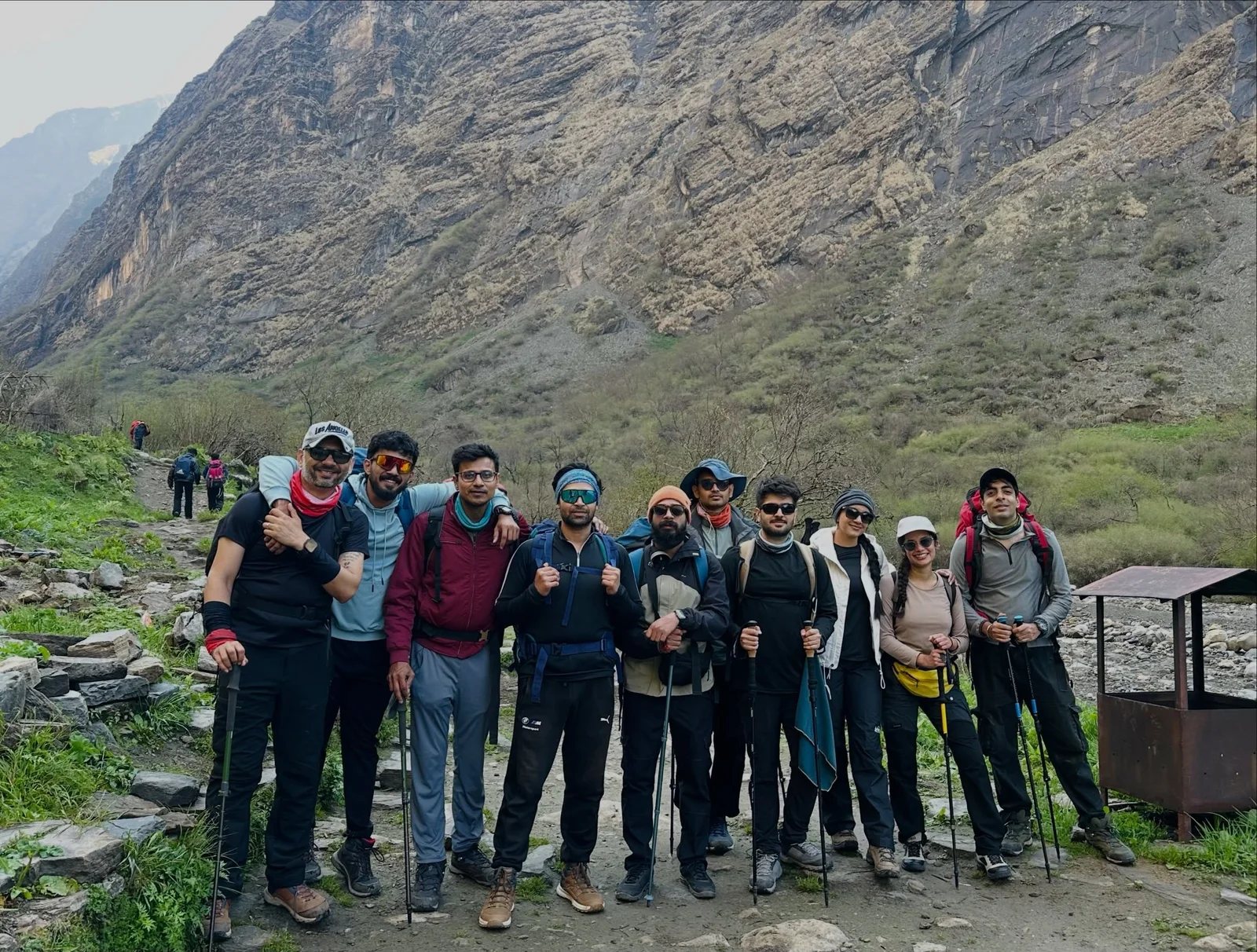
The short version
The complete Annapurna Base Camp (ABC) trek guide for 2026 — itinerary, cost, difficulty, permits, and best season. The most rewarding Himalayan trek accessible to fit beginners, into a sanctuary of 7,000m peaks.
- ABC ends directly beneath Annapurna I (8,091m) at 4,130m — a glacial amphitheatre and the most rewarding trek accessible to fit beginners.
- A budget trek costs roughly $600–850 per person (2-person group); comfort-level $1,000–1,500. No flight needed — you drive from Pokhara.
- Graded moderate; the lower max altitude than EBC makes acclimatisation more forgiving, but ascend steadily above Chhomrong.
- You need an ACAP and a TIMS card, both arranged by your agency.
The sanctuary trek
The Annapurna Base Camp (ABC) trek climbs into a glacial amphitheatre ringed by peaks over 7,000m, ending directly beneath Annapurna I (8,091m) at 4,130m. It blends rhododendron forest, Gurung villages, and high-mountain grandeur — and it's the most rewarding trek accessible to fit beginners, with teahouses the whole way.


ABC at a glance
Duration: 7–11 days · Max altitude: 4,130m · Difficulty: Moderate · Start: Pokhara (drive to Nayapul/Phedi) · Best seasons: Oct–Nov, Mar–Apr · Permits: ACAP + TIMS · Accommodation: Teahouses.
The classic 9-day itinerary
Drive Pokhara → Nayapul; trek via Ulleri to Ghorepani (2,870m); dawn at Poon Hill (3,210m); on to Chhomrong, Dovan, Machhapuchhre Base Camp (3,700m), and Annapurna Base Camp (4,130m) for an unforgettable sunrise; descend via Jhinu Danda's hot springs back to Pokhara. A 7-day version skips the Poon Hill loop.
How much does it cost?
Per person, guided, all permits and teahouses included. The price falls as the group grows because the guide and porter are shared:
| Group size | 7-day ABC | 9-day ABC (with Poon Hill) |
|---|---|---|
| Solo | $800 | $920 |
| 2–3 people | $730 | $830 |
| 4–7 people | $660 | $750 |
| 8+ people | $600 | $680 |
That covers your licensed guide, a porter between every two trekkers, both permits, every teahouse night, three meals a day on the trail, and the private jeep each way from Pokhara.
What it does not cover: your gear, travel insurance, tips, and drinks or hot showers at the teahouses. Budget roughly $10–15 a day for those, and see the full cost breakdown.
No internal flight is needed — you drive from Pokhara — which is the single biggest reason ABC costs roughly half what Everest Base Camp does.
How hard is it, honestly?
Graded moderate, and that grade is fair. There is no technical ground, no ropes, no glacier travel — it is walking, on a path, the whole way. What makes it hard is the amount of ascent and descent packed into consecutive days.
The three sections that hurt:
- The Ulleri staircase — roughly 3,300 stone steps, straight up, usually on day one or two. No technique will help you. You climb slowly and it ends.
- The Chhomrong descent and re-ascent — you lose several hundred metres to the river and win every one of them back on the other side. It is the day people quietly stop talking.
- The descent from the sanctuary — the day you come down from Base Camp to Bamboo is long, steep and lands on legs that have already done a week. More people hurt their knees here than anywhere else on the trek. Poles matter.
On altitude: at 4,130m the sanctuary is genuinely more forgiving than Everest Base Camp's 5,364m. Mild headaches and broken sleep at MBC and ABC are common and normal. Serious altitude sickness is uncommon on this route — but the last two days climb quickly, so ascend steadily above Chhomrong and do not push through symptoms that are getting worse.
Preparation that actually works: walk hills with a daypack for a few weeks beforehand. Stair climbing beats flat running for this trek. If you can manage a long flight of stairs without stopping, you are ready enough.
Who this trek is not for
We would rather tell you now than at Chhomrong.
If you have a knee problem that flares on long descents, this route will find it — the descent is relentless and there is no way to shorten it once you are in. If you need a guaranteed private room every night, the high lodges at MBC and ABC cannot promise that in any season. And if you are hoping for a wilderness with nobody in it, the main trail in October is busy; consider Mardi Himal or Khopra Ridge instead.
What the sanctuary is actually like
The last two hours into Annapurna Base Camp are the quietest of the trek. The valley closes to a narrow throat above Deurali and then opens without warning into the amphitheatre — a ring of 7,000m peaks with Annapurna I standing at the back of it at 8,091m.
There are only a handful of lodges up there, all basic, all cold once the sun drops behind the ridge. You will sleep badly. You will get up before dawn anyway, because the sunrise hits the summits first and works down the faces, and that ten minutes is the reason people walk for four days to stand there.
Although the 4,130m max altitude is more forgiving than EBC, altitude is still real in the sanctuary. Climb steadily above Chhomrong and don't rush the final push to Base Camp.
Permits
The Annapurna Conservation Area Permit (ACAP) and a TIMS card — both arranged by your agency. See the Nepal permits hub for current fees.
Best time to trek
October–November for the clearest views and stable weather; March–April for warmth and blooming rhododendrons. Winter is doable but cold and occasionally snowy near the sanctuary; monsoon brings cloud and leeches.
Aim for October–November for the clearest, most stable views, or March–April for warmth and blooming rhododendrons. Avoid the monsoon, which brings cloud and leeches.
Why choose ABC
It delivers the up-close grandeur of an 8,000m massif, teahouse comfort, beautiful villages, and manageable altitude — all from Pokhara with no flight. For many, it's the perfect first Himalayan trek. Read our deeper Annapurna Base Camp hub, or compare it with the best treks in Nepal.
What is the hardest part of the Annapurna Base Camp trek?
The descent, not the climb. Coming down from Base Camp to Bamboo is long and steep and arrives on legs that have already walked for a week, and it causes more knee trouble than any ascent on the route. On the way up, the Ulleri staircase — roughly 3,300 stone steps — and the drop-and-climb through Chhomrong are the two that people remember.
Do I need to worry about altitude sickness on ABC?
Less than on Everest. The sanctuary tops out at 4,130m against EBC's 5,364m, so serious altitude sickness is uncommon here. Mild headaches and poor sleep at Machhapuchhre and Annapurna Base Camp are normal. The risk comes from the last two days, which gain height quickly — ascend steadily above Chhomrong and tell your guide early if symptoms worsen rather than settle.
Who should not do the Annapurna Base Camp trek?
Anyone with a knee problem that flares on long descents — the descent from the sanctuary is relentless and cannot be shortened once you are committed. Also anyone expecting an empty trail in October, or a guaranteed private room at the high lodges, which no operator can promise in any season.
How much does the Annapurna Base Camp trek cost?
A budget ABC trek costs roughly $600–850 per person in a 2-person group, including guide, permits, and teahouses. Comfort-level trips run about $1,000–1,500. No internal flight is required, which keeps the cost down.
Is ABC suitable for beginners?
Yes. It's graded moderate and, with a max altitude of 4,130m, acclimatisation is more forgiving than EBC. A few weeks of fitness preparation makes it very achievable for fit beginners, and teahouses line the whole route.
Ready to walk into the sanctuary? Contact us to arrange your ABC trek with permits and a guide.
Private Annapurna departures on any date, hand-picked NMA guides, and 25+ years on these trails. Tell us your dates — we usually reply within a few hours.
Browse Annapurna treks & tours → Read the Annapurna guide →
Written by
Travel Himalaya NepalPokhara-based, NMA-certified trekking guides. We’ve led 5,000+ treks across the Annapurna and Everest regions since 1998 — every word here comes from the trail. More from this author →
Share this article
Ready to Trek?
From reading about it to standing on it
Our Pokhara-based guides have been doing this since 1998. Tell us your dates and fitness level — we'll build your perfect itinerary. Free, no obligation.
Why trek with our licensed agencyMore guides like this
Popular trips to consider
Free Trekker's Insider Guide
Permits, packing lists, cost breakdowns — no fluff.
We send one useful email. You can unsubscribe anytime.