
The short version
Bandipur is a car-free Newar hill town between Kathmandu and Pokhara. What to see, how to get up from Dumre, and whether it is worth a night.
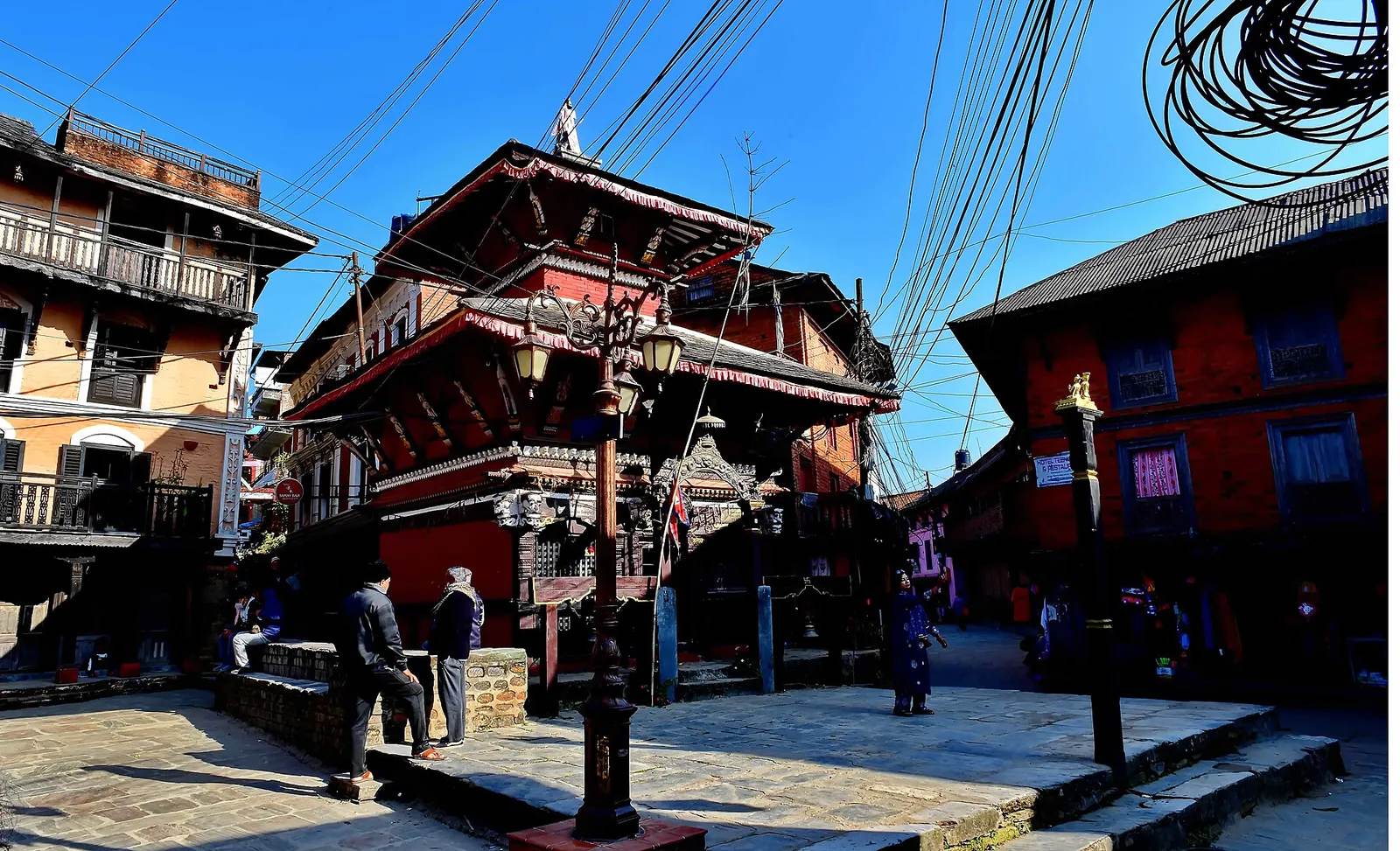
Bandipur is a Newar trading town on a ridge above the Kathmandu–Pokhara highway, 143 km from Kathmandu and 80 km short of Pokhara, and it is the best reason to break that drive. Its main bazaar is stone-paved and closed to traffic, its old brick houses still have their carved windows, and on a clear morning the Himalaya lines up along the northern horizon from Langtang to Dhaulagiri. One night is enough for most people. The turn-off is at Dumre, and the bus or taxi up the hill takes about half an hour.
- Bandipur is a car-free Newar bazaar on a ridge, a half-hour climb from Dumre on the Kathmandu–Pokhara road.
- The two things to do: the mountain view from Tundikhel, a ten-minute walk from the bazaar, and Siddha Gufa, Nepal’s largest known cave.
- One night is the right length. Arrive in the afternoon, walk the bazaar at dusk, be at Tundikhel at dawn, leave after breakfast.
- In 2026 the Khadga Devi temple’s sacred sword is brought out on Phulpati, Saturday 17 October, the one day a year it opens.
Why Bandipur is worth stopping for
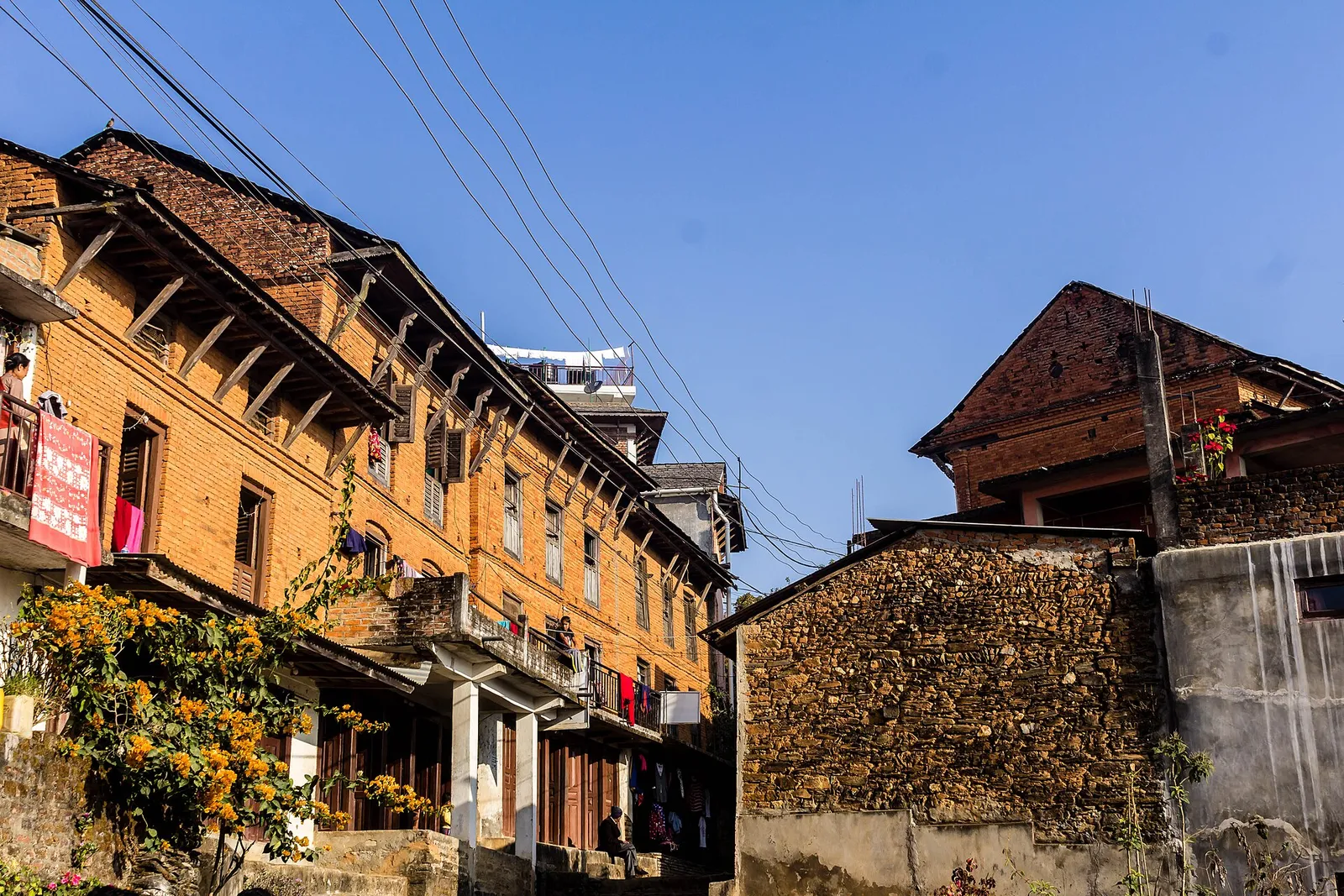
Because it is the one place on that road where the Nepal of a century ago is still standing in one piece. Newar merchants from Bhaktapur settled here in the 19th century, when the ridge sat on a trade route between India and Tibet, and they built the tall brick houses with carved wooden windows that still line the bazaar. Salt and cooking oil came up from the border at Thori and went on to the hill districts of Tanahun, Kaski, Lamjung and Gorkha.
Then the world moved away. The district headquarters left for Damauli in November 1968, and the Prithvi Highway, built along the valley floor below, took the trade with it. Many of the merchant families followed. That decline is the reason Bandipur survived: nobody had the money to knock the old town down. When tourism arrived, residents chose to keep cars out of the bazaar entirely, and it is still a place you walk through rather than drive through.
What to see in Bandipur
The bazaar, the view, the cave, and a walk into the hills, in roughly that order of effort. Almost everything is on foot, and the table puts each one against the time it really takes.
| Sight | What it is | Getting there | Time to allow |
|---|---|---|---|
| The bazaar | Stone-paved, car-free main street of Newar houses | You are in it | An hour at dusk |
| Bindabasini temple | Two-storey Durga temple on the bazaar square | Centre of the bazaar | 15 minutes |
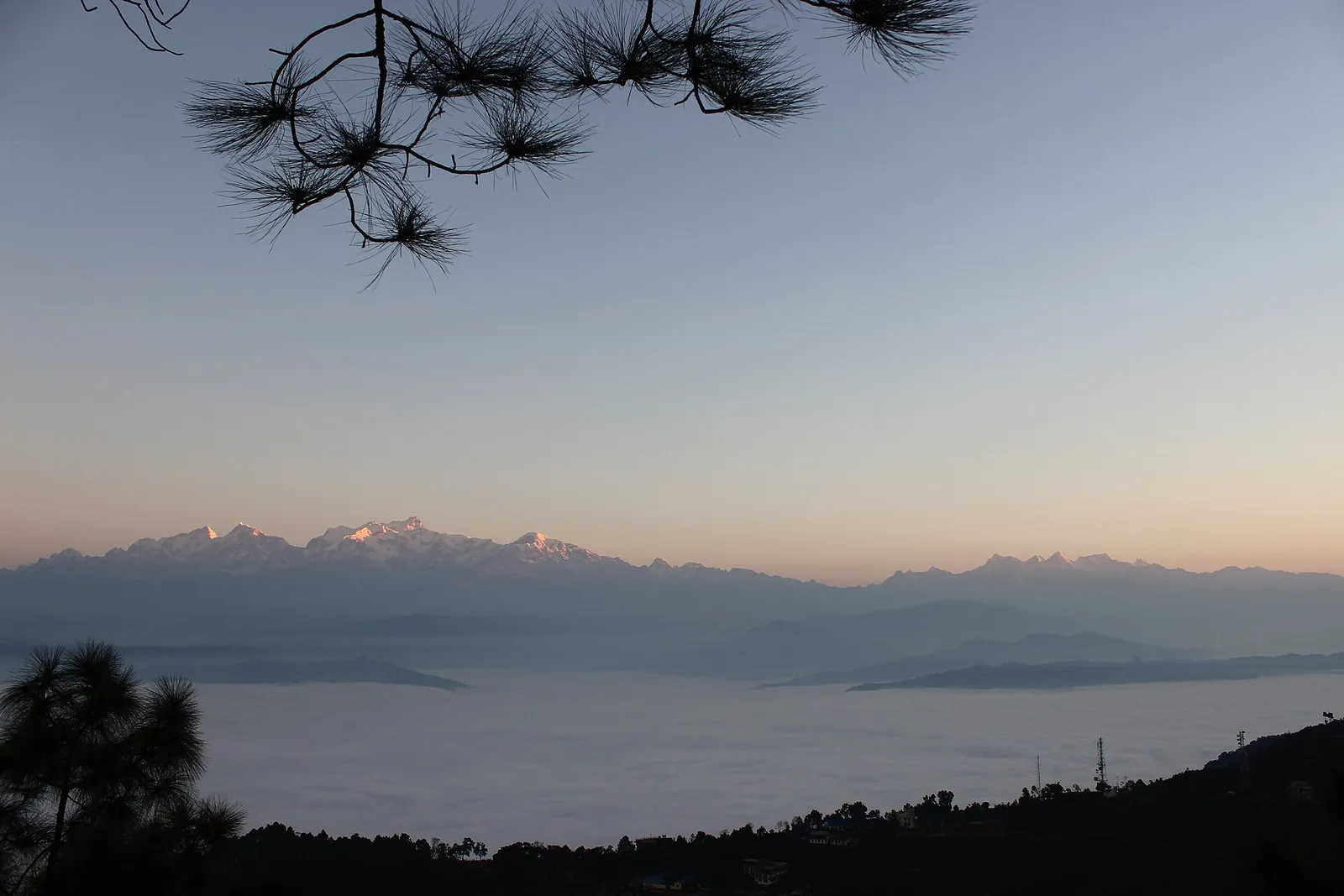
| Tundikhel | The old market ground, now the mountain viewpoint | 10-minute walk | Sunrise, 45 minutes |
| Thani Mai temple | Hilltop shrine above the town | Short, steep climb | An hour |
| Khadga Devi temple | Home of a sacred sword, opened once a year | In town | Visit on Phulpati |
| Siddha Gufa | Nepal’s largest known cave, 437 m deep | ~1.5 hours down on foot | Half a day with the walk |
| Ramkot | Magar village in the hills | About 4 hours’ walk | A full day; bring lunch |
The view is the thing most visitors remember. From Tundikhel, the old market ground a ten-minute walk from the bazaar, the northern skyline runs through Langtang, Ganesh Himal, Manaslu, Himalchuli, the Annapurnas, Machhapuchhre and Dhaulagiri. As everywhere in the middle hills, the mountains are clearest at first light and often gone into cloud by late morning, so the view is a reason to sleep here rather than stop for lunch.
Siddha Gufa, the cave below the town
It is Nepal’s largest known cave, and it feels far less visited than the town above it. Siddha Gufa is 437 metres deep and 50 metres high, full of stalactites, stalagmites and bats, with a small shrine to Shiva inside. It sits about 300 metres above the highway at Bimalnagar, on the old trail between the road and Bandipur.
There are two ways in. From Bandipur it is about an hour and a half on foot, downhill. From Bimalnagar on the highway it is just under an hour straight up stone staircases that are close to vertical, which is the better direction only if you are coming from the road with fresh legs. Local guides take visitors through with lamps; when the Kathmandu Post visited in 2019 the guided tour cost Rs 200, and it took 30 to 45 minutes to reach the far end and the meditation chamber. Wear shoes with grip and clothes you do not mind getting muddy.
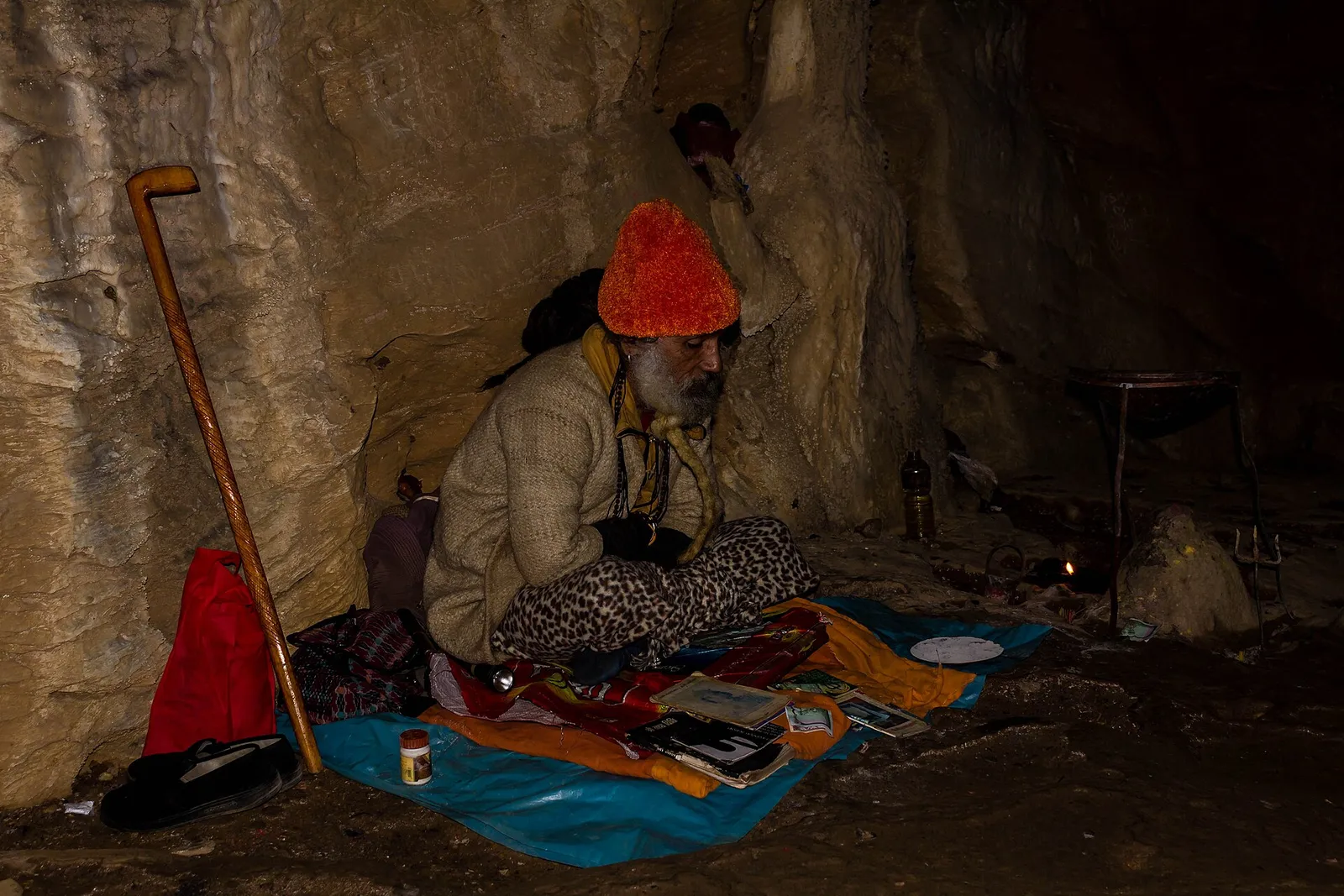
If you are arriving by road from Kathmandu, get off at Bimalnagar, climb to the cave, see it, and carry on up the trail to Bandipur. You arrive on foot the way the traders did, and the big bags can go up by taxi from Dumre.
How to get to Bandipur
Take any Kathmandu–Pokhara bus to Dumre, then a local bus or taxi up the hill, about half an hour. Dumre sits on the Prithvi Highway where the Bandipur road climbs off it. From Kathmandu that is the longer half of the Pokhara journey; from Pokhara, it is the shorter.
The highway itself had a rough end to the monsoon. The Trishuli undercut the road at Krishnabhir in Dhading on 30 August, and it was shut there for 18 days until two-way traffic resumed on a new track on 17 September. It is open, but slower through that section; our Kathmandu to Pokhara guide has the full picture of the road, the buses and the flight.
Where to stay, and how long
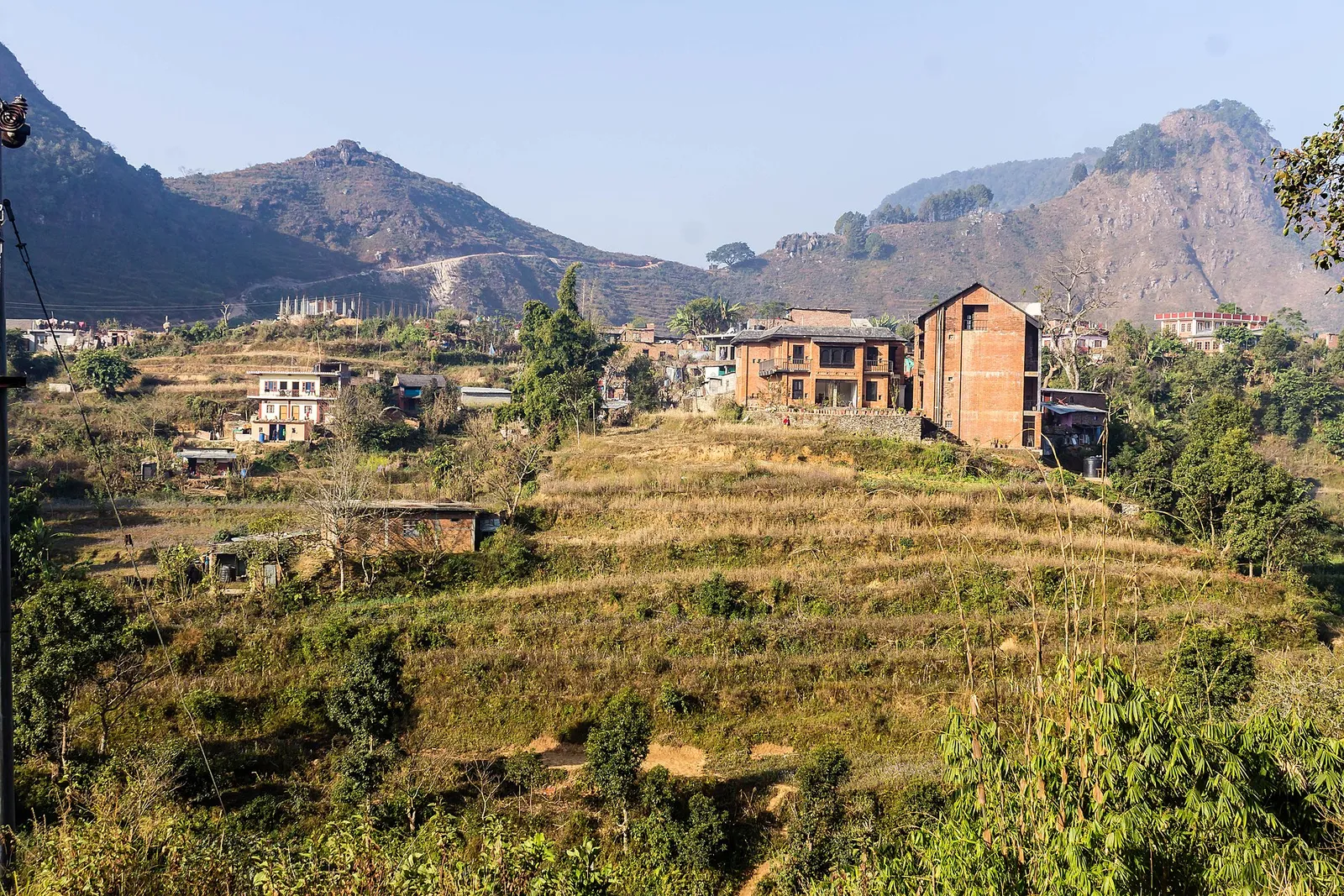
One night, in the bazaar. The town has around ninety hotels and restaurants, from restored Newar houses to simple guesthouses, and a handful of community homestays in and around the bazaar, with room for about 5,000 guests in all, so outside the Dashain and Tihar holidays a bed is rarely hard to find. Staying in the bazaar is the point: the town is at its best after the day visitors leave and before they arrive the next morning.
A second night is worth it only if you want the walk to Ramkot or a paragliding flight from Gurungche Hill. Two nights and nothing planned is a long time in a town you can cross in ten minutes, and we would rather say that than sell you an extra day.
When to go
October and November for the clearest mountains, February to April for warm days and flowers. In the monsoon, June to September, the town is green and quiet but the Himalaya usually stays behind cloud, and the view is half of why you came. Winter mornings can be hazy over the valley.
If you are in Nepal for Dashain, there is one day that is different from all the others. The Khadga Devi temple keeps a sacred sword, believed to be a gift from Shiva, and it is brought out only once a year, on Phulpati, the seventh day of the festival. In 2026 Phulpati falls on Saturday 17 October. Expect crowds of Nepali families that week, and book the room.
Travelling between Kathmandu and Pokhara with us? Tell us and we will quote a night in Bandipur into your transfer, with the cave on the way in if you want it. If you are travelling independently, you do not need us for this one: the public bus to Dumre and a taxi up the hill do the job.
Ask about a Bandipur stopIs Bandipur worth visiting?
Yes, for one night. It is the best-preserved old trading town on the Kathmandu–Pokhara road, the bazaar is closed to traffic, and the dawn view runs from Langtang to Dhaulagiri. It is not worth a special trip from Pokhara just for lunch, because the mountains are usually in cloud by midday.
How do I get from Kathmandu to Bandipur?
Take a Pokhara-bound bus and get off at Dumre, then a local bus or taxi up the hill, about half an hour. Bandipur is 143 km from Kathmandu by road.
How far is Bandipur from Pokhara?
About 80 km by road. Buses between Pokhara and Kathmandu stop at Dumre, where the road up to Bandipur begins.
How long does it take to walk to Siddha Gufa?
About an hour and a half on foot from Bandipur, or just under an hour straight up from Bimalnagar on the highway. Allow 30 to 45 minutes inside.
Are cars allowed in Bandipur?
Not in the main bazaar. Residents chose to keep it traffic-free, so vehicles stop at the edge of town and you walk in.
How many days do you need in Bandipur?
One night covers the bazaar, the dawn view and, if you start early, Siddha Gufa. Add a second night only for the full-day walk to Ramkot or a paragliding flight.
Keep reading
Bus, flight, car or local bus, door to door.
What to do when you get to the lake.
Where a night in Bandipur fits into a first trip.
The festival behind Phulpati and the week the whole country goes home.
Sources: The Kathmandu Post, “Bandipur, a hill station where time stands still” (21 November 2024) and “Finding faces in Siddha Gufa” (6 September 2019); OnlineKhabar, on Bandipur’s car-free bazaar (2 October 2016); The Himalayan Times, “Beguiling Bandipur” (27 August 2015); Nepal’s 2083 public-holiday list for Phulpati. Photos via Wikimedia Commons, all CC BY-SA 4.0: Rajesh Dhungana (Bindabasini temple); Rajivkilanashrestha (dawn view); Bijay Chaurasia (bazaar, terraces and Siddha Gufa).
Written by
Sunita PandeyPokhara-based, NMA-certified trekking guides. We’ve led 5,000+ treks across the Annapurna and Everest regions since 1998 — every word here comes from the trail. More from this author →
Share this article
Ready to Trek?
From reading about it to standing on it
Our Pokhara-based guides have been doing this since 1998. Tell us your dates and fitness level — we'll build your perfect itinerary. Free, no obligation.
Why trek with our licensed agencyMore guides like this
Popular trips to consider
View all treks & toursFree Trekker’s Insider Guide
Permits, packing lists, cost breakdowns — no fluff.
We send one useful email. You can unsubscribe anytime.