
The short version
Three walks from Lakeside, from an hour up to the Peace Pagoda to a full ridge day to Naudanda. Which to do first, what each costs, and when to go.
If you have one free morning in Pokhara, walk up to the World Peace Pagoda: a boat across Phewa Lake, about an hour of stone steps through forest, and the whole Annapurna range above the water when you reach the top. If you have a whole day and the weather is clear, start at Sarangkot at dawn and walk the ridge west to Naudanda instead. Those are the two hikes most visitors should choose between, and the rest of this guide is how to choose.
- World Peace Pagoda (1,100m): half a day, a boat and a steady climb. The easiest hike with the biggest reward.
- Sarangkot (~1,600m): the classic sunrise viewpoint over Dhaulagiri, Annapurna and Machhapuchhre. Busy at dawn.
- Sarangkot to Naudanda: about 14 km and 5–6 hours along the ridge, and the quietest of the three.
- You do not need a guide for the Pagoda or for Sarangkot. A guide earns the fee on the ridge day.
World Peace Pagoda: the one to do first
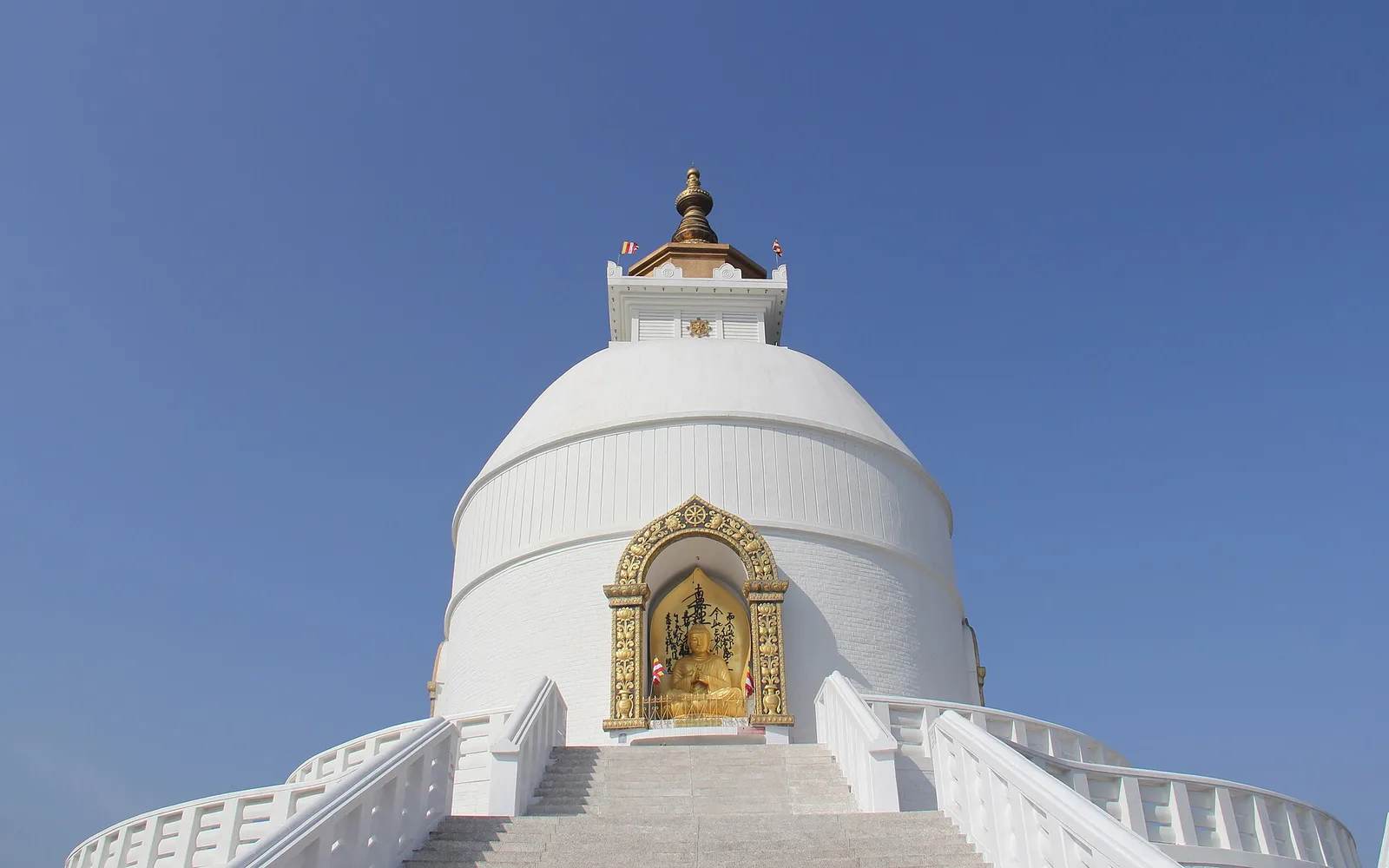
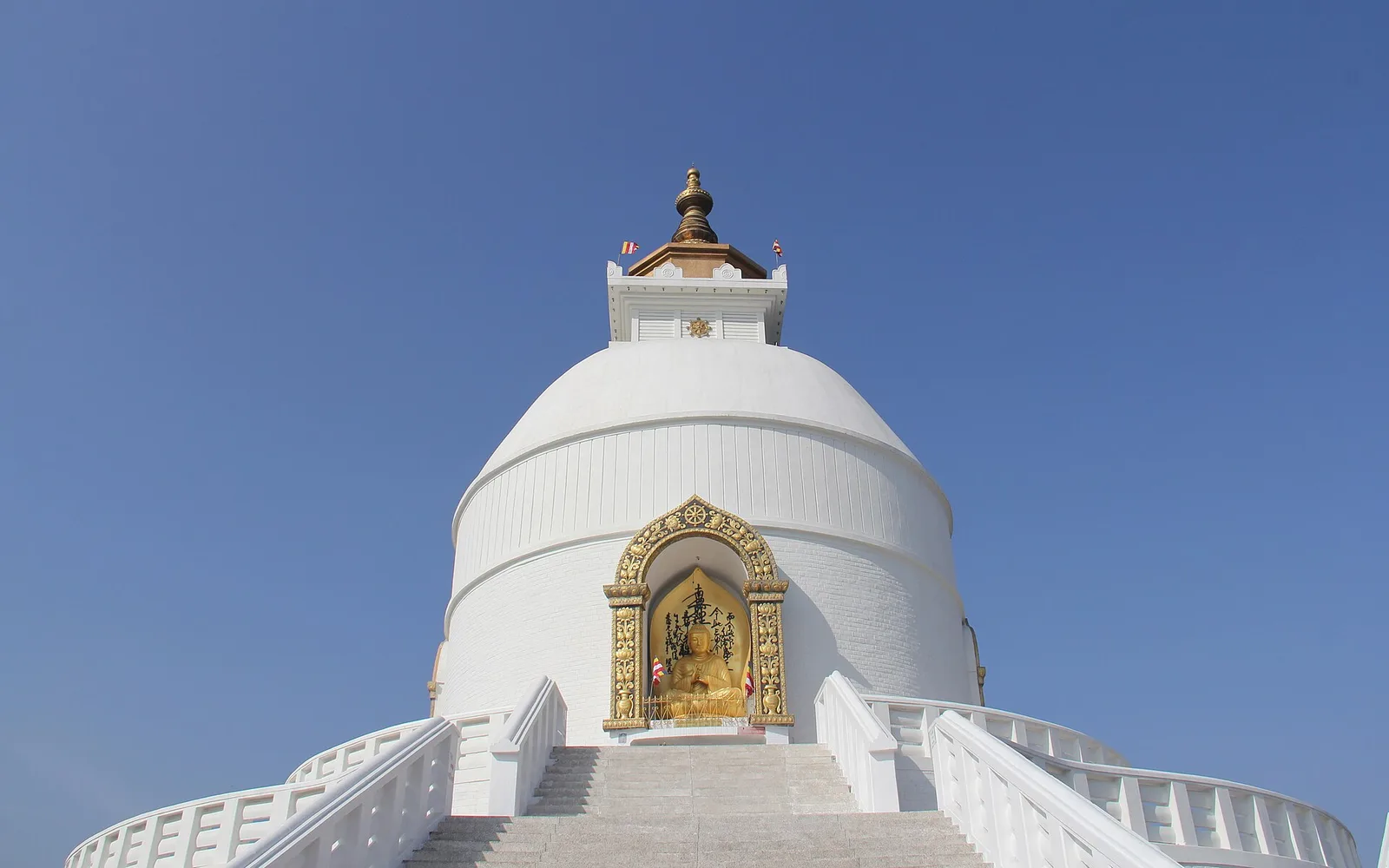
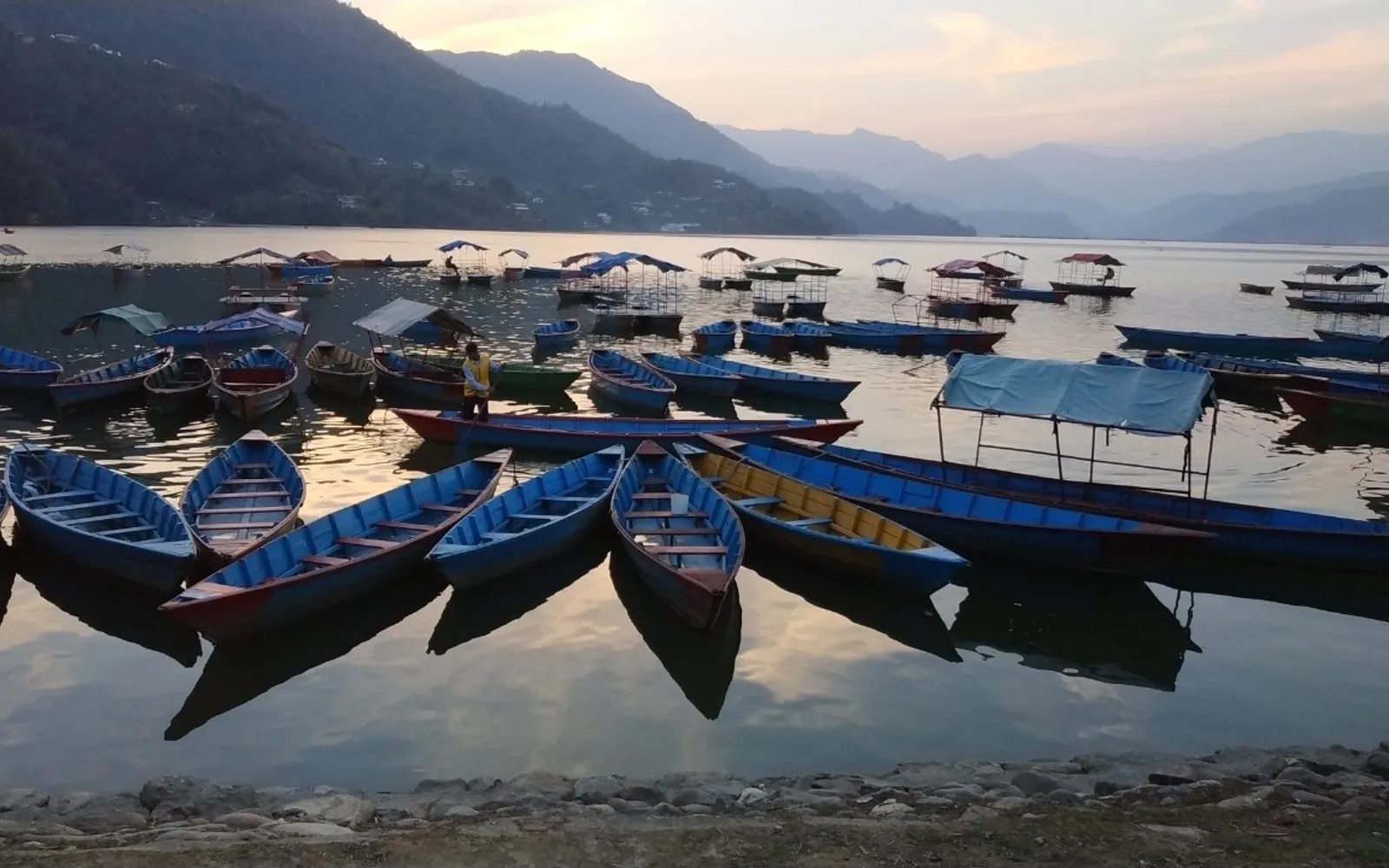
Do this one on your first morning, because it gives the most for the least. The pagoda — the Shanti Stupa — sits at about 1,100 metres on Anadu Hill, on the far side of Phewa Lake from Lakeside. The classic way up is the best one: take a boat across the lake, then walk up through the forest on stone steps and village paths for roughly an hour. At the top the view opens over the lake, the city and the full line of the Annapurnas behind it.
The stupa itself has a story worth knowing before you arrive. Monks of the Japanese Buddhist order Nipponzan-Myohoji laid its foundation in 1973; the first attempt was stopped by the authorities partway up, and it was re-founded in 1992 and finished on 30 October 1999. Dress and behave as you would at any temple — shoes off on the upper terrace, voices down. Photographs are fine; filming video there is restricted, so ask before you record.
If you would rather not climb both ways, a road reaches the top from the Chhorepatan side and a taxi takes about 25 minutes. The best version walks up from the boat and takes a taxi down, which leaves your legs fresh for anything else that afternoon.
Cloud builds over the Annapurnas most afternoons, even in autumn. Leave Lakeside by 8 a.m. and you will usually have the mountains; leave at noon and you may have the lake alone.
Sarangkot: the sunrise everyone comes for
Sarangkot is the view on the postcards, and at dawn it has the crowd to match. The hill rises to about 1,600 metres on Pokhara’s western side and looks straight at Dhaulagiri, the Annapurnas, Machhapuchhre and, on the clearest days, Manaslu. Most people are driven up in the dark to be on the viewing tower for first light. You can also walk it: the path from Miruwa on the Pokhara–Baglung road takes about ninety minutes.
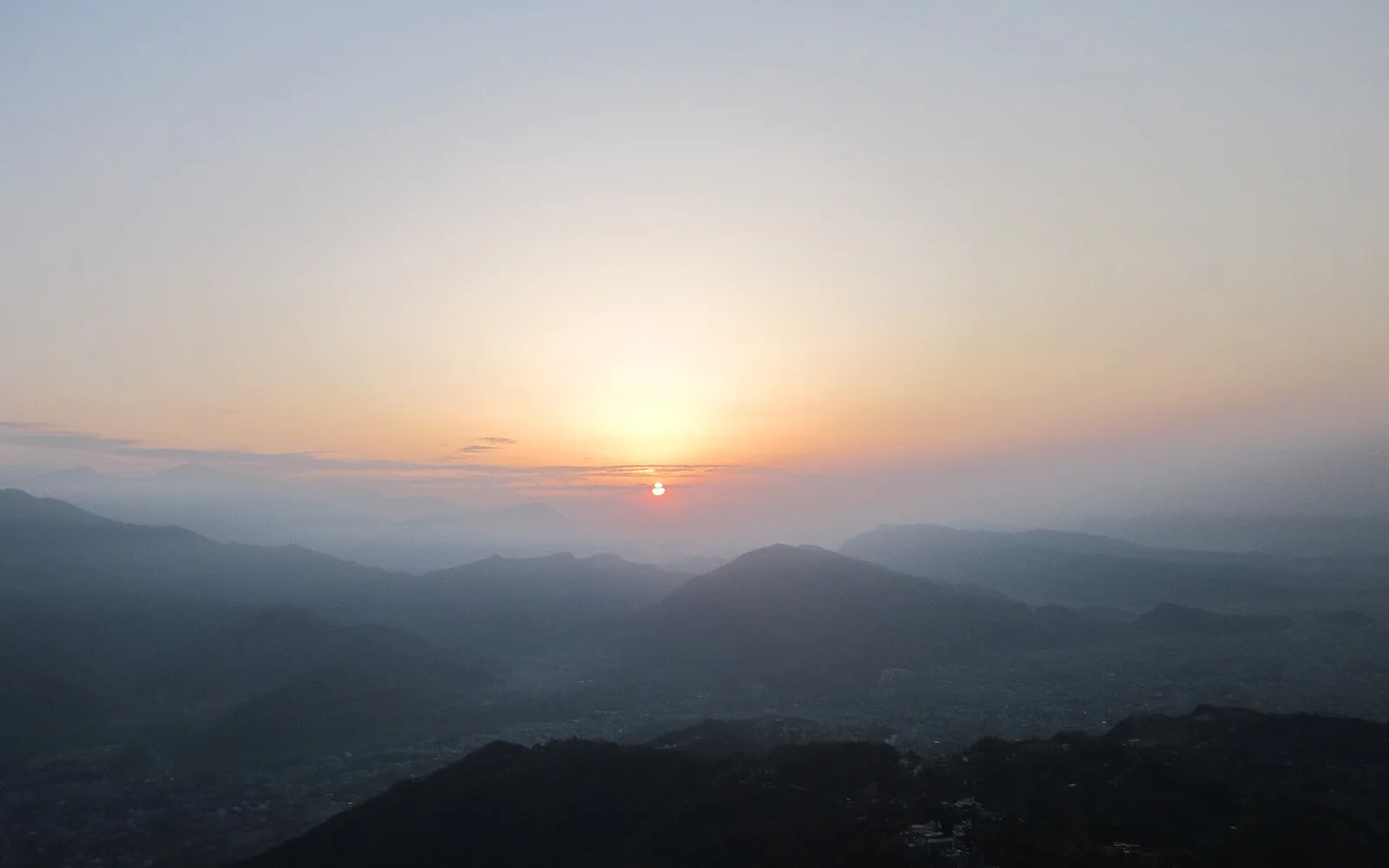
A useful thing nobody tells you: the sun rises over the valley hills to the east, but the reason you came is behind you. Turn round. The snow peaks to the north take the colour first, a few minutes before the sun clears the horizon. Sarangkot is also where Pokhara’s paragliders launch, so by mid-morning the sky above the lake fills with wings.
Sarangkot to Naudanda: the full ridge day
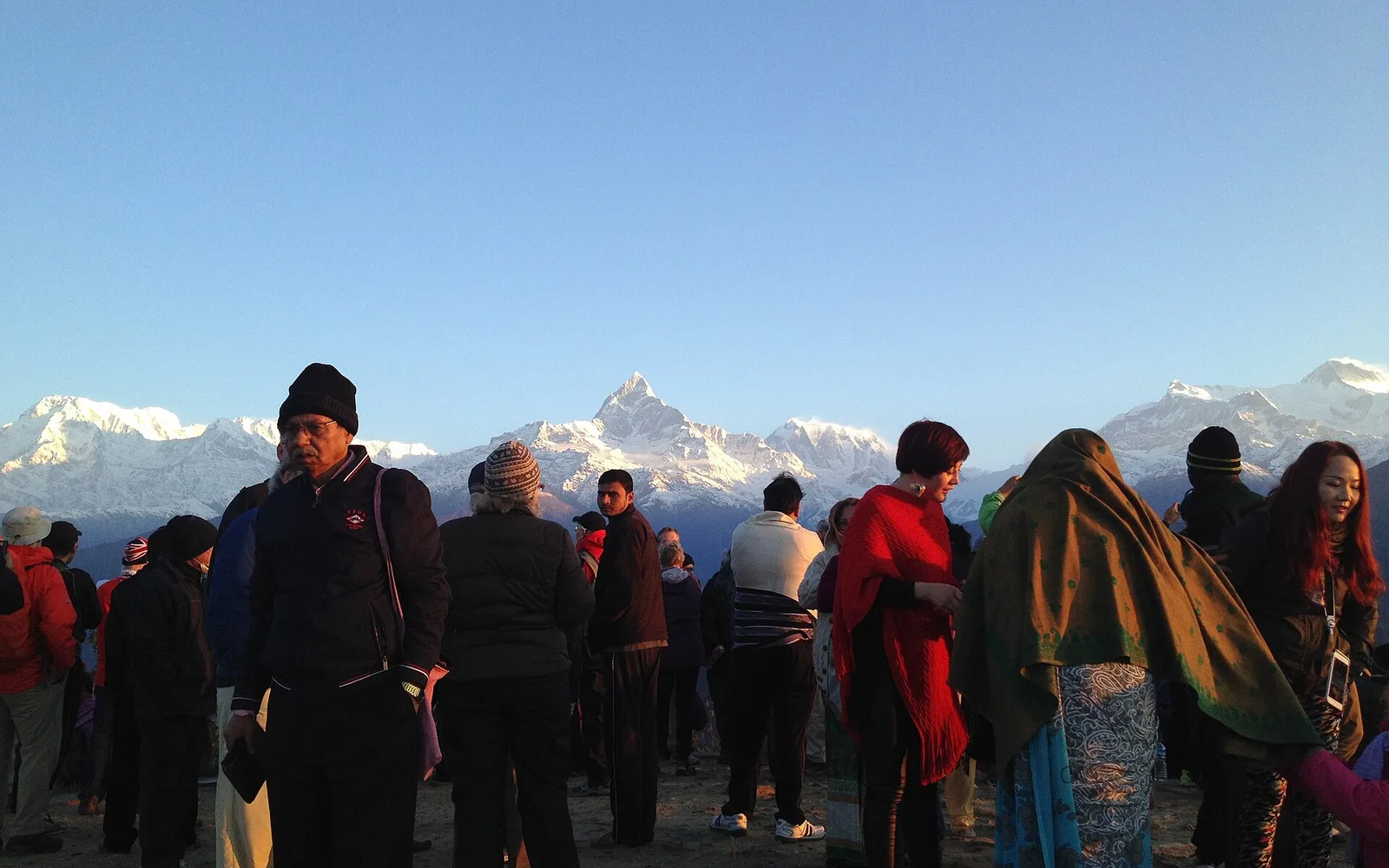
This is the hike for people who came to Pokhara to walk, not to look. Start at Sarangkot for sunrise, then follow the ridge west through Kaskikot, an old hilltop settlement with the remains of its fort, past Gurung and Brahmin villages to Naudanda at about 1,430 metres. It is roughly 14 kilometres and five to six hours of easy, mostly level walking, with the valley falling away on one side and the snow peaks on the other the whole way. A vehicle brings you back to Lakeside.
It is also the quietest of the three. The sunrise crowd stays on the Sarangkot tower; ten minutes along the ridge you are walking through farm terraces with nobody but the people who live there.
Our Sarangkot to Nagdanda day hike includes the pre-dawn drive up, a local guide for the ridge, and the drive back: $95 solo, falling to $70 each in a group of eight or more. The reason to book it for the right morning is the weather, not us: October and November give the clearest mornings of the year.
See the ridge day →Which one should you do?
One morning: the Pagoda. One full day: the ridge. Only the sunrise: Sarangkot by car. The table puts the three side by side.
| Hike | Time | High point | Crowds | Guide needed? |
|---|---|---|---|---|
| World Peace Pagoda (boat + climb) | 3–4 hours | 1,100m | Moderate | No |
| Sarangkot sunrise | 2–3 hours by car, longer on foot | ~1,600m | Busy at dawn | No |
| Sarangkot to Naudanda ridge | 5–6 hours walking | ~1,600m | Quiet | Helpful |
A boat, an hour of steps, the lake and the Annapurnas together · good for a first day or a jet-lagged morning
Sunrise, then 14 km of ridge through villages · for people who want to walk, and the best warm-up before a trek
Do you need a guide for a Pokhara day hike?
For the Pagoda and Sarangkot, honestly, no. Both are well-trodden walks outside any national park or conservation area, and Nepal’s licensed-guide rule applies to those protected areas, not to a walk above the lake. Plenty of people do them alone every day, and we would rather tell you that than sell you a guide you do not need.
The ridge day is different. The path through the villages beyond Sarangkot branches often, and a guide who knows it turns a day of checking your phone into a day of looking at the view and learning whose fields you are crossing. If you are walking the Pagoda alone, go in daylight and with company if you can, as you would on any quiet forest path.
When to go, and what to bring
October, November, March and April, and always in the morning. Autumn after the monsoon gives the clearest skies of the year. December to February is clear but hazier in the valley; June to September is green, humid and often cloud-bound, and the mountains may not show at all. For every hike here, bring water, a warm layer for the dawn start, sun cream, and shoes you can walk in on stone steps — trail shoes are plenty. Carry some cash for the boat, tea and a snack at the top.
Our World Peace Pagoda day hike collects you from your hotel, crosses Phewa Lake by boat and walks the forest trail with a local guide: $130 solo, from $95 each in a group of eight. If you only want the view and are happy on your own, you do not need us for this one.
See the Pagoda hike →How long does the World Peace Pagoda hike take?
About an hour of walking uphill from the boat landing on the far side of Phewa Lake, plus the boat crossing. Allow three to four hours for the round trip with time at the top.
Can you walk to Sarangkot from Pokhara?
Yes. The path from Miruwa on the Pokhara–Baglung road takes about ninety minutes; most people who want the sunrise are driven up in the dark instead.
Is the Sarangkot to Naudanda hike difficult?
No. It is roughly 14 km and five to six hours of mostly easy ridge walking between about 1,400 and 1,600 metres. The early start is the hardest part.
Do I need a permit for these hikes?
No trekking permit is involved in visiting the Peace Pagoda or Sarangkot. For anything going deeper into the Annapurna region, check our permit guide before you set out.
Can I see the mountains from Pokhara itself?
On clear mornings, yes, from Lakeside. The hills lift you above the valley haze, which is why the views from the Pagoda and Sarangkot are so much sharper.
Which hike is best before a trek?
The Sarangkot to Naudanda ridge. It is a full day on your feet at modest altitude, so you find out how your boots and pack feel before the real thing.
Keep reading
When a day is not enough: three to five days in the hills.
The easiest overnight walk from Pokhara.
Forest, villages and a quieter Annapurna view.
Where else to watch the Himalaya wake up.
Want help picking the right morning? Contact us and we will tell you which hike fits your days in Pokhara.
Sources: Wikipedia, “Shanti Stupa, Pokhara” and “Sarangkot”; Travel Himalaya Nepal field experience. Photos via Wikimedia Commons: Yallu007 (CC BY-SA 4.0); Gaurav Dhwaj Khadka (CC BY-SA 4.0); Mahendra Raj Adhikari (CC BY-SA 3.0); Anuja Sharma (CC BY-SA 4.0).

Written by
Sunita PandeyPokhara-based, NMA-certified trekking guides. We’ve led 5,000+ treks across the Annapurna and Everest regions since 1998 — every word here comes from the trail. More from this author →
Share this article
Ready to Trek?
From reading about it to standing on it
Our Pokhara-based guides have been doing this since 1998. Tell us your dates and fitness level — we'll build your perfect itinerary. Free, no obligation.
Why trek with our licensed agencyMore guides like this
Popular trips to consider
Free Trekker’s Insider Guide
Permits, packing lists, cost breakdowns — no fluff.
We send one useful email. You can unsubscribe anytime.