The short version
Chitwan or Bardia? Nepal's two great Terai safari parks both protect rhinos and tigers, but the experience is very different. A Pokhara guide compares access, cost, crowds, wildlife odds and season — with real tour prices and who each park is honestly not for.
- Choose Chitwan if it is your first Nepal safari, you want the most reliable one-horned rhino sightings in the country, and you need a park that slots into a two-week Kathmandu–Pokhara trip without a big detour. Our 3-day Chitwan safari starts at $455 per person (less in a group).
- Choose Bardia if you have the extra days, want Nepal's best odds of seeing a wild Bengal tiger, and prefer real, empty wilderness over lodges and buffets. Our 4-day Bardia safari starts at $575 per person.
- The honest line: one park only, jungle break beside a trek → Chitwan. Here for wild tigers → travel for Bardia — but do not book expecting a guaranteed tiger anywhere in Nepal.
I am Laxman Rawal, and I have been sending travellers into Nepal's Terai jungles since the late 1990s. The question I answer most about the lowlands is this one: Chitwan or Bardia? Both parks protect the greater one-horned rhino and the Bengal tiger, both run jeep safaris, guided jungle walks and dugout-canoe trips, and both are home to the Tharu, the indigenous people of the Terai. But the two experiences are genuinely different, and the wrong choice wastes both days and money. Here is how I actually advise people, minus the sales gloss.
Nepal's two great jungle parks, side by side
Chitwan was Nepal's first national park (1973) and a UNESCO World Heritage Site since 1984. It sits in the south-central Terai, roughly 5–6 hours by road from Kathmandu or Pokhara — which is exactly why it became the country's flagship wildlife destination. Bardia is the largest national park in Nepal's lowland Terai, tucked into the remote far west along the Karnali River. Reaching it means a long overland haul or, more sensibly, a short flight to Nepalgunj plus a two-to-three-hour drive. That friction is not a flaw — it is the reason Bardia still feels wild.


| Factor | Chitwan | Bardia |
|---|---|---|
| Access & distance | 5–6 hr drive from Kathmandu or Pokhara, or a short flight to Bharatpur | Far west; flight to Nepalgunj + 2–3 hr drive, or a long overland journey |
| Our tour & from-price | 3-day safari, from $455/person (solo) | 4-day safari, from $575/person (solo) |
| Crowds | Busiest park in Nepal; jeeps can queue at a sighting in peak season | Genuinely quiet; you can go a whole drive without seeing another vehicle |
| Rhino odds | Best in Nepal — the country's rhino stronghold | Present but far fewer; not why you come here |
| Tiger odds | Possible but lower; dense forest and more traffic | Best in Nepal; multi-day patient trips see them regularly |
| Landscape | Sal forest, tall grassland, the Rapti and Narayani rivers, oxbow lakes | Sal forest, riverine grassland, the wide braided Karnali and the Babai valley |
| Best season | Oct–Mar for comfort and rhinos | Oct–Mar; plus Mar–May can be superb for tigers |
| Status | UNESCO World Heritage Site; Nepal's first park | Largest park in the Terai; the wilderness choice |
Chitwan: the accessible, rhino-rich classic
Chitwan is the park I recommend to most first-time visitors, and to anyone whose real trip is a trek with a jungle break bolted on. The infrastructure is mature — lodges from budget to genuinely comfortable, well-drilled naturalist guides, and an established gateway village at Sauraha on the park's edge. The rhino population is the largest in the country, so if the one animal you must see is a rhino, the odds sit firmly in your favour — it is common to watch one grazing in the grass or wallowing in a river channel in a single day's outing.
Your days here mix jeep safaris into the sal forest and grassland, guided walks with a naturalist, a dugout-canoe drift down the Rapti past basking mugger and gharial crocodiles, and a Tharu village or the gharial breeding centre at Kasara. Birdlife is exceptional — over 500 species recorded.
Who Chitwan is NOT for: travellers who came to Nepal specifically for a wild tiger and will be quietly crushed by a rhino instead; anyone who hates sharing a sighting with other jeeps; and purists chasing an untouched-wilderness feeling. In peak season Sauraha is busy and the popular routes carry real traffic. It is a wonderful park, but it does not pretend to be empty.
Bardia: the wild, tiger-country far west
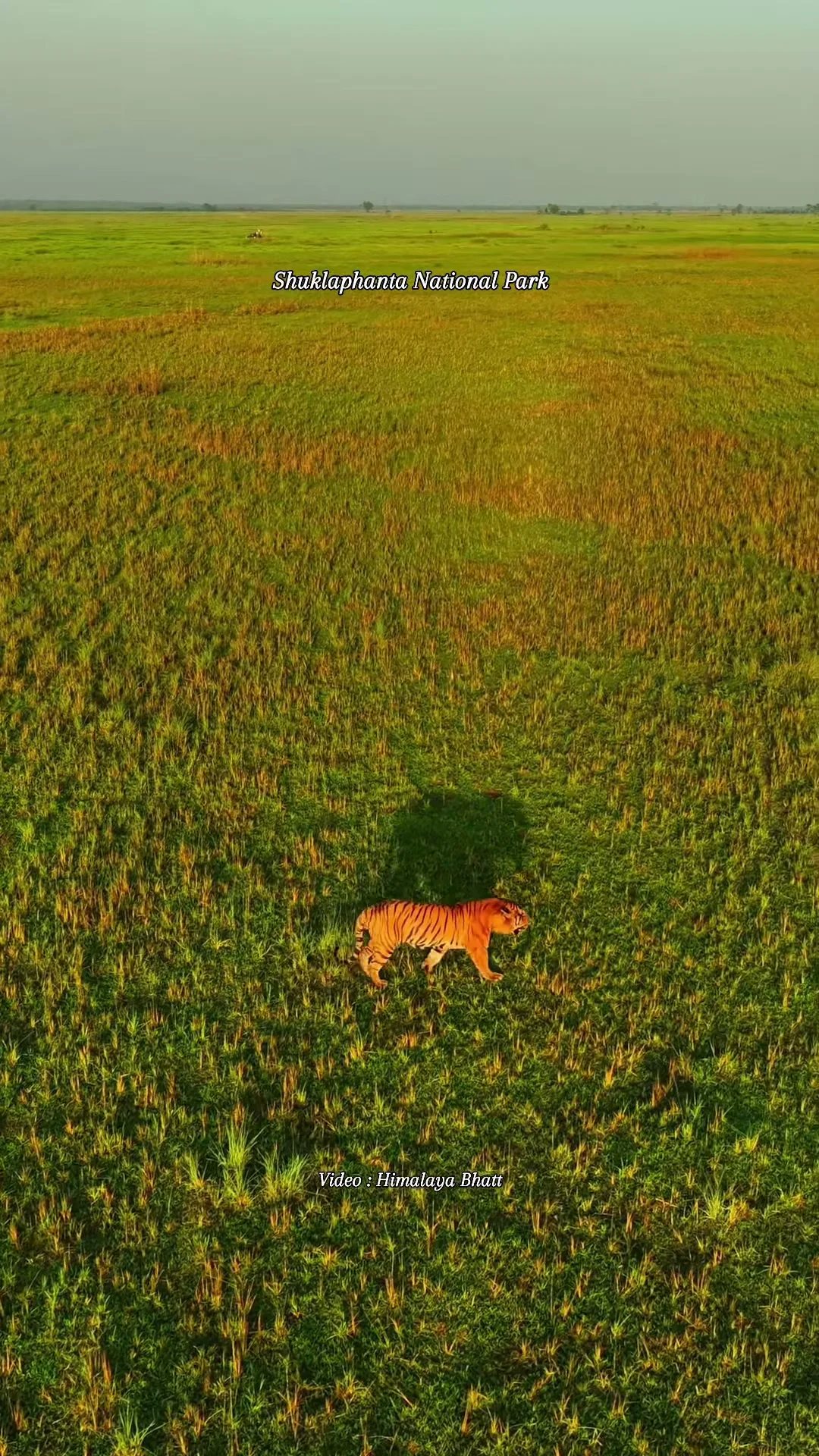
Bardia is my honest favourite, and the one I send serious wildlife people to. It is the largest protected area in the Terai and, because it is a genuine journey from the tourist trail, it stays quiet in a way Chitwan no longer can. This is Nepal's best tiger country. Sightings are never guaranteed — anyone who promises you a tiger is lying — but a healthy tiger population, open riverine grassland along the Karnali, and far fewer vehicles mean the people who do see wild tigers in Nepal overwhelmingly see them here, usually on multi-day trips with patient waiting at river crossings and grassland edges.
Beyond tigers, Bardia holds herds of wild Asian elephants (the real thing, not captive animals), rhinos reintroduced from Chitwan, swamp deer, and gharial crocodiles in the Karnali and Babai rivers. The Karnali is also one of the few places in Nepal where the endangered Gangetic river dolphin still surfaces, though seeing one is pure luck. The wide, braided river gives Bardia a spacious, cinematic feel the denser Chitwan forest does not.
Who Bardia is NOT for: anyone on a tight schedule — the travel time is real and you must give it days, not hours; travellers who want polished resort comfort and a wide choice of lodges (accommodation is simpler and thinner here); and people who will be disappointed by anything less than a tiger. Bardia rewards patience and punishes a rushed itinerary. If you can only spare 48 hours, do not fly all the way to Nepalgunj — take Chitwan instead.
What you will actually see — and how you will see it
Both parks offer the same core menu: jeep safari, guided jungle walk, and dugout-canoe trip, with Tharu cultural evenings at the edge of both. One thing worth saying plainly, because guests still ask: elephant-back safaris have been phased out on animal-welfare grounds, and we do not offer or recommend them. The ethical — and frankly better — way through these jungles today is by jeep, on foot with a trained naturalist, and by canoe. Walking safaris in particular, quiet and slow and on the animals' terms, are where the far west comes alive.
Set your expectations honestly. This is not the Serengeti — Terai wildlife lives in tall grass and dense forest, so viewing is about patience, good guiding, and a little luck. Rhinos are the most dependable large animal in Chitwan; tigers are Bardia's prize precisely because they are hard-won. Sloth bears, leopards, wild boar, deer and superb birdlife fill out both parks.
Cost, timing, and how to fit a park into your trip
Our fixed safari packages start at $455 per person for the 3-day Chitwan safari and $575 per person for the 4-day Bardia safari, both as a solo traveller. Both fall substantially in a group — toward $330 (Chitwan) and $420 (Bardia) per person at eight or more — so if you are two, four, or a family, ask for the group rate rather than reading the solo figure. Bardia costs a little more per day mostly because of the distance: the Nepalgunj flight and longer transfers are baked in.
Timing: for both parks the prime window is October to March — dry, comfortable, and the tall grass thinned enough to see through. Bardia has a second sweet spot in the hot pre-monsoon months of March to May, when rivers shrink, animals concentrate at water, and burnt-back grassland makes tigers easier to spot, if you can handle the heat. The monsoon (June–September) is hot, wet, leech-prone, and the grass grows head-high, so we steer people away from it for serious wildlife viewing.
Fitting it in: Chitwan sits almost on the Kathmandu–Pokhara corridor, so it slides into a two-week itinerary with barely a detour. Bardia asks you to commit: it is a far-west destination in its own right, best treated as a wilderness centrepiece, not an afterthought.
The verdict, said straight
For most travellers on a first Nepal trip, Chitwan is the sensible answer: easy to reach, reliable for rhinos and culture, almost no extra travel time. For wildlife enthusiasts who will build the trip around the animals, Bardia is the prize — Nepal's best tigers, real wilderness, and the quiet Chitwan has outgrown. And the thing I will always tell you before you pay: no park in Nepal guarantees a tiger. Come for the whole jungle — rhinos, elephants, crocodiles on the sandbanks, the Tharu villages, the slow canoe at dawn — and a tiger, if it comes, is the gift on top.
A safari also pairs beautifully with the mountains — see our best treks in Nepal guide to combine wildlife and high peaks, or contact our team and tell us your dates. We build both Chitwan and Bardia safaris on any day of the year and usually reply within a few hours.
Which park is better for seeing tigers?
Bardia, clearly. Its remote far-western wilderness, open Karnali grasslands and low visitor numbers give the best Bengal tiger sighting odds in Nepal. Chitwan has tigers too, but denser forest and more traffic make them harder to see — Chitwan's strength is reliable rhino sightings. Neither park can promise a tiger.
Is Chitwan or Bardia easier to reach?
Chitwan, by a wide margin — a 5–6 hour drive or short flight from Kathmandu or Pokhara. Bardia is in the far west and usually means a domestic flight to Nepalgunj plus a 2–3 hour drive, or a long overland journey.
Can you still do an elephant-back safari?
No — elephant-back safaris have been phased out on animal-welfare grounds, and we do not offer them. Today's safaris are by jeep, on guided jungle walks, and by dugout canoe, which is both more ethical and, in our experience, a better way to see wildlife.
Do I need to choose only one?
Not if you have the time. If wildlife is your priority you can do both — Chitwan for guaranteed-feeling rhinos and easy access, Bardia for the tiger chase — but if you must pick one, decide by what you most want to see and how far you are willing to travel for it.
Private Chitwan departures on any date, hand-picked NMA guides, and 25+ years on these trails. Tell us your dates — we usually reply within a few hours.
Browse Chitwan treks & tours →
Written by
Travel Himalaya NepalPokhara-based, NMA-certified trekking guides. We’ve led 5,000+ treks across the Annapurna and Everest regions since 1998 — every word here comes from the trail. More from this author →
Share this article
Ready to Trek?
From reading about it to standing on it
Our Pokhara-based guides have been doing this since 1998. Tell us your dates and fitness level — we'll build your perfect itinerary. Free, no obligation.
Why trek with our licensed agencyMore guides like this
Popular trips to consider
Free Trekker's Insider Guide
Permits, packing lists, cost breakdowns — no fluff.
We send one useful email. You can unsubscribe anytime.