
The short version
Our itineraries leave at 3:00, 4:00 and 4:30 AM. Why alkaline dies in the cold, how many lumens you need, and the red mode nobody thinks about.
Ask a trekker what they wish they had spent another twenty dollars on and a surprising number say the head torch. Not the jacket, not the boots — the small thing they grabbed at the airport, which then died on a pass at four in the morning.
This is a genuine buy-before-you-fly item, and we say that as a company that spends most of its gear advice telling people to rent. Down jacket, sleeping bag, poles: rent them in Thamel for a dollar or two a day and we earn nothing from it. A headlamp is different. Nobody rents them, they cost less than a night in a teahouse, and they are the one piece of kit whose failure turns an ordinary morning into a genuinely dangerous one.
The short version. Around 250 lumens is plenty — you are walking a trail, not searching a hillside. What actually matters is a red mode (so you do not blind your dorm at 3am), lithium batteries above 4,000 m, and a spare set carried on your body where they stay warm. Rechargeable is fine, but only if it also takes normal batteries.
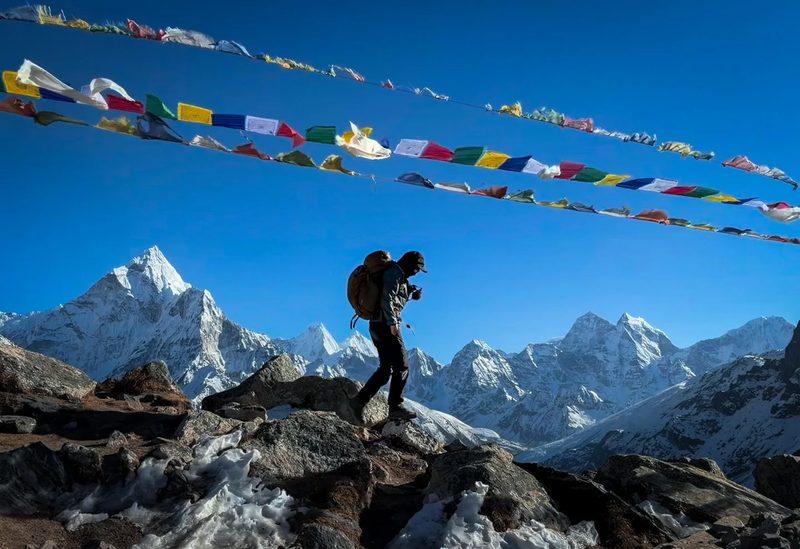
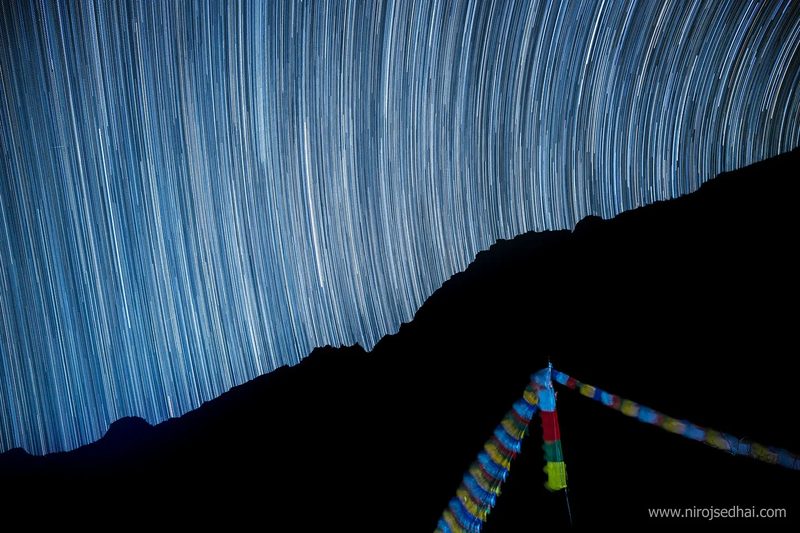
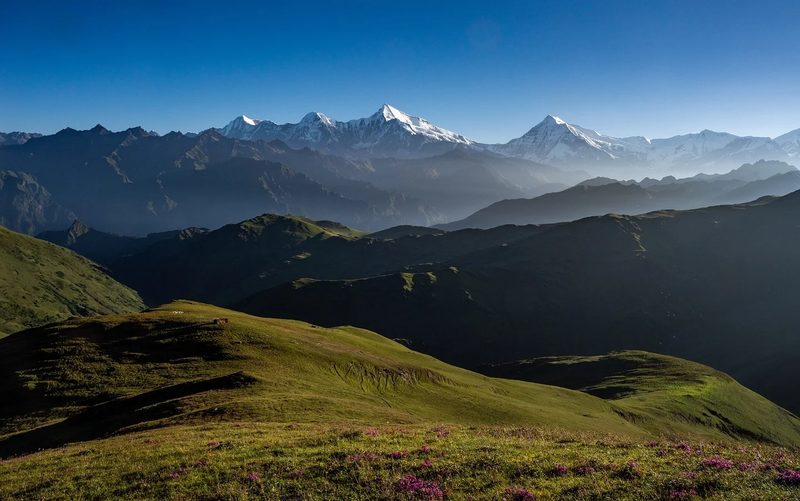
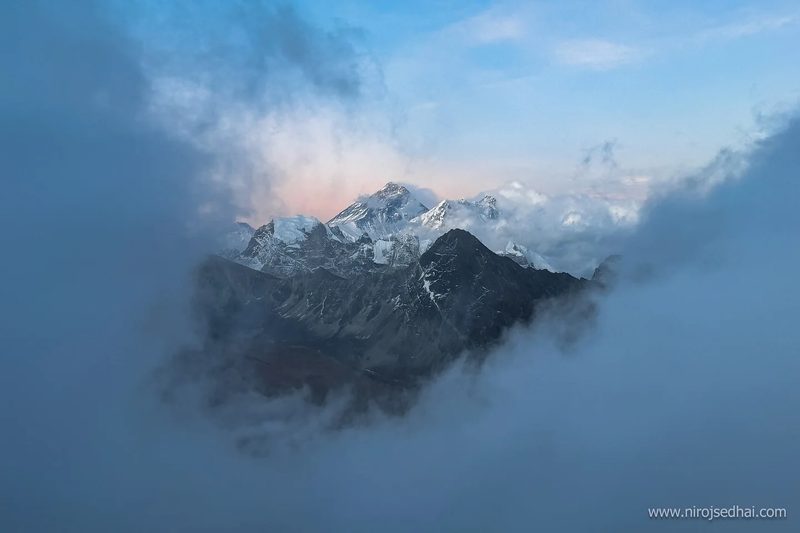
The mornings you will actually be walking in the dark
Most headlamp guides are written by people who have never had to be somewhere at 4am. Here is the honest list, taken straight from the itineraries we run — not from a gear catalogue.
| Trek | Start | Why that early |
|---|---|---|
| Manaslu Circuit — 14 days | 3:00 AM | Larkya La, a glaciated pass. Afternoon wind is the reason nobody leaves late. |
| Manaslu Circuit — 16 days | 4:00 AM | Our own itinerary says it plainly: “4 am by headlamp”, crossing at 5,106 m. |
| Annapurna Circuit — 13 days | 4:00 AM | Thorong La at 5,416 m, the highest point of the trek. |
| Ghorepani Poon Hill | 4:30 AM | Nepal’s most photographed sunrise. Uphill, in the cold, in the dark. |
| Everest Base Camp — 14 days | Pre-dawn | Kala Patthar, to watch first light hit the summit 3.6 km away. |
| Gokyo Lakes — 12 days | Pre-dawn | The climb up Gokyo Ri for Everest, Lhotse, Makalu and Cho Oyu together. |
That is before you count the ordinary stuff: finding the toilet block at 2am, a teahouse whose solar has not recovered from three cloudy days, and the load-shedding that still happens in the hills whatever the schedule says.
Cold is what actually kills your batteries
This is the part people get wrong, and it is worth understanding rather than memorising.
Alkaline batteries run on a water-based electrolyte. As the temperature falls towards freezing, ion mobility in that electrolyte drops, the chemical reaction slows, and the battery cannot deliver current as fast. Lithium cells hold a much lower internal resistance as they cool, so they keep supplying steady current when it is cold.
And the gap widens exactly where it hurts. Under a gentle load in a warm room the two are close. Under a high-drain load in the cold — which is precisely what a headlamp on a freezing pass is — lithium keeps going while alkaline falls away. At around −20 °C most batteries of any chemistry are down to roughly half their rated performance, so this is about how far you fall, not whether.
Indicative shape, not a bench test — exact numbers depend on the cell, the load and how long it has been cold. The direction is what matters, and it is consistent across sources.
The free trick that works. Carry your spare batteries in an inside pocket against your body, not in the top of your pack. A cold battery that looks dead often is not — warm it in your hands or an armpit for a few minutes and it will frequently come back for long enough to finish the pass. Our guides do this as a matter of routine.
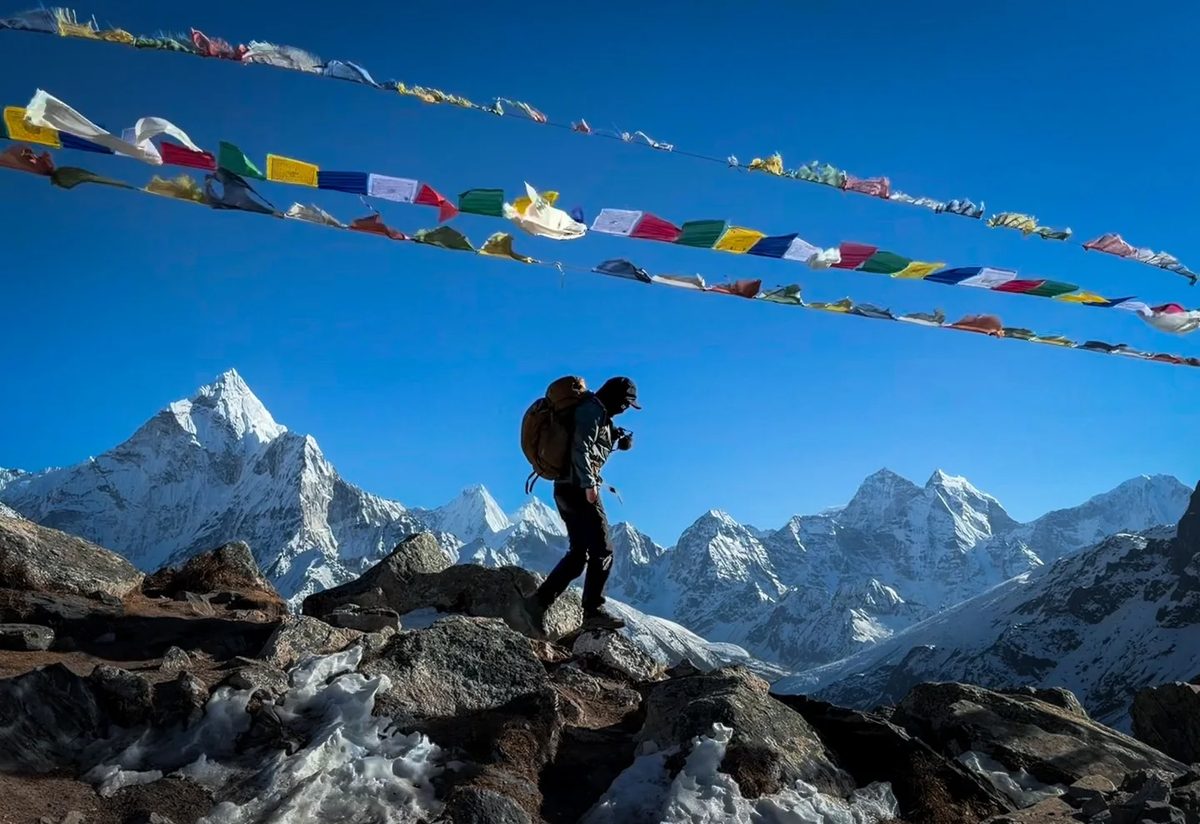
What we would actually put in your bag
About the links below. Some go to Amazon, and as an Amazon Associate we earn from qualifying purchases — at no extra cost to you. It changes nothing about the advice: we tell people to rent down jackets and sleeping bags in Thamel rather than buy them, and we earn nothing when they do. These are the things worth owning.
Around 250 lumens, with a red mode
Two hundred to three hundred and fifty lumens lights a trail properly without flattening the battery. The red mode is the part people skip and then regret: it preserves your night vision on a pass, and it means you can find your socks at 3am in a shared room without waking six other people. In a teahouse dorm this is close to a social obligation.
Do not chase 1,000-lumen numbers. That is search-and-rescue brightness, it eats batteries, and on a trail it mostly blinds the person in front of you.
Compare trail headlamps →Lithium AAA batteries, plus a spare set
Whatever the lamp, put lithium cells in it before a high pass and carry one full spare set in an inside pocket. This is a few dollars and it is the difference between a cold morning and a genuine problem. If your lamp is rechargeable, the spare set still applies — see below.
Rechargeable AAAs (NiMH) are fine at teahouse temperatures but drop away faster than lithium in real cold. Fine below 4,000 m, not what we would take over Thorong La.
Compare lithium AAA batteries →A USB lamp that ALSO takes normal batteries
Rechargeable is genuinely convenient and cheaper over time. The catch in Nepal is charging: above Namche or Manang most teahouses charge by the hour for electricity that comes from a solar bank, and after a cloudy run there may be none. A hybrid lamp — USB rechargeable but able to run on AAAs when the cell is flat — removes the whole problem.
A sealed rechargeable-only lamp with no battery option is the one design we would avoid for a Nepal teahouse trek. When it is empty at 3am it is a paperweight.
Compare hybrid headlamps →Which of these mornings are you doing?
Everest and Annapurna were untouched by the 2026 floods and are running normally this autumn. Every itinerary tells you the start times before you book.
- Annapurna Circuit — 13 days · Thorong La at 4 AM · from US$1,400
- Everest Base Camp — 14 days · pre-dawn Kala Patthar · from US$1,650
Three mistakes we watch people make every season
Using a phone instead. It occupies the hand you need for a pole, the battery dies faster in cold than any headlamp, and dropping it on a frozen pass costs you your camera, your maps and your way of contacting anyone.
Packing it in the duffel. Your duffel is with the porter, who is ahead of you or behind you. The lamp lives in your daypack, always.
Testing it for the first time in Nepal. Switch it on at home, learn where the red mode is in the button sequence, and check the batteries are not the ones that came in the box three years ago. Learning a button sequence at 3am in gloves is not the moment.
How many lumens do I really need for a Nepal trek?
200–350 is the sweet spot for teahouse trekking. You are following a defined trail with people ahead of you, not navigating open ground. More lumens mostly means shorter battery life and dazzling your companions.
Can I buy a headlamp in Kathmandu?
Yes, and the real branded stock in the established Thamel shops is fine. The risk is the copies beside it: identical looking, a fraction of the price, and the output and battery life bear no relationship to the printed numbers. If you buy in Kathmandu, buy from a proper outdoor shop.
Rechargeable or normal batteries?
Either, provided the lamp can take AAAs as a fallback. Charging above Namche or Manang is paid, metered and dependent on solar that does not always deliver. A lamp that only charges by USB is a liability when the teahouse bank is flat.
Do I need a headlamp on a short trek like Poon Hill?
Yes — that trek contains one of the earliest starts we run, at 4:30 AM, uphill. It is a four-day trek that absolutely needs a torch.
Why does the red mode matter so much?
Two reasons. It preserves your night vision, so your eyes stay adjusted on a dark pass. And in a shared teahouse room at 3am it lets you pack without waking everyone — which, after a week on the trail, is worth more than any spec.
What else should I buy rather than rent?
Boots, socks, eye protection and a base layer — anything that has to fit you or touch you. Rent the bulky expensive things: down jacket, sleeping bag, and poles if you do not hike at home. The full split is in our gear rental guide.
Keep reading
Not sure which pass you are crossing or when you will be walking in the dark? Ask us — we will send you the actual start times for your itinerary.

Written by
Laxman RawalPokhara-based, NMA-certified trekking guides. We’ve led 5,000+ treks across the Annapurna and Everest regions since 1998 — every word here comes from the trail. More from this author →
Share this article
Ready to Trek?
From reading about it to standing on it
Our Pokhara-based guides have been doing this since 1998. Tell us your dates and fitness level — we'll build your perfect itinerary. Free, no obligation.
Why trek with our licensed agencyMore guides like this
Popular trips to consider
View all treks & toursFree Trekker's Insider Guide
Permits, packing lists, cost breakdowns — no fluff.
We send one useful email. You can unsubscribe anytime.