
The short version
Inca Trail or Everest Base Camp? A genuine head-to-head on length, altitude, difficulty, cost, permits and scenery to help you pick the right bucket-list trek.
Two treks sit at the very top of almost every walker's bucket list: the Inca Trail to Machu Picchu in Peru, and the Everest Base Camp trek in Nepal. They get talked about in the same breath, as if choosing between them were a coin toss. It isn't. These are wildly different journeys — different lengths, different altitudes, different kinds of hard, and different rewards waiting at the end. One ends at a 15th-century Inca citadel wrapped in cloud forest. The other ends beneath the highest mountain on Earth.
We're a Nepal-based operator, so yes, we run the Everest side. But the honest answer to "which one should I do?" is genuinely "it depends" — and for a lot of people the right pick is Peru, not Nepal. This guide lays both out side by side so you can choose the trek that fits your body, your calendar, and what you actually want to feel when you get there.
Inca Trail vs Everest Base Camp: the quick comparison
| Factor | Inca Trail (Peru) | Everest Base Camp (Nepal) |
|---|---|---|
| Length | 4 days / ~43 km (classic route) | 12–14 days / ~130 km round trip from Lukla |
| Highest point | Dead Woman's Pass, 4,215 m (13,828 ft) | Kala Patthar, 5,545 m (18,208 ft); EBC itself 5,364 m |
| Sleeping altitude | Camps up to ~3,600 m; Machu Picchu only ~2,430 m | Up to Gorak Shep, ~5,164 m |
| Main difficulty | Steep stone steps, one big pass day | Altitude and endurance over many days |
| Altitude-sickness risk | Low to moderate | High — the defining challenge |
| The reward | Machu Picchu, Inca ruins, cloud forest | 8,000 m giants: Everest, Lhotse, Nuptse, Ama Dablam |
| Accommodation | Camping (tents, porters carry gear) | Teahouses (real beds, cooked meals) |
| Permit system | Strict: 500 permits/day, must pre-book months ahead | Two permits, bought on arrival — no scarcity |
| Best months | May–Sep (dry); closed every February | Mar–Apr & Oct–Nov |
| Typical guided cost | ~$600–$1,500 per person | ~$1,350–$2,500 per person |
| Getting there | Train + bus from Cusco | Mountain flight to Lukla |
That table is the whole argument in miniature. Now let's unpack what those numbers actually mean on the ground.
Length: a long weekend vs a fortnight
The classic Inca Trail is a 4-day, roughly 43 km hike (some sources round it to 42 km) that starts near Ollantaytambo and finishes at the Sun Gate above Machu Picchu. You can be off a plane in Cusco and standing at the ruins inside a week. That compactness is a huge part of its appeal — it fits inside a normal holiday.
Everest Base Camp is a different order of commitment. A proper itinerary runs 12 to 14 days on the trail, covering around 130 km round trip between Lukla and Base Camp, with two built-in rest-and-acclimatise days at Namche Bazaar and Dingboche. You cannot safely rush it — those "wasted" days are exactly what keep you healthy at altitude. Add international flights and a buffer day for Lukla weather, and you're realistically booking two and a half weeks off work. If you want the fuller version with the turquoise Gokyo Lakes and a high pass, our EBC via Gokyo Lakes trek stretches to 15 days.
Altitude: this is the real dividing line
Here is the single most important difference, and the one people underestimate most. The Inca Trail tops out at Dead Woman's Pass (Warmiwañusca), 4,215 m — a lung-busting climb on day two, but you're up and over it in a morning, and you sleep far lower. Machu Picchu itself sits at only about 2,430 m, lower than Cusco. Altitude sickness happens on the Inca Trail, but it is not the defining risk.
Everest Base Camp is an altitude trek from start to finish. Base Camp is at 5,364 m, and the classic viewpoint of Kala Patthar reaches 5,545 m — the point where you actually see Everest's summit, because from Base Camp itself the mountain is hidden behind Nuptse. You sleep above 5,000 m at Gorak Shep. At that height the air holds roughly half the oxygen it does at sea level. Acute mountain sickness is a genuine possibility for anyone, regardless of fitness, which is why the itinerary is deliberately slow. We wrote a whole honest breakdown of what that feels like in how hard is Everest Base Camp, really — worth reading before you commit.
If altitude frightens you, or you have a heart or lung condition, the Inca Trail is the far gentler introduction to high-mountain trekking. There is no shame in that — it's the smart call.
Difficulty: sharp and short vs slow and relentless
Both are "moderate" treks that ordinary fit people complete every day, but the hard parts are opposite in shape.
The Inca Trail's difficulty is concentrated: thousands of uneven stone steps, some brutally steep, and one savage pass day. It's a fierce four days that punishes your knees on the descents, but it's over quickly and the altitude ceiling is manageable.
Everest's difficulty is cumulative. No single day is technically hard — there's no scrambling, no ropes, no ice. What wears you down is doing it for two weeks in thinning air, with cold nights, simple food, and the slow grind of gaining a mountain's worth of height. Endurance and patience matter more than raw strength. Neither trek requires mountaineering skill; both reward training your legs and lungs before you arrive.
Scenery: ancient ruins vs the roof of the world
This is where the choice becomes personal, because the two treks are selling completely different dreams.
The Inca Trail is a cultural and archaeological journey. You walk an original stone road built by the Inca, passing terraced ruins — Runkurakay, Sayacmarca, Wiñay Wayna — threaded through misty cloud forest full of orchids and hummingbirds, before the trail delivers you to Machu Picchu through the Sun Gate at dawn. The mountains are the backdrop; the human story is the main event.
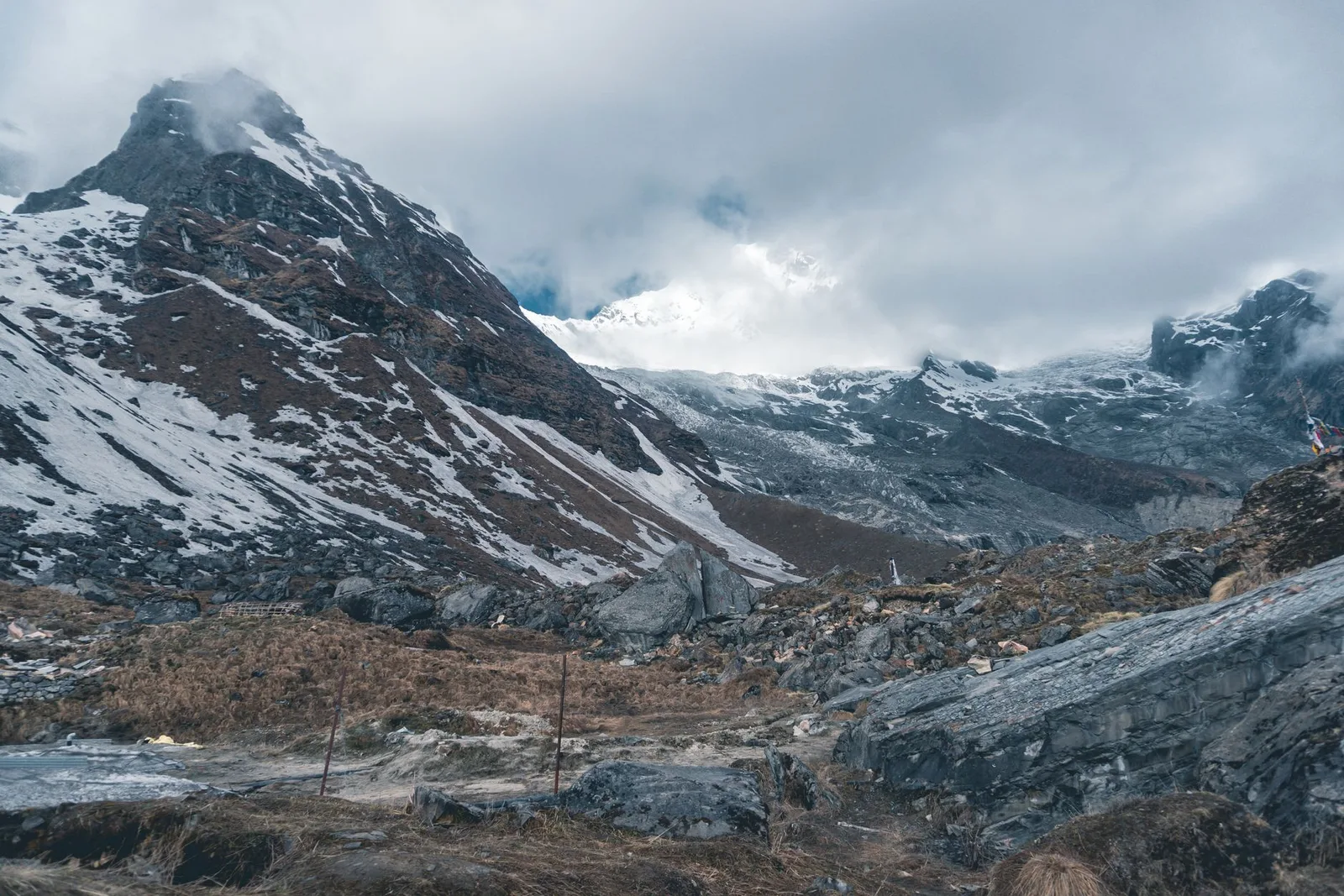
Everest Base Camp is raw high-mountain grandeur. The draw is the scale of the Khumbu: Everest, Lhotse and Nuptse forming a wall of rock and ice, and the impossibly beautiful spire of Ama Dablam watching over you for days. Layered on top is living Sherpa Buddhist culture — Tengboche Monastery, mani walls, prayer flags, yak trains. If you want to stand among the highest peaks on the planet, nothing substitutes for it. We ranked where these giants sit among their peers in the 14 eight-thousanders ranked and gathered the most jaw-dropping summits in the most beautiful mountains in the world.
Permits: the biggest practical headache is Peru's, not Nepal's
People assume Everest, being the bigger name, must be the harder trek to organise. On paperwork, it's the reverse.
The Inca Trail runs on a strict daily quota of 500 permits, and that number is shared between trekkers and all their support staff — guides, cooks, porters. In practice that leaves roughly 200 tourist spots per day. Permits are non-refundable, tied to your passport number, and can only be bought through a licensed operator — you cannot get one independently. For popular 2026 dates you should book five to six months ahead; peak dates can sell out within hours of release. The trail also closes completely every February for maintenance. Miss the window and your only alternatives are the Salkantay or Lares routes, which don't walk the original trail.
Everest Base Camp has no such scarcity. You need two permits — the Sagarmatha National Park entry permit and the local Khumbu Pasang Lhamu Rural Municipality permit (there is no TIMS card in the Khumbu; it was replaced by the municipality permit) — and both are simply bought en route or arranged by your operator. No lottery, no months-in-advance panic. Our Nepal trekking permits hub lays out exactly what you'll pay, and every foreign visitor also needs a tourist visa, which is straightforward on arrival — see our Nepal visa guide.
Comfort and logistics: tents vs teahouses
How you sleep and eat differs completely, and it surprises people. On the Inca Trail you camp — porters run ahead to pitch tents, and a cook prepares meals in a mess tent. It's remarkably well-supported for camping, but it is still four nights on a sleeping mat in the open, with no showers and basic toilets. Part of the romance, part of the roughness.
Everest Base Camp, counterintuitively, is more comfortable underfoot. You sleep in teahouses — family-run mountain lodges with real beds, blankets, and a warm communal dining room heated by a yak-dung stove. You order cooked meals off a menu (dal bhat, fried rice, soups, even apple pie) and can usually buy hot showers, charging and Wi-Fi for a few dollars higher up. It's simple, and it gets colder and more spartan as you climb, but you're never sleeping on the ground.
The journeys in are their own adventures. Peru's trailhead is reached by a scenic train and bus from Cusco, all at accessible elevation. Nepal's begins with the famous — and famously weather-dependent — mountain flight into Lukla, one of the most dramatic short-runway landings in the world. Build a spare day into any Everest itinerary in case a Lukla flight is delayed by cloud; it happens, and it's simply part of trekking in the high Himalaya.
Cost: Everest is the bigger outlay, but for more trek
A guided Inca Trail typically runs from around $600 for a budget group departure to $900–$1,500 for mid-range and premium operators, including the government permit fees, camping gear, porters and meals. It's a lot of value for four days.
A guided Everest Base Camp trek generally lands between $1,350 and $2,500 per person for a quality 12–14 day trip, though the range stretches wider. Our own 14-day Everest Base Camp trek is priced by group size: $1,850 for a solo trekker, $1,650 per person for a group of 2–3, $1,500 for 4–7, and $1,350 per person for groups of 8 or more. That covers your Kathmandu–Lukla flights, teahouse lodging, all trail meals, permits and a licensed Sherpa guide. Per day on the mountain, EBC often works out cheaper than the Inca Trail — you're just buying three times as many days. We break the numbers down fully in the Everest Base Camp cost guide for 2026.
Season and crowds
The Inca Trail's dry season runs roughly May to September, with the wet months and February closure to avoid. Everest Base Camp has two clear windows: spring (March–April) and autumn (October–November), prized for stable skies and mountain views. Both treks are busy in their peak months — there's no version of these world-famous routes where you have the trail to yourself — but Everest's shoulder weeks (early April, late November) thin the crowds noticeably while keeping decent weather.
So which trek should you actually do?
Choose the Inca Trail if you have a week rather than a fortnight, you're drawn to history and ruins over raw mountains, you'd rather not gamble with serious altitude, and you can commit to booking months ahead. It's the more accessible bucket-list trek, and Machu Picchu at sunrise earns every step.
Choose Everest Base Camp if you want to walk among the highest mountains on Earth, you can spare two-plus weeks, you're up for the slow challenge of altitude, and standing in the Khumbu beneath Everest is the image that keeps you awake at night. It's the bigger adventure in every dimension — longer, higher, and, for many, the trek of a lifetime.
Honestly? Plenty of people do both, years apart, and never regret either. If Nepal is calling, start with our complete Everest Base Camp trek guide and the wider Everest region guide, then browse where else the country can take you in the best places to visit in Nepal. And if you're simply collecting the planet's greatest walks, both of these sit near the top of our best treks in the world list.
Frequently asked questions
Is the Inca Trail or Everest Base Camp harder?
They're hard in different ways. The Inca Trail is short but intense — steep stone steps and one big pass over four days. Everest Base Camp is longer and higher, so its challenge is altitude and endurance over two weeks rather than any single steep climb. For most people, EBC is the tougher trek overall because of the altitude, even though no single day is technically difficult.
Which trek is higher?
Everest Base Camp, by a wide margin. Its high point, Kala Patthar, reaches 5,545 m and Base Camp sits at 5,364 m, while the Inca Trail's highest point, Dead Woman's Pass, is 4,215 m. Machu Picchu itself is only about 2,430 m.
How far in advance do I need to book each one?
The Inca Trail requires booking months ahead — typically five to six months for popular 2026 dates, because only about 500 permits are issued per day and they sell out fast. Everest Base Camp has no permit quota, so it can be arranged much closer to your travel dates, though booking a month or two ahead secures better flights and guides.
Can I do the Inca Trail without a guide?
No. Inca Trail permits can only be purchased through a licensed tour operator, and independent trekking on the classic route is not permitted. Everest Base Camp can technically be done independently, but a licensed guide is now standard and strongly recommended for safety at altitude.
How much does each trek cost?
A guided Inca Trail typically costs around $600–$1,500 per person depending on the operator's tier. A guided Everest Base Camp trek generally runs $1,350–$2,500 per person for a 12–14 day trip. Our 14-day Everest Base Camp trek ranges from $1,350 to $1,850 per person depending on group size.
When is the best time to do each trek?
The Inca Trail is best from roughly May to September (the dry season), and closes every February. Everest Base Camp is best in spring (March–April) or autumn (October–November), when skies are clearest for mountain views.
Written by
Travel Himalaya NepalPokhara-based, NMA-certified trekking guides. We’ve led 5,000+ treks across the Annapurna and Everest regions since 1998 — every word here comes from the trail. More from this author →
Share this article
Ready to Trek?
From reading about it to standing on it
Our Pokhara-based guides have been doing this since 1998. Tell us your dates and fitness level — we'll build your perfect itinerary. Free, no obligation.
Why trek with our licensed agencyMore guides like this
Popular trips to consider
View all treks & toursFree Trekker's Insider Guide
Permits, packing lists, cost breakdowns — no fluff.
We send one useful email. You can unsubscribe anytime.